

Sanskrit means "perfected" in English. Sanskrit was the language of India's cultural and religious elite throughout most of its history.
It is still the language with the greatest religious
importance in the twentieth century.
The theological belief that it was the ideal language—the language of the gods—is reflected in its name.
In his Ashtadhyayi, the grammarian Panini basically cemented
Sanskrit in the fourth century B.C.E.
Sanskrit is no longer regarded a "natural"
language since it hasn't altered since Panini's time.
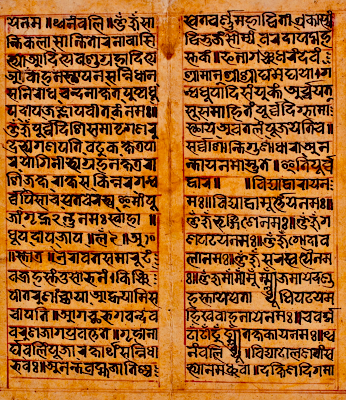
Sanskrit would have been a person's second language even in
Panini's day, acquired by purposeful study after obtaining a grammatically
easier mother tongue (one of the Prakrits) through the regular language
acquisition process.
Sanskrit has largely been the domain of brahmins in a
religious setting, acting as both a holy language and a common language for
brahmins from various places to speak with one another.
The impact of the devotional (bhakti) religious movement has
weakened its position as the language of religion par excellence.
Poetry written in vernacular languages was a ubiquitous
feature of this movement, reflecting the purposeful decision to communicate in
a language that everyone could understand.


