Showing posts with label Sri Lanka. Show all posts

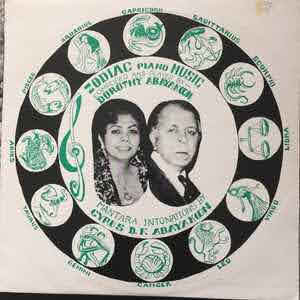
Parapsychology - Who Was Cyrus D. F. Abayakoon?


Cyrus D. F. Abayakoon (1912–1986) was a Ceylon-born astrologer (now Sri Lanka).

Buddhist monks taught him astrology, which was an established science at the time.

He also honed his skills in palmistry and illness cure via Mantra yoga (science of sound vibration through sacred utterance).

He accurately predicted a number of major historical events, including Gandhi's killing, Khrushchev's collapse, Kennedy's assassination, and the Watergate crisis.


Further Reading:


Abayakoon, Cyrus D. F. Astro-Palmistry: Signs and Seals of the Hand. New York: ASI, 1975.

Rahu Pimma [and] Yama Kalaya. Delhi, India, ca. 1957.


~ Kiran Atma

You may also want to read more about parapsychology and occult sciences here.


Hinduism - Where Is Sri Lanka? How Is Status Of Srilankan Hindu Tamils?


Sri Lanka Formerly known as Ceylon, this island country off the southeast coast of India is today known as Sri Lanka.

According to local legend, Sri Lanka was the destination of the biblical Adam's exit from paradise.

Despite its exquisite natural beauty, the island's human geography has been significantly more problematic.

Since 1981, the country has been torn apart by civil conflict between the island's two primary ethnic groups, the Sinhalese and Tamils.

The Sinhalese make up over 70% of the population, are mostly Buddhist, and dwell primarily in southern, western, and central Sri Lanka.

They believe themselves to be the island's traditional occupants.

Tamils, who make up little over 20% of the population and are both Hindu and Christian, are located in the north and east.

About half of the Tamils are derived from medieval conquerors who founded Tamil kingdoms in northern Sri Lanka after crossing the straits from southern India, while the other half were transported to Sri Lanka in the nineteenth and early twentieth century to work on tea plantations.

Since 1948, the Tamils have been at a considerable disadvantage in comparison to the Sinhalese, whose majority has enabled them to exert control over practically every element of national life.

Anti-Tamil riots, particularly in Colombo, the country's capital, exacerbated this perilous situation.

In the Tamil majority districts, Tamil organizations started fighting for independence in 1981.

The Sinhalese majority was adamantly opposed to this idea, and Sri Lanka has been ravaged by civil conflict ever then.

The Tamils have resorted to guerilla warfare due to their limited resources.

Their warriors are known for carrying cyanide capsules around their necks in case they are kidnapped.

These troops are also well-known for their readiness to act as human bombs, attacking civilians in metropolitan areas.

A person bomb was used to assassinate former Indian Prime Minister Rajiv Gandhi in 1991, in retaliation for Gandhi's alleged treason in cooperating with the Sri Lankan government.

Although Sri Lanka's current Prime Minister, Chandrika Kumaratunga, has promised some autonomy to the Tamil areas, the conflict has been so acrimonious that it is unlikely to be quickly resolved.

Sri Lanka has a long history of cultural connections with India and has always been a member of the Indian cultural circle.

According to local legend, Mahinda, the son of Mauryan ruler Ashoka, introduced Buddhism from India to Sri Lanka in the third century B.C.E.

Sri Lanka also has an important Hindu pilgrimage site (tirtha), Kataragama, on the island's southern shore, as evidence of this link.

Kataragama's purported potency attracts Hindus from across the world as well as Sri Lankans of all faiths.

Despite the fact that Kataragama is Sri Lanka's sole significant Hindu monument, the northern areas largely represent the Tamil culture of the region's inhabitants, which originates from their geographical origins.

Also see Tamil Nadu.

~Kiran Atma


You may also want to read more about Hinduism here.

Be sure to check out my writings on religion here.


Hinduism - Where Is Lanka In The Context Of Hindu Mythology?


Lanka is the land of the demon-king Ravana in the Ramayana, the first of the two major Indian epics.

Although the epic's descriptions should be regarded as mythological and narrative tales than than a geographical survey, Lanka is occasionally connected with the present island of Sri Lanka, and southern Indian places such as Rameshvaram have been linked to events in the Ramayana.

Vishvakarma, the heavenly architect, had created Lanka for Kubera, a lesser god, but Kubera had been deposed by Ravana and his siblings.


You may also want to read more about Hinduism here.

Be sure to check out my writings on religion here.


Hinduism - Who Is Lankalakshmi In The Hindu Pantheon?


Lankalakshmi is the name of the guardian goddess of Lanka, the demon-king Ravana's capital city, in the Ramayana, the older of the two major Indian epics.

Lankalakshmi is also the reincarnation of Vijayalakshmi, the goddess who was cursed by Brahma to serve as Lanka's guardian deity.

The curse will endure until an invader in the city defeats her, foreshadowing Ravana's demise.

The appearance of the monkey-god Hanuman, who jumps over the ocean in quest of the goddess Sita, whom Ravana has kidnapped, leads to this defeat.

In her role as a guardian goddess, Lankalakshmi sees Hanuman as an invader and assaults him.

Hanuman uses a tremendous strike to knock her out, ending the spell and signaling Ravana's demise. 


You may also want to read more about Hinduism here.

Be sure to check out my writings on religion here.


Hinduism - Where Is The Kataragama Tirtha?


Sacred shrine (tirtha) devoted to the deity Skanda in his southern Indian avatar as Murugan, situated in the extreme southeastern portion of Sri Lanka.

The location is famous for being outside of India's mainland and for being a significant Hindu and Buddhist pilgrimage destination.

According to legend, the site was founded when Skanda went hunting in the Sri Lankan forests, fell in love with a native lady called Valli, and pledged to stay in her house forever.

Skanda, the Hindu pantheon's mighty deity, is the son of the god Shiva.

His friendship with Valli demonstrates his openness and devotion to his devo shirts (bhakta).

The yearly Kataragama pilgrimage, which takes place in July–August, serves as a stage for demonstrating these qualities: Many individuals come to seek medical cure or release from suffering, while others come to fulfill promises made in exchange for advantages previously gained.

Carrying the kavadi, a yoke kept in place by hooks piercing the skin; piercing the mouth or cheeks with small arrows, one of Skanda's emblems; or hanging from hooks inserted in the back and thighs are all examples of severe self-mortification.

These devout followers are said to be rewarded for their suffering with a state of euphoria in which they are free of pain and bleeding.

Devotees are also said to be mouthpieces for the deity Skanda when in this state of ecstasy.

Other pilgrims seek them guidance on every possible situation, believing that Skanda will provide them with the best appropriate solution.

For further detail, read Paul Wirz's Kataragama: Ceylon's Holiest Place, published in 1966, and Bryan Pfaffenberger's "The Kataragama Pilgrimage," published in Journal of Asian Studies, Vol. 28, No. 2, 1979. 


You may also want to read more about Hinduism here.

Be sure to check out my writings on religion here.