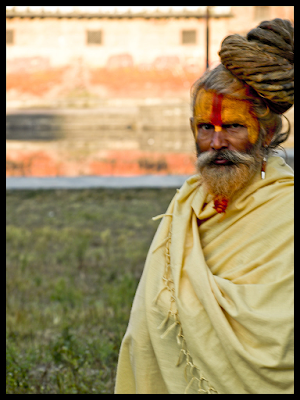
Vedarambha (“beginning of Veda [study]”) Samskara.
Traditionally, the
twelfth of the life cycle ceremonies (samskaras).
In this ceremony, a newly initiated brahmacharin—a young man
who had entered the celibate student phase of life—would commence to study the
Vedas, the oldest Hindu religious texts.
This rite is not mentioned in the earliest texts in the
dharma literature, perhaps under the assumption that Veda study would commence
at an appropriate time, after learning had commenced with the earlier
vidyarambha samskara.
'Veda' is Vedic literature, and 'arambha' refers to the start. As a result, Vedarambha literally means "beginning of Vedic study."
- After the Upanayanam, this ritual is done on any auspicious day.
- The student makes a pledge in front of the holy fire to dedicate himself to serving his Guru and living a disciplined life.
- The student takes the Brahmacharya path and concentrates only on education.
The Vedarambha Sanskar is the beginning of knowledge and is also simultaneously seen performed with the Upnayanam Samskara initiation.
- It places equal focus on material and spiritual understanding.
- Under the guidance and blessings of Acharya or teacher of the Vedas, the student begins his study at Gurukul.
- The traits and behavior of Guru are reviewed here, and the youngster is given instructions by the parents as well.
- The character of both teacher and student is given special attention to in the initial formative stages.
- Brahmachaari is expected to solicit for charity to reduce arrogance, according to Vedic tradition.
- Following the same tradition, brahmacharinis walked throughout samskar asking for "bikshaamdehi," or "please give me alms," from visitors, and parents of pupils.
- The ritual is then followed by a group bhajan with submission to the almighty, which creates a tranquil mood.
What are Vedrambha's Rituals?
The earliest reference of Vedrambha 'samskara' is said to be in the "Vyasa Smriti."
After the "Upanayana," an auspicious day is set to do this "samskara." It may also be done on the day of the "Upanayana."
If it is not conducted on the same day, it is performed the following day, or it may be done on any auspicious day before the end of the "Upanayana" year.
- In the absence of the father, the Vedrambha 'samskara' is performed by the child's father or the 'Acharya'.
The performer first bathes the youngster with pure, clean water.
- The infant is then clothed well and put next to the 'Acharya' on a good seat in the west of the 'Yajnavedi,' facing eastward.
Following that, the eight mantras are used to conduct God's devotion, prayer, and meditation.
- Then, with three mantras and the sprinkling of water on the four corners of the 'Yajanakunnada,' 'Agnayadhana' and 'Samidhadhana' must be done.
- The 'Yajnakunda' fire is now burning with wood fuel.
- Now, in addition to the eight Mantras, the four oblations 'Agharavajyabhagahuti,' four 'Vyahriti Ahutis,' and four 'Ajyahutis' are presented.
- The four 'Vyahriti Ahuti' oblations, one 'Svistakrit Ahuti' oblation, and one 'Prajapatya Ahuti' oblation are then presented on the child's hand.
Then, with this mantra, the fire of the 'Yajnakunda' is collected in the 'Kunda.'
"Acharya, the illustrious Acharya! Please help me become well-known in the world of education.
Acharya, I salute you!
You have a lot of clout and are well-versed in a lot of things. Acharya, I salute you!
You, as one of the wise men, are the keeper of the wealth of knowledge, Yajna, and so on.
So I became a man among men, the keeper of the Vedic knowledge and speech wealth "..
The youngster next sprinkles water over the 'Yajnakunda' after making a circle around it while repeating the four specified mantras.
Now the youngster must stand on the south side of the 'Yajnakunda,' with his back to the north.
Then, while singing the following mantra, he takes one wood stock, dips it in ghee, and offers it in the centre of the 'Vedi' fire
"I've brought wood for igniting the Yajna fire, which is powerful in nature and found in all of the world's created objects.
As this wood-fueled fire blazer shines with long life, intelligence, vigour offspring, animals, and Vedic and Brahma knowledge.
May my Acharya have a long and happy life, and may I be blessed with great intellectual strength.
I promise not to act arrogant in front of anybody. I may be well-known, active, and endowed with heavenly qualities "..
In the same way, the youngster must throw the second and third wood sticks into the fire.
By singing the proper mantras, the fire of the 'Vedi' has now collected, and water is sprayed on all four sides of the 'Vedi.'
"This fire is the preserver of body, let it preserve my body, this fire is the giver of life, let it grant me long life, this fire is the giver of brilliancy, whatever has exhausted in my body, let this fire recuperate, may the creator of the universe grant me wisdom, let the all-flourishing knowledge give us wisdom, let the teacher and presiding officer grant us wisdom, let the teacher and presiding deity grant us wisdom."
Now, according to Vedarambha ritual, the kid pronounes the following mantras while touching the various organs listed in each mantra:
1. "Oh, my God! May my speech organ be healthy and well-developed.
2. Oh, my God! May my vision be clear and well-developed.
3. May my hearing grow properly, O God.
4. Oh, my God! May my arms, which have brought me renown and power, mature properly.
Now, while repeating this mantra, the Vedarambha ritual proceeds with God's thought:
"May Agni, the self-renewing God, bestow knowledge, progeny, and power onto me. May Indra, the Almighty God, give knowledge, progeny, and biological strength upon me, and may Surya, the all-powerful God, bestow wisdom, progeny, and brilliance upon me; may I be effulgent with the effulgence Thou hast in three, my Lord! May I wield the power that Thou hast in three, my Lord! May the strength with which Thou hast equipped me, my Lord, make me an irresistible force!"
The youngster then moves to the north side of the 'Yajnakunda' and sits on the ground with his knees supported while facing east.
The 'Acharya' sits in front of the kid with his back to the west.
The youngster now adds, "O Acharya, teach me the Gayatri Mantra, which has as its theme savitar, the sun. Please instruct me in this area."
Vedarambha continues the 'Acharya' by placing a piece of cloth on the kid's shoulder and then holding the child's fingers in his own while repeating the 'Gayatri' Mantra in three parts to the infant.
- In this situation, the youngster must accurately pronounce the first section word for word.
- The toddler repeats the second section word for word, slowly and accurately.
- The 'Acharya' has the youngster recite the mantra three times and also gives the child the brief meaning of the mantra.
The next phase in Vedarambha is for the kid and the 'Acharya' to swear a vow, similar to what is done in "Upanayana" with the singing of a set mantra.
- The girdle is then tied into the child's belt, which is extremely attractive and smooth.
This should be accomplished by saying this mantra
"This is the girdle, which is as holy and delightful as the sister. Devi is the hymn and symbol of virginity and purity. This has come into my hands, obstructing evil in thought and deed, safeguarding the integrity of the Varna system, and providing strength for our breathing and exhaling breath."
After that, the 'Acharya' gives the youngster two fresh clean clothing and instructs him to wear one while repeating the specified mantra. With a stick in his hand, the 'Acharya' now steps up in front of the youngster. While reciting this mantra, the youngster receives the stick from the 'Acharya's hand with folded hand "This stick that has come into my possession is built on the earth and stands straight in space. I embrace it once again, particularly for the sake of long life, Vedic knowledge, and continence discipline and strength."
The child's father then offers him broad celibacy knowledge on chastity and teaches him the code of behavior as follows:
"You've realized that you've been celibate since today.
You will always drink clean, pure water before each meal and say your prayers on a regular basis. Always avoid harmful deeds and engage in pious and noble deeds.
You will never sleep throughout the day.
You will always preserve in studying the Vedas with their limbs and sub-limbs if you remain under the supervision and control of your 'Acharya.'
Unless you finish the study of the four Vedas with limbs and sub-limbs, you will live a celibate life for 48 years in proportion to 12 years for each of the four Vedas, without failing.
You will always follow the laws of 'Dharma' under the guidance of your 'Acharya,' and you will always follow your 'Acharya's advise if he teaches you anything of 'Adharma' and wants you to behave in accordance with it.
You will refrain from becoming angry or lying.
You will always keep yourself away from the eight types of passionate activities.
You will only be able to sleep on the ground.
Never engage in the practice of 'kaushilava,' which includes poor singing, playing musical instruments, dancing, and other heinous behaviors, as well as the use of perfumes.
You will avoid excessive bathing, eating, sleeping, and waking, as well as reproach, over indulgence, dread, and sadness.
You will always do necessary acts such as clearing bowls, brushing your teeth with 'Dantadhanvana,' washing your mouth, bathing twice a day, two times meditations, eulogium, prayer and communion with God, and the practice of Yogic systems. Never consume dry meat or coarse grains, and never drink intoxicating beverages."
The father continues,
"You will never live in a village (save at Gurukula), and you will never wear shoes or an umbrella unless it is to dispose of pee.
Never touch the urinary organ to prevent the release of sperm and the restraining of sperm in the body.
Always strive to become a guy whose sperm is never expelled and has thus become a source of information by adopting mental trends and doing your task with such attention.
Do not use mustard-plaster for body attractiveness, and avoid eating foods that are highly sour, such as tamarind.
Do your daily meals and other interactions with great care and thought, and be engaged in information acquisition.
You will always have a decent character, be modest in your speech, and maintain excellent manners and seated etiquette in meetings and gatherings.
These are your everyday actions, and you should refrain from doing anything that has been banned."
"I would without a doubt behave according to anything you have taught to me," the youngster now salutes his father and says to him with folded hands."
The youngster then proceeds to go around the "Yajnakunda" fire, asking for charity from his mother, father, sister, brother, maternal uncle, mother's sister, uncle, and so on.
The alms collected from them are gathered and given to the 'Acharya' by the youngster.
The 'Acharya' takes part of the grain and gives the balance of the alms to the celibate, who keeps it safe for his own meals.
The youngster then sits and sings the 'Vamdevya' song as instructed in the 'Samanya Prakarana'.
The youngster now consumes the alms that had been saved for him.
The youngster then naps until dusk, when the 'Acharya' instructs the child to pray and meditate as specified in 'Grihashrama Sanskara.'
The 'Acharya' and the Brahmin then sit on the west side of the 'Yajnakunda,' with their backs to the east.
Then they make 'SthaliPaka,' as instructed in 'Samanya Prakarana,' and smear it with ghee before storing it.
They offer the four oblations of 'Agharavajyabhagahutis' and four oblations of 'Vyahriti Ahutis' while keeping the 'Kunda' fire blazing.
The youngster then gets up and warms his hand-palms on the 'Yajnakunda' fire before touching his limbs and lips in accordance with the 'Vedarambha Samskara' ritual.
The youngster then gives the cooked rice to the 'Acharya,' who will make oblations and consume it.
With the singing of this mantra, the 'Acharya' then sprinkles ghee on the rice and makes three oblations
"May I come to know God, the self-effulgent master of knowledge, marvelous, dear to everything that the human spirit desires, as well as discriminate wisdom.
Whatever has been said here is correct.
The oblations presented are for the sake of fulfilling 'Sadasaspati's order, not for me. I am imbued with the admirable attributes and light of the all-creating, all-powerful God.
May he guide our thoughts and actions in the direction of positive traits. Everything that has been said so far is correct.
The oblation being given is for Savitar, not for me. The attributes of seers who study Veda and see are described."
After performing the first three oblations, 'Acharya' performs the fourth oblation using the appropriate mantra.
Following that, the four 'Vyahriti Ahutis' oblations and eight 'Ajyahutis' oblations are offered.
The youngster then sits with his back to the east, facing 'Acharya.'
"I born in the genealogy of such and so thank you, O my instructor," the youngster says, saluting him".
The 'Acharya' then responds,
"Oh, my devoted pupil! May you live a long life and be remembered for your wisdom."
As the 'Acharya' bestows his blessings on the infant, he consumes the leftover grains from the 'Yajna' as well as other delicacies.
The meal is then served to the invited guests.
Before departing, the people bless the kid.
The infant must sleep on the ground for the following three days after the Vedarambha rite.
The method of three'samidha' with the specified mantra and the 'Angasparsha' procedure are conducted by the 'Acharya.'
He also asks the youngster to sing the mantras while performing the four oblations.
For three days, the youngster eats only salt-free meals.
The kid must next go to the 'Pathshala,' where he or she must complete the commitment and vows of the period of schooling.
Every day, he practices the 'Sandhayapasana' and continues his studies there till it is completed.
The instructor is awarded a 'Purnapatra' at the conclusion of Vedarambha, while the officiating Brahmana is given 'dakshina.'
~ Kiran Atma
You may also want to read more about Hinduism here.
Be sure to check out my writings on religion here.