Showing posts with label justice. Show all posts

Hinduism - Who Is Vidura In Hindu Mythology?


He is the son of sage Vyasa and Queen Ambika's maid servant.


Vidura, according to tradition, is a partial incarnation of Dharma, the deity who personifies justice.

In his contacts with the Pandavas and Kauravas, the epic's two warring factions, Vidura constantly demonstrates his justice.


As the Kauravas grow more evil, he gravitates toward the Pandavas, whom he serves as a trustworthy and loyal counsel.

Vidura is the one who recognizes the danger in the House of Lac, which is made solely of extremely flammable materials, and makes plans for the Pandavas to flee.


He stays neutral throughout the Mahabharata battle, but once it is finished, he returns to serve as an advisor to King Yudhishthira, the oldest of the Pandavas, and Yudhishthira's siblings.


~Kiran Atma


You may also want to read more about Hinduism here.

Be sure to check out my writings on religion here.


Hinduism - Who Is Varuna In The Hindu Pantheon?


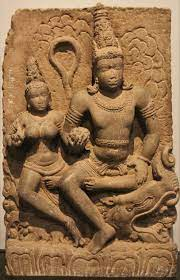
Varuna with his consort Varunani

Who Is The Indo-Aryan Deity Varuna?

Statue of Varuna at the National Museum in Delhi


In the Vedas, the oldest and most authoritative religious texts, Varuna is a deity associated with the sky, with waters, with justice, and with truth.
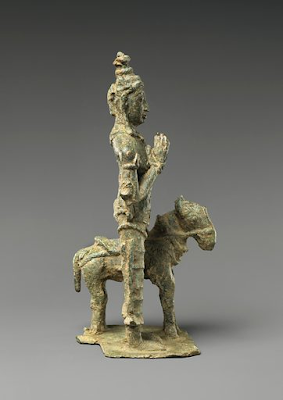
Statue of Varuna - Lord of knowledge


Varuna belongs to the earliest layer of the Indo-Aryan deities; this is clearly shown by comparisons with the Avesta, an ancient Iranian sacred text that shows many parallels with the Vedas, and with even older epigraphic sources.

As portrayed in the Vedas, however, Varuna’s influence has clearly declined—there are far fewer hymns addressed to him than to deities such as Indra, Agni, and Soma, and he seems to have played a far less important role than these other deities in Vedic religion.

In the Vedas, Varuna is portrayed as the guardian of rta, the cosmic order through which the world proceeds.
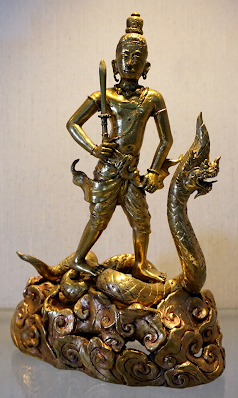
Varuna Riding Naga


As the deity associated with the high heaven, he also watches over the deeds of human beings and punishes them for any transgressions.

The best known hymn to Varuna, Rig Veda 7.86, shows Varuna’s connection with justice, moral order, and the waters.

The hymn is the lament of a person who has committed some offense against Varuna and whose sin has become visible through being afflicted with dropsy, in which the body retains its fluids and swells.

USS Varuna


The speaker begs Varuna to reveal the forbidden act, “committed under the influence of liquor, anger, or heedlessness,” so that Varuna may be propitiated and the sufferer healed.

Despite his virtual eclipse early in the tradition, in the later tradition, Varuna retains his association as the god presiding over the waters.

He is also considered to be one of the eight Guardians of the Directions, each of which is associated with one of eight points on the compass.

Varuna presides over the western direction.


~Kiran Atma


You may also want to read more about Hinduism here.

Be sure to check out my writings on religion here.


Remembering Gail Omvedt - American Born Indian Author, Sociologist And Human Rights Activist


Gail Omvedt (2nd of August 1941 – 25th August 2021) was an Indian sociologist and human rights activist who was born in the United States. 


She was a prolific writer who authored many books about India's anti-caste movement, Dalit politics, and women's issues. 


  • Omvedt was active in anti-caste and Dalit movements, as well as environmental, farmers', and women's movements, particularly among rural women. 
  • Cultural Revolt in a Colonial Society: The Non-Brahman Movement in Western India, - was the title of Omvedt's dissertation. 


  • Numerous books and essays on class, caste, and gender problems are among Omvedt's scholarly writings. 
  • She worked as a consultant for FAO, UNDP, and NOVIB, as well as a Dr Ambedkar Chair Professor at NISWASS in Orissa, a professor of sociology at the University of Pune, and an Asian guest professor at Copenhagen's Nordic Institute of Asian Studies. 
  • She was the research director of the Krantivir Trust and a senior fellow at the Nehru Memorial Museum and Library. 


Gail Omvedt was born in Minneapolis and received her bachelor's and master's degrees in sociology from Carleton College and UC Berkeley, respectively. 


  • She has been a citizen of India since 1983. 
  • She and her husband, Bharat Patankar, resided in Kasegaon, Maharashtra, with their mother-in-law, Indumati Patankar, and relatives. 
  • She worked as a consultant sociologist on gender, environment, and rural development for the United Nations Development Programme (UNDP), Oxfam Novib (NOVIB), and other organizations in the years leading up to her death. 
  • She worked as a consultant for UN agencies and NGOs, as well as a Professor of Sociology at the University of Pune, an Asian Guest Professor at the Nordic Institute of Asian Studies in Copenhagen, and a Senior Fellow at the Nehru Memorial Museum and Library in New Delhi. 
  • She worked as a Visiting Professor and Coordinator at the University of Pune's School of Social Justice, as well as a Fellow at the Indian Institute of Advanced Study in Shimla. 
  • Dr. B.R. Ambedkar Chair of Social Change and Development at IGNOU has Gail Omvedt as a previous Chair Professor. 


At the age of 80, Omvedt passed away in August, 2021. She is survived by her husband Dr. Bharat Patankar, daughter Prachi, son in law Tejaswi and grand daughter Nia who are settled in the United States.


  • In India, Omvedt worked with social movements such as the Dalit and anti-caste movements, environmental movements, farmers' movements, and particularly rural women. 
  • Shramik Mukti Dal, Stri Mukti Sangarsh Chalval, which works on problems of abandoned women in the Sangli and Satara regions of southern Maharashtra, and the Shetkari Mahila Aghadi, which focuses on issues of women's land rights and political power, were both active in her community. 


Omvedt was critical of Hinduism's holy texts (or what she referred to as "brahminism") for promoting a caste-based society, according to her. 


  • Omvedt criticized the Hindu practice of venerating the Vedas as sacred, in addition to criticizing their seeming support for the caste system. 
  • She expressed her views on the Rigveda in an open letter to then-BJP President Bangaru Laxman, which was published in The Hindu: The Vedas, particularly the Rg Veda, are magnificent literature. 

  • I can only speak from translations, but I'm happy the prohibition on women and shudras reading them has been lifted, and that excellent translations by women and shudras themselves are now accessible. 

    • But to treat them as though they were holy? Check them out for yourself. 
    • The majority of the songs are aimed at achieving victory in battle, cattle rustling, and love-making, among other things. 

  • They celebrate conquest; hymns about Indra and Vrtra sound suspiciously as if the Aryans were responsible for destroying dams built by the Indus valley people; despite archeologists' claims that there is no evidence of direct destruction by "Aryan invasion," the Rg Veda reveals enmity between the Aryans and those they called dasyus, panis, and the like. 


Despite the prevalence of caste-based discrimination, Omvedt claims that Hindutva organizations promote an ethnic definition of Hinduism based on location, lineage, and history in order to build unity across different castes. 


Omvedt agreed with Dalit activists who said during the World Conference Against Racism that caste discrimination is akin to racism in that disadvantaged groups are seen as "biologically inferior and socially harmful." 


  • She has called the United States a "racist country" and advocated for affirmative action; however, she has compared American affirmative action policies favorably to those of India, saying, "It is a sad commentary on the state of Indian industrialists' social consciousness that such discussions have begun in an organized way in the United States before they have been thought of in India itself." 
  • In terms of perceptions of "group performance" in the United States and India, Omvedt wrote: "Whereas the debate in the United States assumes an overall equal distribution of capacity among social groups, in India the assumption appears to be that the unequal showing of different caste groups on examinations, in education, and so on is a result of actual different capacities." She has backed large-dam projects and GMO crops on occasion.


Omvedt's academic writing includes numerous books and articles on class, caste and gender issues, most notably:


  • Cultural Revolt in a Colonial Society: The NonBrahman Movement in Maharashtra (Scientific Socialist Education Trust, 1966)
  • We Shall Smash This Prison: Indian Women in Struggle (1979)
  • "We Will Smash This Prison!.: Indian Women in Struggle " (Zed, 1980)
  • "Violence Against Women: New Movements And New Theories In India" (Kali for Women, 1991)
  • Reinventing Revolution: New Social Movements in India (M.E. Sharpe, 1993)
  • Gender and Technology: Emerging Asian Visions (1994)
  • Dalits And The Democratic Revolution: Dr. Ambedkar And The Dalit Movement In Colonial India (Sage India, 1994)

  • Dalit Visions: the Anticaste movement and Indian Cultural Identity (Orient Longman, 1995)
  • Growing Up Untouchable: A Dalit Autobiography (Rowman and Littlefield, 2000)
  • Buddhism in India : Challenging Brahmanism and Caste (SageIndia, 2003
  • "Ambedkar: Towards an Enlightened India " (Penguin, 2005)
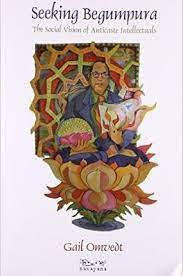
  • Seeking Begumpura: The Social Vision of Anticaste Intellectuals (New Delhi, Navayana, 2009)
  • "Understanding Caste: From Buddha To Ambedkar And Beyond" (New Delhi: Orient Blackswan, 2011)
  • Songs of Tukoba with Bharat Patankar she has published (translations) (Manohar, 2012)
  • Jotirao Phule and the Ideology of Social Revolution in India.


Awards And Recognition:


  • Matoshree Bhimabai Ambedkar Award (2012)
  • BA received Magna Cum Laude, with Distinction in Senior Comprehensive Examinations
  • PhD qualifying examinations passed with Distinction
  • Honorary Woodrow Wilson Fellowship, 1964–65
  • Fulbright Fellowship as Tutor in English in India, June 1963-March 1964
  • University of California Graduate Fellowships, 1964–65, 1965–66
  • American Institute of Indian Studies, Junior Fellowship for PhD research in India on “The NonBrahman Movement in Maharashtra,” January–December 1971
  • American Association of University Women, Fellowship for research on “Women’s Movement in India,” January–December 1975
  • Savitribai Phule Puraskar, Padmashri Kavivarya Narayan Surve Sarvajanik Vacanalay, Nashik, 2002
  • Dr. Ambedkar Chetna Award, Manavwadi Rachna Manch Punjab, August 2003
  • ABP Majha Sanman Purskar, 2012
  • Vitthal Ramji Shinde Award, April 2015


You may also want to read more about Hinduism here.

Be sure to check out my writings on religion here.


☽☸☾ What is an Actor Warrior?


☽☸☾


“I can truthfully say it was only the Group that gave me again what I experienced in my youth—a vision beyond personal success. A conception of the actor’s art as an expression of the highest human principals, the highest human aspirations. These are the values I brought my students as a teacher. For me they can never change. Those principals, those aspirations, will always remain for me the best, the surest, the only way for the actor.”

~ Stella Adler  On What is an Actor Warrior?


P.S ~ Something so deep, spiritual, organic and innate does not form overnight. It can not be manufactured, dramatized, taught or mimicked, but has to be cultivated and refined from deep within... over an Eternity.

Now in 2016, I have grown to understand and like this quote just as much,

 “There must be those among whom we can sit down and weep and still be counted as warriors.”  

~ Adrienne Rich

☽☸☾


What is an Actor Warrior?


☽☸☾

Actor Warriors understand their role as the voice of the people.

Actor Warriors use their craft and art in service to communities.

Actor Warriors recognize the power of craft to contribute to positive social transformation.

Actor Warriors write and perform powerful, socially relevant plays.

Actor Warriors empower themselves by creating their own work.

Actor Warriors seek for ways and means to make use of the industry without being used by the industry.

Actor Warriors refuse to be defined as an actor or a person by external forces such as money or status but rather by the richness of their humanity, creativity and sense of fulfillment.


☽☸☾


In early 2013 Tom Oppenheim (Stella Adler Studio) and Teresa Eyring (Executive Director, Theater Communications Group) met and the idea of Actor Warrior was born.

The studio believes that the New York community and the theater community at large are ripe for a conversation about actors, art, craft, social engagement and service. Gone are the days of actors passively going to auditions and sending out headshots. Now is the time for actors to identify active ways that they can use craft to affect social transformation and/or create work with strong socially relevant themes.

In September 2013 Tom created a discussion moderated by Teresa with Lemon Andersen (County of Kings) and Michael Milligan (Mercy Killers). This occasion provided the first public forum for the Actor Warrior conversation. In January 2014, in collaboration with The Working Theater, the studio provided a platform to continue the discussion. Teresa moderated a discussion with Heather Raffo (9 Parts of Desire), Lisa Ramirez (Exit Cuckoo) and Michael Milligan.

The studio is interested in continuing the Actor Warrior discussion and turning it into a movement. 

The studio aims to continue the vital discussion that began in 2013 and invite more artists and audiences into the discussion through a series of performances, talks and events.


☽☸☾