Showing posts with label Trika. Show all posts

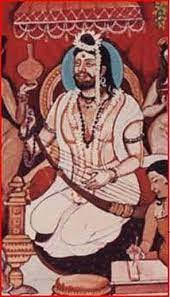
Hinduism - ABHINAVAGUPTA


(late tenth century) Abhinavagupta was a major thinker in Kashmiri Saivism, and the son of scholar Narasimhagupta, who was his first tutor.


Abhinavagupta wrote forty-one works, commentaries and independent treatises, on the three main branches of Kashmiri Saivism: Krama, Pratyabhijna, and Trika, as well as aesthetics, poetics, and language theory, becoming the most prominent and influential teacher in Abhinavagupta was the one who systematized the Trika doctrine based on a number of older and often obscure texts, most notably in his masterpiece, the Tantra loka (Light on the Tantras), a massive work in thirty-seven ahnika ('day-times,' i.e. chapters) that takes up twelve volumes in the Kashmir Series of Texts and Studies (1918–38) with Jayaratha's commentary.


The Tantra loka was summarized by its author in the Tantrasara (Essence of the Tantras), a widely read book that combines yoga, devotion to the Lord, and nondualism (advaita) in such a manner that it is applicable to a variety of systems.


The Patra trimsika Vivarana is a lengthy commentary on the Tantra Para trimsika's thirty-six pithy stanzas, which elaborates on all elements of Word/speech, whether liturgical, cosmogonic, psychological, epistemological, or metaphysical.

The Ma lin vijaya Varttika and the Isvara pratyabhijn a Vimarsin on Utpala deva's Pratyabhijn a Karika, both major works in the tradition, are two more commentaries worth noting.


All of these writings are significant, and Abhinavgupta's impact beyond not just his own school but also Tamil Nadu, where he was even regarded as an incarnation of Siva.


Not just in the sphere of poetics, with his focus on the primacy of suggestion, but also in the performing arts, particularly theatre, dance, and music, his writings on aesthetics were to be as authoritative and of enduring value.


Kiran Atma


You may also want to read more about Hinduism here.

Be sure to check out my writings on religion here.


See also: 


Advaita; Dance; Drama; Kashmiri Saivism; Music; Poetry; Siva; Tantras; Tantrism; Yoga


Hinduism - Who Is Trika In Hindu Philosophy?


The greatest figure in the Trika school was the tenth-century philosopher and aesthetic theorist Abhinavagupta.

The Trika school was a Kashmiri religious community whose members were devotees (bhakta) of the god Shiva; the greatest figure in the Trika school was the tenth-century philosopher and aesthetic theorist Abhinavagupta.

Trika Shaivism is a tantric tradition—that is, a secret, ritual-based religious practice—whose philosophical foundations combine theism and monism.

Theism holds that a divine being is the universe's Supreme Reality, while monism holds that a more abstract principle is the foundation of all reality.

The deity Shiva, who is both Supreme God and the source of emana tions from which the material cosmos is generated, is the single genuine reality for Trika Shaivism.

The process of "recognition" (pratyabhijna), in which one knows that the whole cosmos is nothing but a manifestation of Shiva alone, leads to final soul emancipation (moksha).

Here, one "recognizes" something that has always been true but had been obscured by a misunderstanding up until that point.

More information can be found in Paul Eduardo Muller-1989 Ortega's book, The Triadic Heart of Siva.

Tantra and Shaiva are two other terms for the same thing.

~Kiran Atma


You may also want to read more about Hinduism here.

Be sure to check out my writings on religion here.

Hinduism - Who Was Kshemaraja?


(11th c.) Kshemaraja was Abhinavagupta's major follower and a significant figure in the development of Trika Shaivism.

Abhinavagupta was a Kashmiri writer notable for his writings on poetics and aesthetics.

Trika Shaivism claims that the deity Shiva, who is both supreme god and the source of the ema nations that make up the universe's substance, is the only actual reality, according to tantric philosophy.

The process of "recognition" (pratyabhijna), in which one recognizes that the whole cosmos is a manifestation of Shiva alone, leads to final soul emancipation (moksha).

Here, one “recognizes” something that has always been true, but has been concealed by a misunderstanding up until that point.

Kshemaraja continued to work on the Trika school's growth.

The Svacchandatantra is his most renowned work.

Also see tantra.


You may also want to read more about Hinduism here.

Be sure to check out my writings on religion here.