Showing posts with label Poetry. Show all posts

Hinduism - AESTHETICS OR ALAMAKARA SHASTRA


    What Is Aesthetics Or Alamakara Shastra?


    Sanskrit aesthetic theory (alamkara sastra) developed in India as a way to explain the aim of play and poetry, and is known as alamkara (ornamentation/beauty).

    Early theoreticians interpreted alamkara to mean both beauty and beauty achieved via adornment.


    In the first definition, alamkara (virtues/qualities) is innate, but in the second, it is created by the use of words or theatrical gesture to achieve a certain impression.

    However, as with Anandavardhana's theoretical works, a philosophical change happened in this understanding of the connection of alamkara to the guna (c. ninth century).

    He stated that even someone with minimal technical expertise but an intuitive sensibility may be brought to an aesthetic experience (Krishnamoorthy 1979: 123–25).

    He did not dispute the importance of alamkara and guna to aesthetic experience.


    This, of course, implies that there is something intrinsic in the work of art, whether it poetry, theater, or painting, that transcends its mechanics.


    What Is The Theory of Rasa?


    The idea of rasa, which first appears in the sixth chapter of the second-century Sanskrit dramaturgical handbook Natyasastra, is perhaps the most prevalent and influential Indian aesthetic philosophy.


    The term rasa literally means "taste" or "appreciation." 


    In terms of aesthetics, rasa is the consequence of a careful balance of stimulus (vibhava), automatic response (anubhava), and intentional reaction (anubhava) (vyab hicaribhava).


    Rasa is likened to the cooking process, in which the components, each different in their own way, come together to create a singular flavor.

    The flavor is the rasa aesthetic experience, the components are the different bhavas (emotions), and the person who can experience rasa is called as a rasika.


    The Natyasastra lists eight basic rasas, each with its own set of bhavas (emotions).

    To put it another way, if bhava is the feeling, rasa may be thought of as the aesthetic experience of that emotion.


    The eight rasas are listed here, together with their corresponding sthayi bhavas (permanent/stable emotions) (Rangacharya 1986: 38–39).


    • Rasa (Bhava)
    • Srngara (erotic) 
    • Rati (desire) 
    • Hasya (comic),
    • Hasaaaaaaaaaa (laughter)
    • Karuna(compassion) 
    • Soka (grief)
    • Raudra (fearsome) 
    • Krodha (anger) 
    • Vira (heroic) 
    • Utsaha (energy) 
    • Bhayanaka (fearsome) 
    • Bhaya (fear) 
    • Bibhatsa  (loathsome) 
    • Jugupsa(disgust) 
    • Adbhuta  (wonder) 
    • Vismaya (astonishment) 


    When rasa theory is applied to an Advaitic philosophical philosophy, a crucial ninth rasa, Santa (tranquility), is introduced.


    It was just recently inserted into the Natyasastra text, and it is commonly attributed to the eighth-century philosopher Udbhata.


    Santa, on the other hand, is not merely another rasa; it is the basic state of thought from which all other rasas are derived (Krishna moorthy 1979: 206–10).


    Another key notion is sadharanikarana (universalizing emotion), which was first proposed by Bhatta Nayaka (ninth century) and further expanded by Abhinavagupta (tenth century) in his commentary on the Natyasastra, Abhinavabharati.

    Abhinavagupta is largely speaking in the context of Natya when he comments on Bhatta Nayaka's notion offspring sadharanikarana (drama).

    Natya refers to both the text itself and the actual performing that gives the text meaning.

    Unlike emotions that one encounters in reality, which link one to the world, the emotions that occur as a reaction to art (or art-like experiences) lead readers/audience to transcend their subjectivity and individuality.

    According to Abhinavagupta, a rasa experience is impossible without sadharanikaran. (Krishnamoorthy 1979: 214–15), and hence aesthetic experience correlates to the yogin's mystical bliss.


    What Is Bhakti Rasa?


    The rise of bhakti as a significant literary and theological movement has led to its classification as a rasa.

    Bhakti rasa became the dominating and preeminent metaphor of divine experience, particularly within the intellectual circles of Vallabha, Caitanya, and the Gosvamis.


    Bhakti was originally intended as a bhava, not a rasa.

    However, two thirteenth-century interpreters on the Bhagavata Puran, Vopadeva and Hemadri, not only promoted bhakti as a rasa, but even replaced Santa to argue for it as the rasa par excellence.

    Instead of Santa, the other nine rasas are now variations of bhakti.

    The sensation of happiness created by listening, reading, and participating in some manner in the exploits of God and his followers is a basic description of bhakti rasa.

    Other Vaisnava schools, especially Caitanya, Vallabha, and the Goswamis, have significant discrepancies in the formulation of bhakti rasa, and these schools have significant disparities among themselves.

    Sringara or madhurya (sweetness) was the most effective medium for approximating the ecstasy of mystical connection for them (Krishnamoorthy 1979: 198–201).


    What Is Aesthetic theory in Tamil Literature And Philosophy?


    The complimentary ideas of interior/exterior, public/private worlds, and inner and outer in Tamil aesthetic theory are referred to as akam (inner) and puram(outer).


    It grew up alongside what is known as the Sangam/Cankam era of poetry (first to third centuries).

    Puram poetry represented monarchs, battle, and ethics, but akam poetry dealt with love, desire, and yearning.


    The universe and emotions were divided into five landscapes (tinai) in the akam world, each of which symbolized a stage in the growth of love.


    The hero, heroine, her friend, his friend, and so on were all anonymous and archetypal in the akam world.

    The pur.am poetry, on the other hand, included named kings, 'real' events, and bards touring the countryside in quest of a wealthy patron.


    Cankam poetry's aesthetic norms had a big effect on emerging Tamil bhakti poetry (sixth to ninth centuries).

    These traveling poets stole the structures and genres of the previous literary era to convey a new religious sensibility.

    For some ways, bhakti religion brought in a new literary form.

    Although identifying the hero (god) and heroine (the poet in his/her persona) broke a basic aesthetic value, the bhakti poem used the form of the nameless hero and heroine of the akam poems.

    In addition, the poets elevated the god to the status of monarch in their newly created pur.am poetry, transforming the bard-royal connection into that of the devotee and his chosen deity.

    The shattering of the invisible and impassable barrier between the poet and the imagined poetic environment was perhaps the most profound aesthetic change of these new poems.

    By identifying their characters and personalizing their poetic narratives, the new bhakti poems brought the listener into the poem in a manner that the antecedent akam and pur.am poems could not (Selby 2000: 26–35).


    ~Kiran Atma


    See also: 

    Abhinavagupta; Advaita; Bhakti; Caitanya; Drama; Gun.as; Kashmiri Saivism; Languages; Poetry; Puranas; Sanskrit; Vaisnavism; Vallabha; Yogı Archana Venkatesan


    References And Further reading:


    • Krishnamoorthy, K. 1979. Studies in Indian Aesthetics and Criticism. Mysore: Mysore Printing and Publishing House.
    • Rangacharya, Adya. 1986. Natyasastra (English Translation with Critical Notes). Bangalore: IBH Prakashana.
    • Selby, Martha Ann. 2000. Grow Long Blessed Night: Love Poems from Classical India. New York: Oxford University Press.
    • Tapasyananda, Swami. 1990. Bhakti Schools of Vedanta: Lives and Philosophies of Ramanuja, Nimbarka, Madhava, Vallabha and Caitanya. Madras: Sri Ramakrishna Math.


    Hinduism - ABHINAVAGUPTA


    (late tenth century) Abhinavagupta was a major thinker in Kashmiri Saivism, and the son of scholar Narasimhagupta, who was his first tutor.


    Abhinavagupta wrote forty-one works, commentaries and independent treatises, on the three main branches of Kashmiri Saivism: Krama, Pratyabhijna, and Trika, as well as aesthetics, poetics, and language theory, becoming the most prominent and influential teacher in Abhinavagupta was the one who systematized the Trika doctrine based on a number of older and often obscure texts, most notably in his masterpiece, the Tantra loka (Light on the Tantras), a massive work in thirty-seven ahnika ('day-times,' i.e. chapters) that takes up twelve volumes in the Kashmir Series of Texts and Studies (1918–38) with Jayaratha's commentary.


    The Tantra loka was summarized by its author in the Tantrasara (Essence of the Tantras), a widely read book that combines yoga, devotion to the Lord, and nondualism (advaita) in such a manner that it is applicable to a variety of systems.


    The Patra trimsika Vivarana is a lengthy commentary on the Tantra Para trimsika's thirty-six pithy stanzas, which elaborates on all elements of Word/speech, whether liturgical, cosmogonic, psychological, epistemological, or metaphysical.

    The Ma lin vijaya Varttika and the Isvara pratyabhijn a Vimarsin on Utpala deva's Pratyabhijn a Karika, both major works in the tradition, are two more commentaries worth noting.


    All of these writings are significant, and Abhinavgupta's impact beyond not just his own school but also Tamil Nadu, where he was even regarded as an incarnation of Siva.


    Not just in the sphere of poetics, with his focus on the primacy of suggestion, but also in the performing arts, particularly theatre, dance, and music, his writings on aesthetics were to be as authoritative and of enduring value.


    Kiran Atma


    You may also want to read more about Hinduism here.

    Be sure to check out my writings on religion here.


    See also: 


    Advaita; Dance; Drama; Kashmiri Saivism; Music; Poetry; Siva; Tantras; Tantrism; Yoga


    Hinduism - What Is The Vinaya Patrika By Tulsidas?


    Vinaya Patrika or a petition letter is a collection of 280 short poems written in the Braj Bhasha dialect by poet-saint Tulsidas (1532–1623?).


    The entire work is presented as a letter of petition to Tulsidas' chosen deity, Rama, through the monkey god Hanuman, who acts as his intermediary.


    The letter's main theme is a plea for deliverance from the current degenerate age's evils (kali yuga).


    The first sixty-odd verses are a series of invocations to various gods, demonstrating Tulsidas' devotion's ecumenical quality.

    The poem's remainder is addressed to Rama and emphasizes other themes that run throughout Tulsidas' poetry.


    One of the themes is the kali yuga's corrupted nature, which makes devotion the only effective means of salvation.


    Another pervasive theme is the incomparable power of God's name to rescue the devotee (bhakta).

    Finally, the listeners are cautioned not to squander the gift of human birth.

    Much of the poetry has an intensely personal quality to it, and it seems to reflect both the poet's despair and eventual hope for salvation.

    The Vinaya Patrika is generally thought to have been written in the poet's later years, though it cannot be precisely dated, based on its general tone.


    ~Kiran Atma


    You may also want to read more about Hinduism here.

    Be sure to check out my writings on religion here.


    Hinduism - Who Was Surdas Among The Ashtachap?


     (early sixteenth century) One of the ashtachap, a group of eight bhakti (devotional) poets from northern India.

    The Pushti Marg, a religious society whose members are Krishna devotees (bhakta), utilized the works of these eight poets for liturgical reasons.

    All eight poets are also identified as members of the community and colleagues of either the community's founder, Vallabhacharya, or his successor, Vitthalnath, in the Pushti Marg's sectarian literature.

    Surdas started writing songs about Krishna's lila, his humorous interactions with the universe, and his followers at Vallabhacharya's instruction, according to the Chaurasi Vaishnavan ki Varta ("Lives of eighty-four Vaishnavas").

    He subsequently went on to write the Sursagar's 5,000-odd poems.

    Surdas is shown in a very different light in the earliest manuscripts, since most of them only include a few hundred verses, most of which are relatively brief.

    Supplication (vinaya) and separation (viraha) are the most essential topics in early poetry, and although Surdas is best known for his descriptions of Krishna's boyhood, these themes are more prominent later in the poetic tradition.

    Surdas' poetry covers a broad variety of topics, from his personal spiritual life to devout "glimpses" of Krishna, the latter of which often explores the religious conflict between Krishna's image as a cute kid and his alter ego as master of the world.

    Surdas wrote these poems to draw his listeners into Krishna's realm, as he does in most Vaishnava devotional poetry.

    The disparity between these images casts doubt on Surdas' and Vallabhacharya's relationship.

    Surdas, unlike the other ashtachap poets, did not produce poetry in honor of Vallabhacharya, despite his songs being included into the Pushti Marg's ceremonies.

    It's just as probable that, as Surdas' poetry rose in popularity, the Pushti Marg "claimed" him as a fellow Krishna lover.

    In truth, very little is known for certain about him, including whether or not he was indeed blind, as is often assumed.

    Only two of the earliest poems address blindness; one is obviously allegorical, and the other is part of a litany of old age's ills.

    One knows a lot more about the poetry than the poet, as is the case with many bhakti poets.

    For further detail, read John Stratton Hawley's Krishna: The Butter Thief (1983) and Surdas: Poet, Singer, Saint (1984); also check John Stratton Hawley and Mark Juergensmeyer's Songs of the Saints of India (1988).


    You may also want to read more about Hinduism here.

    Be sure to check out my writings on religion here.


    Hinduism - What Is The Rajatarangini?


    "River of Kings" is # Rajatarangini.

    Kalhana, a Kashmiri poet, wrote a historical chronicle of the rulers of Kashmir in poetry.

    The Rajatarangini is an extraordinarily detailed and accurate history of Kashmir and its political, social, and religious institutions; the text's sole flaw is that it ignores the outside world.

    The Rajatarangini is one of the few indigenous Indian histories, and Kalhana's historical focus is rare for Indian authors.


    You may also want to read more about Hinduism here.

    Be sure to check out my writings on religion here.


    Hinduism - What Is The Nacciyar Tirumoli?


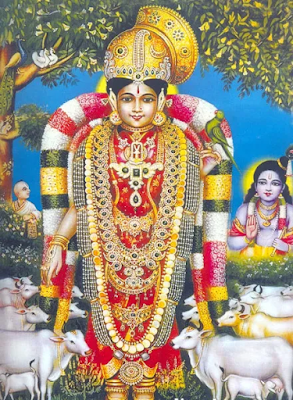
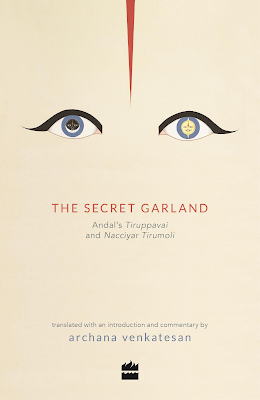
    The Tirruppavai is one of two volumes of poetry composed by the poet-saint Andal (9th century).

    Andal was the only woman among the Alvars, a group of twelve poet-saints who flourished during the seventh and tenth centuries in southern India.

    All of the Alvars were Vishnu worshipers (bhakta).

    Their focus on fervent devotion (bhakti) to a personal deity, expressed via Tamil hymns, changed and revived Hindu religious life.

    Andal's chosen god was Ranganatha, a manifestation of Vishnu who presides over the Shrirangam temple.

    Nonetheless, both of her poetry books are devoted to Krishna, a different incarnation of Vishnu.

    This seeming split might be due to her belief that all incarnations of Vishnu are ultimately the same, or it could be due to the distinction between personal devotion and literary expression.


    The Nacciyar Tirumoli has thirty poems recited by a group of unmarried females who had made a pledge to wash in the river at daybreak during the coldest month of the year.

    This oath has a long history in southern India, when young ladies would swear to find a nice spouse and live happily ever after.

    The females in the poem had made a promise to win Krishna as their spouse.

    The cycle's poems depict many aspects of the natural world at morning, the girls' aspirations for carrying out the pledge, and their return to Krishna's dwelling to awaken him and ask for his favor.

    The concluding poem in the sequence explains the advantages of chanting the text.


    ~Kiran Atma


    You may also want to read more about Hinduism here.

    Be sure to check out my writings on religion here.


    Hinduism - Who Is A Kavi? What Does Kavi Mean?


    The phrase technically means "intelligent man," although it's more usually used to refer to a "poet" or "bard." 

    This additional meaning stems from the pan-Indian assumption that the objective of such poets was to teach and elevate, not only amuse. 


    You may also want to read more about Hinduism here.

    Be sure to check out my writings on religion here.


    Hinduism - What Is A Kavitt?


    In Hindi poetry, a certain meter or beat pattern.

    The Kavitt meter is comprised of four lines of thirty-one syllables each, with the break in each line occurring after the sixteenth syllable.


    You may also want to read more about Hinduism here.

    Be sure to check out my writings on religion here.


    Hinduism - What Is Kavya?


     (“related to kavis”) is an extremely lengthy meter that lends itself well to extensive descriptions using alliteration; the poet-saint Tulsidas utilizes this meter with great effect to depict war scenes in his Kavitavali.

    The most broad term for courtly poetry or lyrical prose, which is usually written in Sanskrit.

    Such kavya was frequently composed and presented in a court environment, where originality and self-revelation were prized less than clever reworkings of classic forms.

    The two-line stanza, which was a self-contained unit in terms of meaning, was the fundamental building block of such poetry.

    Verses were written in a variety of meters, ranging from four to twenty-six syllables per half-line, and were embellished with numerous alamkaras ("figures of speech") to communicate the right mood (rasa) for the subject matter.

    Single-verse epigrams, such as those of Bhartrhari, to long epic poems (mahakavyas), most famously those of Kalidasa, are examples of poetic genres.

    Despite many allusions to religious life, such poetry was written largely for pleasure rather than moral exhortation, a focus that mirrors the court culture in which it was written.

    The Gitagovinda of Jayadeva, a work thought to have been produced in the Jagannath temple in Puri and focusing on devotion to the deity Krishna as lord of the universe, is the lone exception to this pattern. 


    You may also want to read more about Hinduism here.

    Be sure to check out my writings on religion here.


    Secret Whispers of a Moonlit Sky


    Secret Whispers of a Moonlit Sky


    Oh beautiful Moon..
    Oh beautiful Star...
    By the waters of the Heavens, 
    By the air which I breathe, 
    By the fire in my heart, 
    & By the Earth that kisses my feet, 
    Shine your Love eternally and forever more unto my Soul. 
    Blessed be our union, together we shall be made True & Whole )O( 

    ~ Jai Krishna Ponnappan


    When I Saw You Near...

    ☽O☾


    Lady Moon bright and serene,

    Lend us your blessings,

    Let your light surround us.

    Surround us Goddess,

    Surround us with your Love. .

    ☽O☾


    P.S 


    ~When I Saw You Near...~ .
    .
    .
    .
    Oh, ascendant Moon

    When I saw you there

    Resplendent flare, waxed gibbous

    In the shadow of my setting star 
    The woods are burning

    Earth tide is turning

    When I saw you near

    In the shadow of the setting Sunlight

    I couldn't resist your tender.. silver... kiss

    Tears of pearls like the silent drift

    Of petals and love from some magic rose;

    When I saw you near

    I'm glad to make you & my shadow into friends

    You look so beautiful

    Three in one I know we'll meet again & You'll look so beautiful

    Shown affection by 
    The cool breeze of the night

    You'll look so beautiful

    With every valiant step you take

    Wear the dusk as your armor

    The moment my heart got a grip of you

    You can't hide from me that heart so pure

    The sweet soft kiss of those Silver lips

    Dear Moon, full and bright

    Drive those tides insane tonight

    When I see you near

    Show me things like.. witnessing 
    The beauty of this universe 
    All at once in your eyes

    Dear lustrous orb of silver light

    Cloudy skies for weeks have veiled 
    Thy brilliance from my eyes

    But tonight I see thy glowing face 
    Cool breeze caressed by your Silver rays 
    Once more as in the past

    I bask and bathe ripe in moonlight 
    Watching Shadows play upon the grass. & You look so beautiful

    Tonight, When I sleep neath your magic light 
    Inside your lunar womb

    The fragrant breeze of your memory 
    Gathers the sweetest taste

    Oh lustrous orb of silver light

    As ripe and real 
    As the memories we made

    Let your moonbeams touch my soul & You shall look so beautiful and whole again... .
    .
    .
    ~ Jai Krishna Ponnappan .
    .
    .
    ☽O☾