Remembering Gail Omvedt - American Born Indian Author, Sociologist And Human Rights Activist


Gail Omvedt (2nd of August 1941 – 25th August 2021) was an Indian sociologist and human rights activist who was born in the United States. 


She was a prolific writer who authored many books about India's anti-caste movement, Dalit politics, and women's issues. 


  • Omvedt was active in anti-caste and Dalit movements, as well as environmental, farmers', and women's movements, particularly among rural women. 
  • Cultural Revolt in a Colonial Society: The Non-Brahman Movement in Western India, - was the title of Omvedt's dissertation. 


  • Numerous books and essays on class, caste, and gender problems are among Omvedt's scholarly writings. 
  • She worked as a consultant for FAO, UNDP, and NOVIB, as well as a Dr Ambedkar Chair Professor at NISWASS in Orissa, a professor of sociology at the University of Pune, and an Asian guest professor at Copenhagen's Nordic Institute of Asian Studies. 
  • She was the research director of the Krantivir Trust and a senior fellow at the Nehru Memorial Museum and Library. 


Gail Omvedt was born in Minneapolis and received her bachelor's and master's degrees in sociology from Carleton College and UC Berkeley, respectively. 


  • She has been a citizen of India since 1983. 
  • She and her husband, Bharat Patankar, resided in Kasegaon, Maharashtra, with their mother-in-law, Indumati Patankar, and relatives. 
  • She worked as a consultant sociologist on gender, environment, and rural development for the United Nations Development Programme (UNDP), Oxfam Novib (NOVIB), and other organizations in the years leading up to her death. 
  • She worked as a consultant for UN agencies and NGOs, as well as a Professor of Sociology at the University of Pune, an Asian Guest Professor at the Nordic Institute of Asian Studies in Copenhagen, and a Senior Fellow at the Nehru Memorial Museum and Library in New Delhi. 
  • She worked as a Visiting Professor and Coordinator at the University of Pune's School of Social Justice, as well as a Fellow at the Indian Institute of Advanced Study in Shimla. 
  • Dr. B.R. Ambedkar Chair of Social Change and Development at IGNOU has Gail Omvedt as a previous Chair Professor. 


At the age of 80, Omvedt passed away in August, 2021. She is survived by her husband Dr. Bharat Patankar, daughter Prachi, son in law Tejaswi and grand daughter Nia who are settled in the United States.


  • In India, Omvedt worked with social movements such as the Dalit and anti-caste movements, environmental movements, farmers' movements, and particularly rural women. 
  • Shramik Mukti Dal, Stri Mukti Sangarsh Chalval, which works on problems of abandoned women in the Sangli and Satara regions of southern Maharashtra, and the Shetkari Mahila Aghadi, which focuses on issues of women's land rights and political power, were both active in her community. 


Omvedt was critical of Hinduism's holy texts (or what she referred to as "brahminism") for promoting a caste-based society, according to her. 


  • Omvedt criticized the Hindu practice of venerating the Vedas as sacred, in addition to criticizing their seeming support for the caste system. 
  • She expressed her views on the Rigveda in an open letter to then-BJP President Bangaru Laxman, which was published in The Hindu: The Vedas, particularly the Rg Veda, are magnificent literature. 

  • I can only speak from translations, but I'm happy the prohibition on women and shudras reading them has been lifted, and that excellent translations by women and shudras themselves are now accessible. 

    • But to treat them as though they were holy? Check them out for yourself. 
    • The majority of the songs are aimed at achieving victory in battle, cattle rustling, and love-making, among other things. 

  • They celebrate conquest; hymns about Indra and Vrtra sound suspiciously as if the Aryans were responsible for destroying dams built by the Indus valley people; despite archeologists' claims that there is no evidence of direct destruction by "Aryan invasion," the Rg Veda reveals enmity between the Aryans and those they called dasyus, panis, and the like. 


Despite the prevalence of caste-based discrimination, Omvedt claims that Hindutva organizations promote an ethnic definition of Hinduism based on location, lineage, and history in order to build unity across different castes. 


Omvedt agreed with Dalit activists who said during the World Conference Against Racism that caste discrimination is akin to racism in that disadvantaged groups are seen as "biologically inferior and socially harmful." 


  • She has called the United States a "racist country" and advocated for affirmative action; however, she has compared American affirmative action policies favorably to those of India, saying, "It is a sad commentary on the state of Indian industrialists' social consciousness that such discussions have begun in an organized way in the United States before they have been thought of in India itself." 
  • In terms of perceptions of "group performance" in the United States and India, Omvedt wrote: "Whereas the debate in the United States assumes an overall equal distribution of capacity among social groups, in India the assumption appears to be that the unequal showing of different caste groups on examinations, in education, and so on is a result of actual different capacities." She has backed large-dam projects and GMO crops on occasion.


Omvedt's academic writing includes numerous books and articles on class, caste and gender issues, most notably:


  • Cultural Revolt in a Colonial Society: The NonBrahman Movement in Maharashtra (Scientific Socialist Education Trust, 1966)
  • We Shall Smash This Prison: Indian Women in Struggle (1979)
  • "We Will Smash This Prison!.: Indian Women in Struggle " (Zed, 1980)
  • "Violence Against Women: New Movements And New Theories In India" (Kali for Women, 1991)
  • Reinventing Revolution: New Social Movements in India (M.E. Sharpe, 1993)
  • Gender and Technology: Emerging Asian Visions (1994)
  • Dalits And The Democratic Revolution: Dr. Ambedkar And The Dalit Movement In Colonial India (Sage India, 1994)

  • Dalit Visions: the Anticaste movement and Indian Cultural Identity (Orient Longman, 1995)
  • Growing Up Untouchable: A Dalit Autobiography (Rowman and Littlefield, 2000)
  • Buddhism in India : Challenging Brahmanism and Caste (SageIndia, 2003
  • "Ambedkar: Towards an Enlightened India " (Penguin, 2005)
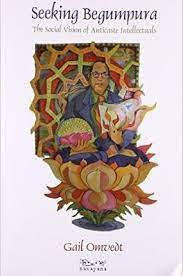
  • Seeking Begumpura: The Social Vision of Anticaste Intellectuals (New Delhi, Navayana, 2009)
  • "Understanding Caste: From Buddha To Ambedkar And Beyond" (New Delhi: Orient Blackswan, 2011)
  • Songs of Tukoba with Bharat Patankar she has published (translations) (Manohar, 2012)
  • Jotirao Phule and the Ideology of Social Revolution in India.


Awards And Recognition:


  • Matoshree Bhimabai Ambedkar Award (2012)
  • BA received Magna Cum Laude, with Distinction in Senior Comprehensive Examinations
  • PhD qualifying examinations passed with Distinction
  • Honorary Woodrow Wilson Fellowship, 1964–65
  • Fulbright Fellowship as Tutor in English in India, June 1963-March 1964
  • University of California Graduate Fellowships, 1964–65, 1965–66
  • American Institute of Indian Studies, Junior Fellowship for PhD research in India on “The NonBrahman Movement in Maharashtra,” January–December 1971
  • American Association of University Women, Fellowship for research on “Women’s Movement in India,” January–December 1975
  • Savitribai Phule Puraskar, Padmashri Kavivarya Narayan Surve Sarvajanik Vacanalay, Nashik, 2002
  • Dr. Ambedkar Chetna Award, Manavwadi Rachna Manch Punjab, August 2003
  • ABP Majha Sanman Purskar, 2012
  • Vitthal Ramji Shinde Award, April 2015


You may also want to read more about Hinduism here.

Be sure to check out my writings on religion here.


Hinduism - What Is Bijak?


    Bijak means "inventory." 


    The Adigranth and the manuscripts of the religious institution Dadupanth include the other two major collections of poetry attributed to the poet-saint Kabir (mid-15th century?). 


    • Kabir is the most well-known of the sants, a group of poet-saints from central and northern India who share several concepts, including a focus on individualized, interior religion leading to a personal experience of the divine, a dislike for external ritual, particularly image worship, faith in the power of the divine Name, and a tendency to disregard traditional caste distinctions. 
    • In terms of established religious rituals and authority, Kabir is the most iconoclastic of all the sants. 
    • He always stresses the need of personal seeking and fulfillment. 


    What Is The Bijak?


    The Bijak is the scripture of the Kabirpanth, a religious group claiming to be Kabir's followers, which is noteworthy given the nature of Kabir's message. 


    • Certainly, the idea of declaring Kabir the founder of anything, or of his words acquiring the authority of a scripture, would have been rejected by him. 
    • The Bijak includes a variety of poems, including brief epigrams that have become proverbial wisdom, lengthier chaupai stanzas, and shorter two-line poetry (doha). 
    • The Bijak has linguistic characteristics that place it in the eastern portion of the Hindi language area, thus its popular moniker of "eastern" recension. 


    NOTE: Linda Hess and Shukdev Singh (trans. ), The Bijak of Kabir, 1983, contains translations of the text itself.


    Kabir Bijak Pdf 


    Kabir Bijak Pdf - In English


    Kabir Bijak Pdf - In Hindi

    Frequently Asked Questions:


    What is Bijak according to Kabir?

    A document containing holy writings is referred to as a bijak. It is also one of the oldest important writings in contemporary Hindi. According to Kabir, the True God is with the individual who is following the path of justice, views every living thing as his own self, and maintains a passive detachment from worldly matters.


    How many parts are there in Bijak?

    All renditions of the Bijak include a fourth portion that contains other folk song types in addition to the three major sections known as Ramaini, Sabda, and Sakhi.


    What are the followers of Kabir called? Name the three main sections of the Bijak?

    The Bijak is divided into four sections: Ramain, Shabda, Skh, and another segment with other folk music.


    What is Bijak?

    The sacred text for adherents of the Kabirpanthi faith, Bijak is the most well-known of the Kabir's collections. There are also other folk tunes in it. One of the first important texts in contemporary Bagheli is the Bijak.


    Kabir worships which God?

    He adored the Nirguna form of God, whom he refers to by several names, including Rama, Allah, Hari, Sain, and Sahib. Thus, Kabir is the subject of all the claims.


    What is Bijak in history?

    The word "Bijak" refers to a book that contains religious passages. Kabir Das was an Indian mystic poet and saint who lived in the 15th century. His poetry may be found in the Sikhism holy book Guru Granth Sahib and his works had an impact on the Bhakti movement in Hinduism.


    What does the Bijak mention as two main teachings of Kabir?

    (1) He stressed the word "Bhakti." (2) According to him, only true love and devotion to God, which he termed Bhakti, could free a person from the cycle of life and death and bring them closer to God.


    What were the major four teachings of Saint Kabir?

    rejection of the great religions. criticism of all manifestations of Brahmanical Hinduism and Islam's exterior worship. criticism of the caste system and the priesthood classes. belief in a supreme being without form.


    What was Kabir's followers known as?

    Its Kabir panthis, or members, number in in the neighborhood of 9.6 million. Up from 843,171 in the 1901 census, they are distributed across north and central India as well as abroad with the Indian diaspora.


    What is Bijak? how it is divided?

    Bijak: A bijak is a collection of Kabir's poetry. It is divided into three major portions, Sakhi, Ramaini, and Shabda.


    Who wrote the Bijak?

    For the Kabir Panthis, the holy text known as Bijak was written by Kabir Das. Dohas and poetry of Kabir made up the majority of bijak.


    What is the meaning of ultimate reality concept of Kabir?

    By using a variety of traditions, including those from Islam, Kabir portrayed the "Ultimate Reality," depicting it as Allah, Khuda, Hazrat, and Pir. The names Alakh, Nirakar, Brahmana, and Atman were all adopted from the Vedantic traditions. outline of a heart


    What is God according to Sant Kabir?

    According to Sant Kabir, the genuine God is with the one who is on the road of righteousness, loves all living things as his own, and is uninvolved in the events of this world.


    What was the theme of Kabir's illusion and reality?

    A typical human is caught in the struggle between illusion and reality. The One Inexpressible God, the One and Only Truth, is manifestly incomprehensible. In this stanza, Kabir asserts that the only way to break free from the traps of illusion is to become conscious and govern one's affairs with awareness.


    Where is Kabir buried?

    In January 1518, which is known as Magh Shukl Ekadashi in Hindu tradition, the enlightened teacher Kabir departed his body in Maghar. This was followed by Vikram Samvat 1575. He was equally adored by Muslims and Hindus, and after his passing, each religion constructed a mazaar (tomb) and a samadhi in his honor.


    Why was Kabir abandoned?

    His mother was said to have been a Brahman who became pregnant after visiting a Hindu temple, according to one version. She left Kabir behind since she wasn't married, and a Muslim weaver later discovered and adopted him.


    What was Kabir's poetry influenced by?

    Though he was critical of certain parts of both religions, Kabir's poetry incorporates elements of both Islam and Hinduism. The Adi Granth, a collection of Sikh texts, contains some of his poems. His mystical poetry are rooted on the specifics and worldly elements of daily existence.


    Why Kabir Doha is famous?

    Songs known as padas, rhymed couplets known as dohas, words of wisdom known as shabd, and "witnesses" known as sakhis are among Kabir's works. Kabir did not adhere to the practices of idol worship or the caste system. His lyrics are straightforward and easy to grasp, and his ideology is founded on total devotion to one God.


    What is the contribution of Kabir to Bhakti movement?

    Kabir Das made an effort to harmonize the many faiths by presenting a universal path that all people might follow. He asserts that there is a connection between the two spiritual laws and every life (Jivatma and Paramatma).


    References And Further Reading:


    1. Grierson, George A. Review of The BÄ«jak of KabÄ«r, by Ahmad Shah. The Journal of the Royal Asiatic Society of Great Britain and Ireland, 1918, 151–60. http://www.jstor.org/stable/25209368.
    2. Meena, Pooran Lal. “THE ANCIENT REMAINS ON THE BIJAK-KIPAHADI ‘THE GREAT CENTRE OF BUDDHISM.’” Proceedings of the Indian History Congress 77 (2016): 928–32. https://www.jstor.org/stable/26552725.
    3. Gold, Daniel. History of Religions 43, no. 1 (2003): 80–81. https://doi.org/10.1086/381332.
    4. VAUDEVILLE, CHARLOTTE. “KABĪR’S LANGUAGE AND LANGUAGES, HINDUĪ AS THE LANGUAGE OF NON-CONFORMITY.” Indo-Iranian Journal 33, no. 4 (1990): 259–66. http://www.jstor.org/stable/24655578.
    5. Ranjan, Purnendu. “HISTORICAL EVIDENCE FOR THE STUDY OF KABIRPANTH.” Proceedings of the Indian History Congress 68 (2007): 1041–47. http://www.jstor.org/stable/44147909.
    6. Singh, R.P. “Kabir: The Articulator Par Excellence of Indigenous Indian Modernity.” Social Scientist 47, no. 5/6 (2019): 71–78. https://www.jstor.org/stable/26786189.
    7. Kalyani, Kalyani. “Tathagata Buddha Songs: Buddhism as Religion and Cultural-Resistance Among Dalit Women Singers of Uttar Pradesh.” CASTE: A Global Journal on Social Exclusion 1, no. 2 (2020): 51–62. https://www.jstor.org/stable/48643564.
    8. Cort, John. Review of WILL THE REAL KABIR PLEASE STAND UP?, by LINDA HESS and SUKHDEV SINGH. Journal of South Asian Literature 20, no. 1 (1985): 249–50. http://www.jstor.org/stable/40872765.
    9. Hess, Linda, and Sukhdev Singh. The Bijak of Kabir. Motilal Banarsidass, 2015.
    10. The Bijak of Kabir. Oxford University Press, USA, 2002.
    11. Lorenzen, David N. Kabir legends and Ananta-das's Kabir Parachai. SUNY Press, 1991.
    12. The Bijak of Kabir. A. Shah, 1917.
    13. Lorenzen, David N. "Traditions of non-caste Hinduism: the Kabir Panth." Contributions to Indian Sociology 21, no. 2 (1987): 263-283.
    14. Grierson, George A. "The BÄ«jak of KabÄ«r-The Bijak of Kabir. Edited by the RevAhmad Shah. Cawnpore, 1911.-The Bijak of Kabir. Translated into English by the RevAhmad Shah, according to his edited Hindi text published in 1911. Hamirpur, 1917." Journal of the Royal Asiatic Society 50, no. 1 (1918): 151-160.
    15. Lorenzen, David N. "Dissent in Kabir and the Kabir Panth." Devotion and Dissent in Indian History (2014): 169-187.

    You may also want to read more about Hinduism here.

    Be sure to check out my writings on religion here.


    Hinduism - What Is The Meaning Of Bindu?


    Bindu is a Hindi word that means "drop." 


    The bindu is the term for the dot at the exact center of the shrichakra, which is a Shrividya symbolic diagram (yantra) used in worship in the Shrividya school, a branch of the esoteric ritual tradition known as tantra


    • The shrichakra is made up of nine interlocking triangles, four of which point up and five of which point down, encircled by a double sequence of lotus petals and round and angular outer walls. 
    • The bindu represents the ultimate oneness of Shiva and Shakti, as well as the unity of all reality. 


    The Secret of the Three Cities, by Douglas Renfrew Brooks, was published in 1990 and contains more material.


    A literal translation of the Sanskrit word "bindu" is "point" or "dot." Bindu may represent a wide range of things depending on the context, but in Indian faiths and philosophies, it is generally seen as the place where all creation originates and finally unites.


    Bindu is seen in tantra as an expression of the greatest awareness and is a representation of both Shiva and Shakti, the divine masculine and feminine energies, respectively. 

    Bindu may also be used to describe the void that gives rise to every holy music.

    The word's feminine equivalent, bindi, refers to a tiny decorative dot that is applied to the forehead as part of a Hindu ceremony of devotion.

    The symbol for bindu, the beginning of the cosmos and the source of all awareness, is a bindi dot. 

    The bindu is often seen in the middle of yantras and mandalas (ritual patterns that are frequently round or geometric).


    Bindu is the name of a drishti, or point of gaze, in yoga that is located in the middle of the eyebrows. 

    It is also sometimes known as the moment of entry into pure awareness or the convergence of the yogic disciplines of contemplation, concentration, and meditation.

    Experience of bindu and its subsequent transcendence result in samadhi, or joyful union with the greater Self, on a personal level. 

    At the most fundamental level, when the physical body dies, all existence returns to bindu, where it all began.


    The eighth chakra, known as the bindu chakra, is acknowledged by tantric yoga and is situated five inches below the top of the skull at the back of the head. 

    When in equilibrium, the bindu chakra promotes general physical, emotional, and spiritual health and energy and brings a feeling of satisfaction and direction.

    According to the Tantric tradition, the bindu chakra is said to contain a particular nectar (amrit) that may assist the practitioner be freed from pain.


    Yoga poses such as the headstand stance (sirsasana) and shoulder stand pose (salamba sarvangasana) are said to awaken the bindu chakra.

    Bindu may also refer to the area on the back of the head where Brahmins develop their distinctive tuft of hair in Tantra. 

    This point, which is symbolized as a crescent moon with a white drop, is located between the third-eye (ajna) chakra and the crown (sahasrara) chakra.

    It is said to be the physical incarnation of everything that has ever been, including awareness. 

    Bindu may be thought of as a basic representation of semen.

    This insight explains how the idea of bindu's individualized cosmic, universal potential works. 

    This emphasizes the idea that Bindu is the source of all creation.


    Hasta Yoga: Preserving Life's Essence.

    The primary goal of traditional hatha yoga is to protect bindu, or the essence of life. 

    It was believed that bindu leaked from the cranium and was consumed by the digestive fire in the stomach. 

    Our supply of bindu depletes as we age, as we become older. Thus, by protecting bindu, we may live longer. 

    The idea of bindu has lost favor in the current day as attention has shifted to physical fitness and western anatomy.


    What are the two techniques used to preserve Bindu or this essence? 

    Many of the yoga practices we engage in are influenced by these two approaches:

    1. inverting the body (a process known as viparitakarani, or "inversion"), 
    2. and bringing bindu upward by inhaling into the "central channel." 


    How can viparitakarani mudra be used to preserve the Bindu?


    It is common to interpret viparitakarani as "inverted action," "the reverser," or just "inversion." 

    We only really learn to put the head below the abdomen from ancient literature. 

    Thus, headstand, shoulder-stand, and the mudra known as viparitakarani are all acceptable. 

    Its purpose is to stop gravity's attraction on Bindu, which is downward.


    How to bring Bindu into the body's central nadi or channel?


    Mudras are hand positions used to bring bindu upward in the body's center channel. 

    Traditional hathayoga utilizes 10 or 11 mudras, some of which have been lost or transformed into asanas. 

    They are often performed while sitting, with one or both heels pressing on the perineum and using some kind of breath control. 

    This is supposed to stop bindu from tumbling and even pull it upward.

    The idea of kundalini, a potent force that resides latent at the base of the spine, gradually supplanted the idea of bindu as the ages passed. 

    Similar to as they did with bindu, the same methods are employed to "awaken" this energy and bring it upward.


    Frequently Asked Questions:


    What does Bindu mean?

    Bindu is a Sanskrit word that translates to "point," "drop," or "dot."


    Is Bindu a Chakra?

    This is an advanced technique for the secondary chakra known as the Bindu.


    What does the red dot or Bindi on Indians mean?

    A bindi is the name of the marking. Furthermore, it is a Hindu custom that originated in the third and fourth centuries. Women often wear bindis for religious reasons or to signify their marital status. However, the bindi is now gaining popularity as a beauty mark among women of various ages.


    How can I activate the bindu chakra?

    According to the Tantric tradition, the bindu chakra is said to contain a unique nectar (amrit) that aids the yogi in attaining enlightenment. 

    Yoga poses that open the bindu chakra include shoulder stand and headstand. 

    The khecari mudra and ujayii pranayama are also helpful for opening this chakra.


    What is the third eye chakra?

    The ajna (or brow) chakra is referred to as the third eye in Indian spiritual traditions. 

    The gateway to the inner regions and places of higher awareness is referred to as the third eye. 

    The third eye is a common spiritual emblem for enlightenment.


    How is Bindu or spiritual essence preserved and kept safe?

    Two techniques may be used to preserve this essence: inverting the body (a process known as viparitakarani, or "inversion"), and bringing bindu upward by inhaling into the "central channel." Many of the yoga practices we engage in are influenced by these two approaches.


    How does Bindu meditation work?

    Bindu is the name of a drishti, or point of gaze, in yoga that is located in the middle of the eyebrows. 

    It is also sometimes known as the moment of entry into pure awareness or the convergence of the yogic disciplines of contemplation, concentration, and meditation.


    ~Kiran Atma


    You may also want to read more about Hinduism here.

    Be sure to check out my writings on religion here.