YOGA AND AESTHETIC PHILOSOPHY.


Aesthetic philosophy is the study of sensuous experience, how we judge beauty, and how this affects our understanding of reality. 


"The term 'aesthetics,' which comes from the Greek word aesthesis ('perception,' was created in the middle of the eighteenth century by the German philosopher Alexander Baumgarten. 

He intended 'the science of sensory knowledge,' yet the word was rapidly restricted to a specific area of sensory knowledge and regarded as 'the science of sensory beauty.'" Cooper, 1997, p. 1. 

Aesthetic appreciation, which is based on sensory processing, is critical for how physical yoga is used to discern material reality, but it also has implications for understanding the transcendent. 

The aesthetics of current physical yoga practice are examined here by comparing and contrasting two primary technical approaches: one that works with approximation stillness and the other that tries to achieve continuous fluid movement. 


The possibilities and propositions of yoga, which are founded on stillness, are well-represented in the literary canon, yet the exact strategies for achieving them are unclear. 


There is also a lot of literature on the nature of "activity," which has an impact on how yogic movement might be done. 


Stillness is often connected with asana and movement with vinyasa in contemporary yoga, and these words will be used interchangeably throughout to indicate which of these techniques is being explored. 


The historical concepts of yoga are undeniably essential, yet they may become an impediment to the live growth of yoga's practices and philosophy if they are examined without caution. 

Ancient writings' aphoristic form promotes interpretation, but these interpretations seem to be based on the idea that the serious issues yoga presents have already been fully resolved. 


Physical yoga discoveries are a necessary and ongoing search for new perspectives, informed by fresh and provocative information and subject to constant modification. 


This philosophical perspective provides the writers' experiences and understanding of yoga practice and teaching (since the 1970s). 


It presents a theory to explain these sensations and investigates them via a range of aesthetic and historical reflections on the nature of reality (later chapters give ways and strategies to research it). 

The mystical, old, and complicated philosophic traditions associated to yoga are rife with speculation and remain unsolved. 


Rather than abandoning the teachings of earlier generations of yogis, the aesthetic philosophy is a method of making sense of this intriguing argument from a contemporary, Western, scientific viewpoint.


References & Further Reading: 


Bhaktivedanta Narayana Gosvami Maharaja, Sri Srimad and Śrīla Bhaktivinoda Ṭhākura, Pure Bhakti: Bhajana-rahasya, 2nd Edition. New Delhi: Gaudiya Vedanta Publications, 2015.

Birch, Jason. “The proliferation of asana-s in late-medieval yoga texts.” In Yoga and transformation historical and contemporary perspectives, edited by Karl Baier, Philipp A. Maas, and Karin Preisendanz, 101–180. Vienna: Vienna University Press, 2018.

Coomaraswamy, Ananda K. The dance of Siva: essays on Indian art and culture.
New York: Dover, 1985.

Cooper, David E. “Introduction.” In Aesthetics: the classic readings, edited by David E. Cooper, 1–10. Oxford: Blackwell Publishers, 1997.

Eliade, Mircea. Yoga immortality and freedom, translated by Willard R. Trask. 
Princeton: Bollingen Foundation, Princeton University Press, 1958.

Herbermann, Charles, ed. “The Absolute.” In Catholic Encyclopedia. New York: Robert Appleton Company, 1913.

Jakubczak, Marzenna. “The purpose of non-theistic devotion in the classical Indian tradition of Sāmkhya-Yoga.” Argument, vol. 4 (January, 2014): 55–68.

Jaspers, Karl. The origin and goal of history, translated by Michael Bullock. London: Routledge, 1955.

Johnson, Williams J., translator. The Bhagavad Gita. Oxford: Oxford University Press, 2009.

Lewis-Williams, David and David Pearce. Inside the neolithic mind. London: Thames and Hudson, 2005.

Mallinson, James and Mark Singleton. Roots of yoga. New York: Penguin Books, 2017.

McGilchrist, Iain. The master and his emissary: the divided brain and the making of the Western world. New Haven: Yale, 2009.

Rama, Swami. The science of breath. Delhi: The Himalayan Institute Press, 1979.

Rama, Swami. Sacred journey: living purposefully and dying gracefully. Delhi: Himalayan Institute Hospital Trust, 2002.

Rees, Martin. Our cosmic habitat. Princeton: Princeton University Press, 2001.

Sinh, Pancham. The Hatha Yoga Pradipika: Sanskrit text with English translation. New 
Delhi: Munshiram Manoharlal Publishers, 1915.

Sinha, Phulgenda. The Gita as it was: rediscovering the original Bhagavad Gita. LaSalle: Open Court, 1986.

Stark, Rodney and William Sims Bainbridge. The future of religion. Berkeley: University of California Press, 1985.

Tarnas, Richard. The passion of the Western mind: understanding the ideas that have shaped our world view. London: Pimlico, 1991.

Vasu, Rai Bahadur Srisa Chandra, translators. Siva Samhita. New Delhi: Munshiram Manoharlal Publishers, 1914–15.


Parapsychology - What Is Abred In Celtic Cosmology?


In Celtic cosmology, the innermost of three concentric rings represents the entirety of existence.

Abred portrays the stage of struggle and progress in the fight against Cythrawl, the evil force.

(Also see Barddas.) 


Kiran Atma

You may also want to read more about parapsychology and occult sciences here.


Parapsychology - What Is Absent Healing?


Healing at a distance from the subject, sometimes through the subject providing some associational link, such as a written request for healing, or in reverse, by the healer sending a piece of material to be placed on the subject's body where the healing is required, or simply by the healer or a band of healing associates praying for the subject's recovery.

Many individuals today, whether Christians, metaphysicians, or contemporary spiritualists, attend prayer sessions in which they pray for the recovery of petitioners who write to them for assistance.

(See also Faith Healing and Psychic Healing.) 


Kiran Atma

You may also want to read more about parapsychology and occult sciences here.



Parapsychology - What Is The Absolute In Theosophy?


Theosophists claim to know nothing more than the existence of the Absolute, the Logos, the Word of God.

The lowest forms of this Being that humans are capable of experiencing are the universes with their solar systems.

Human beings are emanations of the Absolute, with whom they shall be reunited at some point.


Kiran Atma

You may also want to read more about parapsychology and occult sciences here.


Parapsychology - What Is The Abteilung für Psychologie und Grenzgebiete der Psychologie des Psychologischen Instituts der Universität Freiburg I. Br In Germany?


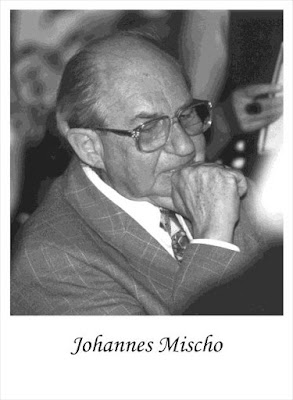
Under the guidance of Johannes Mischo, this parapsychology laboratory was established at the University of Freiburg in Germany.


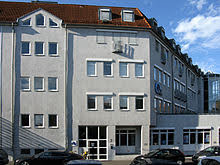
The lab comprises a library and an experimental program, and it collaborates closely with the Institut für Grenzgebiete der Psychologie und Psychohygiene (Institute for Border Areas of Psychology and Mental Hygiene).


Address: Belfortstr. 16, D-79085, Freiburg I. Br., Germany.


Kiran Atma

You may also want to read more about parapsychology and occult sciences here.


Parapsychology - Who Was Abu Yazid al-Bestami?


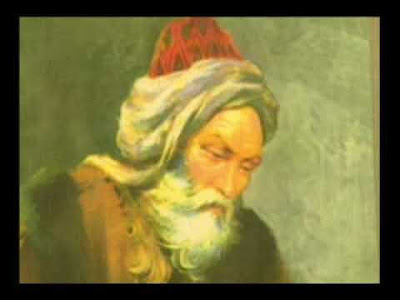
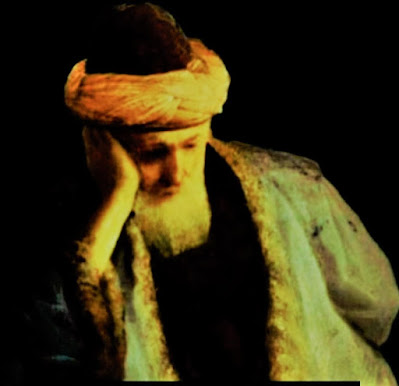
Abu Yazid al-Bestami (ca. 801–874) was a Muslim prophet who lived between the years of 801 and 874.

Notable Islamic mystic who created the Sufism ecstatic school.

He was born in the city of Bestam in northern Persia and was known as al-Bestami.

Hindu Vedanta is considered to have influenced his idea that the spiritual search may lead to total absorption and connection with deity.

His heterodoxy was disrespectful to orthodox Islam in this regard.

Starting with the Sufi notion of approaching god in the same way as a lover approaches his or her beloved, al-Bestami believed that love was a barrier in and of itself.


He abandoned traditional mosque worship, Mecca pilgrimages, and even mystical activities like austerity and meditation.

Al-Bestami was credited with a number of miracles.


Kiran Atma

You may also want to read more about parapsychology and occult sciences here.


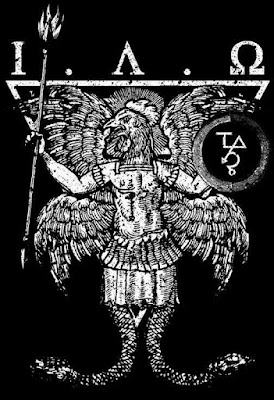
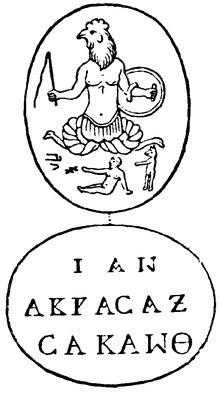
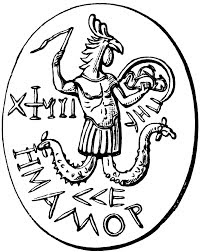
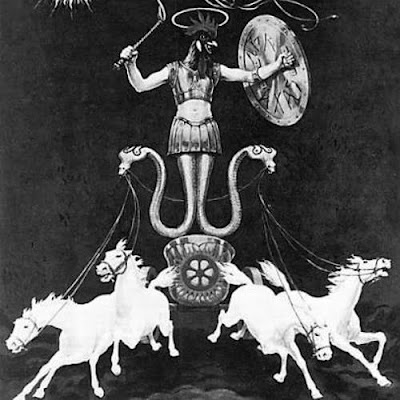
Parapsychology - Who Is Abraxas?


Abrasax was the supreme deity of the Basilidian sect of Gnostics in the second century, who held that Jesus Christ was just a phantom brought to Earth by him.


They thought his name held significant secrets since it was made up of the seven Greek letters that make up the number 365, the number of days in a year.

They believed Abraxas commanded 365 gods, to whom they ascribed 365 qualities, one for each day.


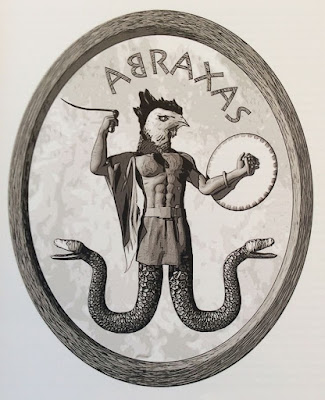
Older mythologists see Abraxas as an Egyptian deity, whereas demonologists depict him as a demon with a king's head and serpents for feet.

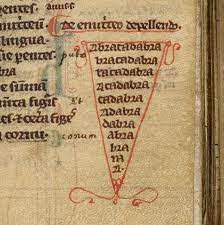
Abraxas is shown with a whip in his hand on ancient amulets, and his name inspired the magical term abracadabra.


Further Reading:


Drury, Nevill, and Stephen Skinner. The Search for Abraxas. London: Spearman, 1972.


Kiran Atma

You may also want to read more about parapsychology and occult sciences here.


Parapsychology - What Is Abracadabra?


A

AB

ABR

ABRA

ABRAC

ABRACA

ABRACAD

ABRACADA

ABRACADAB

ABRACADABR

ABRACADABRA


According to Julius Africanus, both ways of pronouncing this term were equally effective.

It was employed as a magic to heal asthma, according to Serenus Sammonicus.

Abracalan, or aracalan as alternative spelling, is claimed to have been the name of a deity in Syria and a magical emblem for the Jews.


Further Reading:


Lévi, Éliphas. Transcendental Magic. London: Rider, 1896. Reprint, New York: Samuel Weiser, 1970.


Kiran Atma

You may also want to read more about parapsychology and occult sciences here.


Parapsychology - Who Was Albert Abrams (1863–1924)?


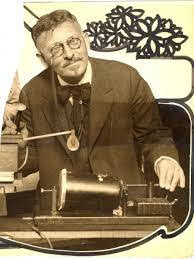
Albert Abrams (1863–1924) was a San Francisco physician who developed the radionics, electronic medicine, or electronics method of diagnosis and therapy.

Abrams, a renowned physician, earned his medical degree from Heidelberg University in Germany and served as a professor of pathology at Cooper Medical College in San Francisco, California.

He thought he'd uncovered that sick tissue emitted an aberrant wave while working on cancer patients.

His work also led to the development of the oscilloclast, an electrical instrument that uses an electronic theory of disease to generate oscillations involving changes in skin potential.

Abrams' contraption has been dubbed "black boxes" in the years after it was developed.

The British Royal Society of Medicine released a negative report on Abrams in 1922, only two years before his death, and his work almost died out. Ruth Drown took it up in the 1930s and published it.

The American Association for Medico-Physical Research continued his research.


Further Reading:


Abrams, Albert. New Concepts in Diagnosis and Treatment. San Francisco, Calif.: Physico-Clinical, 1922.

Barr, James. Abrams’ Methods of Diagnosis and Treatment. London, 1925.

Scott, G. Laughton. ‘‘The Abrams Treatment’’ in Practice: An Investigation. London: Bless, 1925.

Stanway, Andrew. Alternative Medicine. New York: Penguin, 1982.


Kiran Atma

You may also want to read more about parapsychology and occult sciences here.


Parapsychology - Who Is Stephen Irwin Abrams (15th July, 1938–21st Nov. 2012)?


Extrasensory activation of conditioned reflexes in hypnotic individuals was researched by Stephen Irwin Abrams, a  Psychologist.

He was born in Chicago, Illinois, on July 15, 1938, and attended the University of Chicago and Oxford University in England.

Abrams has worked as a visiting research fellow at Duke University's Parapsychology Laboratory in Durham, North Carolina; as president of the University of Chicago's Parapsychology Laboratory (1957–60); and as a founder associate of the Parapsychological Association.

In 1964, he presented his work "Extrasensory Behavior" at the Seventh Annual Congress of the Parapsychological Association in Oxford.


Kiran Atma

You may also want to read more about parapsychology and occult sciences here.


Parapsychology - Who Was Abraham The Jew (1362–1460)?


Little is known about this German Jew who lived about 1400 and was an alchemist, magician, and philosopher.


The majority of what is known comes from a manuscript held in the Archives of the Bibliotheque de l'Arsenal in Paris, a repository of esoteric texts.


The manu script, written completely in French, claimed to be a translation from Hebrew, and the handwriting style suggests that the writer lived in the early eighteenth century, if not earlier.


The French script has a distinct illiteracy to it, with punctuation that is either incorrect or visibly lacking.

Abraham was most likely a Mayence native, and he was born about 1362.

His father, Simon, was a seer and magician, and the youngster began his esoteric studies under his father's tutelage, then later under the tutelage of another teacher, Moses, whom Abraham characterizes as "truly a nice man, but utterly unaware of The True Mystery, and of The Veritable Magic." After that, Abraham chose to travel to further his studies.

He traveled via Austria and Hungary with his buddy Samuel, a Bohemian by origin, through Greece, and then to Constantinople (now Istanbul), where he stayed for two years.

After that, Abraham journeyed to Arabia, a well-known center of mystic study at the time, and then to Palestine and Egypt.

In Egypt, he met Abra-Melin, a great Egyptian philosopher, who entrusted him with important papers and revealed a lot of vital secrets.

Abraham then left Egypt for Europe, finally settling in Würzburg, Germany, where he got extensively immersed in alchemy study.

He had three daughters and two sons, the older called Joseph and the younger Lamech, after marrying a lady who seems to be his cousin.

He trained both sons in esoteric matters, and he bestowed a dowry of 100,000 golden florins on each of his three daughters.

He claimed to have gained this substantial fortune, as well as other huge wealth, while traveling as an alchemist.

He was well-known and was asked to do magical deeds in front of many wealthy and powerful individuals, including Emperor Siegmund of Germany, the bishop of Würzburg, King Henry VI of England, the Duke of Bavaria, and Pope John XXII.

There are no details concerning the remainder of Abraham's life, and his death date is unknown, although it is widely assumed to have occurred about 1460.

The Book of the Sacred Magic of Abra-Melin, as bequeathed by Abraham the Jew unto his son Lamech, is the title of the book that supplied this biographical information.

This title is deceptive and inaccurate, since Abra-Melin had no involvement in the work's introductory section, which includes a description of Abraham's boyhood and early journeys in quest of enlightenment, as well as guidance to a young man striving to become expert in esoteric arts.

The second section, on the other hand, is either based on the records given to Abraham by Abra-Melin or on the secrets revealed to Abraham by the Egyptian sage.

"How Many, and What are the Classes of Veritable Magic?" is one of the chapters in this section of the manuscript, which deals with the fundamentals of magic in general.

"What we Should Consider Before Conducting the Operation," "Concerning the Convocation of the Spirits," and "How We Should Conduct the Operations." The third and last section of the paper is primarily taken directly from Abra-Melin, and the author, avoiding theoretical matters as much as possible, focuses on practical magic practice.

First and foremost, he explains how to "get various Visions," "retain the Familiar Spirits, bound or free, in whatever shape," and "excite Them bugs." In other chapters, he talks of reviving the dead, transforming into "divers shapes and forms," flying through the air, smashing buildings, finding robberies, and swimming underwater.

The author discusses the thaumaturgic treatment of leprosy, dropsy, paralysis, and a variety of other maladies including fever and seasickness.

He also gives tips on "How to Be Loved by a Woman," as well as how to gain the favor of popes, emperors, and other powerful figures.

In "How to induce Armed Men to Appear," he answers the question of summoning visions and explains how to conjure "Comedies, Operas, and all types of Music and Dances." Many of these achievements are accomplished via the use of Kabalistic letter squares.

Many distinct symptoms of this kind are detailed in the book.

As described in this book, Abraham's demeanor and temperament depict a guy who scorns most other magicians and speaks with great mockery of practically all spiritual works other than his own and those of his hero, Abra-Melin.

Abraham harshly condemns anybody who denies the faith in which they were reared, claiming that no one who does so would ever be able to master magic.

Nonetheless, Abraham exhibits minimal selfishness throughout the writings and seems to have labored for accomplishment in his skill in order to use it for the good of humanity as a whole.

His works also indicate a strong conviction in the existence of a higher self in every individual, as well as a strong desire to develop it.

(Also see Nicholas Flamel.) 


Further Reading:


The Book of the Sacred Magic of Abra-Melin the Sage. Translated by S. L. MacGregor-Mathers. Chicago: De Laurence, 1932. Reprint, New York: Causeway Books, 1974.


Kiran Atma

You may also want to read more about parapsychology and occult sciences here.


Parapsychology - Who Was Abou-Ryhan?


Mohammed ben-Ahmed was an Arabian astrologer who is credited with creating judicial astrology.

Many legends from the East claim that he had a supernatural ability to predict the future.


Kiran Atma

You may also want to read more about parapsychology and occult sciences here.


Yoga For The Inner And Outer Body.


The development of the higher or inner phases of Yoga consciousness should go hand in hand with the physical practices of Yoga, so that all of the practices and processes of Yoga, which are limiting within themselves, become an integrated activity uniting body, emotions, and mind with the Higher Nature


Yoga encompasses a wide range of topics. 


  • Yoga appeals to the logical mind because it gives full play to reason in its aphorisms and directions, with reasonable explanations for theory and practice. 
  • It is scientific because it takes a balanced approach to man's requirements and teaches practical applications of focus and meditation in daily life. 
  • Yoga permits pleasant emotions to flourish while suppressing those that are distracting, disruptive, and harmful in human nature. 
  • Friendship, compassion, empathy, unitive sentiments, and love are all attributes associated with Yoga's higher path. 


The practical component of Yoga is concerned with Kriyas or Pratcriyas, which are practices and procedures that deal with the "man within," the conscious mind, governing and regulating the body, emotions, and lower mind. 


Yoga is sometimes referred to as "mind over matter" because of its control. 


To achieve "four-fold awareness," the conscious mind must be employed. 


  • The third and fourth phases of the Asthanga, or Raja Yoga, are Asana and Pranayama


These activities help people become more conscious of their bodies, their functions, and their roles in personal development. 

The result is vigorous well health as a side effect. 


The Bahiranga, or outside limbs of Yoga practice, are represented by the four phases of Yama, Niyama, Asana, and Pranayama. 


These outer limbs serve as a solid basis for the higher practices, such as Antaranga or Samyarna. 


  • Otherwise, one's existence is founded on the changing sands of bad health, emotional and mental uncertainty, which are so frequently the spiritual aspirant's demise. 
  • Pratyahara, Dharana, Dhyana, and Samadhi are the Antaranga or Samyarna stages of Yoga. 


Each one develops a distinct kind of spiritual awareness. Some people refer to these stages as "above the brow" yoga exercises, and they prefer to focus only on them, believing that they constitute the core of Raja Yoga. 


"On the authority of our Spiritual forefathers and Ancestors, I declare that there can be no Raja Yoga without Hatha Yoga."


In this scenario, Raja Yoga refers to the upper Antaranga, whereas Hatha Yoga refers to the Bahiranga's basis. 


  • Sensory control, which culminates in the withdrawal of the senses from the object of their attachment, is known as pratyahara. 


In fact, most people become aware of how their senses have "misused" their bodies. 


  • Kriyas in many forms gradually pull the senses away from the world to which they are naturally drawn. 
  • By nonviolently restraining the senses, the Yogi may direct his mental focus to the Antarakarana, the inner faculty of mind activity, and acquire Dharana, or concentration. 
  • This level is about being aware of how the mind can govern emotions and perceptions while also transcending into a higher mental state. 


"Yoga Chitta Vritti Nirodha: Yoga starts with the limitation of the subconscious mind's activity," Patanjali correctly said. 


Until one becomes aware of the lower mind's disloyal activities, he is subject to its whims and irrational behavior. 


  • What seems to be a method of "pulling oneself up by one's own boot straps" is instead an instance of "mind elevating mind." 

"The Self is employed to raise the self," Sri Krishna says in the Srimad Bhagavad Gita


  • Dhyana, or meditation, is the practice of achieving free-flow concentration. 
  • Meditation is not the same as "thinking," as many people believe. 


Cosmic Consciousness or Universal Awareness is what Samadhi is. 


It, like other parts of existence, has various features and phases, ranging from the sudden and brief to the natural and limitless. 


  • Sabikalpa Samadhi refers to the early stages, whereas Nirbikalpa Satnadhi refers to the latter or deeper stages. 


Thus a Jivan Mukhta, a free-soul, or a realized one, is the being experiencing this condition. 


Kiran Atma


Yoga Asanas - What Are Hathenas Or Hathaats Or Forced Methods?


Hathenas, also known as Hathaats, are body-forcing procedures that are designed to induce a certain impact on the body. 


Many of the asanas in Hatha Yoga are classical. Asanas, or postures, Kriyas, or movements, and Mudras, or neuromuscular tensors, are all used in Hatha Yoga to stimulate glandular activity. 


The Sanskrit syllables "Ha" and "Tha" make form the phrase "Hatha." 


  • The "Ha" represents sun energies in the body, especially positive Pranic forces flowing via the right side of the nervous system. 


Prefect balance happens when the "Ha forces" and the "Tha forces" are balanced as "Hatha" (pronunciation: "Hat-ha", not "Ha-tha"). 


Hatha Yoga is sometimes referred to as "Yoga Obstinacy" by certain publications. 

In its effort to govern the body, the mind is "obstinate." 


Various nerves corresponding to the portion of the lung to be enlarged, expanded, reconditioned, or regenerated are prestressed using these forcing procedures under the supervision of a bona fide yoga instructor. 

  • The complete treatment should be performed once a day, first thing in the morning. If this isn't feasible, a session in the afternoon or evening may be replaced. 
  • For individuals who are in a rush to reclaim their health. A morning and evening session is advised, with a high noon time practice optional for true devotees. 


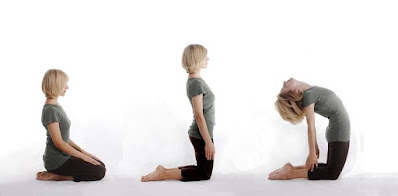
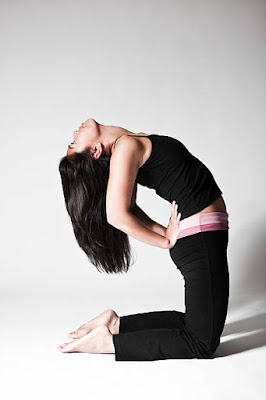
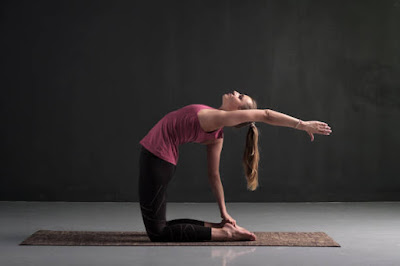
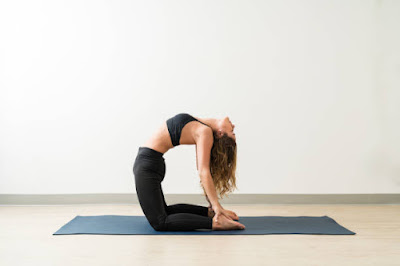
Yoga Asanas - USHTHRA ASANA - THE CAMEL POSE.


The Camel Posture and its variations are a good Hathena for forcing air into the lower abdominal lobes in the posterior. 


  1. To execute the Sapurna or Incomplete Camel, sit in Vajra Asana on your heels and exhale. 
  2. Lift the buttocks off the heels, kneel, and back-bend with arms dangling to the sides on an incoming breath, without putting any conscious weight or tension on the arms. 
  3. Keep your eyes open or you'll lose your balance. 
  4. Take a seat on the exhaled breath. 
  5. Rep three times more. 
  6. Other variations on the Camel Posture may be employed in conjunction with the one illustrated in the diagram. 
  7. Rest the weight of the body on the palms of the hands, bending the hands inwards so that the fingers contact the toes, starting in the heel-sitting Vajra Asana. 
  8. Relax the shoulders and neck so that the head dangles behind the shoulders and the breath is out. 
  9. Then, on the next incoming breath, elevate your buttocks, heels, and arch your back as high as you can, as if you were a camel attempting to get out of its sting posture. 
  10. Take a seat on the exhaled breath. 
  11. Rep three times more. 


The Extended Camel Pose, Purna Ushthra Asana, is performed from the Vajra Asana (Heel Pose). 


  1. Raise off the heels with each incoming breath, relaxing into a back-bend until the heels can be grabbed with the hands. 
  2. Do vigorous Bhastrikas or Bellows-like breaths while in this posture. 
  3. Breathing should be inhaled via the nose and exhaled through the mouth. 


Do this position with Pranayama once in the beginning, twice after a week, and three times after a fortnight. 


Kiran Atma