Showing posts with label Dance. Show all posts

Hinduism - ABHINAVAGUPTA


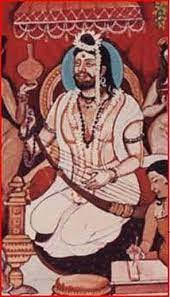
(late tenth century) Abhinavagupta was a major thinker in Kashmiri Saivism, and the son of scholar Narasimhagupta, who was his first tutor.


Abhinavagupta wrote forty-one works, commentaries and independent treatises, on the three main branches of Kashmiri Saivism: Krama, Pratyabhijna, and Trika, as well as aesthetics, poetics, and language theory, becoming the most prominent and influential teacher in Abhinavagupta was the one who systematized the Trika doctrine based on a number of older and often obscure texts, most notably in his masterpiece, the Tantra loka (Light on the Tantras), a massive work in thirty-seven ahnika ('day-times,' i.e. chapters) that takes up twelve volumes in the Kashmir Series of Texts and Studies (1918–38) with Jayaratha's commentary.


The Tantra loka was summarized by its author in the Tantrasara (Essence of the Tantras), a widely read book that combines yoga, devotion to the Lord, and nondualism (advaita) in such a manner that it is applicable to a variety of systems.


The Patra trimsika Vivarana is a lengthy commentary on the Tantra Para trimsika's thirty-six pithy stanzas, which elaborates on all elements of Word/speech, whether liturgical, cosmogonic, psychological, epistemological, or metaphysical.

The Ma lin vijaya Varttika and the Isvara pratyabhijn a Vimarsin on Utpala deva's Pratyabhijn a Karika, both major works in the tradition, are two more commentaries worth noting.


All of these writings are significant, and Abhinavgupta's impact beyond not just his own school but also Tamil Nadu, where he was even regarded as an incarnation of Siva.


Not just in the sphere of poetics, with his focus on the primacy of suggestion, but also in the performing arts, particularly theatre, dance, and music, his writings on aesthetics were to be as authoritative and of enduring value.


Kiran Atma


You may also want to read more about Hinduism here.

Be sure to check out my writings on religion here.


See also: 


Advaita; Dance; Drama; Kashmiri Saivism; Music; Poetry; Siva; Tantras; Tantrism; Yoga


Hinduism - What Is A Mudra In Indian Dance And Hindu Iconography?


 (meaning "seal") A mudra is a stylized hand gesture in Indian dance, theater, and iconography that expresses a particular meaning, ranging from real things like animals, common items, and Hindu deities to abstract things like emotions.

Performers in the performing arts, notably dance, use gesture alone to create elaborate tales.

Many of these gestures are qualities associated with certain deities in the context of iconography.

The words mudra and hasta ("hand") have considerable syntactic overlap; one difference is that some hastas merely describe the location of the hand, while others have symbolic value, but mudras always have extremely particular symbolic meanings.

~Kiran Atma


Discover more about Hindu Art, Architecture, and Iconography here.

You may also want to read more about Hinduism here.

Be sure to check out my writings on religion here.


Hinduism - What Is The Mohini Attam?


Mohini Attam is a relatively newer type of traditional Indian dance found mostly in Kerala, India's modern state.

Mohini Attam was created at the royal court in Travancore, Kerala, in the early eighteenth century.

Bharatanatyam and Kathakali, a Keralan dance genre, are both represented in this type of dance.

The dance is named after the mythological enchantress Mohini and exudes a sensuality that is coquettish.

Some of the muscular stances in the dance are inspired by Bharatanatyam, while the stylized hand motions (mudras) are predominantly inspired by Kathakali.

Mohan Khokar's Traditions of Indian Classical Dance, published in 1984, has further information.


You may also want to read more about Hinduism here.

Be sure to check out my writings on religion here.


Hinduism - What Is Manipuri?


Bharatanatyam, Orissi, Kuchipudi, Kathak, and Kathakali are some of India's traditional dance traditions, as are Bharatanatyam, Orissi, Kuchipudi, Kathak, and Kathakali.

Classical dance, like most of traditional Indian culture, has strong regional identification; Manipuri is found exclusively in the state of Manipur in eastern India, situated between Burma and Assam.

Manipuri, which originated in the seventeenth century, displays the prominence of Vaishnava devotionalism.

Acting out incidents from the life of the deity Krishna, particularly the Ras lila and his dalliance with his sweetheart Radha, is one of the most popular dance styles.

Dancers play a two-headed drum or cymbals in other genres, jumping wildly throughout the performance.

This style has its origins in devout Vaishnavism, namely the passionate singing and dance associated with Bengal's Gaudiya Vaishnava group.

Mohan Khokar's Traditions of Indian Classical Dance, published in 1984, has further information.


You may also want to read more about Hinduism here.

Be sure to check out my writings on religion here.


Hinduism - What Is A Mandala?

 "Mandala" means "circle" in Sanskrit.

A word having diverse meanings in different situations, as with many Sanskrit phrases.

It may refer to an area in the context of geography, such as the Braj region, which is known as the Braj Mandala.

Mandala refers to both the group of followers and the form of the dance itself in the ras lila, the circular dance between the deity Krishna and his devotees (bhakta).

By extension, a mandala may refer to any collection of people, however it is usually associated with individuals who have gathered for a serious religious purpose.

Mandala refers to a symbolic graphic used as an aid to meditation, a ritual accessory, or a symbolic road map of the spiritual search in the hidden ritually based religious practice known as tantra.

The word mandala is primarily associated with Buddhist tantra in this particular literature, although Hindu tantrikas use the terms yantra and chakra more often.

~Kiran Atma


Discover more about Hindu Art, Architecture, and Iconography here.

You may also want to read more about Hinduism here.

Be sure to check out my writings on religion here.


Hinduism - What Is Lasya In Hindu Performance Art?


Soft, lyrical, and conveying a loving atmosphere, this is one of two main types in Indian dance.

The tandava form, on the other hand, is athletic, theatrical, and conveys aggression and strength.


You may also want to read more about Hinduism here.

Be sure to check out my writings on religion here.


Hinduism - What Is The Kathakali?


Kathakali is an Indian classical dance genre that includes Bharatanatyam, Orissi, Kuchipudi, Kathak, and Manipuri, among others.

Classical dances, like much of traditional Indian culture, are associated with certain locations; Kathakali is largely found in Kerala.

Kathakali, unlike many other classical forms, did not evolve in a temple context.

It emerged as a developed form in the seventeenth century, while it has roots in centuries-old folk and religious plays.

The men's version of Kathakali is Mohini Attam, whereas the women's form is Kathakali.

One of the most spectacular shows in Indian arts is a Kathakali performance.

The dancers' training emphasizes controlled facial motion to promote ease and force of expression, which contributes to the drama.

The dancers are dressed in extravagant costumes and headdresses.

The most remarkable aspect is the intricate makeup—the heroes' faces are painted a vibrant green with fluted ridges made of rice paste affixed to their cheeks, while the villains' chins and foreheads are painted green and red with pith knobs attached.

The dance goes between muscular leaps and grand spins stylistically, with religious scriptures serving as the primary source of storytelling.

Kathakali, like many Indian dances, has a well-developed "vocabulary" of gestures and facial expressions that allows the dancers to participate in elaborate storytelling.

Kathakali, like all other classical dances, has evolved throughout the years, driven on by a shift in the venue from temple courtyards to stage performances.

A scheduled stage performance, for example, requires a well-organized "program" and a predetermined time constraint, while Kathakali performances used to continue all night.

Mohan Khokar's Traditions of Indian Classical Dance, published in 1984, has further information. 


You may also want to read more about Hinduism here.

Be sure to check out my writings on religion here.


Hinduism - What Is Kathak?


Bharatanatyam, Orissi, Kuchipudi, Kathakali, and Manipuri are some of the other Indian classical dance genres.

Classical dances, like much of traditional Indian culture, are associated with certain locations; Kathak is largely found in northern India.

Kathak is said to have developed from Braj's ras lilas, devotional dances depicting incidents from Krishna's life.

This notion has little historical evidence and may just represent a desire to enshrine religion in all aspects of Indian culture.

Kathak, on the other hand, developed as an art form in the northern Indian monarchs' courts, where it was performed for the amusement of the king and his guests.

Over time, two main Kathak hubs emerged: Jaipur, which is recognized for its spectacular footwork, and Lucknow, which is noted for its emphasis on acting.

Kathak is distinguished stylistically by an erect posture with straight legs.

The dance focuses on quick, rhythmic foot movements, which are enhanced by bell strings worn on the dancer's ankles and accompanied by repeated rotations; the body is kept relatively static.

Kathak, like many other forms of Indian dance, has a well-developed "vocabulary" of facial expressions and arm and hand movements that enable the dancer to communicate a wide variety of emotions to the audience.

Mohan Khokar's Traditions of Indian Classical Dance, published in 1984, has further information. 


You may also want to read more about Hinduism here.

Be sure to check out my writings on religion here.


Hinduism - What Is Hasta In Indian Performance Art?


 (“hand”) A hasta is a hand posture used in Indian dance, sculpture, and ritual.

In some circumstances, the hasta's name may merely describe the form of the hand, as in varada hasta, or the "gift-giving" gesture; in other cases, the hasta's name may only describe the hand's shape, as in kataka hasta, in which the tips of the fingers are loosely linked to the thumb.

All of these movements have several symbolic connotations in the context of dance, and the dancer may utilize them to convey a narrative via her motions.

The terms hasta and mudra ("seal"), which are both used to describe hand movements, have considerable overlap in meaning and are often used interchangeably.

Mudras, on the other hand, are more clearly defined and stylized than hastas.

They emphasize finger positions rather than full hand postures; the fingers are constantly in extremely particular positions.

Mudras have highly unique symbolic connotations at all times.


~Kiran Atma


Discover more about Hindu Art, Architecture, and Iconography here.

You may also want to read more about Hinduism here.

Be sure to check out my writings on religion here.


Hinduism - What Gestures Are Used In Indian Dance And Drama?


Hasta, which are wide postures of the arms and hands, and mudras are primarily incorporated into dance and performance art forms in India. 

Hindu Dance and Dramatic Techniques are specialized in hand motions.

These generally represent particular meanings, convey emotions, intent, and are often seen as either of the two types of gestures used in combination in Hindu dance and theatre.


~Kiran Atma


Discover more about Hindu Art, Architecture, and Iconography here.

You may also want to read more about Hinduism here.

Be sure to check out my writings on religion here.


Hinduism - What Is The Status Of Dance In The Context Of Hindu Culture?


All of the performing arts in old Hindu society had a close tie to religious life, and dancing was no exception. 

Dancers simply follow the divine model in their craft, since Shiva is the supreme dancer in Indian mythology; fact, it is via his dancing that he first creates the cosmos and then destroys it. 

A number of traditional dance genres have been linked to certain Hindu temples. 

Beginning with the Brhadeshvar temple in Tanjore, the Bharatanatyam form evolved in Tamil Nadu temples and is immortalized in the sculptures of the Shiva temple at Chidambaram. 

The Orissi style was inspired by the Jagannath temple in Puri, India, near the Bay of Bengal. 

The Kathakali form in Kerala, the Kuchipudi form in Andhra Pradesh, the Chau form in eastern India, and the Manipuri form in Manipur are some of the other ancient forms that were originally performed solely in temples or had their origins in religious festivals. 

The lone exception is the Kathak form of northern India, which was born and performed in a court rather than a temple, but whose subject matter often dealt with religious themes, notably those related to devotion to the deity Krishna. 

All of these techniques have a highly developed language of gesture (mudra) and emotion through which the dancer may tell the audience a tale. 

The dancer's goal, like in other ancient arts, is to create and convey a certain aesthetic mood (rasa), which will elicit a similar emotional response (bhava) from the audience. 

Aside from these fundamental commonalities, each shape has its own own personality and artistic aspect. 

The most visibly linked forms are Bharatanatyam, Kuchipudi, and Orissi, however while Bharatanatyam shows a sharply geometric line with a rigid upper body, Kuchipudi and Orissi's lines become gradually softer, rounder, and more fluid. 

Kathakali is distinguished by its extravagant costumes and theatrical makeup, as well as its emphasis on facial movement development and control. 

These factors make it easier and more powerful to express yourself. 

Manipuri and Chau are both extremely athletic types of dance that clearly reflect folk dance influences. 

Chau is unique in that the dancers always wear masks, which creates a mood. 

Kathak is the only dance style in which the dancer's legs are maintained straight; the form emphasizes sophisticated footwork in which the dancer's ankle bells act as a complement and counterpoint to the drum, as well as dramatic twists and spins. 

Except for Kathak, all dance traditions arose in a religious setting, as previously stated. 

Dance was often performed as an offering to the deity, and it was primarily performed for the deity's entertainment, though other spectators could enjoy it as well. 

Although many schools have their own typologies, the most common distinction is between "pure" dance (nrtya), which conveys nothing more than the dancer's ability to move, and "acting" dance (natya or abhinaya), which tells a tale. 

Until the nineteenth century, the dancers were mainly devadasis, or temple slaves. 

The devadasis were legally wedded to the temple's god and performed numerous ceremonial functions as his "wife" at the temples, but they were free to have affairs with other men. 

The temple's offspring would also be in service to the temple, with their males as musicians and their girls as dancers. 

This arrangement occasionally devolved into common prostitution, but it was often distinguishable. 

Even though their status was unusual and thus marginal, these women had their own status and property. 

The dance performance site has shifted from the temple to the stage in the twentieth century, which has had a number of consequences in terms of transforming it from a form of worship to a performing art. 

See Mohan Khokar, Traditions of Indian Classical Dance, 1984, for more information on the dance's history and various manifestations. 

See Frederique Apffel Marglin's Wives of the God-King, 1985, for a masterful analysis of the devadasis.


You may also want to read more about Hinduism here.

Be sure to check out my writings on religion here.


Alborada Dance Celebrates 20th Anniversary - 20 Years of Powerful, Passionate Performances


Jesse and Dave join Alborada Spanish Dance Theatre as it prepares for its 20th anniversary concert to learn more about the group’s intoxicating form of music, art and dance.

New Jersey’s premier Flamenco and Spanish dance company and known for its dramatic flair, Alborada is committed to teaching its varied audiences about Spanish culture and the history of its dance. Originally founded by Maria Alba, a noted Flamenco dancer and popular teacher, the company embraces all Spanish dance art, enabling its audiences to experience the breathtaking richness and beauty of the culture.

“A whirl in drama and color” (The New York Times), Alborada’s performances reach tens of thousands annually through its programs that bring Spanish dance to schools, colleges and senior and community centers.

The 20th Anniversary Concert of Alborada Spanish Dance Theatre will take place on Friday, September 25 at 7:30 at the Crossroads Theatre, 7 Livingston Ave, New Brunswick. For tickets or more information, visit AlboradaDance.org.

thAnniversaryFlyer2015

World Theatre Day Message 2015


The author of the Message of World Theatre Day 2015 is the Polish director Krzysztof Warlikowski!


The true masters of the theater are most easily found far from the stage. And they generally have no interest in theater as a machine for replicating conventions and reproducing clichés. They search out the pulsing source, the living currents that tend to bypass performance halls and the throngs of people bent on copying some world or another. We copy instead of create worlds that are focused or even reliant on debate with an audience, on emotions that swell below the surface. And actually there is nothing that can reveal hidden passions better than the theater.


Most often I turn to prose for guidance.  Day in and day out I find myself thinking about writers who nearly one hundred years ago described prophetically but also restrainedly the decline of the European gods, the twilight that plunged our civilization into a darkness that has yet to be illumined. I am thinking of Franz Kafka, Thomas Mann and Marcel Proust. Today I would also count John Maxwell Coetzee among that group of prophets.

Their common sense of the inevitable end of the world—not of the planet but of the model of human relations—and of social order and upheaval, is poignantly current for us here and now. For us who live after the end of the world. Who live in the face of crimes and conflicts that daily flare in new places faster even than the ubiquitous media can keep up. These fires quickly grow boring and vanish from the press reports, never to return. And we feel helpless, horrified and hemmed in. We are no longer able to build towers, and the walls we stubbornly construct do not protect us from anything—on the contrary, they themselves demand protection and care that consumes a great part of our life energy. We no longer have the strength to try and glimpse what lies beyond the gate, behind the wall. And that’s exactly why theater should exist and where it should seek its strength. To peek inside where looking is forbidden.

 “The legend seeks to explain what cannot be explained. Because it is grounded in truth, it must end in the inexplicable”—this is how Kafka described the transformation of the Prometheus legend.  I feel strongly that the same words should describe the theater. And it is that kind of theater, one which is grounded in truth and which finds its end in the inexplicable that I wish for all its workers, those on the stage and those in the audience, and I wish that with all my heart.

---Krzysztof Warlikowski


Supported by Theatre Communications Group and the U.S. Center of ITI


Desert Dancer – Official Trailer HD


Set in Iran, this powerful and unbelievable true story follows the brave ambition of Afshin Ghaffarian. During the volatile climate of the 2009 presidential election, where many cultural freedoms were threatened, Afshin and some friends (including Elaheh played by Freida Pinto) risk their lives and form an underground dance company. Through banned online videos, they learn from timeless legends who cross all cultural divides, such as Michael Jackson, Gene Kelly and Rudolf Nureyev. Afshin and Elaheh also learn much from each other, most importantly how to embrace their passion for dance and for one another. 


Facebook: https://www.facebook.com/desertdancer...
Twitter: https://twitter.com/desertdancer
Instagram: http://instagram.com/desertdancermovie

Ballet Performance + Art Exhibition = NYCB Art Series & Dustin Yellin


Brooklyn-based artist Dustin Yellin brings a collection of his glass sculptures from the ongoing Psychogeographies series to New York City Ballet for the third presentation of Art Series, which welcomes contemporary artists to our Lincoln Center home.


NYCB ART SERIES commissions contemporary artists to create original works of art inspired by our unique energy, spectacular dancers, and one-of-a-kind repertory of ballets. New York City Ballet has worked with leading and emerging artists throughout the Company’s history — luminaries like Andy Warhol, Keith Haring, and Julian Schnabel. We are proud to continue this tradition with Art Series and look forward to partnering with Brooklyn artist Dustin Yellin in 2015.


Find Out More At: http://www.nycballet.com/artseries

February 12, 19, 27. On Sale Now. All Tickets $29.

Limit of 6 tickets/performance:
http://www.nycballet.com/Season-Tickets/Winter-2015/HEAR-THE-DANCE.aspx