Showing posts with label Vishnu. Show all posts

Hinduism - Who Is Vijaya In Hindu Mythology?


In Hindu mythology, Vijaya is one of Vaikuntha's gate guards, who, along with his brother Jaya, is cursed by the sage Sanaka to be born three times as an asura (demon) and destroyed by Vishnu each time.


Jaya and Vijaya incarnate as Hiranyaksha and Hiranyakashipu in their first births, respectively, and are murdered by the Boar avatar and the Man-Lion avatar.


They have a second Earthly incarnation, Ravana, and Kumbhakarna, who are murdered by Lord Vishnu incarnate as Rama.


Next, they take on the forms of Shishupala and Dantavaktra, who are murdered by Lord Krishna, this being their last birth for now.


They resume their responsibilities as Vishnu's guardians after their last slaying at the Lord's hands. It is believed they are yet to fully atone and extinguish the energy of the sage's curse. As a result, they will take birth yet again, only to suffer and be slaughtered by Lord Kalki for the final time. 


~Kiran Atma


You may also want to read more about Hinduism here.

Be sure to check out my writings on religion here.


Hinduism - What Is Yoganidra?


("yoga slumber") The Goddess's epithet appears in the first episode of the Devi Mahatmya, the oldest and most authoritative document on the Goddess's mythology.

In this episode, the Goddess uses her power of illusion to lull Vishnu into a coma, rendering him unconscious to Brahma's screams for aid when he is threatened by the demons Madhu and Kaitabha.

When Brahma praises the Goddess, she withdraws her yogic slumber from Vishnu, allowing him to restore consciousness and save Brahma by destroying the demons.


~Kiran Atma


You may also want to read more about Hinduism here.

Be sure to check out my writings on religion here.


Hinduism - Who Is Considered A Yatri In Hindu Spirituality?


The term yatri refers to a novitiate Bairagi, a renunciant ascetic society made up of worshippers of the deity Vishnu (bhakta).

As a common term, it refers to a person who is embarking on a yatra ("journey"; more specifically, a travel of religious meaning).


You may also want to read more about Hinduism here.

Be sure to check out my writings on religion here.


Hinduism - Who Is Lord Vishnu In The Hindu Pantheon?


Vishnu meaning the “all-pervasive” in Sanskrit, is one among the three most powerful deities in the Hindu pantheon, with Brahma, Shiva and the Goddess.

All three are significant for being largely unmentioned in the Vedas, the oldest Hindu religious books, and their rise, as well as the progressive eclipse of the Vedic gods, indicates a marked change in Hindu religious life.

Vishnu is the one who appears most often in the Vedas among the three.

Many hymns that mention him refer to him as a helper to Indra, the major Vedic deity, and one of Vishnu's epithets is Upendra ("junior Indra").

He also appears as an autonomous actor in certain late hymns, linked with wonderful works for the benefit of the cosmos, such as measuring out the universe in three steps.

Vishnu is also linked to the sun, both in terms of his ability to travel through the skies and his ability to fall on (and therefore "observe") everything.

Vishnu is the sustainer or maintainer of the universe, according to the holy trinity of Brahma Vishnu-Shiva.

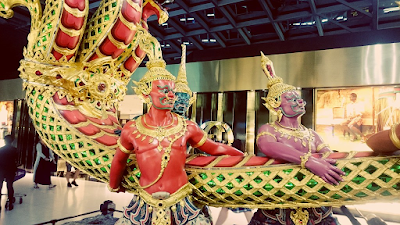
Vishnu is pictured reclining on the back of his serpent couch, Shesha, in the primordial ocean at the moment of cosmic disintegration in one of the most prominent creation myths (pralaya).

Vishnu's navel produces a lotus, which opens to reveal Brahma, the creator, who starts the creation process.

When the time comes for disintegration, the whole process reverses, and the cosmos is pulled back into Vishnu, who is therefore considered as the source of everything.

The cosmos is also sustained by Vishnu's avatars or incarnations, who come into the world to restore balance to a universe that has been dangerously out of balance, generally as a result of an out of proportionally powerful demon.

There are 10 avatars as far as we know.

The Fish avatar, Tortoise avatar, Boar avatar, and Man-Lion avatar are the first four in nonhuman forms.

The other six are in human form, frequently as sages or heroes: Vamana avatar, Parashuram avatar, Rama avatar, Krishna avatar, Buddha avatar, and Kalki avatar.

In each of these instances, Vishnu takes on a physical form in order to avoid tragedy and preserve the cosmos' purity.

The theory of the avatars served as a means of assimilating existing deities into the broader pantheon while still granting them distinct status.

Although most of the avatars are no longer objects of devotion (the Boar and Man-Lion avatars each had a significant following early in the common period), Rama and Krishna's adoration has entirely exceeded that of Vishnu himself in most of northern India.

Vishnu is still revered throughout southern India, especially among Shrivaishnavas.

Apart from the avatar idea, notable local deities like as Jagannath, Venkateshvara, and Vithoba have all been absorbed into the pantheon as manifestations of Vishnu.

Vaishnavas and Shaivas established sectarian rivalry in medieval Hinduism, both claiming supremacy over their own deities (Vishnu and Shiva).

Despite the fact that Vaishnavas see Vishnu as the universe's highest force, his legendary persona and activities are vastly different from Shiva's.

Vishnu's headgear is a crown, and his persona is that of an all-ruling monarch, but Shiva is linked with ascetic life and practices (tapas) and hence with the religious force created by such acts.

Vishnu frequently succeeds by guile, ingenuity, and deceit, but Shiva eliminates his mythological enemies with sheer might, which is devoid of any finesse.

Each deity's followers recognize their divinity as the supreme force in the cosmos, from which all other gods get their power, and both are portrayed as kind and caring to their worshippers (bhakta).


Kiran Atma


You may also want to read more about Hinduism here.

Be sure to check out my writings on religion here.


Hinduism - Who Was Vishnuchittar?


Vishnu Periyalvar, an Alvar poet and saint, was given this appellation.

Between the seventh and tenth centuries, the Alvars were a group of twelve poet-saints living in southern India.

All of the Alvars were worshippers of the deity Vishnu, and their emphasis on emotional devotion (bhakti) to a personal god, expressed via hymns sung in Tamil, revolutionized Hindu religious life.


Kiran Atma


You may also want to read more about Hinduism here.

Be sure to check out my writings on religion here.


Hinduism - Who Was Vishnuswami ?


Vishnuswami  is a Sanskrit word that means "Vishnu Swami." ("Vishnu is [his] Lord") 

The Vaishnava ascetics' Rudra Sampraday is said to have been founded by a Guru named Vishnuswami.

(The Rudra Sampraday is one of the four "sampraday" branches of the Bairagi Naga ascetics, who are devotees of the god Vishnu; vaishnava refers to Vishnu devotees.)

According to some sources, Vishnuswami was the guru of both Jnaneshvar and Namdev.

Vishnuswami was a Vaishnava, as his name implies, but nothing is known about him other than that.

His ascetic path and status as one of the four Vaishnava ascetic sampradays have been seized by Vallabhacharya's Shuddadvaita, or "Pure Monism," which emphasizes Krishna's adoration with Radha as his wife.


Kiran Atma


You may also want to read more about Hinduism here.

Be sure to check out my writings on religion here.


Hinduism - What Is Vijaya Ekadashi?


The eleventh day (ekadashi) of the dark (waning) half of the lunar month of Phalgun (February–March) is a religious celebration.

This is the eleventh-day observance devoted to the worship of Vishnu, as is the case with all eleventh-day observances.

Most Hindu holidays have pre-determined ceremonies, which generally include fasting (upavasa) and devotion, and frequently offer particular rewards for loyal participation.

Those taking this vow should fill an earthen pot with the seven varieties of grain, place an image of Vishnu on top of the pot, and recite the names of Vishnu for twenty-four hours.

The pot of grain should be handed to a brahmin on the twelfth.

In terms of outcomes, it is stated that diligently honoring this festival would provide vijaya (victory) over poverty and sadness.


~Kiran Atma


You may also want to read more about Hinduism here.

Be sure to check out my writings on religion here.


Hinduism - Who Is Venkateshvara In The Hindu Pantheon?


("Venkata [HillLord]")  The presiding deity of the Venkateshvara temple in Andhra Pradesh, near Tirupati.

The temple is located north and east of Madras.


Venkateshvara is a local deity who has been adopted into the greater pantheon as a manifestation of Vishnu.


The temple is located in the Tirumalai hills, which are made up of seven hills that are said to resemble the seven cobra hoods of Shesha, the fabled snake that acts as Vishnu's couch.

Venkateshvara's picture is unique in that he has a plate covering his forehead.

The Tengalais and Vadagalais, two branches of the Shrivaishnava society, each wear specific sectarian insignia on their images, and this plate hides these markings on the picture, allowing both groups to claim him as their own.


Venkateshvara is also known for having India's most valuable temple.


People go from all across the nation to Tirupati, partly because it is widely believed that any request expressed in the presence of the deity would be fulfilled unfailingly.

Aside from large monetary gifts, it is usual for pilgrims to have their heads shaved as a token of their presence and to give a hair donation.

Since independence, the temple's riches has been managed by a trust, which has paid special attention to publishing, educational institutions, and assisting in the construction of Hindu temples outside of India.


~Kiran Atma


You may also want to read more about Hinduism here.

Be sure to check out my writings on religion here.


Hinduism - Who Are The Vellala Of Tamil Nadu?


The landlord community throughout much of traditional Tamil Nadu.

Although technically the Vellalas were of shudra status, their control over the land gave them considerable influence and prestige in the region.

The Vellala community was the source for many of the Alvars, a group of twelve poet-saints whose stress on passionate devotion (bhakti) to the god Vishnu transformed and revitalized Hindu religious life.

Most of the Alvars’ influence undoubtedly stemmed from the strength of their religious devotion, but this was undoubtedly reinforced by Vellala status as a land holding community.


~Kiran Atma


You may also want to read more about Hinduism here.

Be sure to check out my writings on religion here.


Hinduism - Who Was Vedanta Deshika?


Vedanta Deshika(13th c.) was a writer and commentator in the Vishishthadvaita Vedanta philosophical school.


Vedanta Deshika was a follower of Ramanuja and interpreted Ramanuja as teaching that there were two sorts of liberation: 


  1. a lower one in which one was subject to no outside forces, 
  2. and a higher one in which one’s entire being was focused on the Lord, whom Ramanuja identified as the god Vishnu.


The human being is considered both identical to and different from the Lord, which means the perfect identity is never possible; God’s transcendence leads to the exaltation of devotion (bhakti) and the stress on submission to God’s grace.


~Kiran Atma


You may also want to read more about Hinduism here.

Be sure to check out my writings on religion here.


Hinduism - Who Is Vasuki In Hindu Mythology?


Who Is Vasuki?

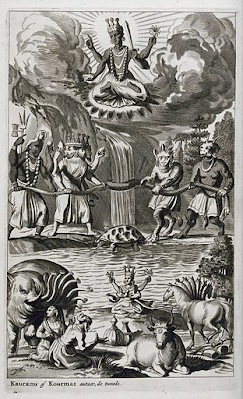
A renowned Naga from Hindu mythology (mythical serpent).

Vasuki's most well-known legendary role is in the narrative of the gods and demons churning the Ocean of Milk in search of immortality's nectar (amrita).


The deity Vishnu acts as the churning-base in the shape of his Tortoise incarnation, Mount Mandara serves as the churning-stick, and Vasuki, with his immense length, serves as the churning rope.

They tug Vasuki back and forth, with the gods on one side and the devils on the other, until the sea of milk yields up its riches.


~Kiran Atma


You may also want to read more about Hinduism here.

Be sure to check out my writings on religion here.
Hinduism - Who Is Considered Svayambhu?


Svayambhu (“self-born”) The deity Brahma's epithet. Brahma is a Hindu god.

This moniker emphasizes his function as the world's fashioner—being the person in charge of ordering the universe, he cannot be a formed entity himself.

According to Hindu mythology, Brahma emerges from the calyx of a lotus that grows from the deity Vishnu's navel at the start of each cycle of creation; at the end of the cycle, he returns to the lotus and is reabsorbs into Vishnu's body.

~Kiran Atma


You may also want to read more about Hinduism here.

Be sure to check out my writings on religion here.
Hinduism - Who Is Renuka(Parashuram) In Hindu Mythology?


Renuka is the wife of the sage Jamadagni and the mother of the parashuram avatar, the deity Vishnu's fifth avatar or incarnation, according to Hindu mythology.


You may also want to read more about Hinduism here.

Be sure to check out my writings on religion here.


Hinduism - Who Are Considered Rasik Or Rasik Devotees In Hinduism?


Someone who is intellectual and intelligent who can appreciate a developed artistic mood (rasa).

The term refers to a person who has translated this awareness of aesthetic mood into a devotional setting in the context of religious activity.

Rasik devotees (bhakta) would engage in intricate visualizations and mental accompaniments of their chosen god throughout the day.

These contemplative visualizations were thought to provide the devotee a feeling of involvement in God's presence on earth's divine drama (lila), sharpening his or her appreciation of it.

The Pushti Marg and the Ram Rasik Sampraday, whose objects of devotion were the gods Krishna and Rama, respectively, placed the highest emphasis on this talent.

This kind of devotion is nearly entirely devoted to these gods or other manifestations of Vishnu.


You may also want to read more about Hinduism here.

Be sure to check out my writings on religion here.


Hinduism - What Is Radhavallabh Sampraday?


Radhavallabh Sampraday is a day dedicated to Radhavallabh.

Vaishnavas are a religious society founded by the sixteenth-century poet-saint Harivamsh.

Its members are followers (bhakta) of the deity Vishnu (that is, Vaishnavas).

Harivamsh had strong feelings about Radha's standing, which his community has maintained.

Earlier poetry often depicted Radha as the god Krishna's adulterous mistress, but the Radhavallabhans saw her as his legitimate wife and a goddess with equal rank to Krishna.

Krishna and his reputation as the "beloved of Radha" were the center of their devotion (Radhavallabh).


You may also want to read more about Hinduism here.

Be sure to check out my writings on religion here.


Hinduism - When Is Purushottama Observed? Who IS Revered As Purushottama?


When the intercalary month falls within the lunar month of Ashadh, it is observed as a religious observance.

The intercalary month is a lunar month that is placed into the calendar every thirty months or so to keep the solar and lunar calendars in sync.

It starts after any "normal" lunar month in which the sun has not yet shifted into the next zodiac sign, and adopts the name of the previous month.

The intercalary month is regarded unlucky since it has an atypical phenomenon, and the most popular vernacular word for it is malamasa, which means "impure month." When the additional month happens in the lunar month of Ashadh, however, worshippers of the deity Vishnu (bhakta) see it as an extremely sacred period devoted to Vishnu in his avatar as Purushottama ("best of men"), and treat it as such.

This month, Vaishnavas study holy scriptures, sing Vishnu's glorious names, and engage in various forms of devotion.

The month of Ashadh, as well as its intercalary month, are particularly significant for the Jagannath temple in Puri, whose presiding god, Jagannath, is regarded a form of Krishna, and hence a manifestation of Vishnu.

Every year, the Rath Yatra event is held in Puri during the month of Ashadh, and in years when the intercalary month occurs in Ashadh, fresh representations of Jagannath and his siblings are produced.


You may also want to read more about Hinduism here.

Be sure to check out my writings on religion here.


Hinduism - What Is The Parivartini Ekadashi?


The eleventh day (ekadashi) of the bright (waxing) half of the lunar month of Bhadrapada (August–September) is a religious celebration.

This, like other eleventh-day observances, is devoted to Vishnu devotion.

This day is dedicated to Vishnu's wife Lakshmi, the goddess of riches and prosperity, and her husband Vishnu.

In her Mahalakshmi form (as recounted in the Devimahatmya), she can destroy demons that the gods can't, and she can reclaim the kingdom that the gods have lost.

Vishnu is said to be resting on the snake Shesha, in an ocean of milk, with Lakshmi stroking his feet at this festival.

Parivartini means "turning," and Vishnu is said to be turning in his slumber on this day.

See also cosmology and churning of the ocean.


You may also want to read more about Hinduism here.

Be sure to check out my writings on religion here.


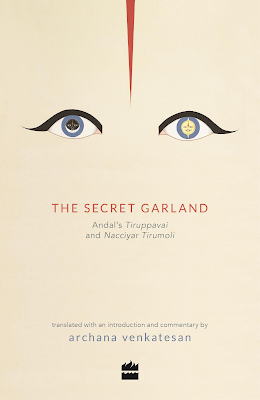
Hinduism - What Is The Nacciyar Tirumoli?


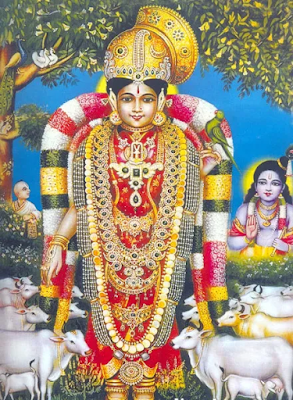
The Tirruppavai is one of two volumes of poetry composed by the poet-saint Andal (9th century).

Andal was the only woman among the Alvars, a group of twelve poet-saints who flourished during the seventh and tenth centuries in southern India.

All of the Alvars were Vishnu worshipers (bhakta).

Their focus on fervent devotion (bhakti) to a personal deity, expressed via Tamil hymns, changed and revived Hindu religious life.

Andal's chosen god was Ranganatha, a manifestation of Vishnu who presides over the Shrirangam temple.

Nonetheless, both of her poetry books are devoted to Krishna, a different incarnation of Vishnu.

This seeming split might be due to her belief that all incarnations of Vishnu are ultimately the same, or it could be due to the distinction between personal devotion and literary expression.


The Nacciyar Tirumoli has thirty poems recited by a group of unmarried females who had made a pledge to wash in the river at daybreak during the coldest month of the year.

This oath has a long history in southern India, when young ladies would swear to find a nice spouse and live happily ever after.

The females in the poem had made a promise to win Krishna as their spouse.

The cycle's poems depict many aspects of the natural world at morning, the girls' aspirations for carrying out the pledge, and their return to Krishna's dwelling to awaken him and ask for his favor.

The concluding poem in the sequence explains the advantages of chanting the text.


~Kiran Atma


You may also want to read more about Hinduism here.

Be sure to check out my writings on religion here.


Hinduism - What Is The Mohini Ekadashi?


Mohini Ekadashi is a festival celebrated on the eleventh day (ekadashi) of Baisakh (April–May), the bright, waxing half of the lunar month.

The event is devoted to the worship of Vishnu as Rama, his incarnation.

Most Hindu holidays have specific mandated ceremonies, generally requiring fasting (upavasa) and prayer, with specific rewards promised for faithful performance; honoring this festival frees one from the consequences of one's wicked conduct.


You may also want to read more about Hinduism here.

Be sure to check out my writings on religion here.