Showing posts with label Vedic. Show all posts

Hinduism - Who Is Vishvakarma? What Does Vishvakarma Mean?


Vishvakarma is a Sanskrit term that literally refers to a cycle of good and bad deeds ("doing everything") is a phrase that is used to describe a person who does everything. 

It also variably refers to a Universal Worker or Builder capable of various constructions or creations. 

Vishvakarma is more significantly the name of a minor Vedic and Hindu deity who is the architect of the gods, the designer of many handicrafts, decorations, and weapons, the best sculptor, and the inventor of the gods' airborne chariots.

He is the patron and model for all skilled trades involving the shaping and shaping of materials, and he is credited with establishing the canons for carving godly pictures.

Sanjna, Vishvakarma's daughter, is married to Surya, the sun, but she cannot stand to be with him because of the sun's splendor, according to one account.

Vishvakarma brings the sun to his studio and reduces his radiance to a level that Sanjna can tolerate.

He then carves the sun's cut-off fragments into Vishnu's discus (Sudarshana), Shiva's trident (trishul), numerous heavenly weapons, and the Pushpak Viman, the most renowned of the airborne chariots.

In the Vedas, the earliest Hindu sacred books, Vishvakarma is frequently mistaken for Tvashtr, the god's workman.

Despite this, it seems that they are two distinct gods who have been homologized by their same role.

Tvashtr's name means "maker of carriages," and it seems that this was his major duty, but he is also known for manufacturing godly weapons, including the mace with which the storm-god Indra slays the snake Vrtra.

Nonetheless, his name seems to imply that his primary role is the construction of carriages, which is seen to be quite crucial in a Vedic religious literature, since numerous Vedic songs reference the usage of war chariots.

Vishvakarma, on the other hand, has a considerably broader set of abilities, implying that the two deities are not the same.


~ Kiran Atma


You may also want to read more about Hinduism here.

Be sure to check out my writings on religion here.


Hinduism - What Is Vedanta School Of Hindu Philosophy?


The sixth and most recent of traditional Hindu philosophy's six schools.


Vedanta literally translates to "the end of the Vedas," reflecting their belief that they were unveiling the final meaning of these ancient books.


The Upanishads, which were also the final layer of Vedic books, and therefore their "end" in a different sense, were given special attention by Vedanta proponents.

Several prominent schools with significantly differing philosophical perspectives have used these works as authoritative sources.

The Advaita Vedanta school, founded by the philosopher Shankaracharya and his disciples, is the most well-known and influential of them.


The Advaita school adheres to the philosophical viewpoint of monism, or the belief in a single impersonal Ultimate Reality known as Brahman.

Despite the appearance of distinction and diversity, Advaita proponents believe that reality is "nondual" (advaita), that is, all things are nothing but the formless, unqualified Brahman.

This assumption of variety, according to Advaitins, is a basic misunderstanding of the ultimate essence of things, as well as a sign of avidya.

Although frequently translated as "ignorance," avidya is more accurately defined as a lack of genuine understanding that traps humans in karmic bonds, reincarnation (samsara), and suffering.

Unlike the Advaita school, which views the Ultimate Reality in abstract, impersonal terms, the other Vedanta schools are theistic, in that they regard the Ultimate Reality as a personal God, namely Vishnu.


The two other major schools are the Vishishthadvaita vedanta (“qualified nondualism”) pro pounded by Ramanuja and the Dvaita Vedanta (“dualist”) propounded by Madhva.


The major differences between these two schools stem from assumptions about connections between God, human souls, and the world.

Ramanuja tends to see these in a continuum, with the world and human souls sharing in the divine nature, whereas Madhva stresses the great gulf between God and all other things.

Another minor school is the dvaitadvaita vedanta (“dualism and nondualism”) of Nimbarka, which strives to find some middle ground between Advaita Vedanta’s monism, and Dvaita Vedanta’s dualism.

Nimbarka stressed that the world and souls were dependent on God, in whom they exist, and with whom they had a subtle connection.

Even from their names, it is obvious that there are significant differences between these positions.


~Kiran Atma


You may also want to read more about Hinduism here.

Be sure to check out my writings on religion here.


Hinduism - Who Is Varuna In The Hindu Pantheon?


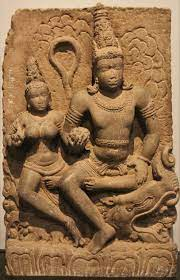
Varuna with his consort Varunani

Who Is The Indo-Aryan Deity Varuna?

Statue of Varuna at the National Museum in Delhi


In the Vedas, the oldest and most authoritative religious texts, Varuna is a deity associated with the sky, with waters, with justice, and with truth.

Statue of Varuna - Lord of knowledge


Varuna belongs to the earliest layer of the Indo-Aryan deities; this is clearly shown by comparisons with the Avesta, an ancient Iranian sacred text that shows many parallels with the Vedas, and with even older epigraphic sources.

As portrayed in the Vedas, however, Varuna’s influence has clearly declined—there are far fewer hymns addressed to him than to deities such as Indra, Agni, and Soma, and he seems to have played a far less important role than these other deities in Vedic religion.

In the Vedas, Varuna is portrayed as the guardian of rta, the cosmic order through which the world proceeds.

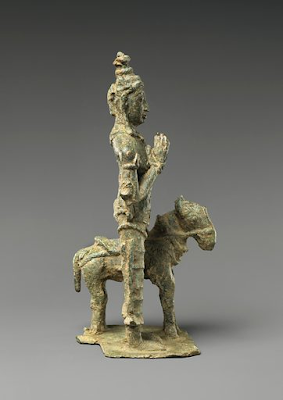
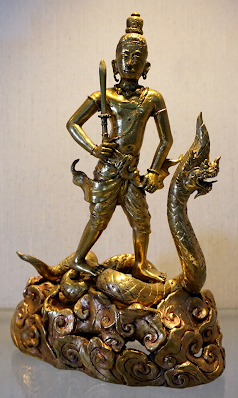
Varuna Riding Naga


As the deity associated with the high heaven, he also watches over the deeds of human beings and punishes them for any transgressions.

The best known hymn to Varuna, Rig Veda 7.86, shows Varuna’s connection with justice, moral order, and the waters.

The hymn is the lament of a person who has committed some offense against Varuna and whose sin has become visible through being afflicted with dropsy, in which the body retains its fluids and swells.

USS Varuna


The speaker begs Varuna to reveal the forbidden act, “committed under the influence of liquor, anger, or heedlessness,” so that Varuna may be propitiated and the sufferer healed.

Despite his virtual eclipse early in the tradition, in the later tradition, Varuna retains his association as the god presiding over the waters.

He is also considered to be one of the eight Guardians of the Directions, each of which is associated with one of eight points on the compass.

Varuna presides over the western direction.


~Kiran Atma


You may also want to read more about Hinduism here.

Be sure to check out my writings on religion here.


Hinduism - What Are The Chandas?


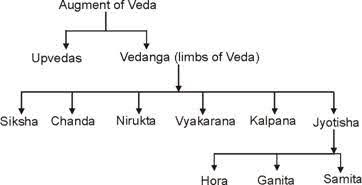
Chandas Are One of the Six Vedangas. 


These were supplementary areas of knowledge designed to make the Vedas, the earliest Hindu sacred scriptures, easier to utilize. 


Chandas was interested in the study of metrical forms of poetry, which were important in the Vedic literature. 

The term chandas is employed to identify the Vedas itself in various texts (such as Panini's grammar, the Ashtadhyayi), indicating the significance of meter. 


Shiksha (proper pronunciation), vyakarana (Sanskrit grammar), kalpa (ritual instructions), nirukta (etymology), and jyotisha are the other Vedangas (auspicious times for sacrifices). 


Northern Indian dynasty that ruled most of the Ganges River valley and northern Madhya Pradesh in its peak (10th–14th centuries C.E.). 

The Chandellas are known for their beautiful temples in the hamlet of Khajuraho, which they constructed mostly during the eleventh and twelfth centuries. 

Due to their distant and inaccessible position, these temples have survived to the current day. 

They are world-famous for their incredible exhibition of sexual sculptures and are outstanding examples of the Nagara architectural style in its mature state. 


You may also want to read more about Hinduism here.

Be sure to check out my writings on religion here.


Pagan Religions - Who Is APAM NAPAT?


    A mysterious entity similar to the occultists' Fohat in Zoroastrian holy texts. 


    • It's a Vedic and Avestian name that means "Son of the Waters."


    A water-related god in the Indo-Iranian pantheon is known as Apam Napat. 


    His names, Apam Napat and Apam Napat, are Avestan names that translate to "child of the rivers" in the Vedas and Zoroastrianism, respectively. 


    The words "grandson" and "progeny" are cognates of the Latin word nepos and the English word nephew. 

    He is referred to be the creator of everything in the Rig Veda. 


    It is often clear from the Vedas that Apam Napat is being used as a title rather than an actual name. 

    Agni, the deity of fire, and Savitr, the god of the sun, are the two deities to whom this is most often ascribed. 

    Boyce has also suggested a connection between Varuna, who is known as "Child of the Waters" and is regarded as a deity of the sea, and both the Vedic and Avestic traditions of Apam Napat. 

    He is a yazad and also goes by the name Burz, which means "high one" in Persian. 

    The founder of humanity, Apam Napat, is depicted in the Zoroastrian Avesta's Yasht. 


    However, as Ahura Mazda is regarded as the greatest creator in Zoroastrianism, Apam Napat's role has been diminished. 


    Apam Napat is no longer extensively worshiped for this reason, even though he is still honored every day via Zoroastrian rituals. 


    A song written in praise of the Vedic Apam Napat also acknowledges the creator-god status. 

    Apam Napat, with Mithra, upholds social order, while Khvarenah upholds rightful authority among the Iranian peoples. 

    It is his responsibility to provide water from the sea to all areas. 

    One Vedic song describes Apam Napat as coming out of the river, golden, and "clothed with lightning," which has been taken to mean fire. 


    Some have theorized that a Proto-Indo-European story involving a fire god born from water may have existed due to Agni's frequent connection with him and the fact that Agni is often shown as hiding or staying in water. 

    Other such texts include an old Armenian poem in which a reed in the middle of the sea spontaneously catches fire, from which springs the hero Vahagn, with fiery hair and eyes that blaze like sun, and a ninth-century Norwegian poem in which the name svar nir, meaning "grandson of the sea," is used as a kenning for fire. 

    It's still up for question if fire was always a part of Apam Napat's character, particularly because this relationship isn't there in the Iranian translation. 

    According to Hermann Oldenberg, Apam Napat was initially a separate water god who subsequently became linked with Agni, in part due to an old Indian belief that water held fire within itself and that when fire was quenched by it, it seemed to "merge into" water. 


    Similar associations with Savitr might be attributed to the idea of the sun lowering into the water. 


    Another idea states that lightning, "the burst of fire born from the rainbearing clouds," explains the relationship between fire and water. 


    There have been efforts to link the name "Apam Napat" to the term "naphtha," which originated in an Iranian language and found its way into Greek and then English. 

    This connection is based on the theory that this fire-from-water picture was inspired by burning seepage natural gas. 

    The account of the sacred fires being blown out to sea from the back of the ox Srishok, where they continue to burn unquenched on the water, is suggestive, but there is only a small amount of evidence for a connection between the sacred fires of Iranian religion and petroleum or natural gas. 

    This is especially true in relation to hydrocarbon deposits in the Southwestern part of the Caspian Sea, which are currently being exploited by the Absheron gas field near Baku in Azerbai It has been suggested that the term "naphtha" derives from the Akkadian word napu, which means "petroleum." Zoroastrian god APAM NAPAT (Son of the Waters), whose actual identity, like that of his Vedic counterpart, Apam Napat, has been hotly contested. 

    The Avestan writings and the Zoroastrian religion both imply that he is a great god who has gotten somewhat obscured. 


    He is referenced in songs dedicated to other water divinities, but no hymn has been preserved in his honor. 


    In Yat 5 (v. 72), a hymn to the river goddess Ardv Sra, there is a brief mention of him. 

    In Yat 8, a hymn to the rain god Titrya, it is stated in one verse (v. 34) that "Apam Napat distributes to the material world those waters assigned to dwelling places," and in another verse (v. 4) that worshipers honor Titrya because "from whom, the lofty one, is fame, from Apam Napat is In two passages, Apam Napat is depicted working alongside Mithra to uphold order in human society: "Mithra of wide pastures will further all ruling councils of the lands and pacify (the lands that are in turmoil)." Apam Napat is given the title of Ahura (Lord), which is normally only given to Mithra and Ahura Mazda himself. 

    Mighty Apam Napat will now support all governing bodies of the lands and calm any unrest in those regions. 

    (Yt. 13.95; for further information on this stanza, see I. Gershevitch's The Avestan Hymn to Mithra, Cambridge, 1959, repr. 1967, pp. 27–29, 59–60. According to a tale described in Yt. 19.35f, these two Ahuras are working together to defend the divine xvarnah (Pahl. xwarrah, NPers. farr[ah]), which is the means by which the Iranian people's rightful dominion is maintained. 

    A "lying, false statement" that Yima, the first monarch, permitted into his mind caused xvarnah to flee from him and be safeguarded by Mithra and fire. 


    It is stated that xvarnah first resided with Yima. 

    When evil once again attacked it, it fled to the sea, Vourukaa, where Apam Napat caught it "at the bottom of unfathomable bays." (The old text [vv. 36–46] has blatant interpolations that obfuscate this sequence of events and the intimate relationship between the two divinities.) 

    A lovely poem honoring Apam Napat is next read (Yt. 19.52): 

    "We worship the High Lord (brzantm ahurm), a kingly, brilliant Son of the Waters, a rider of rapid horses, and a savior who lends assistance when needed. 

    The deity in the seas who moulded and formed man is the one who hears prayers the quickest of all." 


    This passage is referenced in a song written in praise of the Vedic Apam Napat, who is described as having "made all creatures via his strength as Asura" in the hymn (Rigveda 2.35.2). 

    All Zoroastrian invocations of Apam Napat begin with the Avestan verse, and as a result, Apam Napat has also been referred to as Borz or Bor since at least Sasanian times. 

    This name is a contraction of the Avestan term brzant-, the "High One," which is glossed in one Pahlavi text (Zatspram 3.18) as Borz Abannaf, "The High One who is Apam Napat is once again depicted in the Pahlavi literature as a powerful water deity that guards Xwarrah. 

    "Where Ardvsr and the unpolluted streams are, it is the dwelling of the yazad Borz. 


    And his main responsibility is to provide water from the sea to all areas. 

    He is also responsible for saving animals from strong waves as they are crossing the sea, and he always keeps an eye on Xwarrah (Bundahi, 26.91). 

    The following bizarre story also honors his concern for the Xvarnah of the Iranian peoples: "Every third year, numerous people from non-Iranian regions assemble on Mount Harborz (Alborz) in preparation to invade Iranian territory and inflict havoc and disaster to the globe. 

    Then, the yazad Borz emerges from the lake of Arang and awakens the bird "amr" on the summit of the whole high mountain, which picks up all visitors from non-Iranian countries as a bird picks up grain (Bundahi, 24.24). 

    In the Zoroastrian writings, Apam Napat is essentially only mentioned in passing; nonetheless, according to the cult, he was formerly a powerful deity. 


    The calendar does not dedicate a day or a month to him, but the day's divisions—which are obviously far older than the calendar dedications—place Mithra in the morning and Apam Napat in the afternoon. 

    Because of this, the two minor Ahuras were likely significantly and equally venerated in pre-Zoroastrian days. 

    Even today, a Zoroastrian must inevitably invoke the "Son of the Waters" when he offers the prayers that are appropriate to the Uzrn Gah. 


    Additionally, anytime water is called in the yasna ritual (which is done often), Apam Napat is also invoked (Y. 1.5 and passim). 

    Thus, he is revered every day in the Zoroastrian religion. 

    Although no act of devotion is now presented to him exclusively, Apam Napat is routinely invoked (together with Haoma and Dahman Afrn) after the deities of the calendar dedications whenever one is devoted to all the yazatas. 

    (Continued under Zoroastrian calendar.) Although the traits and background of the Indian Apam Napat are likewise puzzling, Vedic usages at least confirm what might be inferred from the Iranian evidence—that Apam Napat is a title rather than a real name. 

    In the Vedas, Agni, a deity not included in the Iranian pantheon, is most often referred to as "Son of the Waters," which may seem rather out of place for the god of fire. 


    While the deity called as Apam Napat in the song previously given (Rigveda 2.35) is not explicitly specified, other than as a water god and an Asura, the term is also sometimes used to refer to Savit, who is associated with the sun. 

    H. Oldenberg hypothesized that the original Apam Napat had been a separate divinity, an Indo-Iranian "water-spirit," who had become associated with and partially absorbed in Agni because, to ancient Indian thinkers, water held fire within itself (Die Religion des Vedas, 2nd ed., Berlin, 1917, repr. 1970, pp. 100-01, 117-19). (ibid., pp. 113-14). 

    Because it was believed that the setting sun sank into the oceans underneath the ground, the connection between this "water-spirit" and Savit might also be explained in a similar way. 

    The only thing that connected Apam Napat to rites in India and Iran was water. 


    Oldenberg's theory was adopted by L. H. Gray ("The Indo-Iranian deity Apam Napat," ARW 3, 1900, pp. 18-51) before M. Boyce ("On Varuna's Part in Zoroastrianism," Mélanges E. Benveniste, ed. M. Monfar, Paris, 1975, pp. 57-66; idem, Zoroastrianism, pp. 46f.) went further and This theory seems to be supported by at least two lines from the Rigveda, which sometimes associate Agni with Varuna. 

    You, Agni, are Varuna when you are born, that is, when fire is lit with sticks, according to Rigveda 5.3.1. 

    Agni is once again addressed by the poet in Rigveda 10.8.5, who says to him: "You become the eye and defender of vast ta [= Avestan aa]—you become Varuna, and because you enter on behalf of ta, you become Apam Napat." Furthermore, the Kautaki-Brahmana 18.9 states the following about Savit: "When the [sun] descends in the ocean, it becomes Varuna." In addition, Varuna is referred to as "Child of the Waters" (apam iur, Vajasaneyisahita 10.7; see H. Lüders, Varuna, Göttingen, 1951-59, I, pp. 50-51) and is often shown as a goddess of the sea and water (ibid., p. 9). 


    Although the idea that Iranian Apam Napat is Varuna is still debatable, an argument against the idea has not yet been made and published. 


    It has also been suggested that Iranian Baga, Vedic Bhaga, "the Dispenser," another epithet of Varuna, which in India came to be regarded as the name of an independent divinity, closely associated with Varuna, on the assumption that the Iranians never invoked Varuna by name, but only by title or cult-epithet. 

    According to this interpretation, Mithra and Varuna were addressed by the Avestan people in the pair-compound Mira-Ahura brzant (on which see F. Spiegel, Die arische Periode und ihr Zustand, Leipzig, 1887, pp. 187-88) and by the Old Persians in the compound Mira-Baga, both of which were parallel to the Vedic compound Mitra-Varuna; it would also be possible to interpret Zoroaster (A3 Pa 24-25; see Kent, Old Persian, p. 156). 

    It is undeniable that the Iranian Apam Napat refers to a strong deity called an Ahura, a close companion of Mithra, who, while still celebrated daily through Zoroastrian liturgies, has ceased to be widely worshipped. 

    The decline of his cult has a number of potential causes. 


    The crucial verse Yat 19.52 reveals that the ancient Apam Napat was, in one of his aspects, a powerful creator-god, "who created men, who shaped men" (y nru da'a, y nru tata'a); however, in Zoroastrianism, Ahura Mazda is revered as the supreme Creator, and Apam Napat thus came to be robbed of this function. 

    Words used to describe Ahura Mazda in the relatively recent Yasna 1.1., perhaps in an echo of Yat 19.52: "who made us, who fashioned (us)" (y n da'a, y tataa), powerfully illustrate the process (see F. Windischmann, Zoroastrische Studien, Berlin, 1863, p. 180). 

    As a result of losing this significant function, which belonged to both the Indian Varuna and the Indian Apam Napat, it is clear that the Iranian Apam Napat gradually became more constrained to his own water deity. 


    Then, over time, the accolades that were initially directed at Apam Napat were transferred to Ahura Mazda, the Ahura of Zoroastrianism, according to his cult title of Ahura brzant, "High Lord," and his apparent ancient invocation of simply "Ahura" (see Boyce, Zoroastrianism I, pp. 49–51). 

    This is eloquently demonstrated in the ancient Yasna Hapta Haiti, which was written to the two lesser Ahuras Mithra and Apam Napat in accordance with their respective roles in the priestly offerings to fire and water. 

    The current form of this ritual clearly dedicates Ahura Mazda in accordance with orthodoxy; yet, one of its archaic aspects is that the Waters are referred to as "the Ahura's women" (ahuran ahurahya) there, i.e., the wives of Apam Napat. 

    (See Rigveda 2.32.8 and 7.34.22, where the Waters are referred to as varunan, "women of Varuna"). 

    The usage of using only the epithet Brzant, i.e., "High One," instead of Ahura brzant developed, which is why the common Middle Persian name for him is Borz Yazad. 

    It may have been done to lessen confusion or what may have been perceived as the improperness of speaking of Apam Napat as Ahura. 

    Evidently, the Achaemenians' devotion to Anahiti and their absorption of her worship into Zoroastrianism via her identification with Ardv Sra Anahita, whereby this star goddess also became a water divine, contributed to Apam Napat's eclipse. 


    While inscriptions of his son Artaxerxes III show a return to a more traditional invocation, it was these three who subsequently became the most adored of all Zoroastrian deities, at least in western Iran. 

    In inscriptions of Artaxerxes II, "Anahita" replaces the third Ahura, for this king invokes auramazda anahita uta mira (e.g., As a result, both popular and royal devotion of Anahita as the "Lady of the Waters" progressively replaced that of the "Son of the Waters." 

    The fact that neither divinity received a calendar dedication, with the efforts of their respective supporters presumably coming to a standstill in this regard, suggests that this development was not initially uncontested. 

    That priests were then among the leading upholders of Apam Napat can be inferred from the fact that this divinity is still frequently worshipped as Ahura brzant/Borz Yazad with the "calendar gods" at the temple of Ahura Mazda (see above, and further Boyce, Zoroastrianism II, pp. 247-48).


    You may also want to refer to my Comprehensive list of World Pagan Religious Terms And Concepts.

    You may also want to read more about Paganism here.

    Be sure to check out my writings on Religion here.


    Supernatural Powers Of Yogis - Yogic Luminescence, Asceticism, And Psychic Power


      Long before the word yoga came to mean "spirituality" or "spiritual path," He compelled the Gods to grant His request that the heavenly river Ganges (Ganga) release its waters to flood and regenerate the parched earth by raising his arms high. 


      The archetypal ascetic (tapasvin) of the Vedic period is the ecstatic muni, not the obedient householder-sacrificer or even the elevated seer (rishi). 


      • The muni is part of what is known as the Vedic counterculture, which consists of religious people and organizations (such as the Vratyas) that followed their holy goals outside of Vedic society. 
      • The muni has been referred to be the forerunner of the later yogi? in that he resembles a lunatic in his euphoric oblivion. 
      • Many aspects of his lifestyle foreshadow the later avadhuta's unconventional conduct, which is celebrated in the Avadhuta-Gita and other medieval Sanskrit writings. 


      Tapas has survived as a separate tradition from Yoga.


      The Mahabharata epic, for example, documents this simultaneous growth. 

      Many famous tapasvins' tales are told, including Vyasa, Vishvamitra, Vashishtha, Cyavana, Bharadvaja, Bhrigu, and Uttanka. 


      Indeed, the tradition of tapas is given precedence over Yoga in several sections of the epic, indicating the passages' early antiquity. 


      • Tapas is usually achieved via chastity (brahmacarya) and the subjection of the senses (indriya-jaya). 
      • The inherent tendencies of the body-mind are believed to produce psychophysical effulgence (tejas), brightness (jyotis), tremendous power (ba/a), and vitality (ba/a) (vfrya). 


      Since Vedic times, another word strongly associated with asceticism is ojas (apparently related to the Latin a dt ustus, "majestic"). 


      • It refers to a certain kind of numinous energy that energizes the whole body and mind. 
      • Ojas is produced primarily via the discipline of chastity, as a consequence of sexual energy being sublimated. 
      • It is said to be so powerful that the ascetic may influence and alter his or her own fate as well as the fate of others. 
      • According to the Atharva-Veda, the deities attained immortality by practicing chastity and austerities. 


      Tapas is typically associated with the acquisition of psychic powers (siddhi), which often proved to be the downfall of unwise ascetics who abused their extraordinary abilities. 


      • The Tapas tradition unfolded against the backdrop of a magical worldview in which the cosmos is filled with personalized sources of psychic power, both in the Vedic Age and the Epic Age (virya). 
      • He also names tapas as one of the five observances or restrictions (niyama) and claims that austerity perfects the body and its senses. 
      • Tapas is clearly limited to the role of a warm-up exercise in this context. 


      Yoga is primarily concerned with meditation and its enhanced form, ecstatic transcendence (samadhi).


      • For millennia, the tradition of tapas has coexisted with the schools of Yoga, and this is also the case today. 

      The hagiography Maharaj tells the extraordinary tale of a modern tapasvin and saint who supposedly lived for years. 

      • Tapasviji Maharaj, the story's protagonist, was born into a royal family but abandoned everything in his late fifties and girded himself with a loincloth. 
      • He was regarded as a powerful ascetic and miracle worker throughout his lifetime. 
      • He achieved incredible feats of endurance, overcoming both pain and boredom. 
      • He stood on one leg with one arm extended skyward for three years, then never laid down for another twenty-four years while traveling several kilometers every day. 


      This saint drew a lot of attention in the United States because of his extraordinary lifespan, which he said was due to his receiving the kaya-kalpa or renewing therapy known to traditional Indian medicine three times. 

      • The effectiveness of this therapy is mainly determined on the patient's temperament, since he or she must be able to tolerate extended periods of near-complete isolation. 
      • Only a highly adept meditator of Tapasviji Ma­ haraj's caliber could conceivably bear the agony of self-denial. 
      • Clearly, the tapasvins of ancient and modern India have much to teach Western medicine.


      You may also want to read more about Kundalini Yoga here.

      You may also want to read more about Yoga here.


      You may also want to read more about Yoga Asanas and Exercises here.


      You may also want to read more about Hinduism here.

      Be sure to check out my writings on religion here.


      Ayurvedic Herbs and their Therapeutic Uses


      Description of a Few Plants Used in Vamana Therapy:


      Apamarga

      The leaves, flowers, seeds, and root of apamarga, also known as the prickly chaff plant, are utilized extensively in pancha karma, with the leaves, flowers, seeds, and root being utilized in emesis treatment. Apamarga, which has a pungent and bitter flavor and a heating effect, is used to treat haemorrhoids, hiccoughs, and stomach ailments.


      Arka

      This plant, which is also known as sadapushpi and akda in India, and belongs to the caltrops family, is widely employed in pancha karma. Emesis treatment uses the roots, leaves, and flowers of this plant. The plant's "milk" is recognized for its acute strength, and a few drops are occasionally employed as an alkalizer in purgative decoctions. Flowering buds emerge at the base of the leaves and mature into umbrella-shaped blooms. The fruits are white and crimson in hue and have a cottony feel on the inside. Arka is spicy and bitter, with a warming effect. It's used as an emetic and a purgative, as well as to prevent tumors, ulcers, skin illnesses, and stomach problems.


      Ela

      These green or black pods and seeds, often known as cardamom in English, are well-known in both the Vedic cooking and the Ayurvedic medicine. Cardamom is a spice that is fragrant, sweet, pungent, and warming. It's commonly used in pancha karma's nasya, svedana, and vamana treatments, as well as a digestive, heart tonic, and to treat urinary problems.


      Karanja

      This plant, often known as Indian beech in English, is often employed in pancha karma. Karanja has a spicy, bitter flavor and a strong heating effect. Emetic medicine includes the leaves, bark, seeds, and root, which are also used to treat psychological tension, phlegmatic illnesses, parasites from the body, skin illnesses, ulcers, and hemorrhoids.


      Madana

      The fruit of the madana tree, which is native to the Himalayas, is well-known for its wide usage in vamana treatment and has been extensively explored by the renowned Ayurvedic triumvirate of Charaka, Sushruta, and Vagbhatta. There are as many names for this tree as there are Indian languages. It's also known as the emetic nut or bushy gardenia in English. This thorny tree, which grows to be around fifteen feet tall, has huge white and yellow leaves and blooms. Madana phala are kidney-shaped fruits with a sweet, bitter, and astringent flavor. They are picked before they ripen in the spring and summer seasons, wrapped in kush grass, and buried for eight days beneath cow dung, barley grain, mung or urad legumes until the fruit is soft and ripe. After that, they're left to dry in the sun. One seed of the fruit is extracted and mashed with honey and sesame butter in one of Charaka's formulae, madana pippali. After drying, the paste is utilized as an emetic in vamana treatment. Madana is also used to treat skin ailments, abdominal distension, swellings, tumors, ulcers, and to aid in the evacuation of flatus from the body due to its sweet and bitter taste.


      Madhuka

      This creeper, also known as yastimadhu in Sanskrit and licorice in English, is utilized in a variety of Ayurvedic treatments. Its root and bark are employed as a supplemental element in emesis therapy and as the principal herb in purgation therapy, respectively. Licorice, which has a sweet flavor and a cooling effect, is used to treat thirst, toxicity, weariness, nervous tension, and blood diseases.


      Musta  

      The musta weed, also known as nut grass or coco grass, has a wiry rhizome-root structure that produces tiny tubers. This beneficial plant is mistaken for a weed in many places and is exterminated. Musta is used in Ayurveda to treat fevers, restore circulation and menstrual regularity, and stimulate digestion. It has a bitter, pungent, and astringent flavor with a chilly power. It's also used as a diuretic and to treat skin conditions including eczema, burns, and internal bleeding. Musta can also be used as a complement to antiemetic medications.


      Nimba

      The leaves of this large tree, sometimes known as neem, are renowned for their bitterness. Nimba has a bitter and pungent flavor, as well as a cold potency. Ayurveda makes considerable use of both leaves and roots. Emesis treatment, blood illnesses, skin problems, and agni problems are all treated using the leaves. Nimba tree twigs are still used as disposable toothbrushes in India. Neem is an effective treatment for preventing tooth decay and gum disease due to its inherent antibacterial properties. Neem powder may also be used as a pesticide. The neem plant was just brought from India for cultivation in Florida.


      Pippali

      The unripe peppers, also known as long peppers, are picked, and stored to ripen before use. They are endemic to India and Java. Pippali is a key element in Ayurvedic medicine for treating Kapha imbalances. It has a spicy, volatile, and spicy flavor with a strong heating effect. Pippali is a digestive and carminative herb used in Vedic cookery. It is also widely used in Ayurveda to treat spleen issues, asthma, diabetes, and bronchitis. It's also a natural antispasmodic.


      Sveta bimba

      The fruits, leaves, bark, and root of this plant, sometimes known as the ivy gourd in English, are utilized in pancha karma. In India, the ivy gourd is known as bimbi and comes in two flavors: bitter and sweet. Both plants have a cooling effect. The sweet variety's fruit is used to treat blood problems, swellings, anaemia, fevers, and emesis. The bitter variety's fruit is used to treat Kapha diseases such colds, coughs, mucous, and lethargy.


      Vacha

      This branching rhizome, also known as sweet flag, myrtle flag, or calamus, is a perennial noted for its therapeutic applications in Ayurveda. The roots are reddish-brown in color, hairy, and crowded together. Vacha root has an aromatic scent and a bitter, pungent flavor with a warming effect. "Vacha" is a Sanskrit word that signifies "speaking." Vacha is used as a brain tonic and to boost speaking capability, as its name suggests. Vacha is commonly used in emesis and purgation treatment to treat digestive and mental illnesses, as well as heart illness, constipation, uterine issues, and infections.


      Vidanga

      This creeper, also known as embelia or viranga, has white blooms and black berries. The berries are fragrant and warming and are often utilized in Ayurveda. Vidanga is used to treat obesity and phlegmatic illnesses, as well as to promote digestion, strengthen immunity, and remove internal parasites including fungus, yeast, bacteria, and worms. It is also used as an oral contraceptive when mixed with pippali.


      A Few Plants Used in Virechana Therapy:


      Badri

      Badri is a small evergreen tree with thin scraggly branches and stinging thorns that produces clusters of tiny star-shaped yellow flowers and red oval leaves. It is also known as the jujube tree in English. In ancient times, a grove of these trees high in the Himalayas was chosen as a sacred spot for the saint Narayana, Lord Vishnu's avatar; now, Badrinath, a Hindu pilgrimage destination, is still secluded in the grandeur of this same badri grove. This tree's berries are used to create sherbet and preserves, and the juice is utilized in purgation treatment.


      Castor (eranda).

      The eranda, or castor plant as it is known in English, is an African plant that is now grown in India and many tropical nations. This strongly purgative plant grows as an annual herb as well as a perennial tree and is used to treat a variety of ailments. The castor plant has a sweet, pungent, and warming flavor to it. The seeds and oil are largely used in Ayurvedic medicine for purgative treatment, as well as to treat neurological problems, pain, and heart disease, as well as to eliminate internal parasites. The castor plant's roots are used to treat inflammatory diseases, fever, asthma, and analgia. The leaves are used to treat Kapha problems including asthma, cough, colds, and phlegm. The blossoms are used to treat glandular cancers, while the fruits are utilized to restore appetite and reignite digestive fire.


      Lotus (kamala).

      Kamala is a Sanskrit word that signifies desired, good, or rosy. The lotus, to borrow the English term, is regarded the birthplace of the cosmos in Hindu mythology. It represents the universe's transformation from formlessness to complete splendor. Lord Vishnu floats on the ocean with a lotus flower sprouting from his navel after the universe has disintegrated. The Creator, Brahma, emerges from the lotus and creates the universe. The goddess Lakshmi, Vishnu's spouse, appears standing on a pink lotus, with lotus-eyed eyes and wearing lotus garlands. Lord Vishnu and the goddess Lakshmi, who are often depicted as the sun and the lotus in ancient Vedic mythology, are emblems of the eternal love that binds the entire cosmos together. The lotus plant, which is native to the ponds and lakes of Kashmir, China, and Japan, adorns the waters around India's temples with its magnificent blue, white, pink, and red blossoms. The lotus blossom is regarded as the most beautiful flower on the planet. The lotus bloom is framed by huge waxy leaves that are typically used as disposable plates for meals served at religious events in India. Ayurvedic medicine, particularly pancha karma treatments, uses the roots, flowers, leaves, stamens, and seeds extensively. The lotus is a sweet, astringent, and cooling flower that is used as a nutritional tonic, aphrodisiac, and to soothe nerve illnesses. The seeds can be used as a heart tonic.


      Palasha

      The palasha tree, also known as the "Flame of the Forest," is considered sacred in India. The dye powders that worshippers of Lord Vishnu and Lord Shiva apply on their foreheads are made from its vivid red and orange parrot-shaped blossoms. Butea monosperma is the Latin name for this tree, named for the Earl of Bute, a patron of botany, and palasha is the Sanskrit word for both beauty and leaf. Many unique and esoteric myths have been told about the palasha tree. According to legend, the palasha tree was born on Earth when a falcon's feather soaked in Soma, the gods' nectar formed from the characteristics of the moon, fell to the ground, and formed the seed for the tree. Pancha karma treatments employ wood, fruit, leaves, flowers, seeds, and bark, whereas earth sveda therapies employ wood, bark, and leaves, and purgation uses fruit, leaves, and seeds. The palasha tree offers the basic material for tanning leathers, which is a red, astringent gum. Lacquer is created by the lac insects that live on the tree and is used in colours and as a sealing wax. In India, its leaves are still used to produce disposable plates and animal feed, and its roots are used to manufacture rope.


      Pomegranate (dadima).

      Pomegranate, the English name for dadima, is derived from the French term Pomegranate, which means seeded apple. The pomegranate is a sign of fertility and wealth in the Vedas. The Prophet Mohammad is claimed to have encouraged his students to consume this fruit to cleanse their jealousy because of its astringent, sweet, and cooling properties. Pomegranates have long been used to fend off bad spirits, according to legend. Pomegranate trees have reddish orange blossoms with crumpled petals that bloom at the end of their stiff, narrow limbs. Pomegranates are a small bushy tree that comes in both evergreen and deciduous forms. The fruit is the size of giant Macintosh apples and has a hard skin that cracks apart or "laughing" once mature, revealing a cluster of carmine red fleshy seeds, which are the fruit's edible section. Every component of the pomegranate tree is utilized medicinally in Ayurveda. The root bark is used to remove internal parasites, while the fruit is utilized as a blood cleanser and tonic. Pomegranate juice is used for purgation and digestion, while the fruit rind is utilized as an anti-inflammatory for mucous membranes.


      Sesame seeds (tila).

      The Sanskrit term "tila" refers to a little particle, but "sesame" is derived from the Arabic word "sesam," which denotes plants. The sesame plant is said to have been initially grown in the Indus Valley, and sesame seed oil was the sole seed oil utilized throughout Vedic times. The sesame seed is reported to have grown from a drop of Lord Vishnu's perspiration that dropped to the ground in Hindu mythology. The sesame plant is a tall, upright annual with gorgeous white trumpet-shaped blooms. The fruit is a two-celled pod with white, buff, or black flat pear-shaped seeds. When the fruits are fully mature, the pods break open, scattering the seeds. The seeds and oil are widely utilized in Ayurvedic treatment, including virechana, vamana, and vasti treatments. The sesame seed is utilized as a basis for a range of herbs and chemicals that are used to treat Vata disorders. Although it is most beneficial to Vata types, it may be taken medicinally by anybody. Sesame is sattvic in nature and creates a serene state of mind, making it one of the original meals of the cosmos. Trikatu (ginger, black pepper, and long pepper) is an old Ayurvedic recipe made up of equal parts of three strong spices: ginger, black pepper, and long pepper, like triphala. Trikatu, unlike triphala, produces a lot of heat. This ancient trio, often known as the three pungent spices, is one hundred times more effective when all three components are mixed. Trikatu is the major formula used to heal digestive issues and eliminate the existence of ama in the body, and it is utilized in both virechana and vamana treatments. Trikatu is an expectorant, decongestant, and stimulant, and as such it is used to treat coldness, mucous, and stagnation in the body. Each of the three spices is energizing and hot in nature. They constitute a strong synergy that helps to restore many Vata and Kapha disorders when taken together.


      Ginger (ardraka).

      In Sanskrit, ginger is known as sunthi in its dry form and ardraka in its fresh form, and it conveys the powers of the earth's fire. The Vedas refer to it as "vishvabhesaja," or "universal medicine." Ginger is a sattvic or peace-producing food, despite its hot, pungent, and sweet character. Ginger is a perennial creeper with a thick tuberous rhizome that produces an upright annual stem that is native to Southeast Asia. Greenish purple blooms appear towards the end of the stalk. The root works as a heart tonic and a digestive stimulant. It relieves anorexia when combined with lime juice and honey, and it aids digestion when combined with lime juice and rock salt. Colds, flus, indigestion, nausea, laryngitis, arthritis, constipation, hemorrhoids, and migraines are all treated with ginger, as well as purgation treatment. It is ideal for Vata and Kapha diseases, however it may be taken medicinally by people of all kinds.


      peppercorns (maricha).

      Maricha, which means "sun" in Sanskrit, is a powerful source of solar energy. It is a potent digestive stimulant that burns ama and re-ignites agni. Black pepper, like the sun, is rajasic, or energy-producing in nature. The black pepper plant is a perennial climbing shrub with little white blooms and tiny yellow berries that become red as they develop. They are native to South India and prefer to be in the shade. Their tendrils frequently cling to the trunks of coconut trees. Chronic indigestion, obesity, congestion, bodily coldness, bronchitis, sinusitis, intestinal parasites, and toxins in the colon are all treated with black pepper. It is ideal for Vata and Kapha diseases, however it may be taken medicinally by people of all kinds.


      peppers (pippali).

      Pippali, the third ingredient in the trikatu mix, brings out the subtle fire (tejas) in black pepper and ginger. These peppers, which are native to India and Java, are harvested when still green and dried to retain maximum heat strength. The peppers are grey in color when dried, with a modest scent and a spicy flavor. Pippali is used to treat Vata and Kapha problems as a carminative, stimulant, and digestant, as well as an emetic.


      Triphala (amalaki, bibhitaki, and haritaki).

      Triphala is a mix of three ancient medicinal fruits from the myrobalam family: amalaki, haritaki, and bibhitaki, which are widely utilized in Ayurveda. These three fruits are ground into a powder known as triphala or used to make a revitalising jam. Triphala is an Ayurvedic remedy that is both old and widely used. The combo of these three strong myrobalam fruits gives an infinitely powerful harmonic treatment for a thousand human ailments. Triphala strengthens the stomach and intestinal tract, restores the immune system, protects the tissues and organs, increases appetite, decreases internal heat and quenches thirst, neutralises ama, alleviates urinary problems such as diabetes, and is a fantastic rejuvenative tonic, among other things. Triphala is a herb that is used in virechana treatment to induce moderate purgation and is beneficial to people of all sorts.


      Amalaki

      The amalaki tree's fruit is made up of five parts, which symbolize the five elements in Hindu mythology. The amalaki tree is thought to be the universe's first tree. Its fruits are huge and pulpy, and when dried, they become black. Although the entire tree is employed, the fruit is considered the most essential portion of the plant in Ayurvedic medicine. Amalaki is a cooling fruit that is sweet, sour, pungent, bitter, and astringent. It is utilized as a nutritional tonic, blood cleanser, and for restoring tissue normality on its own. Even though amalaki is mostly sour, it is suitable for all palates.


      Bibhitaki

      Bibhitaki is the third sister of the myrobalam tree family, and it grows mostly in the and areas. The fruits of this enormous, prolific tree are huge, spherical, and pulpy, with astringent and sweet flavors. Bibhitaki is used for eye problems, hair loss, bronchial asthma, constipation, skin problems, and as an anti-inflammatory and expectorant because of its heating properties. Bibhitaki can be utilized by people of all kinds.


      Haritaki

      Haritaki fruits are borne on a huge tree with thick leaves and golden blooms, as mentioned in Ayurvedic scriptures. They are brownish black in hue and pear-shaped. Haritaki thrives in both cold and hot climes, and is considered a sister of the amalaki tree. In Ayurveda, the type cultivated in temperate areas is utilized more frequently. The Buddha is frequently shown holding the haritaki fruit in his right hand, which is revered by both Vedic and Buddhist seers. Haritaki improves lifespan, treats heart diseases, opens physiological channels, and boosts prana when administered alone. Grief, depression, cancer, eye ailments, skin ailments, rheumatism, and diabetes are all treated with it. Haritaki, like amalaki, has a warming effect and comprises five of the six flavors; only the salty taste is missing. It can be eaten with a tiny amount of brown sugar in the summer and autumn, a tiny amount of rock salt in the early fall, a small quantity of ginger powder in the early winter, a few pinches of pippali powder in the late winter, and a tiny amount of honey in the spring.


      Trivrit

      The trivrit plant's root is well recognized for its widespread usage in Ayurvedic purgative treatment. Trivrit, like the madana fruit used in emesis treatment, was referenced by Charaka and Sushruta, as well as others.


       Vagbhatta

      There are two sorts of trivrit plants: one that is black and one that is red. The root of the red trivrit plant is recommended in Ayurvedic treatment. Trivrit is a sweet, astringent, and dry herb used in purgation treatment to treat Pitta and Kapha illnesses such skin illnesses, fever, mental disorders, gynecological disorders, stomatitis, anorexia, and bronchial asthma.


      A Few Herbs Used in Vasti Therapy are Described:


      Aloe vera (kumari)

      This plant, often known as aloe vera, is native to the arid, sunny landscapes of Southeastern and Northern Africa, Spain, Indonesia, India, the Caribbean, and, more recently, Australia and the Southwest United States. The Indians, Chinese, Greeks, and Egyptians have all employed aloe as a medicinal plant for millennia. Aloe vera, which has a bitter, sweet, and astringent flavor, is used to restore normal health by modifying nutritive and excretory processes. This plant is also used as a moderate laxative, a liver and spleen tonic, to control the intestines' peristaltic motions, to stimulate digestion, and to ease abdominal distension by encouraging the downward flow of wind. All three doshas are relieved by aloe vera, which is also beneficial in lowering Pitta problems such fevers, skin infections, burns, ulcers, and oedema. Aloe vera is very beneficial to the pituitary, thyroid, and ovaries. Aloe vera softens and smoothes the complexion and relaxes the tissues and body as a general rejuvenator. Aloe vera is calming to the intestinal and vaginal passageways and is used in douching and enema solutions. It eliminates parasites from the colon and, when combined with other enema treatment substances, treats intestinal TB, convulsions, and epilepsy. Aloe vera may be used externally to treat wounds and burns, as well as as a hair and scalp conditioner.


      Ajwan

      Ajwan, also known as wild celery seed, is a powerful digestive, respiratory, and nerve stimulant used to treat high Vata diseases such intestinal gas, spasms, and mental problems. Colds, flus, asthma, bronchitis, laryngitis, oedema, sinus congestion, and renal dysfunction can all be treated with Ajwan. It eliminates deep-seated ama and boosts metabolic activity. Ajwan is a spicy spice with a warming energy that is utilized as one of several substances in vasti treatment.


      Asafoetida (hingu).

      The resin from the fleshy root of the perennial hingu, or asafoetida plant, is harvested from mature plants that are more than five years old. Asafoetida is one of the strongest digestive stimulants in Ayurveda and is normally used in very tiny quantities. It is sometimes referred to as "devil's dung" due to its exceedingly unpleasant and pervasive sulphurous smell. Constipation, indigestion, flatulence, abdominal distension, intestinal discomfort, arthritis, whooping cough, convulsions, epilepsy, intestinal parasites, hysteria, and palpitations are among the Vata and Kapha illnesses for which it is prescribed. Asafoetida is utilized in vasti treatment even though it is contraindicated for Pitta disorders. Asafoetida helps to break down restricted faecal waste generated through extended ingestion of animal or unwholesome meals, as well as to remove worms in the large intestine, while increasing the intestinal flora. Asafoetida has a lot of heat in it. 


      Ashwagandha

      The Sanskrit word ashwagandha refers to the fragrance or vigor of a horse, or what gives the body its "horse force." The root of the ashwagandha plant, also known as winter cherry in English, is used to treat Vata diseases such as sexual debility, nervous tiredness, emaciation, issues associated with old age, memory loss, spermatorrhea, tissue shortage, insomnia, paralysis, and infertility. Ashwagandha can help with kapha issues include trouble breathing, coughing, and anaemia. Skin problems and glandular swellings are also treated with ashwagandha when Pitta is low in the body. Ashwagandha, which is similar to ginseng in nature, is a good herb for enhancing semen and fertility. Ashwagandha is also utilized in vasti treatment, which is delivered through the vaginal or penis, to treat urinary tract and bladder problems, as well as infertility and sperm inadequacy. During pregnancy, ashwagandha is a good balancer for the baby. It also promotes tissue repair while regenerating the hormonal system. Ashwagandha is a warming herb with a sweet, astringent, and bitter flavor.


      Bala

      The country mallow, or bala as it is known in Sanskrit, is a plant that provides vigor and vigor. Bala is a sweet and cooling tonic that is beneficial to all three doshas. It affects all dhatus, particularly the marrow and nerves. Bala, atibala, and mahabala are the three principal mallow kinds utilized in Ayurveda. Bala is a rejuvenating tonic that is particularly beneficial in the treatment of Vata diseases. Bala feeds the nerves, calms the muscular system, and soothes nerve tissue irritation, making it good for the heart. Bala oil is applied topically to relieve nerve discomfort, numbness, and muscle spasms. Bala is also utilized in vasti treatment as one of the moderate substances to tone the colon while improving intestinal flora and controlling correct peristaltic movement.


      You may also want to read more about Ayurveda and Holistic Healing here.