Showing posts sorted by relevance for query ascetic. Sort by date Show all posts

Hinduism - Who Are The Kutichaka?

    Hindu Ascetic - Kutichaka Hindu Ascetism

    What Does Kutichaka Mean?


    Kutichaka derived from the Sanskrit words 'Kuti'- House,  and Itcha-Wish translates to as “one who appreciates the opportunity to remain at the house”. 


    What Are The Other Major Groups Of Hindu Ascetics?


    The Kutichaka is one among the four major  categories Hindu Ascetics.

    The Kutichaka is the least revered of the four, with the others being Bahudaka, Hamsa, and Paramahamsa (in order of increasing reverence).


    What Characteristics Uniquely Identify A Kutichaka Hindu Ascetic?


    The Kutichaka is an ascetic who lives in a dwelling (kuti) built by himself or his sons and begs his sons and relatives for sustenance.

    Kutichaka Sadhus is also the name used to refer to sadhus that constantly reside in a hut. 

    Their principal responsibility is to educate their pupils. As a result, they must always reside in the Kuti or hut.


    In Hindu Ascetism, How Does One Progress Higher From Kutichaka? 


    Sharp and sharper non-attachment are the two types of renunciation that Hindu Ascetics work towards. 

    The former results in the renunciation necessary for the condition of the kutichaka, which when matured evolves the sannyasin into the condition of the pramahamsa, which is the true path to direct self-realization.


    NOTE: The foundation for these four types of Hindu Ascetics and their Hindu Ascetism was their livelihood, which was much less significant for ascetic identity than sectarianism or organizational affiliation in practice.


    Origin And Antiquity Of Kutichaka Hindu Ascetism.


    The Bhagavata Purana (V, 3-6) provides some information on Risabha, including his ancestry. He was Merudevi and Nabhi's son. 

    For a while, he was married, and one of his sons was the illustrious Bharata

    After a while, he appears to have developed a desire for an austere lifestyle since he is characterized as acting insanely and remaining completely nude

    The Bhagavata Purana (II, 7, 10) also claims that he underwent direct asceticism initiation as a Paramahamsa, the greatest level of asceticism. 

    In the same Purana, he is shown as a Vishnu's incarnation. 

    If the legend surrounding Risabhas Paramahamsa's initiation is true, it would prove that the ascetic Paramahamsa order has existed for a very long period. 

    If a generation only lasted twenty years, Rishbha would have been alive about 900 B.C. 

    This would imply that the Kutichaka, Bahudaka, Hamsa, and Paramahamsa, the four main ascetic groups, existed even at the period of the earliest Upanisads. 

    The names of these ascetic orders may be found in the Mahabharata, the Bhiksu, and the Narada-parivrajaka 28 as well as in the extremely late Upanisads (Anusasana, 141.89). 

    But the Paramahamsa order and several of its well-known members are eferenced in the Jabala Upanishad, which, while later than the Bhiksu, is unmistakably pre-Christian.


    References And Further Reading


    1. Ghurye, G. S. “Ascetic Origins.” Sociological Bulletin 1, no. 2 (1952): 162–84. http://www.jstor.org/stable/42864485.
    2. Khatiwada, S.P., 2013. Concept of Sadhus in Nepalese Society. Researcher: A Research Journal of Culture and Society1(2), pp.81-103.
    3. The Jivanmukti-viveka: Or, The Path to Liberation in this Life. Tookaram Tatya, FTS, 1897.
    4. Ṭhākura, Bhaktivinoda, and Bhakti Vilās Tirtha. Jaiva Dharma. Sri Gaudiya Math, 1994.
    5. Neufeldt, Ronald W., ed. Karma and rebirth: Post classical developments. State University of New York Press, 1986.


    ~ Kiran Atma


    You may also want to read more about Hinduism here.

    Be sure to check out my writings on religion here.


    Hinduism - Who Are The Dandi Sanyasi?


    The Dandi Sanyasis are the most renowned of the three broad ascetic varieties among the Dashanami Sanyasis, or ascetic worshippers (bhakta) of the deity Shiva. 

    The other two are the Paramahamsa and Naga Sanyasis. 

    The staff (danda) that they are given at their ascetic initiation and that they wear for the rest of their lives as a symbol of ascetic restraint gives Dandi Sanyasis their name. 

    To retain its purity, the danda is constantly kept above the ground. 

    The Dandi Sanyasis emphasize the necessity of mastering Sanskrit (the holy language) and defend the traditional social and cultural values it promotes. 

    Dandis tend to belong to the Dashanami divisions that solely initiate brahmins, such as the Saraswati, Ashrama, and Tirtha divisions, as well as certain portions of the Bharati division. 

    In many situations, Dandi Sanyasis are initiated as ascetics only after they have finished the other three phases of life (ashramas), demonstrating that they have followed the idealized pattern in the dharma literature, or religious teachings. 

    Thus, their ascetic identity is based on more than just their severe ascetic adherence, for which they are well-known. 

    It also demonstrates their commitment to conventional idealized cultural norms and the continued impact of their prior "worldly" position, which was purportedly left behind following ascetic initiation. 

    The philosopher Shankaracharya, who is credited with founding the Dashanami order, was said to be a Dandi Sanyasi. 

    This system of leadership continues today, with Dandi Sanyasis being selected as Shankaracharyas, the religious leaders who preside over the four monastic centers (maths). 

    These institutes are said to have been founded by the philosopher Shankaracharya, and many of the current leaders have been lifelong ascetics, much like Shankaracharya. 

    Dana Sawyer, "Monastic Structure of Banarsi Dandi Sadhus," in Bradley R. Hertel and Cynthia Ann Humes (eds. ), Living Banaras, 1993, for further details. 


    You may also want to read more about Hinduism here.

    Be sure to check out my writings on religion here.


    Samadhi Shrine


    The last resting place of a departed ascetic.

    The initiate's ritualized death, in which he (or, much more rarely, woman) conducts his (or her) own burial rituals, is followed by rebirth with a new name and identity as part of the ascetic initiation process.

    As a result, when an ascetic dies physically, no funeral ceremonies (antyeshthi) are conducted since the ascetic is (ritually) already dead.

    The corpse is often buried, usually in a sitting posture as if in meditation, after being weighted down with boulders and thrown into a river.

    However, well-known and strong ascetics are frequently buried, usually in a sitting position as if in meditation.

    Such persons are often buried in locations connected with their presence throughout their lifetimes, whether it be a room, a building, or a specific outdoor location.

    According to common belief, ascetics are not dead, but rather rapt in intense concentration (samadhi).

    Many notable ascetics' samadhi shrines had shrines erected over them, which may become pilgrimage sites for individuals seeking the ascetic's continued benefits (ashirvad).

    Hinduism - What Is Dashanami?


     ("ten names")The 10 divisions of the Sanyasis, an ascetic order allegedly created by the great philosopher Shankaracharya and whose members are Shiva worshipers, are known as the Sanyasis. 

    Each of these 10 divisions has its own name, which an ascetic adopts as a surname following his introduction into the division. 

    Giri ("mountain"), Parvata ("mountain"), Sagara ("ocean"), Saraswati (the goddess of learning), Bharati ("India"), Puri ("city"), Aranya ("forest"), Vana ("forest"), Tirtha ("crossing-place"), and Ashrama ("hermitage") are the 10 names. 

    Despite the fact that all ten divisions are Dashanami Sanyasis, internal status disparities exist because to the distinction between three ascetic classes: Dandi, Paramahamsa, and Naga. 

    The Dandi Sanyasis, called after the staff (danda) they must constantly carry, have the deepest link to classical Sanskrit (holy language) learning, the harshest ascetic practices, and the most conservative societal beliefs. 

    Dandi Sanyasis often pursue monastic initiation only after completing the other three phases of life (ashramas), therefore conforming to the idealized pattern in dharma literature, or religious responsibility scriptures. 

    Before becoming ascetics, nearly all Dandis were brahmins (priests), and almost all Dandis are members of the Dashanami divisions that would only initiate brahmins—the Saraswati, Ashrama, Tirtha, and certain portions of the Bharati divisions. 

    Members of all four ancient social classes will be admitted to the remaining Dashanami divisions: brahmins, kshatriyas, vaishyas, and shudras. 

    Members of the first three divisions are referred to as "twiceborn" because they are qualified for the teenage religious initiation known as "second birth," while shudras are referred to as Naga, or militant ascetics. 

    Thus, despite ascetics' purported loss of identity after publicly "renouncing" the world, one can observe how a person's former worldly standing continues to impact them. 

    Anandawara, Bhogawara, Bhuriwara, and Kitawara are the four largest organizational groupings that include these 10 divisions. 

    Each of these groupings contains two or three of the 10 Dashanami orders, and each is focused on one of Shankaracharya's four holy centers (maths). 

    Each of these four groups is linked to one of the four Vedas, India's earliest holy writings, a distinct geographical region, a different "great utterance" (mahavakya), and a different ascetic trait. 


    You may also want to read more about Hinduism here.

    Be sure to check out my writings on religion here.


    Hinduism - What Is The Udasi Ascetic Society?


    Shrichandra (1492–1612), the oldest son of Guru Nanak, the first of the ten Sikh gurus, created the Udasi ascetic society.

    Nanak passed up Shrichandra as his successor because Shrichandra had become an ascetic, according to one legend.

    Guru Nanak objected to this, believing that his devotees should be married in society.

    The Udasis have always been an ascetic sect, and they have been distinguished from the two other great ascetic sects, the Sanyasis and the Bairagis, from their founding.

    The Sanyasis worship Shiva, while the Bairagis worship Vishnu, whereas the Udasis worship the Panchayatana grouping of five Hindu deities (Shiva, Vishnu, Ganesh, Surya, and Durga), rather than one or the other alone.

    The Udasis march third in the Kumbha Mela's bathing (snana) processions, following the Sanyasis and Bairagis.

    They have maintained some informal contacts with the Sikh community as a result of their founder's legacy, but they have always been recognized to be Hindus.

    In the early twentieth century, there was a lot of animosity between the Udasis and the Sikh community because the Sikhs were more self-aware of their unique identity.

    ~Kiran Atma


    You may also want to read more about Hinduism here.

    Be sure to check out my writings on religion here.


    Hinduism - Who Is Goddess Parvati In The Hindu Pantheon?


     ("mountain's daughter") Parvati is the Hindu goddess Parvati, who is the wife of the god Shiva and the daughter of the minor deity Himalaya (the Himalaya Mountains personified) and his wife Mena.

    Shiva has been lost in monastic seclusion since the loss of his first wife, Sati, and Parvati comes in human form to entice him to father the offspring required to defeat the demon Taraka.

    Even as a kid, Parvati swears to have only Shiva as her spouse, according to her legends.

    Shiva has made a vow of asceticism and is engrossed in profound meditation on Mount Kailas, so her parents attempt to dissuade her.

    Parvati's initial attempt to stir Shiva's passion fails miserably.

    Kama, the god of love, attempts to kill Shiva with a desire arrow, but Shiva shoots a torrent of fire from his third eye, burning Kama to ash.

    Undaunted, Parvati enters the mountains and starts her own program of extreme physical asceticism (tapas): standing for long periods of time on one foot, suffering the heat of summer and the cold of winter, and practicing severe fasting (upavasa) and self-denial.

    Shiva is ultimately awakened by the spiritual strength created by her austerity, and he appears to her dressed as an elderly brahmin.

    He attempts to dissuade Parvati by making harsh statements about Shiva's lifestyle and behavior, but Parvati remains steadfast in her decision.

    Shiva eventually exposes his actual self to her, and the two marry.

    Shiva is the Hindu image for the perfect husband because of his love to his bride, yet their family life is uncommon.

    The pair has no stable residence or means of support since Shiva is the metaphor for the ideal ascetic, and Parvati is sometimes shown as lamenting about being an ascetic's wife.

    Their marriage, symbolically, marks the ascetic's domestication and entry into social and family life.

    Their marriage exemplifies the cultural conflict that exists between the two most fundamental Hindu religious ideals: the householder and the renunciant ascetic.

    Shiva and Parvati conceive offspring, but not in the traditional way: Skanda grows from Shiva's semen, which falls on the ground during their interrupted love-making, while Ganesh develops from the invigorated soil from Parvati's body.

    Parvati, like other married Hindu deities, is seen as compassionate and gentle.

    She may be spiteful in certain legendary myths, but on the whole she exudes a loving and motherly presence.

    Her mythology is nearly completely linked to Shiva's, demonstrating her subjugation as the perfect wife, and her devotion is also frequently linked to him.

    Parvati has a crucial role in tantra, a secret, ritual-based religious practice, since she is often shown as the one asking Shiva and later as the pupil receiving his instructions in tantric scriptures.

    See David R. Kinsley's Hindu Deities, 1986, for further information about Parvati and all the Hindu goddesses.


    You may also want to read more about Hinduism here.

    Be sure to check out my writings on religion here.


    Hinduism And Hindu Theology - Who Is An Ascetic?


    In its broadest meaning, this term refers to a person who has given up normal society and traditional social life in order to achieve religious enlightenment and complete spiritual freedom (moksha). 


    • Although austerity or physical discipline are often emphasized by spiritual searchers, they are not required. 
    • Ascetics may be divided into subgroups depending on their organizational membership or the Hindu god that they worship. 

    The Bairagis, Dashanami Sanyasis, and Nathpanthis are all well-defined ascetic groups into which one must undergo official initiation; the Bairagis are Vishnu worshippers (bhakta), while the other two are Shiva devotees. 


    • The sadhu ("straight") is the second main ascetic group and the most difficult to categorize. 
    • Sadhus are not connected with any religious organization, have not undergone official ascetic initiation, and fall beyond the sectarian borders of the other sects. 
    • A sadhu is a lone religious seeker who is motivated to achieve religious objectives by doing whatever he thinks is ideal (or more rarely, to her).


    You may also want to read more about Hinduism here.

    Be sure to check out my writings on religion here.


    Hinduism - What Is Tapas?


     (“heat”) Term for any kind of physical asceticism, or what was formerly known as "mortification of the flesh." 

    Fasting (upavasa) and celibacy, as well as rituals of enduring physical agony, such as the "five flames" (panchagni) rite, are all included in the word tapas.

    During this ceremony, a person sits in the hot season, surrounded by four flames, with the sun above representing the fifth fire.

    Other ceremonies include suffering cold through bathing (snana) in snow-fed rivers, as well as enduring any kind of bodily hardship.

    Tapas may also refer to strange and even masochistic habits such as standing for years on end; holding an arm lifted until the muscles atrophy and it can no longer be lowered; resting on thorn and nail beds, and so forth.

    All of these activities are based on the notion that they produce spiritual strength (which is referred to as "heat"), and that a person who develops and accumulates enough of this force would attain supernormal abilities or the capacity to demand boons from the gods themselves.

    Even while many modern Hindus are wary of and condemn extreme practices, there is still a huge cultural regard for ascetic self-control, and when paired with the appropriate personality, such activities may give significant religious power.

    In Hindu mythology, Indra, the god-king, keeps a watchful eye on individuals who accumulate such abilities in order to safeguard himself from being supplanted by someone more powerful.

    Because of the "heat" created by the tapas, Indra's celestial throne gets heated when an ascetic begins to collect enough strength to unseat him.

    Indra must locate the aspirant and defuse the force in one of two ways: by bestowing a blessing on the aspirant, which is often the motivation for doing the tapas in the first place, or by sending a heavenly nymph (apsara) to seduce the ascetic, whose power will be released along with his semen.

    This legend represents the core Hindu notion that celibacy, which conserves a man's vital energy by conserving his sperm, is the beginning point for ascetic strength.

    ~Kiran Atma


    You may also want to read more about Hinduism here.

    Be sure to check out my writings on religion here.

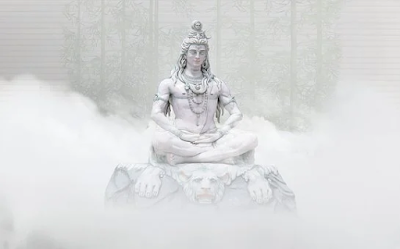
    Hinduism - Who Is Lord Shiva?


    Shiva (auspicious) - One of the three most significant deities in the Hindu pantheon, together with the deity Vishnu and the Goddess.

    All three are remarkable for being almost missing from the Vedas, and their ascent to power (and subsequent eclipse of the original Vedic gods) indicates a significant shift in Hindu tradition.

    Shiva is the only one of the three who is not named in the Veda.

    He is connected with the god Rudra, who initially appears in a few late Vedic hymns and is eventually described as the only ultimate deity underlying all things in the Shvetashvatara Upanishad.

    In this upanishad, the term Shiva ("auspicious") first occurs as an adjective modifiying the feminine noun body.

    Despite his presence in the upanishad as a supreme god, Rudra/status Shiva's is ambiguous.

    He is characterized as a skilled archer who lives in the highlands (away from humans) and is commanded not to hurt either man or beast with his arrows.

    Rudra/Shiva is undoubtedly not a Vedic god, and some have argued that his origins lay in the Indus Valley civilization, citing as proof one of the seals discovered at Harappa, an ancient city in Pakistan, depicting a horned figure sitting cross-legged as if in meditation.

    This association is feasible, but it isn't really persuasive.

    He may have joined the pantheon as a deity worshipped by ascetics, who have historically been connected with mountain settlements.

    Shiva is associated with ascetics because of various ascetic characteristics ascribed to him, such as matted hair and an ash-smeared torso.

    His marginal place among the gods might also be explained by his ascetic background, since he would have been a "outsider" to the Vedic sacrifice cult, which was the "established" religion at the time.

    Shiva's dramatic entrance into the pantheon occurs during the account of his wife Sati's death.

    In this myth, Shiva's father-in-law Daksha's disparaging remarks—that Shiva was an ascetic without money, work, or family who was unsuitable to enter respectable society—led to the destruction of Daksha's sacrifice as a demonstration of Shiva's power.

    Shiva's iconography, mythology, and character have all kept this ambiguous, sometimes marginal nature.

    The fact that he is a god whose nature enables him to pass transcend competing forces (or dualities) inside himself and the universe by being the potential of both forces at the same time is perhaps his most fundamental and significant attribute.

    Shiva may symbolize both the wild and hazardous aspect of life as well as the polished and dignified side.

    Atop the one hand, he had the look of a traditional ascetic, with matted hair, an ash-smeared physique, and a residence on Mount Kailas in the Himalayas.

    He is, on the other side, Hindu society's ideal of a nice husband who adores his wife Parvati.

    He has snakes on his body and is dressed in a bloody elephant hide, yet he also wears the Ganges River and the crescent moon, which are symbols of beauty, purity, and auspiciousness.

    His mythic deeds emphasize his overwhelming power, which no foe can stand up to, as well as his sudden and sometimes impetuous temper, which is best seen in his destruction of Kama, the god of love; however, this sudden violence contrasts with his grace and favor toward his devotees (bhakta), for whom he is given the name "quickly satisfied" (Ashutosh), and to whom he will give almost everything.

    He is historically portrayed as the expositor of the tantras, the most secret and secretive religious practice of all, yet being shown as simple and without deception (as Bholanath, the "simple lord").

    This transcendence of all polarities may be observed in the representations that usually depict him, such as his form as Nataraja, which depicts several of his opposing attributes, or as Ardhanarishvara, which is half masculine and half female.

    The linga, the pillar-shaped item that is his symbolic form, whose base and shaft are seen as signifying male and female reproductive organs, exemplifies this transcending of duality.

    Finally, the tantric theory of the subtle body (the system of psychic centers, or chakras, that run throughout the human body), in which religious practice seeks for the union of Shiva and Shakti, exemplifies this transcendence.

    Shiva encompasses all the conflicting possibilities for human experience, as Wendy Doniger O'Flaherty points out, and in legendary form gives a resolve that one ordinary human existence can never achieve.

    In response to the earlier and more established concept of Vishnu's avatars, Shiva's adherents created a philosophy of avatars (incar tures of Shiva who come on earth in the guise of a variety of saints, sages, and lesser deities to restore balance and do other required deeds).

    Shiva's avatars, unlike Vishnu's, do not seem to have been a mechanism to accommodate minor existing deities within the bigger pantheon.

    The most significant of Shiva's twenty-one incarnations is Hanuman, who is the only one with a well-established separate cult.

    The others were sages (such as Durvasas) and prominent creatures, but unlike Vishnu, the worship of Shiva's avatars has never overshadowed Shiva's own adoration.

    See Wendy Doniger O'Flaherty's Shiva, 1981, and Stella Kramrisch's The Presence of Shiva, 1981, for further information on Shiva's mythology.

    Also see Shaiva.


    ~Kiran Atma


    You may also want to read more about Hinduism here.

    Be sure to check out my writings on religion here.


    Hinduism And Hindu Theology - What Is Asceticism?


    In its broadest meaning, this term refers to physical discipline, most often the abandonment of normal society and conventional social life in the pursuit of divine enlightenment and ultimate spiritual freedom (moksha). 

    Throughout history, ascetic practice has emphasized many recurring themes. 


    Celibacy has been one of the most popular for a number of reasons. 


    • Not only does sexual pleasure utilize the senses to entrap a person, but home and family ties are also regarded as a hindrance to serious spiritual pursuits. 
    • The notion that semen is a man's concentrated essence, and therefore something to be carefully guarded, motivates the focus on celibacy. 
    • Although semen must be spent in order to reproduce, it should not be spilt carelessly since it depletes a man's vitality. 
    • Celibacy is said to provide more vitality, which leads to higher spiritual achievement. 


    The practice of tapas, or physical austerity, has long been a defining feature, with the belief that enduring physical suffering not only develops character but also produces spiritual force. 


    • Tapas may take on horrific self-mutilation and mortification forms at times. 
    • Other times, a gentler physical discipline, such as a type of hatha yoga, may be used to prepare the body and mind for long periods of practice. 


    In general, ascetics' spiritual growth may take a number of routes, which frequently reflect the talents and preferences of the ascetics who pursue them. 


    • Some ways have emphasized conventional study, some have emphasized worship and devotion, others have emphasized physical austerity, while yet others have emphasized meditation and personal revelation. 
    • Almost often, spiritual instruction takes place under the supervision of a religious preceptor (guru), who is responsible for his students' spiritual growth. 
    • Although there is some debate over how long and how venerable asceticism has been practiced in India, it has a long and venerable history. 
    • The most bold assertion is that the Indian ascetic tradition stems from the Indus Valley civilization's religion. 
    • This assertion is based on an old artifact known as an Indus Valley seal, which depicts a person sitting cross-legged as though in meditation. 
    • Whether one believes this assertion or not, the Vedas, the oldest Hindu texts, provide plenty of evidence of asceticism. 


    The Vedas describe renunciants like the vratya, yati, and muni, as well as ascetics who live in the woods. 


    • Indeed, the Aranyakas or "Forest Books," as one layer of the Veda is known, indicates that it was written by such ascetics. 
    • Buddhist and Jain literature, as well as certain later upanishads, clearly indicate that monastic living was firmly established by the fifth century B.C.E. 
    • All of these ascetics, whether Hindu, Buddhist, or Jain, were lumped together under the name shramana, which means “to strive” in Sanskrit. 


    The theological conflict between the two main religious paradigms, the Brahmana ideal linked with Vedic religion and the shramana ideal associated with austerity, is well acknowledged. 


    • The Brahmana ideal was based on sacrifice, mastery of complex sacred texts, and hereditary priesthood; it was also so expensive that it almost required royal patronage—all of these factors made it the "establishment religion." These concepts clashed with the shramana ideal, which was renunciant, individualist, and focused on inner experience. 
    • This conflict had been partly resolved by the time of the Dharma Shastras (treatises on religious duty); asceticism had been consigned to the last of the four ashramas (stages of life), that of the Sanyasi. 
    • Even yet, there is still tension since, according to these scriptures, a twice-born man cannot become a Sanyasi until he has met his children's children, which would put him in his late thirties. 
    • These scriptures limit asceticism to twice-born males who have completed their householder duties, but they exclude women and low-caste men. 
    • Needless to say, the real world has never resembled the utopian society depicted in the Dharma Shastras. 


    Initiated Hindu ascetics may be classified into many main categories based on their organizational structure. 


    • One distinction is based on the patron god of ascetics; the Shaiva are Shiva worshippers (bhakta), while the Vaishnava worship Vishnu. 
    • The Kapalikas, Kalamukhas, and Pashupatas are Shaiva ascetic groups that have vanished; the Dashanamis and Nathpanthis are the only two Shaiva groups that remain. 

    • The Dashanamis are the most renowned ascetics in the world. 
      • They are said to have been founded by the renowned philosopher Shankaracharya and have a long history of emphasizing study. 

    • Gorakhnath, a miracle-working yogi about whom little is known, is the ancestor of the Nathpanthis. 
      • The Nathpanthis are renowned for emphasizing the physical body's change via yoga. 

    • Vaishnava ascetics are more recently organized, and in northern India, they are divided into four groups (chatuhsampradayi Nagas), each named after the founder of the group:

      • Ramananda for the Ramanandis, 
      • Nimbarka for the Nimbarkis, 
      • Chaitanya for the Madhva Gaudiyas (Brahma Sampraday), and 
      • Vishnuswami for the Vishnuswamis. 


    • Both the Dashanamis and the Vaishnava ascetics have formed bands of warriors known as Nagas ("naked") from at least the sixteenth century, and perhaps much earlier. 
      • These soldier-ascetics were tasked with guarding the other ascetics, as well as acting as long-distance merchants and mercenary warriors. 
      • Although these Naga orders still exist today, they are no longer battle-ready. 

    • The Udasis, who worship the panchayatana ("five-fold"), a grouping of five Hindu deities: Shiva, Vishnu, Durga, Ganesh, and Surya, are another prominent sect. 
      • In terms of religion, the Udasis are in between the Shaivas and the Vaishnavas. 
    • Reform-minded ascetics have formed their own ascetic bands throughout the ages, a process that continues now. 


    G. S. Ghurye, Indian Sadhus, 1964; Jadunath Sarkar, A History of the Dasanami Naga Sanyasis, 1958; Padmanabh S. Jaini, “Sramanas: Their Conflict with Brahmanical Society,” in Joseph Elder (ed. ), Chapters in Indian Civilization, 1970; Robert Lewis Gross, The Sadhus of India, 1992; and Peter van der Veer, Gods on Earth, 1988 for more information Also known as panchayatana puja.


    You may also want to read more about Hinduism here.

    Be sure to check out my writings on religion here.


    Hinduism - Who Are The Nathpanthi?


    Renunciant ascetic society formed by the sage Gorakhnath.

    The Nathpanthis are also known as jogis (due to their emphasis on yoga), Gorakhnathis (due to their founder's name), Kanphatas (due to the signature earrings placed in the split cartilage of both ears), Gosains ("master of the senses"), and simply as Naths ("lord") due to the characteristic suffix taken as part of their names during ascetic initiation.

    Although the Nathpanthis are an ancient institution with a lengthy history in northern India, their historical record is scant.

    The group has no centralized administration; its concentration on yoga has resulted in an inner practice rather than a focus on temples or other tangible artifacts.

    Despite the fact that the Nathpanthis are Shiva worshippers (bhakta), they are distinct from the Shaiva Sanyasis.

    The Naths' spiritual practice has always emphasized the mastery of the subtle body as a path to ultimate soul freedom.

    The Naths believe that liberation is bodily immortality, rather than the more commonly acknowledged escape from the cycle of transmigration.

    The subtle body is a physiological system that is thought to exist on a separate level than coarse matter yet is related to the material body.

    It is shown as a collection of six psychic centers (chakras) running approximately down the spine, with two divine principles, Shiva (consciousness) and Shakti (power), residing above and below these centers (power).

    The seeker aspires to unite these two principles at the summit of the head, thereby changing the gross body's perishable parts into immortality.

    The Nathpanthis' dominant metaphor for discussing this process is the merger of the sun and the moon.

    The sun, which is associated with Shakti, represents change and destruction, while the moon, which is associated with Shiva, represents stability and immortality.

    In certain circumstances, the union of the sun and the moon is stated in highly abstract terms; for example, "ha" refers to the sun and "tha" refers to the moon in the description of hatha yoga.

    Other abstract definitions of this process refer to achieving vital wind (prana) balance or yogic unity in the subtle body.

    In other circumstances, such as in the practice of vajroli mudra, this oneness is symbolized in tangible ways.

    This sexual practice involves urethral suction, often known as the "fountain-pen method," in which a man sucks his sperm back into his body after ejaculating into his female partner.

    Through interaction with the woman's uterine blood, the sperm has been purified.

    The Nathpanthis have been influential on many northern Indian bhakti poet-saints, including Kabir, as well as as an ascetic society in their own right.

    Internal religion has always been emphasized in their religious practice, with individual fulfillment viewed much more significant than societal obligations or institutionalized worship.

    Gorakhnath and the Kanphata Yogis, by George Weston Briggs, is the most comprehensive source on Gorakhnath and his disciples.

    ~Kiran Atma


    You may also want to read more about Hinduism here.

    Be sure to check out my writings on religion here.

    Hinduism - What Does Goswami Mean In Sanskrit? Who Are The Goswami Sanyasis?


    Goswami is a vernacular variant of the Sanskrit term goswami, which means "master of the senses." 

    Although this term might be used to any ascetic, it was most widely used to refer to particular subgroups of Sanyasis, the ascetic devotees (bhakta) of the deity Shiva, under British colonial authority in the eighteenth and nineteenth centuries.

    Sanyasis at the lowest end of the ascetic status spectrum, such as the Nathpanthis or Naga (militant) Sanyasis, were known by this moniker and were often recruited from the lower sections of society.


    You may also want to read more about Hinduism here.

    Be sure to check out my writings on religion here.


    Hinduism - Who Is A Naga?


    Naga is a Sanskrit root word that means "naked." Any fighting or militant ascetic is referred to as a militant ascetic.

    Companies of fighting ascetics were originally chartered by ascetic orders to defend their members and their belongings.

    The Dashanami Sanyasis' Naga orders were worshippers of the deity Shiva, while the Bairagi orders were devotees of the god Vishnu.

    These Naga ascetics emerged into strong military and commerce powerhouses in northern India throughout the eighteenth century.

    Naga ascetics have created their own small kingdoms on various occasions.

    In many other cases, whether as individuals or as mercenary warriors in the service of a ruling king, they had a significant impact on the northern Indian economy and politics.

    Because many of these ascetics would go into war with just their weapons, their moniker was a literal representation of their activities.

    Their ash-streaked bodies and matted hair made for a terrifying image.

    The military prominence of India has waned as the country's socioeconomic and political situations have altered.

    These Naga ascetics' associations (akhara) still exist, however they are now most significant in regulating the sequence of bathing (snana) during the Kumbha Mela.

    The ascetics' own stories are replete with tales of sectarian struggle (Shaivas vs.

    Vaishnavas); a solid indicator that the Shaivas achieved ascendancy is that they had precedence in bathing during the Kumbha Melas.

    For more information, see Jadunath Sarkar's A History of the Dasanami Naga Sanyasis, published in 1958; David Lorenzen's "Warrior Ascetics in Indian History," published in the Journal of the American Oriental Society, Vol. 98, No. 1, 1978; and James G. Lochtefeld's "The Vishva Hindu Parishad and the Roots of Hindu Militancy," published in the Journal of the American Academy of Religion, Vol. LXI


    ~Kiran Atma


    You may also want to read more about Hinduism here.

    Be sure to check out my writings on religion here.


    Hinduism - What Is Bhava? Who Is Bhavabhuti?


    Bhava is the Sanskrit word for "being." The deity Shiva's epithet. 


    Sanskrit poet and playwright Bhavabhuti (early 8th century C.E.) is known for his ability to convey and communicate emotions via words. 


    • His most renowned drama, the romance Malatimadhava, is notable not just for its own sake, but also because the main villain is a wicked ascetic who is thought to be a member of the extinct ascetic order known as the Kapalikas. 


    The Kapalikas were Shiva worshippers (bhakta), and their renowned rituals emulated Shiva in his wrathful avatar as Bhairava. 


    • They had long, matted hair, spread ash on their bodies (ideally from a cremation site), and carried a club and a skull bowl (kapala). 
    • They also engaged in prohibited conduct, such as drinking wine, eating meat, using cannabis and other narcotics, performing human sacrifice, and orgiastic intercourse, according to certain accounts, which led them to be shunned and dreaded. 
    • From a historical standpoint, Bhavabhuti's depiction of this wicked ascetic and his followers is one of the first datable allusions to the Shaiva style of asceticism.


    You may also want to read more about Hinduism here.

    Be sure to check out my writings on religion here.


    Hinduism - Who Is Swami Karpatri Maharaj?


    A modern-day ascetic who is known for his stringent ascetic habits.

    His name stems from the fact that he used his hands (kara) as a receptacle (patra) to accept the food he received as charity.

    Because the quantity of food one may acquire in this manner is rather little, it is considered one of the harshest ascetic practices.

    The absence of an eating vessel denotes total detachment from worldly goods.

    Swami Karpatri was also noted for his political conservatism.

    He was one of the founders of the political party Ram Rajya Parishad ("Organization for Ram's Reign") after India's independence in 1947.

    The party's central claim was that in order to create a well functioning society, individuals needed to maintain the ancient caste system's distribution of rank and labor.

    Aside from its orthodox social agenda, the party supported Hindu issues such as a complete prohibition on cow slaughter.

    Swami Karpatri, while being a Sanyasi who had abandoned the world, nonetheless retained certain lingering attitudes from his previous life.

    He was born a brahmin, and even after renunciation, he would only eat from brahmin households.

    Swami Karpatri shows how many ascetics still have ties to the "ordinary" world, both in terms of expressing worry about their previous position and adopting organized political action to support issues that represent deeply ingrained Hindu beliefs. 


    You may also want to read more about Hinduism here.

    Be sure to check out my writings on religion here.

    Hinduism - Who Is A Faqir, Or Faqir Baba, Or A Muslim Ascetic In Contemporary India?


    Faqir is a word that has a lot of different meanings (variant of fakir, from the Arabic poor).

    As the Arabic root of the term suggests, this refers to a Muslim ascetic in the strictest meaning. 

    In common parlance, the term has been used to any ascetic (as seen by Winston Churchill's description of Mohandas Gandhi as a "half-naked faqir"). 

    Both of these idioms are still in use in contemporary India. 

    Although the term "faqir baba" has come to denote a Muslim following India's partition in 1947, Hindu ascetics continue to refer to someone who is divorced from all things and reliant on God for sustenance as a "faqir baba." 


    You may also want to read more about Hinduism here.

    Be sure to check out my writings on religion here.


    Hinduism - Who Is A Kapalin?


     (“skull-bearer”) Any ascetic who uses a human skull as a begging bowl or as a piece of ascetic gear is known as a human skull ascetic.

    Devotees (bhakta) of the deity Shiva in his terrible aspect are ascetics.

    The skull is a sign that, like Shiva, they have transcended all worldly worries of cleanliness and impurity (ashaucha), as well as traditional norms of what is and is not proper. 


    You may also want to read more about Hinduism here.

    Be sure to check out my writings on religion here.


    Paramahamsa


     ("Ultimate Hamsa") A Hindu ascetic is one of four categories.

    The four categories were determined by their ostensible means of subsistence, which has shown to be much less essential for ascetic identity than sectarian or organizational allegiance in reality.

    The Paramahamsa is the most revered of the four, with Kutichaka, Bahudaka, and Hamsa following in sequence of increasing prominence.

    Paramahamsas have no permanent residence and are always seen in a deserted area.

    They are supposed to have transcended all concerns of religious obligation (dharma), purity, and impurity (ashaucha), to have destroyed all ties with the world, and to be constantly absorbed in contemplation of the Supreme Brahman.

    The Dashanami Sanyasis, austere worshippers (bhakta) of the deity Shiva, have a more specific definition for the term paramahamsa.

    Their organization is organized into 10 parts, each with its own name.

    The term "paramahamsa" refers to an ascetic who is a member of one of the three twice-born (dvija) varnas—that is, a brahmin, kshatriya, or vaishya, the three social groupings with greater symbolic status—and has been initiated as a Sanyasi in one of the six divisions that allow non-brahmins.

    The Naga or battling ascetics, who would initiate shudras, have a greater rank in these divisions than the Paramahamsas, while the Dandis, who are generally brahmins, have a lesser standing.

    Supernatural Powers Of Yogis - Yogic Luminescence, Asceticism, And Psychic Power


      Long before the word yoga came to mean "spirituality" or "spiritual path," He compelled the Gods to grant His request that the heavenly river Ganges (Ganga) release its waters to flood and regenerate the parched earth by raising his arms high. 


      The archetypal ascetic (tapasvin) of the Vedic period is the ecstatic muni, not the obedient householder-sacrificer or even the elevated seer (rishi). 


      • The muni is part of what is known as the Vedic counterculture, which consists of religious people and organizations (such as the Vratyas) that followed their holy goals outside of Vedic society. 
      • The muni has been referred to be the forerunner of the later yogi? in that he resembles a lunatic in his euphoric oblivion. 
      • Many aspects of his lifestyle foreshadow the later avadhuta's unconventional conduct, which is celebrated in the Avadhuta-Gita and other medieval Sanskrit writings. 


      Tapas has survived as a separate tradition from Yoga.


      The Mahabharata epic, for example, documents this simultaneous growth. 

      Many famous tapasvins' tales are told, including Vyasa, Vishvamitra, Vashishtha, Cyavana, Bharadvaja, Bhrigu, and Uttanka. 


      Indeed, the tradition of tapas is given precedence over Yoga in several sections of the epic, indicating the passages' early antiquity. 


      • Tapas is usually achieved via chastity (brahmacarya) and the subjection of the senses (indriya-jaya). 
      • The inherent tendencies of the body-mind are believed to produce psychophysical effulgence (tejas), brightness (jyotis), tremendous power (ba/a), and vitality (ba/a) (vfrya). 


      Since Vedic times, another word strongly associated with asceticism is ojas (apparently related to the Latin a dt ustus, "majestic"). 


      • It refers to a certain kind of numinous energy that energizes the whole body and mind. 
      • Ojas is produced primarily via the discipline of chastity, as a consequence of sexual energy being sublimated. 
      • It is said to be so powerful that the ascetic may influence and alter his or her own fate as well as the fate of others. 
      • According to the Atharva-Veda, the deities attained immortality by practicing chastity and austerities. 


      Tapas is typically associated with the acquisition of psychic powers (siddhi), which often proved to be the downfall of unwise ascetics who abused their extraordinary abilities. 


      • The Tapas tradition unfolded against the backdrop of a magical worldview in which the cosmos is filled with personalized sources of psychic power, both in the Vedic Age and the Epic Age (virya). 
      • He also names tapas as one of the five observances or restrictions (niyama) and claims that austerity perfects the body and its senses. 
      • Tapas is clearly limited to the role of a warm-up exercise in this context. 


      Yoga is primarily concerned with meditation and its enhanced form, ecstatic transcendence (samadhi).


      • For millennia, the tradition of tapas has coexisted with the schools of Yoga, and this is also the case today. 

      The hagiography Maharaj tells the extraordinary tale of a modern tapasvin and saint who supposedly lived for years. 

      • Tapasviji Maharaj, the story's protagonist, was born into a royal family but abandoned everything in his late fifties and girded himself with a loincloth. 
      • He was regarded as a powerful ascetic and miracle worker throughout his lifetime. 
      • He achieved incredible feats of endurance, overcoming both pain and boredom. 
      • He stood on one leg with one arm extended skyward for three years, then never laid down for another twenty-four years while traveling several kilometers every day. 


      This saint drew a lot of attention in the United States because of his extraordinary lifespan, which he said was due to his receiving the kaya-kalpa or renewing therapy known to traditional Indian medicine three times. 

      • The effectiveness of this therapy is mainly determined on the patient's temperament, since he or she must be able to tolerate extended periods of near-complete isolation. 
      • Only a highly adept meditator of Tapasviji Ma­ haraj's caliber could conceivably bear the agony of self-denial. 
      • Clearly, the tapasvins of ancient and modern India have much to teach Western medicine.


      You may also want to read more about Kundalini Yoga here.

      You may also want to read more about Yoga here.


      You may also want to read more about Yoga Asanas and Exercises here.


      You may also want to read more about Hinduism here.

      Be sure to check out my writings on religion here.