Showing posts sorted by relevance for query magical power. Sort by date Show all posts

Hinduism - What Is The Significance Of Truth In Hindu Philosophy?


The Power of Truth.

Truth, according to traditional Hindu belief, has magical power of its own, a power to which people might turn in times of need.

The famous act of truth, a conditional statement in which the first part is a true statement about one's past behavior and the second part is a request for a specific result (for example, "If I have always given to those who begged from me, may this fire not burn me"), is one method of appealing to this power.

The power of truth was also evoked in ordeal trials, and it was considered as the power that made the ordeal a genuine way of putting individuals to the test.

~Kiran Atma


You may also want to read more about Hinduism here.

Be sure to check out my writings on religion here.

What is Kundalini?


UNDERSTANDING KUNDALINI


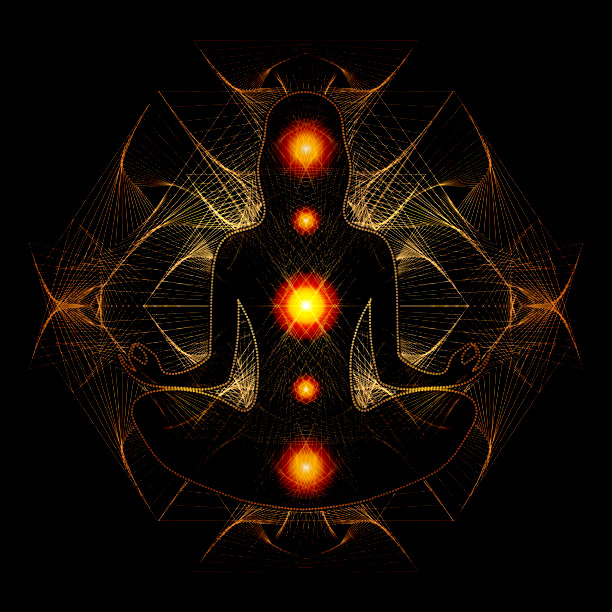
The word Kundalini is well-known among Yoga students as the force, in the form of a coiled serpent, that resides in Muladhara Chakra, the first of the seven Chakras, with the other six being Svadhishthana, Manipuraka, Anahata, Visuddha, Ajna, and Sahasrara, in that order. Both Sadhanas, such as Japa, meditation, Kirtan, and prayer, as well as all virtue development and observance of austerities such as reality, non-violence, and continence, are at best calculated to awaken this serpent-power and cause it to pass through all the subsequent Chakras, beginning with Svadhishthana and ending with Sahasrara, also known as the thousand-petalled lotus, the seat of karma. 

This Kundalini influence is sleeping in worldly-minded people who enjoy sensual and sexual pleasures because there is no stimulation in the form of spiritual practices, as the power produced by such practices alone awakens the serpent-power, not any other power derived from worldly wealth and affluence. When the aspirant devotes himself to all the disciplines prescribed in the Shastras and as instructed by the preceptor, in whom the Kundalini has already awakened and reached its abode or Sadasiva, achieving which blessed achievement alone qualifies him to act as a Guru or spiritual preceptor, guiding and assisting others to achieve the same goal, the veils or layers ebb away. 

When Kundalini passes through Chakra after Chakra, causing them to bloom in all their glory, new worlds with indescribable wonders and charms open up before the Yogi, planes after planes reveal their existence and grandeur to the practitioner, and the Yogi gains divine knowledge, strength, and bliss in increasing degrees. When the Kundalini ascends one Chakra or Yogic center, the Yogi ascends one level or rung higher on the Yogic ladder; he reads one more sentence, the next page, in the divine book; the more the Kundalini ascends, the closer the Yogi gets to the target or spiritual perfection in relation to it. 

When the serpent-power crosses the top center, or Sahasrara Chakra, or the Thousand-petalled lotus, the Yogi loses his identity in the ocean of Sat-Chit-Ananda or Existence-Knowledge-Bliss Absolute and becomes one with the Lord or Supreme Soul. He is no longer a common man, not even a mere Yogi, but a truly enlightened sage who has overcome the everlasting and limitless holy realm, a savior who has triumphed over delusion, a Mukta or free one who has crossed the ocean of ignorance or transmigratory life, and a superman with the authority and ability to rescue the other struggling souls of the relative universe. The Scriptures praise him and his accomplishments the most, in the most glorifying manner imaginable. Brahma, Vishnu, and Siva, to name a few celestial beings, are envious of him.


TANTRIK SADHANA AND KUNDALINI


Kundalini Yoga is a part of Tantrik Sadhana, which describes this serpent-power and the Chakras in detail, as described above. The active part of the Existence-Knowledge-Bliss Absolute, Mother Divine, exists in the bodies of men and women in the form of Kundalini, and the entire Tantrik Sadhana aims to awaken Her and reconcile Her with the Lord, Sadasiva, in the Sahasrara, as mentioned in depth at the beginning. Tantrik Sadhana uses Japa of the Mother's name, prayer, and a variety of rituals to accomplish this aim.


HATHA YOGA AND KUNDALINI


Hatha Yoga also bases its philosophy on Kundalini, but the techniques used are not the same as Tantrik Sadhana. Hatha Yoga aims to awaken Kundalini by disciplining the human body, purifying the Nadis, and regulating the Prana. It tones up the entire nervous system and brings it under the conscious control of the Yogi, it controls the Prana, regulates its movements, and also blocks and seals it without allowing it to move, it purifies the inner organs of the physical body, and it finally brings the mind itself under the conscious control of the Yogi by Pranayama. These combined methods cause Kundalini to move upwards towards Sahasrara.


RAJA YOGA AND KUNDALINI


Raja Yoga, on the other hand, makes no mention of Kundalini and instead proposes a more nuanced, higher course, spiritual and logical, in which the aspirant is asked to calm the mind, remove all senses, and enter meditation. Unlike Hatha Yoga, which is mechanical and spiritual, Raja Yoga teaches an eight-limbed technique that appeals to aspirants' hearts and minds. 

It promotes moral and ethical development by its Yama and Niyama, aids intellectual and cultural development by Svadhyaya or study of holy Scriptures, satisfies the emotional and devotional aspect of human nature by enjoining to surrender oneself to the Creator's will, has an element of mysticism by including Pranayama as one of the eight limbs, and finally, prepares the aspirant for the ascension into heaven. The human mind and Chitta are the goals to be killed in Raja Yoga's doctrine and prescription of techniques, since they alone cause the individual soul to lose its true essence and carry on birth and death, as well as all the woes of phenomenal life.


VEDANTA AND KUNDALINI


When it comes to Vedanta, though, there is no place for Kundalini or any other magical or mechanical approaches. It's all about inquisitiveness and intellectual speculation. According to Vedanta, the only thing that can be demolished is ignorance about one's true nature, which can be destroyed only through understanding one's true nature, which is Sat-Chit-Ananda or Existence-Knowledge-Bliss. 

This ignorance cannot be destroyed by research, Pranayama, practice, or any amount of physical twisting and torturing, but only by knowing one's true nature, which is Sat-Chit-Ananda or Existence-Know Man is divine, free and one with the Supreme Spirit always, which he forgets and identifies himself with matter, which itself is an illusory appearance and a superimposition on the spirit. Liberation is freedom from ignorance and the aspirant is advised to constantly dissociate himself from all limitations and identify himself with the all-pervading, non-dual, blissful, peaceful, homogeneous spirit or Brahman. 

When meditation becomes intensified, in the ocean of Existence or rather the individuality is blotted or blown out completely. Just as a drop of water let on a frying pan is immediately sucked and vanishes from cognition, the individual consciousness is sucked in by the Universal Consciousness and is absorbed in it. According to Vedanta there cannot be real liberation in a state of multiplicity, and the state of complete Oneness is the goal to be aspired for, towards which alone the entire creation is slowly moving on.


Paganism & Wicca - What Is A Charm?

A vocal spell, either spoken or (more often) sung, is referred to as a charm. 

  • The name Carmenta comes from a Greek oracular ghost who became quite prominent in Italy. 
  • In contrast to the Greeks, who saw witches as primarily practitioners of plant magic, the Romans connected witchcraft mostly with incantations (Carmentis). 
  • Incantations and charms are interchangeable terms; many spells use rhymes. Many spells are made up entirely of charms. 


The magical community still uses the term "charm" in this way. 

To be charmed is to be "spellbound," though in a nice way. 


A supplementary contemporary meaning of charm refers to an item having magical power, such as a talisman or amulet. 


  • Charm bracelets, for example, have little charms. 
  • This is what people mean when they say "lucky charms." 
  • This meaning is far more prevalent outside of the magical world, and it is frequently the only term most people are acquainted with. 

A Charmer is a witch who can perform spells.


You may also want to read more about Paganism here.

Be sure to check out my writings on Religion here.


Paganism & Wicca - Who Is Aje The Yoruba Goddess?


Aje is a Yoruba term that means "witchcraft." It literally means "Our Mothers," and it refers to supernatural feminine energies that may be employed for good or evil. 


  • When balanced and directed benevolently, Aje is very useful to the whole society. 
  • Nevertheless, some individuals only use the term Aje to indicate only negative manifestations of this power, similar to how they use the phrase "witchcraft." 


  • The term is also cognate with the words "prosperity" and "wealth" in another sense. 
  • Aje is a term that describes both the power (magical energy) and individuals who embody and manage it. 

  • Although any woman might be Aje, it is most firmly associated with elderly ladies. 
  • Despite the fact that Aje are human, they are commonly depicted as birds, and they are commanded by the Orisha Oshun, who has strong ties to witchcraft, birds, and feminine power. 
  • The masculine orishas Oko and Ogun are likewise linked to Aje. 


MAGICAL PROFESSIONS: Metalworkers; 

DIVINE WITCH: Oshun, Orisha Oko;


You may also want to read more about Paganism here.

Be sure to check out my writings on Religion here.


Hinduism - What Is Urdhvabahu?


("one with an upraised arm") A person who engages in a particularly gruesome kind of physical humiliation in which one or both arms are constantly elevated.

The muscles atrophy after a while, and the arms can no longer be lowered.

Although urdhvabahu is not widely practiced, it has a long history as a kind of ascetic discipline.

As with many forms of extreme physical austerity, this is said to provide tremendous spiritual awareness and magical power.

This view is founded in part on the widely held belief that the desire to endure physical pain develops spiritual power, but it might also arise from the strength of will required to ca

~Kiran Atma


You may also want to read more about Hinduism here.

Be sure to check out my writings on religion here.rry it out—a strength of will that would presumably have equivalents in other aspects of one's personality.

Paganism & Wicca - What Is A Grabancijas Or Garaboncias?

Grabancijas is Southern Slav), and Garaboncias is Hungarian.


This word originates from Italian: necromancia and evolved into nigromancia, which was then perverted into gramanzia, and finally to these present forms. 


  • Both terms allude to the same thing: a supernatural creature born as an amazing wonder-child who learns and uses magic via shamanic trance. 
    • Because he is born with teeth and/or an additional finger, the child's fate is foreshadowed from birth. 
    • The boy, in his seventh or fourteenth year, must face a mystical foe in the guise of a bull. You won't have to look for this opponent; it'll find you.

  • While in a shamanic trance, you may gain magical power by levitating. 
  • The garaboncias is a traveler carrying a magical black book, according to legend. 
    • When he wants to ride in the skies, he raises snakes that turn into dragons. 
    • The garaboncias has a strong desire for dairy products. 
    • He utilizes his abilities to reward good deeds and punish bad deeds. 
    • Using his magic staff or a mirror, the garaboncias may discover riches, stolen or missing things, animals, or humans. Táltos is another name for Táltos.


You may also want to read more about Paganism here.

Be sure to check out my writings on Religion here.


Paganism & Wicca - What Is Ashe?

 Ashe is pronounced “ah-shay” and is sometimes written ase and axe. 

This Yoruba phrase denotes metaphysical energy and is associated with Earth's magical reproductive capabilities. Ashe may also mean "command" or "authority." 

  • Ashe gives a human (or god) access to vast reservoirs of magical energy and power. This power is said to be imbued in the word itself. 


Related to - Baraka, Chi, Heka, Mana, and Nyama.


You may also want to read more about Paganism here.

Be sure to check out my writings on Religion here.


Hinduism - Who Is Lord Hanuman In The Hindu Pantheon And Hindu Mythology?


Hanuman is a Hindu deity with a monkey head.

Hanuman first appears in the Ramayana, the first of the two major Indian epics, where he is depicted as a minister of the monkey king Sugriva and a faithful servant of Rama, the epic's protagonist and god-king.

Despite his modest status in the Hindu pantheon, Hanuman is a very popular deity in contemporary India because he provides mankind with a god who is fundamentally similar to themselves (or what they would want to be), but on a larger scale and with more power.

Hanuman is thought to be the result of a mating between Vayu, the wind deity, and Anjana, the nymph.

Hanuman the child is always hungry after his birth, and one day he tries to devour the sun.

Indra, the gods' monarch and ruler of heaven, gets enraged at Hanuman's behavior and smashes him with a thunderbolt, fracturing his jaw (hanu).

When Vayu learns of his son's injuries, he gets enraged and stops doing his customary things.

Vayu's strike indicates that no one can live a normal existence since winds are responsible for all internal activities in Indian physics, including digestion, breathing, and excretion.

The gods realize their position after a short time and beseech Vayu for pardon; he is appeased when each deity agrees to offer Hanuman a wonderful gift.

Hanuman has immense abilities as a result of these celestial blessings.

He is very powerful, as seen by his picture, which depicts him with bulging muscles.

He can also treat people using plants and natural remedies, as well as his magical skills to defend people from bad supernatural entities.

One of his most unusual divine gifts is the ability to live as long as he wants and to choose when he dies.

His greatest virtue, and many believe the true source of his power, is his devotion to Rama (bhakti).

Hanuman is an important character in the Ramayana who helps the plot progress.

Hanuman is sent with a troop of monkeys to retrieve Sita, Rama's stolen wife, and finds her imprisoned in the country of Lanka after a long and laborious quest.

Hanuman is given considerably more prominence in Tulsidas' Ramcharitmanas (a vernacular translation of the Ramayana), in which he is converted from a formidable monkey servant to a devotee (bhakta) whose only purpose is to serve Rama with passionate devotion.

This devotion forbids any kind of worldly connection, including marriage and family, and Hanuman continues to be a role model for a religious lifestyle that emphasizes celibacy and abstinence.

Celibacy is seen as a source of strength in Indian culture since it avoids the loss of a man's vital energy that occurs after ejaculation.

Hanuman's greatest attribute, according to his worshippers, is his capacity to function as a go-between for Rama, who is normally seen as far removed from human matters.

People feel a connection and kinship with Hanuman since he is also a devotee, despite the fact that his abilities are considerably greater than theirs.

In fact, they feel Hanuman's words have a larger probability of reaching Rama's attention and being acted upon.

Tulsidas, the poet-saint, names Hanuman as his messenger in a poem suitably titled the "Letter of Petition" (Vinaya Patrika), with the full assurance that his case would be heard in the heavenly court.

Hanuman's close relationship with heavenly power, his unquestionable abilities, and his perceived accessibility and empathy have all combined to make him one of India's most widely venerated deities, transcending sectarian lines.

He is often said to be a Vaishnava or follower of Vishnu because of his dedication to Rama.

However, in an unexpected twist, Hanuman is also adored by the Shaivites, Shiva's adherents, as an avatar or "incarnation" of the deity Shiva.

Hanuman is typically venerated on astrologically unfavourable days as a guardian god, to keep these inauspicious forces at bay.

His colossal strength, celibacy, and unwavering devotion have made him the patron god of Indian wrestlers, who attempt to emulate him while training.

Finally, he serves as a healer and a source of sustenance.

On the one hand, he is known for his work as an exorcist, assisting individuals in the exorcism of demonic spirits.

On the other hand, he protects life for those who know his particular phrase, which allows them to select their own death moment, just as he did.

Hanuman is just now getting the respect he deserves, despite his relevance in modern Hindu culture.

Sudhir Kakar, Shamans, Mystics, and Doctors, 1982, has further information. 


You may also want to read more about Hinduism here.

Be sure to check out my writings on religion here.


Paganism & Wicca - Who Is A Root Doctor, Root Woman, Or Root Worker?


A witch, healer, or magical practitioner who specializes in herbs. 


  • Root workers utilize various parts of plants, but roots are said to have the most potent magical properties. 
  • The word "root-worker" also connotes a unique connection with Earth and her protecting spirits, as well as strength and wisdom. 
  • The capacity of root-workers to "root" about in Earth is a hint to their power: it was previously deemed dangerous to disturb Earth unless one understood appropriate procedures and had permission to dig. 
  • Root-working is a kind of magical activity that dates back thousands of years. 
  • Bears, pigs, and snakes are said to have been the first to teach humans the art: these are creatures that "root" in the ground. 
  • Root-worker is a term that is often used interchangeably with Hoodoo Doctor or Conjurer.


BOTANICALS: Mandrake, Roots; 

DIVINE WITCH: Kybele; 

ANIMALS: Bears, Pigs, Snakes; 

DIVINE WITCH: Kybele


You may also want to read more about Paganism here.

Be sure to check out my writings on Religion here.


Hinduism - What Is A Dharna?


When all other methods have failed, this ritual is used to persuade another person to address one's grievances. 

The term dharna is derived from the Sanskrit (holy language) verb dharna, which meaning "to hold" or "to keep." The supplicant's constant public presence in close proximity to the individuals to whom he or she is appealing is one feature of the dharna ritual. 

In contemporary India, a dissatisfied civil worker may stage a dharna before the Parliament building in Delhi, and in some instances, individuals have slept there for months to raise awareness of their situation and organize public opinion. 

People may also perform a dharna at a deity's temple to seek direction or assistance; the most famous example of this is at the Tarakeshvar temple in West Bengal. 

Self-inflicted pain, which is commonly done via fasting (upavasa) or other types of monastic self-denial, is another prevalent feature of dharna. 

Pilgrims to Tarakeshvar abstain from eating or drinking until the deity Shiva delivers them a vision, however temple officials frequently restrict this to three days in practice. 

On a political level, Mohandas K. Gandhi developed the "fast unto death" as a means of achieving his goals. 

The ancient Hindu idea that by willingly enduring bodily agony (tapas), one might acquire spiritual and magical power is one of the cultural assumptions that contributes to make such self-inflicted misery compelling. 

The announcement at the start of the ritual is the other working premise that makes the dharna effective. 

Dharnas are frequently held to rectify very specific perceived injustices that are made public at the outset on a human level. 

It is widely believed that if the person holding the dharna dies, the person against whom the dharna was held would face karmic consequences for causing that person's death. 

Such dharnas are usually only done when there are no other options. 

They continue to be a significant resource because of this idea, even in modern times. 


You may also want to read more about Hinduism here.

Be sure to check out my writings on religion here.


Hinduism - What Is Panchagni-Tapa?


("asceticism of the five flames") A sort of voluntary physical mortification in which the individual sits surrounded by four flames, with the fifth fire being the sun above, commonly performed during the hot season.

Although this practice is no longer common, it is extremely ancient and is often mentioned as one of the typical ascetic practices in the puranas and other holy books.

This ceremony is undertaken with the premise that deliberately enduring pain and/or adversity is a method to develop spiritual, religious, and magical power, as is the case with all types of physical ascetic endurance (tapas).

~Kiran Atma


You may also want to read more about Hinduism here.

Be sure to check out my writings on religion here.

Parapsychology - Who Was Frater Achad?


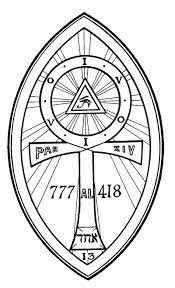
Charles Stansfeld Jones (1886–1950), a British magician and novelist who resided in Cana cay and formed the Fellowship of Ma-Ion, used this mystical name.

He was a disciple of the magician Aleister Crowley, who named him his magical child.

Jones is to be differentiated from theosophical writer George Graham Price, who channeled two popular writings under the alias Frater Achad, Melchizedek Truth Principles (1963) and Ancient Mystical WhiteBrotherhood (1971).

Apart from channeling the two works, nothing is known about Price's life.


Bonner, Margerie Lowry said that while working on Under the Volcano, he started to research the theosophists' canon, which included P.D. Ouspensky, Swedenborg, Blake, James, Böhme, and Yeats, as well as A.E. Waite, Eliphas Levi, Madame Blavatsky, and, by chance, Frater Achad. 


Charles Stansfeld-Jones – a white magician and author of Cabbalistic books and treatises under the name Frater Achad – appeared at Lowry's Dollarton shack and began a long friendship with him, during which time Lowry experimented with astral body projection, the I Ching, and Yoga, and studied the Tree of Life, a reproduction of which was hung on a wall in the shack. 


Lowry discontinued his research after months of immersion for fear of "opening doors that should stay locked." [Originally published in Perle Epstein's The Private Labyrinth of Malcolm Lowry. 

Holt, Reinhart, and Winston, New York, 1969.] While Lowry finished the first draft of Under the Volcano in 1940 before meeting Stansfeld-Jones, he subsequently claimed that he met a Cabbalist at a "critical and serendipitous time in the composition of the novel." Since the receiving of the Book of the Law, Achad has been regarded as the most notable Catholic Thelemite. 


This is because Frater Achad converted to Roman Catholicism in 1928, 19 years after entering the A.A. as a Probationer. 

Achad's claim to fame as a Thelemite—and the reason orthodox Thelemites must contend with him even if they believe his curious researches are mistaken or dangerous—is that he discovered the qabalistic "key" to the Book of the Law, prompting Aleister Crowley to rename the book Liber AL vel Legis instead of Liber Legis. 

This finding was recounted in Achad's magical notebook, Liber 31, which was eventually released. 

Crowley used this insight to consecrate Achad as his magical son, as prophesied in the Book of the Law, and to acknowledge his claim to the Thelemic grade of Magister Templi, or "Babe of the Abyss." However, by the 1920s, Crowley had become disillusioned with his son and successor due to some Achad writings. 

Achad's experiment with changing the courses of the qabalistic Tree of Life was documented in his 1922 Q.B.L.; or the Bride's Reception. 


The Egyptian Revival, published in 1923, and The Anatomy of the Body of God, published in 1925, continued Achad's work. 

To put it plainly, Crowley thought such attempts were foolish. 

Achad was also a member of the Worldwide Brotherhood, an esoteric group that claimed to share universal religious and philosophical knowledge, as well as a "true transcript" of the objective cosmos, by this time. 

Many occultists, including Crowley, thought the convoluted UB system was a "scam" or, worse, a cover for the Catholic Church's infiltration of occult organizations (for more on the UB, see the recent article in the O.T.O. anthology Success is Your Proof). 


Many high-ranking members of the UB converted to Catholicism when it was founded by Merwin-Marie Snell, a Catholic comparative religion professor. 

Crowley and Achad ultimately lost communication, and Achad was expelled from the Order of the Temple. 

Jones, on the other hand, never stopped thinking about his status as Crowley's magical offspring, and Thelema's revelations remained a major element of his spiritual worldview. 

Following Crowley's death, Achad corresponded with Crowley's executor Gerald Yorke in a lengthy series of letters. 

The letters "announced the arriving of the Aeon of Maat" in April 1948, and "from this point onwards the communication contains information recording the development of the new Aeon which Jones had discovered, and exploring its consequences and implications," according to Starfire. 


An Aeon is governed by a central spiritual idea or formula as well as the god-form that personifies that idea, according to Crowley's Thelemic system. 

It lasts about 2,000 years (coinciding with the precession of the equinoxes) and is ruled by a central spiritual idea or formula as well as the god-form that personifies that idea. 

The Aeon of Horus, which began in 1904 with Crowley's receiving of Liber AL vel Legis, is controlled by Horus, the god's crowned and victorious offspring, and will last for thousands of years. 

Yet, like Achad, some unconventional Thelemites have accepted the possibility of a premature dawning of the Aeon of Maat—for example, Kenneth Grant in his Typhonian Trilogies, the Thelemic magical order Ordo Adeptorum Invisiblum, and Nema, whose received text Liber Pennae Penumbra and system of Maat magick is perhaps the most influential result of Maatian speculations. 


The greatest description of these modern currents in theoretical occultism is Don Karr's book Approaching the Kabbalah of Maat. 


Despite the fact that Achad's announcement of the Aeon of Maat influenced a number of important occultist researchers in the twentieth and twenty-first centuries, his Maatian revelation does not appear to follow from his books, his Catholic conversion, or his involvement with (and eventual leadership of) the UB. 

To truly comprehend the importance of an early Aeon of Truth and Justice—the spiritual concepts symbolized by the god-form of Maat—one must first understand the qabalistic implications of Achad's 1920s views. 

Among early twentieth-century occultists, Achad is possibly the most pro-materialist. 


Unlike many Gnostics, Neo-Buddhists, and Theosophists of the time, Achad believes in a material universe infused with spirit—sacramentally infused, if you will. 


This is in line with the Universal Brotherhood's philosophical realism principles. 

It also corresponds to Achad's extreme qabalistic theories. 

Unlike other qabalists, Achad's multifaceted image of the Tree of Life's primeval fall and eschatological restoration resembles a cosmic fulfillment process rather than a myth of transgression and forgiveness. 

This is something he shares with the modernist Catholic thinkers of his day. 

Idealism and Materialism must join and go hand in hand if a new Civilization is to be established, argues Achad in The Anatomy of the Body of God. 


The Soul of Humanity is the connection that binds everything together. 


Our physical bodies are nothing to be ashamed of, but they would be useless without the Spirit and Will that give them life and action. 

On the other hand, we should not be so timid and selfish as to want to be re-absorbed into Spirit, as if the whole Creative Plan had been a waste of time and should have never been undertaken in the first place. 

No! Let us offer gratitude in our hearts for both our bodies and our spirits, and let us use both properly and to the full extent of our abilities. 

Over the course of the 1920s, Achad's writings became more oriented on the immanent fulfillment of God's Kingdom, a perspective that would be dubbed "realized eschatology" in Christian theology. 

"We must take into the inheritance of Freedom that has been provided for us in the Father's Kingdom upon Earth," says Anatomy, "and begin to construct a 'Living Temple, not created with hands, everlasting in the Heavens'—on Earth." The rousing proclamation, There is a space reserved for every one of you, Here and Now, finishes the book's introduction. 


Everything has its place when everything is placed in its place. 


Take up your positions in the Kingdom of the Ever-Coming Son, fulfill yourself in the fulfillment of God's Will inside you, and demonstrate to those who are still in the dark outside that there is space for everyone who are willing to maintain their place and stop attempting to usurp others'. 

Frater Achad's knowledge of the approaching Kingdom of God is based on his interpretation of Qabalah's cosmic processes. 

In the orthodox Thelemic schema, the Egyptian deity forms Isis—Osiris—Horus correlate to Binah—Kether-Chokmah—and Tiphereth, respectively. 

Malkuth, the Material Kingdom, is represented by Maat, who completes the four-part sequence. 


The four letters of the Hebrew Tetragrammaton, IHVH—Osiris (I), Isis (H), Horus (V), with Maat (final H) completing the sequence—can also be ascribed to the Aeons. 


In most texts on Hermetic Qabalah, the letters of the Tetragrammaton fulfill a cosmic story. 

The fallen Daughter (Heh final) must combine with the Son (Vav) to ascend to the level of Heh prime, establishing the Daughter/Malkuth on the throne of Binah, the Mother, in order to restore the Tree of Life to its pre-Fall condition (Heh prime). 

The Mother then "arouses the active power of THE FATHER, and these twain being UNITED, everything is RE-ABSORBED into THE CROWN," as Achad describes in Q.B.L. 

As a result of Malkuth's union with Kether, the eschatological kingdom is realized on Earth, fulfilling God's goal for creation. 

The salvation economy of Mary, a Daughter of Israel and child of the earth, conceiving the Son, the Christos, by the Holy Spirit, then being joined with God the Father in her Coronation as the Mother of Heaven, may be expressed in the Catholic system. 

Through the inbreaking of the eschatological Kingdom in the event of Jesus Christ, the Son's Incarnation thus redeems Malkuth's material world—represented in miniature by Mary. 


Through the Eucharistic Mass, Catholics engage in this reality—the eschaton made manifest here and now in fulfillment of God's design. 


Many orthodox Thelemites have proposed bizarre explanations for why Frater Achad would ever switch to the Roman Church, including insanity, a desire to convert the Church to Thelema's Law, or being lost in the Abyss as a Black Brother. 

Achad, on the other hand, offers a different reason for his strange conversion: Achad needed to be escorted to the Temple's opposite Pillar in order to discover the secrets of the R[oman] Catholic Church. 

He joined the Church as an orthodox member and obtained his first communion during Midnight Mass on Christmas Eve, 1928. 

This step, and only this step, resulted in the start of the Initiations and Ordeals that were to follow, as per Liber Legis. 

(Jones, letter to Gerald Yorke and Albert Handel, May 6, 1948; cited in Hymenaeus Beta, Prolegomenon to Aleister Crowley's Liber Aleph, Second Edition, Hymenaeus Beta, Prolegomenon to the Second Edition, Hymenaeus Beta, Prolegomenon to the Second Edition, Hymenaeus Beta, Prolegomenon to the Second Edition, Hymenaeus Beta, Pro Achad was poised to herald the beginning of the Aeon of Truth and Justice—the eschatological Kingdom realized on earth, glyphed in esoteric terms by the goddess Maat and glyphed in the New Testament by St. John the Divine's vision of the New Jerusalem: Then I saw a new heaven and a new earth, since the previous heaven and earth had vanished, and the sea had vanished as well. 

And I saw the holy city, the new Jerusalem, descending down from God like a bride adorned for her husband (Revelation 21:1-3) This is the banquet for the bride—the New Jerusalem has come down to earth, the divine has become one with the mundane world. 

"Jones relayed the news of his 1932 Silver Star Ordeal not only to Crowley, but also to the Catholic Church," states Hymenaeus Beta. 

Achad considered his initiations into this new New Aeon as vital to both the occult world and the Catholic Church. 

"He came to believe that the Aeon of Horus was coming to an end, and that a new Aeon of Truth and Justice, ruled by the Egyptian goddess Maat (or Ma), was about to begin." Achad's conversion allowed him to participate in the Church's sacramental life. 

This implies he took part in the Eucharist, with his first Mass being the Christmas 1928 Mass commemorating the Incarnation. 

For Catholics, the Eucharist is the eschatological reality bursting into our current moment, the Kingdom of God made visible on earth. 

The Eucharist is "a guarantee of future grandeur," according to the Catholic Church's Catechism, "a foretaste of the celestial feast to come" (CCC 1323). 

The Aeon of Maat is a "backwards current," granting us a vision of an age in which "we all may become something far greater, something which exists in the form of seeds within us in the eternal Now" (Horus/Maat Lodge FAQ page), much like the inbreaking Kingdom of God, which rushes in from the future to meet us in the present (see, for example, radical Catholic theologian Edward Schillebeeckx's God the Future of Man). 

Unlike other non-orthodox Thelemites who believe in a "double current" in which both the Aeons of Horus and Maat are active at the same time, or those who believe that the Aeon of Maat will arrive too soon to replace the Aeon of Horus, my reading of Frater Achad through the lens of the Catholic Mass suggests that the new Aeon of Truth and Justice is present in the present at the same time as the "force and fire" of the Aeon The Mother's Daughter ascends to the throne, the Father awakens, and the Son of God is born among the people of the world. 

"Kether is in Malkuth, and Malkuth is in Kether," Frater Achad declares.


Further Reading:


Achad, Frater [Charles Stansfeld Jones]. The Anatomy of the Body of God. New York: Samuel Weiser, 1969.

Achad, Frater [George Graham Price]. Ancient Mystical White Brotherhood. Lakemont, Ga.: CSA Press, 1971.

Melchizedek Truth Principles. Phoenix, Ariz.: Lockhart Research Foundation, 1963.


~ Kiran Atma

You may also want to read more about parapsychology and occult sciences here.


Supernatural Powers Of Yogis - Yogic Luminescence, Asceticism, And Psychic Power


    Long before the word yoga came to mean "spirituality" or "spiritual path," He compelled the Gods to grant His request that the heavenly river Ganges (Ganga) release its waters to flood and regenerate the parched earth by raising his arms high. 


    The archetypal ascetic (tapasvin) of the Vedic period is the ecstatic muni, not the obedient householder-sacrificer or even the elevated seer (rishi). 


    • The muni is part of what is known as the Vedic counterculture, which consists of religious people and organizations (such as the Vratyas) that followed their holy goals outside of Vedic society. 
    • The muni has been referred to be the forerunner of the later yogi? in that he resembles a lunatic in his euphoric oblivion. 
    • Many aspects of his lifestyle foreshadow the later avadhuta's unconventional conduct, which is celebrated in the Avadhuta-Gita and other medieval Sanskrit writings. 


    Tapas has survived as a separate tradition from Yoga.


    The Mahabharata epic, for example, documents this simultaneous growth. 

    Many famous tapasvins' tales are told, including Vyasa, Vishvamitra, Vashishtha, Cyavana, Bharadvaja, Bhrigu, and Uttanka. 


    Indeed, the tradition of tapas is given precedence over Yoga in several sections of the epic, indicating the passages' early antiquity. 


    • Tapas is usually achieved via chastity (brahmacarya) and the subjection of the senses (indriya-jaya). 
    • The inherent tendencies of the body-mind are believed to produce psychophysical effulgence (tejas), brightness (jyotis), tremendous power (ba/a), and vitality (ba/a) (vfrya). 


    Since Vedic times, another word strongly associated with asceticism is ojas (apparently related to the Latin a dt ustus, "majestic"). 


    • It refers to a certain kind of numinous energy that energizes the whole body and mind. 
    • Ojas is produced primarily via the discipline of chastity, as a consequence of sexual energy being sublimated. 
    • It is said to be so powerful that the ascetic may influence and alter his or her own fate as well as the fate of others. 
    • According to the Atharva-Veda, the deities attained immortality by practicing chastity and austerities. 


    Tapas is typically associated with the acquisition of psychic powers (siddhi), which often proved to be the downfall of unwise ascetics who abused their extraordinary abilities. 


    • The Tapas tradition unfolded against the backdrop of a magical worldview in which the cosmos is filled with personalized sources of psychic power, both in the Vedic Age and the Epic Age (virya). 
    • He also names tapas as one of the five observances or restrictions (niyama) and claims that austerity perfects the body and its senses. 
    • Tapas is clearly limited to the role of a warm-up exercise in this context. 


    Yoga is primarily concerned with meditation and its enhanced form, ecstatic transcendence (samadhi).


    • For millennia, the tradition of tapas has coexisted with the schools of Yoga, and this is also the case today. 

    The hagiography Maharaj tells the extraordinary tale of a modern tapasvin and saint who supposedly lived for years. 

    • Tapasviji Maharaj, the story's protagonist, was born into a royal family but abandoned everything in his late fifties and girded himself with a loincloth. 
    • He was regarded as a powerful ascetic and miracle worker throughout his lifetime. 
    • He achieved incredible feats of endurance, overcoming both pain and boredom. 
    • He stood on one leg with one arm extended skyward for three years, then never laid down for another twenty-four years while traveling several kilometers every day. 


    This saint drew a lot of attention in the United States because of his extraordinary lifespan, which he said was due to his receiving the kaya-kalpa or renewing therapy known to traditional Indian medicine three times. 

    • The effectiveness of this therapy is mainly determined on the patient's temperament, since he or she must be able to tolerate extended periods of near-complete isolation. 
    • Only a highly adept meditator of Tapasviji Ma­ haraj's caliber could conceivably bear the agony of self-denial. 
    • Clearly, the tapasvins of ancient and modern India have much to teach Western medicine.


    You may also want to read more about Kundalini Yoga here.

    You may also want to read more about Yoga here.


    You may also want to read more about Yoga Asanas and Exercises here.


    You may also want to read more about Hinduism here.

    Be sure to check out my writings on religion here.