
What Is The Status Of The Hindu Diaspora In Africa?
What Is The Status Of Hindus in South Africa?
Slavery was abolished in the colonies by 1833.
However, by the mid-nineteenth century, the British Empire had expanded greatly, necessitating the hiring of a labor force to work on the colonies' plantations.
As a result of the abolition of slavery, the colonies were forced to adopt a new labor arrangement known as the "indenture system."
The first batch of indentured Indian laborers came in Natal on October 11, 1860, following extensive negotiations in Natal, India, and England, as well as the passage of several legislation.
This group originated in the Madras area of India.
Approximately 6,445 indentured laborers were sent to Natal between 1860 and 1866.
Between 1866 and 1874, emigration was halted owing to the mistreatment of laborers engaged under the new system in Natal.
When it was reinstated in 1874, the Natal immigration department advertised throughout India to recruit workers.
They promised, among other things, that "your faith would not be disturbed with in any manner, and both Hindoos and Mahomedans [sic] will be equally safeguarded."
The poster also indicated that there were already over 5,000 Indians in Natal, indicating that an Indian population had started to emerge in South Africa.
The powers of the Protector of Indian Immigrants were increased by Law 19 of 1874 in order to defend the rights of indentured laborers.
The future immigrants were also protected by Law 20 of 1874.
Despite all of these restrictions, there were many inconsistencies, and promises made to enslaved laborers were not kept.
Some indentured laborers were rehired into the indenture system after they were free, while others were not.
Some of the latter went to rural regions to cultivate and sell fruit and vegetables, while others worked in a range of jobs.
Between 1874 and 1911, 364 ships brought roughly 146,000 additional immigrants to Natal.
During this time, a large number of 'free traveler' Indians came.
They were largely merchants with British passports who paid their own way into Natal.
The majority of them were from Gujarat, and a large proportion of them were Muslim.
Thus, between 1874 and 1911, there were three separate groups of Indians in South Africa: those still indentured, those who had previously been indentured laborers, and those who arrived as free passengers, or what Maureen Swan (1985) refers to as "the merchant class."
The Indian merchants started trading and supplied the Indian and African populations with food and other necessities.
When emancipated indentured laborers and merchants started to establish modest trade businesses, their economic interests collided with those of European merchants.
By 1890, there was a noticeable anti-Indian sentiment among European settlers.
The entrance of a new merchant class, along with the overall expansion in the Indian population, alarmed the European colonists.
The Indian population had already moved to neighboring colonies such as the Transvaal, Cape, and Free State by this time.
Many Indians, particularly the merchant class, revolted against the European colonists' severe treatment and prejudice against them.
At the same time, from 1890 onwards, a conflict of interests arose between Natal's planters and colonists.
The planters sought to keep the indenture system, but colonists considered the Indian community as a danger to their economic interests.
Natal was granted the status of Representative Government in 1893.
The Europeans' anti-Indian sentiment became even stronger as a result of this.
Act 17 of 1895 mandated, among other things, that indentured laborers be returned after their contracts were completed.
If they remain, however, they must pay a £3 penalty and a £1 poll tax per person every year.
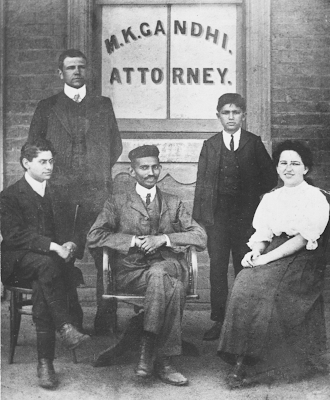
Gandhi had already arrived in South Africa at this point and had been embroiled in merchant politics.

The Natal Indian Congress was founded in 1895, and it was the driving force behind the Indian resistance to harsh policies in Natal.
The Indians staged several demonstrations.
Swan (1985) points out that the majority of the conflict was around merchant interests, with indentured laborers' complaints being used as a pretext to campaign for the merchant elite.
By 1908, English traders in Natal had introduced the Asiatic Trading Bill, which demanded the repatriation of Indians.
However, the British government intervened in 1909, allowing the Indians to take their case to the Supreme Court.
The discovery of diamonds in 1867 drew a large number of Indian merchants to Cape Colony.
There were less rules governing Indian commerce here.
By 1910, the Cape Colony had a population of roughly 10,000 Indians.
By 1854, the Orange Free State had declared independence from the British Empire.
Some 'Arab' businessmen attempted to establish enterprises in the Free State in the 1880s, but were quickly thwarted by strong restrictions.
The 1899 Anglo-Boer conflict in the Transvaal caused a lot of uncertainty since thousands of British subjects, including Indians, departed the Transvaal during the war.
Many Indians returned as refugees after the conflict.
When the refugees returned, however, authorities were unable to ascertain who had the authority to enter the colony.
That was the setting in which Indians were required to get their fingerprints taken.
It was opposed by Gandhi and his allies.
There were already a large number of Indian merchants in the Transvaal when it was granted Representative Government status in 1907.
Between 1907 and 1910, Indians in Transvaal staged a barrage of protests, and Gandhi played a significant role during this time.
Understanding the Hindu presence in South Africa requires a look at the years 1900 to 1910.
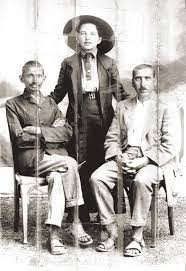
Gandhi published the first Indian newspaper, Indian Opinion, in Gujarati and English in 1903.
The Arya Samaj established a branch in 1904, and Professor Bhai Paramanand of the Arya Samaj visited South Africa in 1905.
The Pretoria Tamil League was organized the same year, and additional Indian organizations such as the Surat Hindu Association (1907), the Young Men's Hindu Association (1909), the Pretoria Hindu Seva Samaj, and the New Castle Tamil Association were founded in the following years (1910).
When all of the colonies merged to form the Union of South Africa in 1911, it marked the beginning of a new era for Indians.
Indian migration to South Africa came to a stop as a result of this.
The debate was no longer so much about Indian immigration as it was about their repatriation.
While the government of South Africa saw it as repatriation, the Indians saw it as expatriation.
Many new organizations and lobbies supporting the Indian cause arose as a result of this scenario.
The South African Indian Committee and the Colonial Born Indian Association were founded in 1911.
Meanwhile, in India, Professor G. Gokhale of the Indian National Congress filed a motion in the Imperial Legislative Council in 1910 calling for an end to further indentured immigration to Natal.
Professor Gokhale traveled to South Africa at Gandhi's request in 1912.
Indian immigration was eventually stopped in 1913.
Gandhi organized the Great March to reject the £3 tax on October 29, 1913.
Gandhi ultimately departed for India on July 18, 1914, after a long period of political participation.
Indentured Indians were exported from two major ports in India: Madras and Calcutta.
Madras sent mostly Tamil and Telegu-speaking individuals, while Calcutta sent more Hindi-speaking people.
Gujarat and Bombay provided the majority of the passenger Indians or merchants.
The ship listings from the Madras port for the first era between 1860 and 1877 do not include any information on Indian castes.
Up until 1877, all Hindus from Madras were classified as 'Gentoo'.
Only until 1878 did ship listings from Madras include caste information.
As a result, determining which caste groups migrated from South India during the early stages of immigration is difficult.
The majority of the South Indian tribes' last names, on the other hand, do signify caste.
The ship listings from the Calcutta port, on the other hand, do include caste information.
There seems to have been some movement in terms of caste background among both North Indian and South Indian tribes.
Individuals' paperwork often indicate caste names that differ from their family names.
One of the records, for example, lists a person as belonging to the Vanniya caste, which is a non-brahmanical caste.
However, the same individual bears the surname 'Iyer,' which is a South Indian brahmanical caste name.
Such anomalies, on the other hand, must be thoroughly explored and studied by social scientists in order to determine if any people claimed better caste rank by altering their last names, and if so, why.
Such research might provide fresh insights into how social mobility among South African Indians may have happened.
In general, the Madras group consisted of 12% Muslims, 5% Christians, 5% Rajputs, some Pillais (Traders), and the rest were low-status laborers.
Only 5.5 percent of the Rajputs in Calcutta were from the Lohar caste (blacksmiths), Koris (weavers), or some other low caste.
The Madras group, for example, was made up of mechanics, house maids, gardeners, merchants, carpenters, barbers, accountants, and grooms, rather than agricultural laborers.
As a result, the Indian population in South Africa may be separated into two distinct groups: North Indians and South Indians.
When the Indian laborers arrived in South Africa, they were assigned to various employers, including those in the sugarcane sector, railroads, and so on.
The bosses then whisked them away to their various workplaces.
Although there seems to be no documentation on which linguistic group travelled to which place, some indirect evidence may be presented to suggest that a large number of families from the same language group migrated to the same area.
For example, one could examine some areas, such as Verulam and Tongaat, where mostly Tamiland Telegu-speaking people appear to have settled, as well as the back grounds of early temples in those areas, which may provide some insight into which language group might have been present there in the past.
Thus, by carefully inventorying earlier towns, it may be feasible to identify the settlements of diverse linguistic groups.
However, a more thorough field investigation is necessary to determine the actual situation in terms of language background in each early Indian settlement.
The Indian community may be split into Hindus, Muslims, and a tiny population of Christians and Parsees based on their religious backgrounds.
The Christian group arose from India's great conversion in the nineteenth century.
South Africa, on the other hand, saw further conversions.
Although there are numerous linguistic groupings (for example, Hindiand Gujarati-speaking people in the North Indian group; Tamiland Telegu-speaking individuals in the South Indian group), all North Indians have a similar cultural milieu, and all South Indians share a similar cultural milieu.
This pattern may be seen in the celebration of festivals.
Temple construction shows distinct South Indian and North Indian architectural traditions.
These diverse architectural origins are noted by Mikula et al. (1982).
The current Hindu population in South Africa may be divided into four categories based on their language.
These are, as previously stated: Tamils, Telugus, Gujaratis, and Hindis.
At this time, it seems that they are more cognizant of their distinct languages and customs than they were during their original era of colonization.
As a result, linguistic group identities seem to be solidifying.
According to Nowbath et al. (1960: 18), the North Indian tribes were formerly ignorant that the Telegus and the Tamils spoke different languages and had different cultures.
However, it should be emphasized that there has been a considerable degree of assimilation between the Tamils and the Telegus through the years, with the Telegus benefiting more.
To put it another way, a large number of Telegus adopted Tamil culture and inclined to identify with Tamil society.
This pattern may be seen in both the Reddy and Naidoo communities, both of which seem to have originated in India's Tamil-speaking areas.
Those who migrated from Andhra's interior districts, on the other hand, seem to be more cognizant of their Telegu heritage, and these groups are more engaged in the Andhra Maha Sabhas.
Much of the following information about Hindus' geographical origins is based on oral conversations with persons and immigration paperwork.
The Tamils came from Chittoor, Tanjore, the north and south Arcott Districts, Tiruvanna Malai, Madurai, and the Madras port's bigger suburbs.
The Telegus migrated from Tirupati, Chittoor (both in Andhra Pradesh and Tamil Nadu), Guntar, the present-day Rayalaseema (Cuddapa) region, the Godavari delta region of Andhra Pradesh, and the east coast of Andhra Pradesh up to the Orissa border.
Uttar Pradesh accounted for 61% of the Hindi group (Allahabad, Varanasi/Benares, Gorakhpur, Lucknow, Barielly, Kanpur, Agra); Bihar accounted for 31% (Allahabad, Varanasi/Benares, Gorakhpur, Lucknow, Barielly, Kanpur, Agra) (Patna, Gaya, Arrah, Mon ghyr).
About 6% of the participants were from Bengal, while 2% were from Central India (Madhya Pradesh).
Gujarati people originated mostly in two parts of Gujarat, namely Surat and Kathiawad on India's western coast.
Hindus constructed a broad range of temples, mostly in the Natal area at first.
Some of the oldest temples date back to the late nineteenth century.
The earliest temple activity was mostly among Natal's indentured laborers, who were mostly of South Indian descent.
There were two kinds of temples built: one in the South Indian style and the other in the North Indian style.
The shrine, the tower, and the flagpole serve as distinguishing features.
The temples in North India are basic and plain in style, but those in South India are ornately ornamented.
Saiva, Vaisnava, and Goddess temples are the three kinds of temples.
Deities from many sects of Hinduism, as well as their adherents, are often found in the same temple complex.
This illustrates the early Indian immigrants' inclusive tendency in attempting to develop a united understanding of Hinduism in the diaspora.
Worship or ritual patterns are found to be a combination of brahmanical and non-brahmanical features.
Earlier ceremonial patterns were primarily non-brahmanical, but with the entrance of priests from Sri Lanka in the past several decades, brahmanical components have grown more prominent.
In South Africa, the word 'brahmin' is often used without reference to caste.
It simply refers to a priest, who might be from any caste or speak any language.
Many modifications in ritual practices and norms have happened during the years of adaption.
Most rituals have been simplified owing to a lack of competence or other societal concerns.
The rules against igniting camphor within the temple, cracking the coconut outside the temple, and so on indicate the changes in worship patterns that individuals had to undertake.
Even religious events and festival celebrations have been shifted to weekends, and the religious calendar has been altered to reflect this.
For South Indian Hindus, the most important rituals are Parattasi (fasting during the months of September and October), the Kavadi (a procession in which devotees carry a yoke as they circumambulate the temple), and fire-walking (walking across a fire pit in commemoration of Draupad's demonstration of her purity).
Although it has officially been proclaimed a pan-Hindu celebration, Diwali is far more popular among North Indian Hindus.
The recital of praise to Hanuman at the Ramanavam festival is quite widespread among North Indian Hindus.
The contrast between Sanatana Hindus and Arya Samajists is very essential in light of the existence of the Arya Samaj.
In the early twentieth century, the Arya Samaj arrived in South Africa.
Other Arya Samaj leaders arrived in South Africa after Bhai Paramanand in 1905: Swami Shankaranand in 1908 and Pandit Bhavani Dayal Sanyasi in 1912.
Under the leadership of Bhavani Dayal Sanyasi, the Arya Samaj played an important role in politics.
By this time, Gandhi's Satyagraha campaign in South Africa had gained traction, and Arya Samaj leaders were ready to join Gandhi in the Satyagraha fight.
Many additional Hindu organizations arose among South African Hindus in succeeding decades.
The Shaiva Siddhanta Sangam, the Ramakrishna Centre, the Divine Life Society, the International Society for Krishna Consciousness (ISKCON), often known as the Hare Krishnas, and the Sathya Sai group, among many other smaller organizations, were prominent among them.
Many religious leaders and intellectuals have brought different Hindu influences to South Africa in recent years, following the re-establishment of ties with India in 1994.
See Kumar for more information on Hindus in South Africa (2000).
What Is The Status Of Hindus In East Africa?
India and East Africa have a long history of trading links (ninth to tenth centuries).
Iron-working in East Africa, for example, arrived via the Indian trade circle.
From the ninth through the fourteenth centuries, the Cholas in South East India, Sri Vijaya of Sumatra, Gujaratis of Cambay, and Bahmanis of the Deccan were among the trade kingdoms.
During this time, the slave trade expanded as East African captives were transported to India and China.
Ships going from the Malabar coast to Madagascar and Zanzibar are known as Marco Polo ships.
Mombasa was also a significant port at this time.
By the seventeenth century, the first Indian colonies in East Africa had established themselves at Aden and Muscat.
Captain Suree recalls in 1811 , Hindu dealers controlled the majority of the commerce.
Sayyid Said of Zanzibar, according to Kenneth Ingham, enabled both Hindus and Muslim Banians to trade in East Africa (Ingham 1965: 58).
Many Hindu merchants joined Sultan Said when he transferred his capital from Muscat to Zanzibar.
In reality, a Hindu held the vital position of customs master.
The actual authority was in the hands of the customs master.
The sultan's Hindu counselors were equally important.
In 1839, the Sultan and the British signed a commercial treaty that gave Hindu traders more security and a trading advantage.
6,000 Indians were counted in East Africa by the mid-nineteenth century.
The Indians felt more protected under the British consul in Zanzibar as the British steadily gained the upper hand in business.
The British were seen as guardians and allies by the Indians (Beachey 1996: 365).
However, many Indian merchants in East Africa openly kept slaves and often forewent British protection in the purpose of slave keeping (Beachey 1996: 367).
The Punjabis arrived in East Africa as a result of their enlistment into the East Africa Rifles as part of East African Defense in 1895, i.e. the Zanzibar sultans utilized Punjabi battalions to secure their territories under British protection.
Railways brought 2,000 Indians to East Africa in 1901.
Parsees supplied the majority of railway clerical positions, Punjabis provided maintenance services, and ex-indentured Indians worked as shopkeepers.
There was a considerable influx of Free Indian immigrants to East Africa from the 1870s forward.
By 1911, Uganda had about 2,000 Indians, the East African Protectorate had 11,000, and Zanzibar had between 4,000 and 10,000.
In East Africa, Indians were primarily engaged in commercial activities and did not engage in agriculture (Beachey 1996: 370–71).
However, Ingham (1965: 211–12) reminds out that when commercial-class Indians attempted to buy agricultural properties, the government hindered them from doing so, particularly in the colder portions of the Protectorate.
According to Harlow et al. (1965: 214), Indian farming was done on a small scale and was not appropriate for commercial purposes.
Many Indian organizations arose under British occupation of East Africa and had a significant influence in politics.
The Indian Association of Dar es Salaam's participation in the argument over the Unification of East African Territories and the role of the Kampala Indian Association in recognizing the British government in Uganda are two examples.
By 1912–13, the Indian population had overtaken the European community in total income, resulting in government discrimination against Indians.
Sir Charles Eliot, the new commissioner of East Africa, issued an order to the Land Office in 1903 prohibiting the Land Office from granting land concessions to Indians save for small plots (Harlow et al. 1965: 271).
Low and Smith (1976: 468) note out that, whereas Indians performed extremely well in business under Omani authority in Zanzibar thanks to Sultan Sayyid Said's enlightened policies, Indian trading was restricted during imperial administration.
Nonetheless, by the 1920s, Asian/Indian economic capital and activity had become a significant part of East Africa's economy.
Until 1944, when immigration restrictions were imposed, there was a regular influx of Indians into East Africa.
By 1948, Kenya had 87,000 people, Uganda had 35,000, Tanganyika had 46,000, and Zanzibar had 16,000.
By the conclusion of the colonial era, East Africa's Asian population had grown to some 350,000 people, out of a total population of 25 million (Low and Smith 1976: 484).
Indians eventually grew more urbanized as their education and economic standing improved.
Dress codes, eating habits, and language (fluency in English and Swahili) have all changed dramatically.
As Indians established down in their adoptive territory, however, a larger awareness of their homeland started to develop.
As a result, they have become increasingly isolated as a distinct racial and cultural group in East Africa.
This, according to Low and Smith, is due to Indian religious and communal traditions, which have tended to emphasize close-knit groups above forming relationships with other communities in the growth of civilization (Low and Smith 1976: 485).
Although Africans and Asians worked in politics after World War II, with India's government adopting a pro-African stance, increasing African nationalism in the 1950s eclipsed African-Asian cooperation, and the future prospects of Asians in East Africa became questionable.
Many Indians fled East Africa under the ensuing dictatorial regimes and settled in different Western nations.
Kenya is the only nation in East Africa that still boasts a sizable Indian community (about 65,000 of whom are Hindus).
The Sanatana Hindu Temple in Nairobi is home to the majority of Kenya's Hindu population.
Arya Samajists, Brahma Kumaris, and Swami Narayana followers are among the other notable organizations.
In Nairobi, there are two Swami Narayana temples; one is older, while the other is newer.
The bulk of Hindus are North Indians who speak Hindi or Gujarati.
They usually perform Sanskrit-based ceremonies.
There is a Sri Venkatesvara temple that serves to Hindus from South India.
Kenyan Hindus have significant ties to India and its culture.
Hindutva/Rashtriya Swayamsevak Sangh (RSS) has a strong presence in Kenya.
Hindutva leaders from India often visit certain temples.
Many Hindus in Kenya have economic ties to India, Mauritius, South Africa, and other Hindu diasporas throughout the world.
The Hindu Council of Kenya is part of the Hindu Council of Africa and is extremely well organized and structured.
At the University of Nairobi, the Hindu Council of Kenya has endowed a chair in Hindu studies.
Many notable Hindus are active in Kenya's political life, and the Hindu Council engages in numerous interfaith talks with other religious organizations.
See also:
Arya Samaj, Brahma Kumaris, Caste, Diaspora, Dıwalı, Divine Life Society, Draupadı, Gandhi, Mohandas Karamchand, Gokhale, Gopal Krishna, Hanuman, Hindutva, International Society for Krishna Consciousness, Madurai, Mandir, Nationalism, Ramakrishna Math and Mission, Ramanavamı, Rashtriya Swayamsevak Sangh, Sai Baba (as movement), Saivism, Shaktism, Sanatana Dharma, Sthapatyaveda, Sri Lanka, Hindus in, Swami Narayana Sampradaya, Utsava, Vaisnavism, Varanası.
References And Further Reading:
- Beachey, R.W. 1996. History of East Africa 1592–1902. London: Tauris Academic Studies, I.B. Tauris Publishers.
- Brain, Joy B. n.d. ‘Movement of Indians in South Africa: 1860–1911’ (unpublished manuscript). Durban: University of Durban-Westville.
- Harlow, Vincent, E.M. Chilver and Alison Smith (eds). 1965. History of East Africa, vol. 2. Oxford: Clarendon Press.
- Henning, C.G. 1993. The Indentured Indian in Natal 1860–1917. New Delhi: Promila & Co.
- Hofmeyr, J.H. and G.C. Oosthuizen. 1981. Religion in a South African Indian Community. (Report No. 2, October 1981.) Durban: Institute for Social and Economic Research, University of Durban-Westville.
- Ingham, Kenneth. 1965. [1962] A History of East Africa. London: Longmans.
- Kumar, P. Pratap. 2000. Hindus in South Africa: Their Traditions and Beliefs. Durban: University of Durban-Westville.
- Low, D.A. and Alison Smith (eds). 1976. History of East Africa, vol. 3. Oxford: Clarendon Press.
- Meer, Y.S. 1980. Documents of Indentured Labour: Natal 1851–1917. Durban: Institute of Black Research.
- Mikula, Paul, Brian Kearney and Rodney Harber. 1982. Traditional Hindu Temples in South Africa. Durban: Hindu Temple Publications.
- Morris, H.S. 1968. The Indians in Uganda. London: Weidenfeld and Nicolson.
- Naidoo, T. 1992. The Arya Samaj Movement in South Africa. Delhi: Motilal Banarsidass.
- Nowbath, R.S. et al. (eds). 1960. The Hindu Heritage in South Africa. Durban: The South African Hindu Mahasabha.
- Oliver, Roland and Gervase Mathew (eds). 1963. History of East Africa, vol. 1. Oxford: Clarendon Press.
- Pillay, Govindamma. 1991. ‘An Investigation into the Caste Attitudes that Prevail amongst Hindus in Durban Metropolitan Area’ (unpublished MA thesis). Durban: University of Durban-Westville.
- Rocher, H.J.W. 1965. ‘A Study of the Theory and Practice of the Hindu Religious Tradition among a Selected Group of Tamil Speaking Hindus in South Africa: A Sociological Approach’ (unpublished MA thesis). Pretoria: University of Pretoria.
- Swan, M. 1985. Gandhi: The South African experience. Johannesburg: Ravan Press.


