Showing posts sorted by relevance for query Hindu ideals. Sort by date Show all posts

Human Well-Being From A Hindu Perspective: Care, Healing, And Wellness


    It is reasonable to conclude that religion and spirituality in general contribute to human life fulfillment and pleasure in all civilizations. 


    Due to the increasing complexity of everyday life, providing care for persons' physical and mental needs has become a growing problem. 

    Indeed, life has become a source of worry, bringing significant challenges to religious thought and spirituality. 

    As a result, care and human well-being are prioritized in modern India, particularly among Hindu civilizations. 


    Hinduism, the world's third biggest religion, is very important to the people of India. It is considered "a way of life" (Chaudhuri 2012: 28). 


    As a result, it's critical to look at how Hindus see care, healing, and human well-being, as well as what their practice includes among their followers in India. 

    The current research begins with an overview of Hinduism as India's major religion. 

    It is descriptive and attempts to elucidate the notions of care, healing, and well-being within Hindu thinking's cultural and religious traditions. 

    The relationship between Hindu thought and how it is operationalized in its rites of passage (also known as "Hindu sacraments"), "goals for meaningful human life," and "five great sacrifices" will be a particular emphasis. 
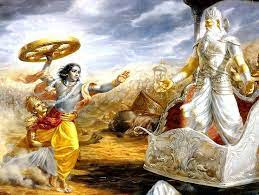


    Finally, the article discusses care, healing, and well-being in the modern day, with a focus on renascent Hinduism and its ideas on gods and goddesses as its source. 


    Ayurveda as a Hindu science of medicine for holistic well-being, yoga as a path for mental well-being, and asrama-dharma as care and well-being for the elderly within the domain of gem-transcendence will all be discussed to further investigate modern Hinduism's viewpoints. 


    India's primary religion is Hinduism. 


    Hinduism is the most widely practiced religion in India, the world's seventh biggest nation (3.3 million square kilometres). 


    India, which is expected to have a population of 1.42 billion people by 2023, is noted for its religious variety and cultural diversity. 

    Aside from Hinduism, India is home to Buddhism, Jainism, Sikhism, and a number of other ancient religious traditions. 

    In addition, India is home to a diverse range of faiths, including Semitic religions. 

    According to the 2011 census, Hinduism is followed by 79.8% of the Indian population, 14.2% Islam, 2.3 percent Christianity, 1.72 percent Sikhism, 0.7 percent Buddhism, 0.37 percent Jainism, and 0.66 percent Zoroastrianism. 


    Despite the diversity of religious connections among Indians, the Hindu religious heritage plays a critical part in the country's spiritual, cultural, and social makeup. 


    In terms of Hinduism's texts, deities, and belief systems, the concept of 'unity amid variety' (Sarma 1996: 13-27) may be distinctively recognized. 

    The word 'Hinduism' does not refer to a single, closed religion tradition, but rather to a wide range of faiths, beliefs, doctrines, rituals, and practices linked with a variety of gods, goddesses, and cults found on the Indian subcontinent. 

    Although the name Hinduism refers to a specific religious tradition with a history that spans many centuries, its spiritual foundations date back almost four millennia. 

    Hinduism is considered by its supporters to be a sanatana dharma, or "everlasting religion," since it is founded on the eternal truth enshrined in the Vedas (the primary Hindu scriptures). 


    Hinduism, being one of the world's oldest alive religions, does not honor a single sage or prophet as its creator, nor does it claim a single central authority for its existence. 

    It is, in reality, based on an open canon. 

    It remains an all-encompassing, all-encompassing, and inevitably ever-evolving spiritual tradition in this way. 

    According to Shashi Tharoor (2018: 39), "Hinduism is a characteristically Indian development, a type of 'banyan tree,' as a consequence of its openness and variety. 

    Its branches spread far and wide, sinking back into the ground to take new root in the inviting soil." 

    One of its defining characteristics is the domination of a type of 'religious awareness.' 

    This centripetal perception leads to the domination of a very distinct religious point of view and spiritual sensitivity to all matters of life among Hindu believers (Griswold 1996: 24-26). 

    As expressed in Hindu scriptures, traditional thought, and culture, this complete worldview incorporates a spiritual perspective of care, healing, and human well-being. 


    Hindu themes of care, healing, and well-being are discussed in this paradigmatic context. 


    The themes of caring, healing, and well-being are implicitly ingrained throughout Hindu thought. 


    In Sanskrit (the Hindu tradition's holy language), the term 'care' has many distinct definitions: 


    Raksa Means to guard, look after, save, preserve, or keep away from. 


    Pala(-na) Means to keep an eye on, guard, defend, or govern. 


    Chinta = to consider a thought via contemplation and introspection,  (Williams 1994; 1976). 


    Raksha Bandhan, a prominent Hindu event, is strongly linked to the pledge of care and the safety of the family. 


    • The sisters tie the rakhi, a kind of amulet, around their brothers' wrists as part of the festival's ceremonial to protect them from negative influences and to pray for their long life and happiness. 
    • The sisters are given a gift at this event. 
    • The ceremony's origins may be traced back to a Hindu folklore in which Draupadi tore a piece of her saree and wrapped it to Krishna's wrist, injuring him accidently. 
    • Its purpose was to halt or prevent bleeding. 
    • As a result, a link was formed between them. 
    • Krishna vowed to safeguard Draupadi in exchange. 
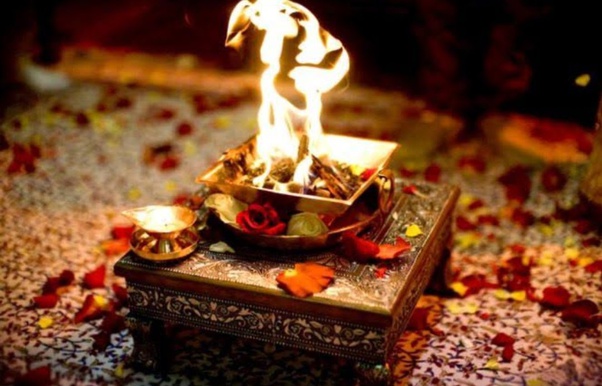


    Furthermore, the Raksha Bandhan celebration serves as an annual ritual. 


    It historically authorized the brothers to take duty for the care of their sisters in order to keep them from being harmed, and it signifies protection and caring among siblings. 


    Sama = balanced; when anything in its original healthy nature is injured, it should be balanced, according to Sanskrit. 


    Svastha is the Sanskrit word for "health" or "being in one's natural condition." • Santhi is a Sanskrit word that means "rest," "quiet," "peace," "tranquility," "bliss," and "comfort" (Williams 1994). 

      • The word svastha in Ayurveda refers to a person's overall health. 
      • It typically refers to a "state of being in which one's body, mind, spirit, and senses are all in happy harmony" (Yogapedia Dictionary 2020). 
      • As a result, health is defined as the physical well-being of a person, as well as mental, emotional, spiritual, and energetic inclinations. 
      • As a result, healing is defined as the comprehensive restoration of health. 
      • Despite this holistic approach, doctors' cures for illnesses are different from the spiritual part of healing. 


    Svasti is a Sanskrit term that means 'well-being.' It might also mean 'benefit.' Well-being refers to a sense of fulfillment and happiness in life, as well as an inner sense of harmony with our surroundings. 


    Meditation, according to Hindu belief, leads to an inner feeling of serenity and tranquility. 


    • It promotes a sense of well-being that is rooted deep inside oneself (Lovato 2019). 
    • Hindus are taught to consider well-being, a feeling of pleasure with life, as vital to a sense of purposefulness, rather than the pursuit of artificial kinds of enjoyment (Menon 2012: 2; 4). 
    • Holi, a full-moon Hindu celebration in which married women celebrate their happiness and the well-being of all family members, is an example of this. 


    Yoga is another aspect of the Hindu tradition's concept of well-being. 


    • It is said to provide people with a feeling of well-being, encouraging a sense of being 'whole.'
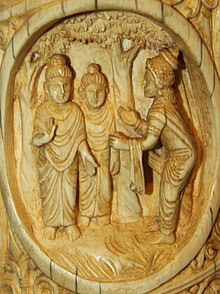


    Sources and practices of conceptualization in Hindu thought. 


    The Hindu scriptures and Indian cultural traditions both include notions of care, healing, and well-being. 


    Hinduism is blessed with various texts as one of the world's oldest existing faiths. 

    The benefit is that they all have a canon that is open-ended. 

    There are four Vedas, as well as Sutras, Epics, Codes of Law, and Sacred History, among other sources. 


    Philosophical Manuals and Sectarian Scriptures are also included with the Vedas. 


    In addition to many other literature that Hindu devotees religiously study, all of them are deemed to have either main or secondary scriptural value. 


    Vedangas, or Sutra literature, is taken straight from the Vedas and contains many of Hinduism's theological principles. 

    In Hindu religious thought, the concepts and practices of caring, healing, and well-being are implied in the Grhya and Dharma Sutras

    The former is concerned with household rituals, whereas the latter is concerned with socioreligious rules. 

    Many other Hindu beliefs and practices, such as samskaras, purushartha, paru;amahayajna, and varnaasramadharma, are intertwined with its different elements. 


    Hindu rites of passage: the practice of samskaras. 


    Meaningful life and dying via Hindu rites of passage: the practice of samskaras. 


    The Hindu sacraments, or rites of passage, are known as samskaras (Pandey 2001; Antoine 1996c) and span one's whole life span as well as the world beyond (transcendent dimension), starting with prenatal rituals and ending with post-mortem existence. 

    • According to ancient scholars, three key prenatal rituals lay the way for care to be offered to pregnant women and the unborn child in order to assure health and protection against evil. 
    • Early childhood or infancy samskaras are for the child's intellectual well-being, longevity, safety, and even adornment. 
    • With basic and secondary education, educational samskaras secure an individual's profession outside of the family, preparing them for active citizenship obligations. 
    • The marriage (vivaha) ceremony is the most important sacrament, through which a person fulfills socio-religious and family duties. 
    • The penultimate sacrament, the funeral ritual (antyeshthi), takes into account the needs of both the dead and the living. 
      • This ceremony expresses 'sublime feelings' that make death pleasant for the one who dies, as well as for the society to accept death and dying as an unavoidable occurrence. 


    A person's life is made up of a succession of events. 


    • In this way, the sacraments offer people in society with the care and protection they need. 
    • These sacraments are intended to mold one's personality and connect our humanity to religious significance. 
    • As a result, the concept of life passages was born. 
    • Their purpose is to aid in the expression of pleasure and grief. 
    • The sacraments support an individual's well-being in this manner. 


    Simultaneously, they contribute to an individual's growth as a "full-fledged social person" (Dandekar 1996: 142). 


    As a result, the Samskaras provide a complete vision of what constitutes a healthy life and personal well-being in Hindu traditional culture. 

    All of these rites of passage are described and formulated in the Grhya Sutras, which defines and formulates household or domestic rituals, which were historically performed at home and in which priests had a little part. 


    The relevance of these family ceremonies is eroding as a result of modernization of schooling and changing societal attitudes. 


    Even the practice of samskaras has become fragmented and has lost its uniting effect. 

    However, some of the customs are still followed, such as the singing of Vedic hymns and the offering of ceremonial fire during official ceremonies, as well as at private occasions when no religious person is present (Gengnagel and Husken eds. 2005). 
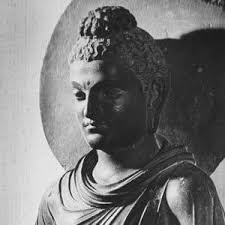


    In reality, only the most devout Hindu households still follow these samskaras to the letter. 


    Fortunately, despite secularization, most Hindus in modern society are still eager to participate in a number of these samskaras, such as the naming ceremony, the first feeding of the infant, initiation into education, marriage, and burial customs. 

    These rituals are often carried out with the assistance of a priest, albeit not always at the temple. 


    Well-being in the context of the individual-society interaction: Promoting 'Human Life Goals' (Purushartha). 


     The four ideals of purushartha (literally: 'goal' or 'end' of man/human [Antoine 1996a: 155156]), dharma, artha, kama, and moksha form a four-fold network about what life is about and its relationship to the universal human desire for meaning and purpose. 


    Dharma as a life aim encourages people to be virtuous, righteous, and morally and ethically responsible in all aspects of life. 

    • The quest of money and success is the theme of ArthaIt is the source of human life and existence. 

    Kama is a Sanskrit word that means "pleasure" or "enjoyment of life." It denotes the method of procreation and, as a result, humanity's survival. Both artha and kama, or money and pleasure, must be consistent with dharma. 

    Moksha is the Hindu term for emancipation, which is the ultimate purpose of existence. 


    A person who acquires money (artha) and enjoys and fulfills life's wants (kama) via virtuous and righteous ways (dharma) would, in theory, achieve nirvana (moksha). 


    These four life objectives are traditionally taught at the student/learning stage of life (brahmachari) and implemented in the householder stage ( Grhastha )  Purushartha is made up of all of these life objectives. 


    In this way, they establish a set of life objectives that must be met in order to live a meaningful life. 

    Life would be blank and pointless without these objectives. 

    As a result, the purushartha dharma defines an individual's well-being in society and fosters wholeness in the public arena of life, resulting in a healthy society. 


    Affectionate treatment of family members, other people, and other living things: The Great Five Sacrifices Or Yajnas (Panchamahayajnas). 


    Every day, a homeowner is obligated to do the five-fold mandatory sacrifices, or duties: 


    (a) Brahma Yajna, homage to Brahman, is performed by reading scripture; 

    (b) Pitr Yajna, homage to the ancestors, is performed by offering water; 

    (c) Deva Yajna, homage to the gods, is performed by offering homa sacrifices

    (d) Bhuta Yajna, homage to elements or other beings, is performed by feeding animals and birds; and 

    (e) Manusya Yajna (Antoine 1996b: 203). 


    Both Bhuta Yajna and Manu-D-'a Yajna are closely tied to an individual's obligation as a caretaker to fellow human beings, animals, and other species; failing to do so implies failing to do one's major daily required task, which may destroy the prospect of liberation, or moksha (the ultimate goal of life). 

    Pitra Yajna, according to Wilson Paluri (2020), is the 'reverential connection' with parents and elders, which is particularly important for the 'well-being' of family life. 


    In the Hindu family structure, caring for parents and the elderly is both a virtue and an obligation. 


    In Hindu tradition, "may mother be god to you, may father be god to you..., may visitors be god to you"10 is the ultimate state of being. 

    Bhuta Yajna, or the offering of food to all creatures, decreases egomaniacal tendencies in humans and cultivates the practice of giving one's assets for the benefit of all sentient beings in need (Dandekar 1996: 139). 

    Hindu traditional societies reflect these mahayajnas. 

    They place a premium on caring for parents and seniors, respecting visitors, offering hospitality to everyone, and defining the pursuit of human well-being. 


    Troublesome Issues to Consider 


    Without mentioning its limits, a discussion of care, healing, and well-being in Hindu thinking and traditional practices would be insufficient. 

    The majority of traditional customs are geared at men and the upper caste. 

    Many people from the disenfranchised, so-called lower caste populations, have been denied access to Vedic traditions because they had to settle for a 'lower religion.' Early Vedic religion is supposed to be simple yet deep, promoting society and gender equality. 

    It has generated hierarchical structures and inequalities throughout its history in order to serve the entrenched interests of rich groups. 

    The most exploited victims of such a discriminatory practice are women and members of indigenous groups (Tribals, adivasis, Dalits) (Devi 2000: 15). 

    Although the dynamic position of people from disadvantaged groups and women in general can be traced throughout Hindu history, the society adopted hierarchical and patriarchal structures (Krishnan 2020a). 

    Current Hindu cultures, on the other hand, are not static, but are subject to social development, which has an impact on the dynamic position of women and indigenous people in religion and society.


    Kiran Atma


    References And Further Reading.


    Antoine, R. 1996a. "Hindu Ethics: 1. General Ethics." In Religious Hinduism, edited by R. DeSrnet and J. Neuner, pp. 149-158. Murnbai: St. Pauls. 

    Antoine, R. 1996b. "Rituals and Worship". In Religious Hinduism, edited by R. DeSrnet and J. Neuner, pp. 200-209. Murnbai: St. Pauls. 

    Antoine, R. 1996c. "The Hindu Saril.skaras." In Religious Hinduism, edited by R. DeSrnet and J. Neuner, pp. 210-219. Murnbai: St. Pauls. 

    Arulsamy, S. 2000. Religion for a New Society. Delhi: ISPCK. 

    Bowker, John. (ed.) 1997. The Oxford Dictionary of World Religions. Oxford: Oxford University Press. 

    Braam, Arjan W., et al. 2006. "Cosmic Transcendence and Framework of Meaning in Life: Patterns Among Older Adults in The Netherlands." The Journals of Gerontology- Series B 61 (3),pp. 121-128. DOl: 10.1093/geronb/61.3.Sl21. 

    Capistrant, B.D., et al. 2015. "Culture and Caregiving for Older Adults in India: A Qualitative Study," The Gerontologist 5(2), p.ll2. DOl: 10.1093/geront/gnv504.06. 

    Chaudhuri, Nirad C. 2012. Hinduism: A Religion to Live By [1st edition 1979]. New Delhi: Oxford University Press. 

    Dandekar, R.N. 1996. ''The Role of Man in Hinduism." In The Religion of the Hindus, edited by Kenneth M organ [first published 19 53], pp. 11 7-153. Delhi: Motilal Banarsidas. 

    Dasgupta, Surendranath. 1975. A History of Indian Philosophy, Vol. II [Cambridge Edition 1922], Delhi: Motilal Banarsidas. 

    Datta, Sukurnar. 2001. "Monasticisrn in India." In The Cultural Heritage of India, Vol. II, pp.582-593. Calcutta: The Rarnakrishna Mission Institute of Culture. 

    Devi, K.Urna. 2000. Women's Equality in India: A Myth or Reality? New Delhi: Discovering Publishing House. 

    Gautamananda, Swami. 2019. "Holistic Health." In Healthy Mind, Healthy Body: New Thoughts on Health [first published 1997] Chennai: Sri Ramakrishna Math, pp. 1-8. 

    Gengnagel, Jorg and Ute Hiisken (eds.) 2005. Words and Deeds: Hindu and Buddhist Rituals in 

    SouthAsia. Wiesbaden: Harrassowitz. 

    Griffith R. T. ( ed.) 1899. The Texts of the White Y ajurveda. https://www.sacred-texts.com/hin/wyv/index.htrn (accessed 13 Sept 2020). 

    Griswold, Harvey De Witt. 1996. Insights into Modern Hinduism. New Delhi: Aryan Books International. 

    Hall, C. Margaret. 1985. "Religion and Aging." Journal of Religion and Health 24(1 ), pp. 70-78. 

    Hinduscriptures. corn. 2021. "Hindu Samskaras." https://www.hinduscriptures.corn/vedic-culture/rituals/sixteen-sanskara/hindu-samskaras/11992/ (accessed 29 Sep 2021). 

    Ketchell, A., L. Pyles, and E. Canda. 2013. World Religious Views of Health and Healing. http://spiritualdiversity.ku.edu/sites/spiritualitydiversity.drupal.ku.edulfiles/docs/Health/World%20Religious%20Views%20of"/o20Health%20and%20Healing.pdf (accessed 10 Nov 2020). 

    Kimble, Melvin A., et al. (eds.) 1995. Aging, Spirituality and Religion: A Handbook. Minneapolis: Fortress Press. 

    Krishnan, Giri. 2020a. "Discovering the Dynamic Status ofWomen in Hindu Tradition: Re-reading of the Narratives of Hindu Women towards Gender Justice." UBS Journal (Union Biblical Seminary, Pune, India) 14(1), pp. 53-70. 

    Krishnan, Giri. 2020b. "Viinaprastha-Sannyiisa Schemes of Life as Gerotranscendence: An Appraisal of a Hindu Perspective of Ageing." In Ageing: Perspectival Explorations Towards Theo-Gerontology, edited by Songram Basurnatary, pp. 125-139. Chennai: Gurukul Publication. 

    Lamb, Sarah. 2005. "Cultural and Moral Values Surrounding Care and (In)Dependence in Late Life: Reflections from India in an Era of Global Modernity." Care Management Journals 6(2), pp. 80-89. 

    Lamb, Sarah. 2007. "Lives Outside the Family: Gender and the Rise of Elderly Residences in India." International Journal of Sociology of the Family 33(1), pp. 43-61. 

    Lamb, Sarah. 2019. "Hinduism Teachings and Aging." In Encyclopedia of Gerontology and Population Aging, edited by D. Gu and M. Dupre. DO I: 1 0.1007/978-3-319-69892-2~144-1. 

    Lovato, Chris. 2019. "Well-Being and Spirituality." In Healthy Mind, Healthy Body: New Thoughts on Health [first published 1997], pp. 147-151. Chennai: Sri Rarnakrishna Math. 

    Menon, Usha. 2012. "Hinduism, Happiness and Wellbeing: A Case Study of Adulthood in an Oriya Hindu Temple Town." In Happiness Across Cultures: Views of Happiness and Quality of Life in Non-Western Cultures, edited by H. Selin and G. Davey, pp. 417-434. Dordrecht: Springer. Manuscript with differing pagination online at https://www.researchgate.net/publication/279409932 (accessed 25 Sep 2020), quoted from this online source. 

    Paluri, Wilson. 2020. "Familial and Community Care in Vrddhavastha: Socio-Religious Jarasastra from Classical Hinduism." In Ageing: P erspectival Explorations towards Theo-Gerontology, edited by S. Basurnatary, pp. 141-153. Chennai: Gurukul Publication. 

    Pandey, R.B. 2001. "The Hindu Sacraments (Sarhskaras)." In The Cultural Heritage of India, Vol. II, edited by S. Radhakrishnan [2nd edition 1962], pp. 390-413. Calcutta: Ramakrishna Mission Institute of Culture. 

    Pandya, Samta P. 2016. "Aging Spiritually: Pitamaha Sadans in India." Cogent Social Sciences 2(1 ). DO I: 10.1080/23311886.2016.1219212. 

    Pathshala. 2020. Overview of Hindu Healing Traditions. https://epgp.inflibnet.ac.in/epgpdata/uploads/epgp_content/S000825CR/POO1532/MO18441/ET/1483520083Text.pdf (accessed 10 Nov 2020). 

    Premsagar, P. Victor. 1994. "Vanaprasthasrama Dharrna: A Programme of Renewal and Religion as Realisation for Retired People." Bangalore Theological Forum 26(3&4), pp. 15-24. 

    Radhakrishnan, S. 2009. The Hindu View of Life [1st edition 1927]. Noida: Harper Collins Publishers. 

    Rajan, K. V. Soundara. 2001. Concise Classified Dictionary of Hinduism, Vol. I. New Delhi: Concept Publishing Company. 

    Roy, Mira. 1986. "Ayurveda." In The Cultural Heritage of India, Vol. VI: Science and Technology, edited by P. Ray and S.N. Sen, pp. 152-176. Calcutta: Rarnakrishna Mission Institute of Culture. 

    Sarrna, D. S. 1966. Renascent Hinduism. Murnbai: Bharatiya Vidya Bhavan. 

    Sarrna, D.S. 1996. "The Nature and History of Hinduism." In The Religion of the Hindus, edited by Kenneth Morgan [first published 1953], pp. 3-47. Delhi: Motilal Banarsidass. 

    Sarrna, D.S. 2000. Hinduism Through the Ages [1st edition 1956]. Murnbai: Bharatiya Vidya Bhavan. 

    Sharma, Arvind. 2002. The Hindu Tradition: Religious Beliefs and Healthcare Decisions. Illinois: The Park Ridge Center. 

    Sri Sathya 2021. "Sri Sathya Sai International Organization." https://www.sathyasai.org 

    Tharoor, Shashi. 2018. Why I am a Hindu. New Delhi: Aleph Book Company. 

    Tilak, Shrinivas. 1989. Religion and Aging in the Indian Tradition. Albany: State University of New York Press. 

    Tiwari, S.C., and N.M. Pandey. 2013. "The Indian Concepts of Lifestyle and Mental Health in Old Age." Indian Journal of Psychiatry (January), pp. 288-292. 

    Valiathan, M.S. 2015. "Healing in the Ramakrishna Tradition." In Total Human Development in the Light ofRamakrishna-Vivekananda Tradition, pp. 109-116. Kolkata: Ramakrishna Institute of Culture. 

    Williams, Monier. 1976. A Dictionary English and Sanskrit [4th Indian edition 1899]. Delhi: Motilal Banarsidass Publishers. 

    Williams, Monier. 1994. Sanskrit-English Dictionary [new edition 1899]. Delhi: Munshiram Manoharlal Publishers. 

    WorldBookEncyclopedia. 1981. Vol. 21. Chicago: World Book, Inc. 

    Yogapedia Dictionary. 2020. "Svastha." https://www.yogapedia.com/definition/11783/svastha-ayurveda (accessed 10 Nov 2020). 


    POP YOGA! Yoga in Popular Western Culture


    Yoga has explicitly entered mainstream culture in the United States. Every few years, Yoga Journal conducts a survey to gauge the importance of yoga. This is self-serving—the paper wants to know if it has a suitable audience—and the survey model is skewed because it stands to profit from the results. Nonetheless, the findings are eye-opening: according to Yoga Journal's 2012 poll, 20.4 million American adults practice yoga, they spend $10.3 billion a year on "yoga lessons and merchandise, including supplies, clothes, holidays, and newspapers," and 44.4 percent of non-practicing Americans are interested in giving it a shot. In my own research into the cultural past of yoga in the United States, I look at how yoga has been marketed as "Eastern" and mystical; as non-Hindu, universal, and scientific; and as a health-promoting activity.

    This 150-year process has aided Americans in envisioning yoga as a secular discipline that has been gendered, culturally classified, and socially classified in a specific manner, free of any religious practices or convictions. This categorization entails both buy-in and push-back, and in this segment, I look at three examples of buy-in and push-back, as well as the resulting tensions and dialogues. Examining the popularity of yoga pants, Christian Yoga, and the Hindu American Foundation's (HAF) protests can demonstrate how mass culture and faith intersect to build pockets of unity and tension.


    A pair of yoga pants


    In the United States, yoga reveals the blurred boundaries between religious and secular practices (and in fact calls into question the many ways in which religion is defined). Yoga is debatable as to whether it belongs to any faith or whether it may be done by all. These issues will be addressed in the second and third sections of this series. But first, I'd like to look at how many of you might have discovered yoga—the cozy yoga pants that many of us wear even though we aren't practicing yoga.

    The material and visual exploration of yoga pants reveals how they reify gender, age, and race categories and normativities. In other words, while yoga is not readily classified as religious or secular, it is more accessible to white/Euro-American, upper middle-class people, and yoga's visual culture in the United States represents and reproduces this construction of yoga. The easiest way to explain this phenomenon is to look at yoga pants in popular culture.

    What is the ethnicity and ethnicity of most people portrayed wearing yoga pants if you do a short Google search for “yoga pants” and click on “images”? What part of the body is the subject of most of these photos? How many of these photos really feature someone doing yoga? If you see any pictures that are identical or different in terms of race and gender? What are the costliest and least expensive yoga pants, and how much do they cost? Now, just for kicks, look up “male yoga pants” on Google. What are some of the similarities and variations you find in terms of pant styles, body representation, and pricing? When I do this search, I find that most of the photographs are of white, slender women, with an emphasis on the lower half of her body. These trousers are also short and can cost anything from $14 to $120.

    Many of the men's trousers, on the other hand, are loose, but the pictures also depict white, very healthy, athletic men, and the price range is close. Lululemon has been the brand most associated with yoga pants in recent years, owing to their appeal and affordability. It does not make men's yoga pants, but it does market men's kung fu pants. Its yoga pants for women range in price from $88 to $118. As women protested about their pricey yoga pants pilling, Chip Wilson, co-founder of Lululemon, said, "Frankly, those women's bodies just don't fit for it." They don't suit the bodies of those ladies. It's all of the rubbing on the elbows, how much friction is applied over time, and how much they need it.”

    As a result, a Lululemon client would have not only a lot of discretionary money, but also a thigh gap. Lululemon would not make trousers bigger than a size 12, according to Wilson, since plus-size clothing needs 30% more fabric. “It's a money loser, for sure,” he said, trying to be sympathetic. I understand their situation, but it's difficult.” Women of color have begun to feature in Lululemon's catalogs in recent years, but the visuals and staff in each of the company's shops make it plain that the target buyer is a white, thigh-gap-thin woman who can afford to spend at least $200 on yoga jeans, top, and bra.

    Lululemon's ads (aimed solely at slim women) and high costs aren't the only things that make the brand notorious. Some also questioned its success due to alleged unfair labor practices. Lululemon began manufacturing in a nonunion shop in Vancouver, Canada, in 1998, although it has since shifted all its production abroad, mostly to China. “Third-world children should be able to work in factories because it provides them with much-needed wages,” Chip Wilson is quoted as saying at a business conference in Vancouver. Furthermore, he claims that "ninety-five percent of the factories I've seen in the Orient are much stronger than factories in North America."

    “Many people in China come from the western provinces, and their ambition is to work seven days a week for 16 hours a day in order to have enough money to go home with and start a company in five years.” “In Canada, for example, 99 percent of our factory workers are Chinese woman sewers,” he said. They would be furious if you worked them eight-hour days. They'll ask, "What are you doing?" if you just work them five days a week for eight hours. I'm not interested in working with you.' If you just work them for so long, they'll leave at 4 p.m., walk across the street to another warehouse, and work for another six hours. This is in Vancouver, British Columbia, Canada.” Wilson made no mention of salaries, working conditions, unions, or benefits in his speech. Such marketing policies have sparked controversy, and Lululemon has received negative press as a result.

    They also pose a threat to the yoga culture, which is known for being socially and politically liberal. The fact that their favorite yoga pants are made by a self-described libertarian whose labor policies may be construed as abusive has opened the door for other brands. Lululemon does not own the yoga pants market—as our Google search revealed, yoga pants can be purchased for $14, making them affordable to a wide range of people, and since they are comfortable, many women of all ages, styles, and sizes choose to wear them. However, this is not without its own collection of issues about women's bodies. Yoga pants are always too tight, and schools are enacting legislation prohibiting them.

    In 2014, officials at Devils Lake High School in North Dakota held a girls-only assembly to clarify the current dress code, during which they demonstrated footage from Pretty Woman to highlight how women can be treated differently based on their clothing choices. This is not the case at Devils Lake High School. Yoga pants and leggings were banned at Cape Cod Regional Technical High School in 2015 unless they were protected with skirt or trousers, as the school believed students should dress more professionally; however, the students were not persuaded. Female students have been advised that their casual attire is a distraction to male students and instructors, and they have responded by demonstrating. “Hundreds of students signed a petition, and some marched—one holding a banner that demanded ‘are my jeans dropping your test scores?'” after a middle school in Evanston, Illinois, outlawed leggings and yoga pants.

    To oppose the surveillance and sexualization of girls' bodies, several students launched the hashtag #iammorethanadistraction. Given how disputed female bodies have long been, the controversy over yoga pants is unsurprising, but it does highlight how popular yoga and exercise accessories have been in the United States. Yoga can be done in any outfit—I've seen women in saris do asanas (poses) that I could only imagine. Yoga skirts, on the other hand, have been the staple yoga attire for American women in the last fifteen years. It's almost as if the material and sensation of yoga pants psychologically prepares us for yoga practice and healthier health—or maybe only to be relaxed.

    However, we struggle with the objectification/sexualization of the female body in American popular culture, as well as the need to keep the body sacred, as well as reminders that it must be healthy, slender, and shapely. This conversation has found a new home in yoga pants. It's not so much a question about who should and shouldn't wear yoga pants as it is about who should and shouldn't do yoga—and how.

    Yoga by Christians


    Yoga and Christianity have a long history together. Swami Vivekananda and raja yoga came to the United States thanks to the Unitarians, who founded the World Parliament of Religion in 1893.

    They held the International Congress of Religious Liberals twenty-seven years later, and it was through that conference that Paramahansa Yogananda and kriya yoga were brought to the United States. Yogananda, following in the footsteps of Swami Vivekananda, refers to Christian scripture and uses Christian imagery in his Autobiography of a Yogi to position kriya yoga as an interdisciplinary activity. Both Vivekananda and Yogananda came to the United States to collect funds for their ventures in India, and they had to make yoga appealing to Christians and their values while being nonthreatening. Pranayama (yogic breathing) is a form of yoga.


    Yoga, especially pranayama (yogic breathing), was a complement to Christian activity rather than a replacement.

    Yoga practice in the United States began to move away from pranayama and toward asanas (yogic poses/postures) in the 1940s and 1950s, signaling a shift away from pranayama and toward asanas (yogic poses/postures). Yoga began to make its way into American living rooms in the 1950s and 1960s, thanks to books and regular television shows. Yoga was now a pagan discipline because of market forces. Hindu yogis, on the other hand, tended to advocate yoga as a discipline that was "ident with all of the world's great religions." In the summer of 1971, the second annual Yoga Ecumenical Retreat was held at Annhurst, a Catholic Women's College, where nuns, priests, monks, rabbis, and "long haired young people" all came together to practice yoga based on Swami Satchidananda's teachings.

    Sister Maria explained, "Deep prayer often entails transcending the body and the senses." “Yoga is a huge support in this regard. It aids in the relaxation of the body and mind, as well as the integration of the entire person.” Sister Rose Margaret Delaney considered yoga to be a practice for prayer rather than prayer itself: “I don't use a mantra. She explained, "I meditate on the Gospel of the day and use Yoga to prepare myself for prayer." Christians are still using their biblical origins to reformulate yoga today. Many Christians participate in yoga courses at gyms or yoga centers, but others are turned off by the overtly Hindu comparisons, meditation, and chanting. Parishioners at Washington, DC's New Community Church sing "Sha-LOM," not "OM" or "AUM."

    Many Christian yoga classes, including Sister Rose Margaret Delaney's, repeat Bible verses during those poses to keep their minds on God and Jesus Christ rather than Isvara, the Hindu Lord of Yoga. The Sun Salutation, or Suryanamaskara, is a twelve-step sequence of asanas and pranayamas. “Sun,” S-U-N, is replaced with “Son,” S-O-N, in many Christian yoga courses. As a result, when they do the twelve steps, it is to prove devotion to Jesus rather than Surya. The teaching of Christian yoga is known as "Yogadevotion" at St. Andrew's Lutheran Church in Minnesota, and while some participants are suspicious, one of the pastors, John Keller, is positive because "it attracts future converts into the church's doors"; "about a quarter of Yogadevotion students are not churchgoers."

    This blending in practices does not sit well for everyone. Many Christian yoga critics are troubled by the combination of Christianity and yoga. According to one critic, using yoga to entice people to church is not harmless, but rather "dancing with the devil." A increasing number of books are advising Christians against combining yoga with Christian practice. “Yoga originated in India as part of the paganism practiced there,” writes Dave Hunt in his book Yoga and the Body of Christ, and argues that yoga is one way the West is being invaded.

    Laurette Willis, the founder of “PraiseMoves,” a Christian alternative to yoga, which, along with “Fitness to His Witness,” is a trademarked system of exercise for good health, plus the blessing of Jesus, offers perhaps the most innovative and interesting critique of Christian yoga. Willis, a former "New Age" believer who came to faith in 1987, grew up doing yoga with her mum, but says, "From experience, I can tell that yoga is a risky exercise for the Christian and takes seekers away from God rather than to Him." Willis, like Hindu opponents of Christian yoga, claims that yoga and Hinduism are inextricably linked because all "yoga postures are sacrifices to the 330 million Hindu gods."

    Christian yoga, on the other hand, is a "oxymoron" for Willis, who defines syncretism as "an effort to combine contradictory belief, religions, or doctrines." Willis also developed the proprietary "PraiseMoves," which is not Christian yoga but a "Christ-centered approach to the discipline of yoga," as an alternative to Christian and Hindu yoga. Willis claims that, while the class appears to be yoga and is structured similarly to many yoga classes in the United States and India, it is not. Since she's "discovered there's not an unlimited amount of ways the human body can move," she admits that some of the PraiseMoves postures mirror yoga postures, and she tells us that these postures were formed by God, and that PraiseMoves is "a way to untwist these advantageous postures back to glorify God."

    Willis' trademarked methodology claims to strip yoga of its Hindu jargon, revealing a fundamentally Christian tradition. The irony of this controversy over yoga in popular culture is that when Indian yogis first arrived in America, they courted Christian yogis. Many Christians today do not see yoga as a conflict; they happily practice it in gyms, church basements, retirement homes, and community centers. Yoga refers to a wider audience because it is non-Hindu, universal, and empirical, as well as a discipline that is sure to improve one's fitness.

    Christians like Dave Hunt and Laurette Willis, on the other hand, demonstrate that combining religious, spiritual, or international beliefs and traditions can lead to controversy and discomfort in this region. What effect does yoga have on Christianity? Can it strengthen or weaken Christian commitment? Is it causing Christians to become less religious, or is it allowing Christians to dive further into their faith? Not only Christians debate the purity and roots of yoga; Hindus have also followed this line of investigation in unique ways.

    "Take back yoga" and the Hindu American Foundation

    Although Christians question whether to practice yoga, a Hindu activist organization claims that yoga is expressly Hindu and launched a "Take Back Yoga Campaign" in 2009.

    The Hindu American Foundation (HAF), a Hindu advocacy or lobbying organization, identifies itself as an advocacy group that provides a radical Hindu American voice. The Foundation engages and educates public policymakers, academics, the media, and the public about Hinduism and global problems affecting Hindus, such as religious liberty, misrepresentation of Hinduism, hate speech, hate crimes, and human rights. HAF stands squarely against hate, injustice, slander, and fear by upholding the Hindu and American ideologies of empathy, equality, and pluralism.

    In the last decade, HAF has been involved in several scandals. It objected Wendy Doniger's book The Hindus' National Book Award nomination, claiming it was biased and misleading, and it is the first to speak out when a garment manufacturer or designer uses Hindu iconography in "inappropriate" ways. Most prominently, prior to the "Take Back Yoga" movement, HAF filed a lawsuit challenging the methods used to write about Hindu culture and tradition in California social sciences textbooks. The lawsuit was dismissed in court, but the fight over textbook material in California continues, and the HAF has launched #donteraseindia to raise awareness. The "Take Back Yoga" movement is credited with putting HAF on the map of mass culture.

    It all began with a blog post on the HAF blog in 2009 called "Let's Take Yoga Back." Sheetal Shah, a young Hindu-American student, laments in this post that the yoga taught in this country lacks the Hindu mark. She is particularly disappointed that Yoga Journal does not promote yoga using the term "Hindu," that there are no Hindus in her yoga courses, and that she was able to find several yoga teachers but none who were clearly Hindu. How do we preserve and encourage yoga's Hindu origins if most yoga studios don't have Hindu students, let alone Hindu yoga instructors, she writes? Our Hindu forefathers recognized the advantages of yoga and spread the word to the rest of the world. The West recognized yoga, fell in love with it, transformed it into a physical and “spiritual” art, removing all metaphysical connotation, and declared themselves experts. While many non-Hindu Americans are enthusiastic about yoga, the majority of Hindu Americans seem to have ignored its value in uniting their mind, body, and spirit, and have given up their understanding and possession of this life-changing activity.

    As a Hindu American, I implore you to restore yoga by reclaiming your expertise in its teaching. I strongly advise you to enroll in a beginner's yoga class at a local studio and to invite your girls, siblings, parents, and friends to join you. Many of our nearby Hindu temples offer free yoga classes taught by Hindu teachers, and some of you might even be attending them... bring a friend or family member with you next week. If you practice basic asanas at home, take an advanced yoga class at a studio to take your practice to the next stage.

    HAF responded to Shah's call with gusto. Following Shah's blog post, HAF published a position paper on yoga's Hindu roots in 2009: Yoga is an important aspect of Hindu belief and practice, according to the Hindu American Foundation (HAF). However, regardless of religious religion, the science of yoga and the enormous rewards it provides are for the good of all mankind. Hinduism is a set of pluralistic doctrines and lifestyles that recognizes the presence of other philosophical and religious practices. As a non-proselytizing religion, Hinduism never forces yoga practitioners to profess allegiance or convert. Yoga is a path to personal enlightenment for those who seek it. In the Washington Post's "On Faith" blog, HAF co-founder and board member Aseem Shukla engaged pop guru Deepak Chopra in a dispute about yoga's ownership beginning in April 2010.


    Underneath Shukla's grievances, one senses the indignation of an inventor who found Coca-Cola or Teflon but failed to patent it, wrote Chopra. Isn't that a petty reason for painting such a bleak picture? When most Indians consider the enormous success of yoga in the United States, they may grin at the glitzy facets of the phenomenon, but they believe something positive is happening overall. Shukla frowns in disapproval at the same scene. Shukla retorted that, while Chopra profits financially from Hinduism (which he refers to as Vedic knowledge) and claims to be an Advaita Vedantin, he does not credit the religion in any of his platforms.

    This debate drew the attention of many Hindu bloggers, anti-yoga Christian blogs, and non-Hindu yoga blogs, with each viewpoint siding with Shukla or Chopra, depending on whether they preferred or required Hindu yoga. The New York Times and CNN have published articles highlighting the key actors in this movement as the controversy gained national exposure. Although many people have strong feelings on who owns yoga, the HAF has specifically taken measures to frame the discussion. While it claims that everyone can learn yoga and profit from it, it is adamant that the Hindu origins of yoga be recognized.

    The questions become, “Is yoga Hindu?” or “To which religion does yoga belong?” when boiled down and distilled, as Internet discussions sometimes are. Scholars can disagree about the Jain or Buddhist legacies of yoga, or even argue that yoga is more European and imperial than Hindu, but in the end, none of this matter in a postcolonial world where religions are divided. Labels have repercussions in mainstream culture, and the increasing popularity of yoga among Hindu South Asian Americans, combined with the fact that it has been turned into a problem by HAF, has given yoga's name, history, and ownership religion, sociopolitical, and economic implications. The bigger question is why "ownership" is still a concern.

    We live in a world where trademarks, copyrights, and phantom mortgages enable people to become billionaires. Religion, culture, and even basic fitness are all impacted by inequality and an environment that prioritizes financial stability and dominance above all else. So, it was only a matter of time before yoga became a battleground for names and histories. Aseem Shukla was referred to as a "fundamentalist" by Deepak Chopra.

    Non-Hindu yoga instructors who liberally use "OM" in their teaching are often opposed to the HAF movement, and it is easier to label them as fundamentalists and ignore them than to hold an open discussion about the causes, implications, and advantages of colonization, as well as racial exploitation and power contours. To put it another way, I don't believe we should or should dismiss the debate about yoga's location or possession. Rather, I believe it is a good time for us to reconsider our assumptions about Hindus and Hinduism.

    White Europeans and Euro-Americans can appropriate aspects of colonized societies and enforce their beliefs on colonized peoples, some of which have come to Europe and the United States, as a result of slavery, patriarchy, and racism. However, when there are little repercussions for this appropriation and subjugation, as groups respond, they react in ways that seem to perpetuate patriarchal ideals of distinction and roots of faith and common culture. Simultaneously, we should consider other Hindu practices that middle-class Hindus in India and the United States have attempted to neglect and abandon.

    Tolerance, karma, dharma, and Brahman are listed as core tenets of Hinduism on the HAF website, but Tantra, sacrifice, possession, mosque bombings, female feticide, or dowry burnings are not mentioned. These are just as important to Hinduism as yoga. Since the Protestant British religious borders never made sense in India, yoga, Tantra, and even Hindu worship spaces defy categorization, belonging, and neat histories, it was perhaps unavoidable that they would defy categorization, belonging, and neat histories. HAF, on the other hand, has opted to focus on meditation, demonstrating once again how yoga has become a part of the religious and cultural landscape of the United States.

    conclusion The three references presented in this chapter demonstrate that yoga is a contentious topic in modern America, with debates raging about the manufacture of yoga pants, the bodies of women wearing yoga pants, who can/should perform yoga, and the roots and identity of yoga. These debates demonstrate how blurry and sometimes subjective the line between religious and secular is, and how necessary it is to publicly explore this messiness.

    Is yoga a religious exercise or a secular one, and how have yoga pants found their way into our daily secular wardrobes?

    Also, how does looking at race, gender, and class reveal how yoga has been sold and created exclusively for one category of people in this country?

    Why is it necessary to examine the intersections of mainstream culture, female sexualization, and yoga pants to better understand broader conflicts in American popular culture?

    Finally, how and when do sects collide? Is this a US-only phenomenon or a worldwide phenomenon? Finally, who owns culture, and how can we draw the distinction between cultural exploitation and appreciation?

    Why do you think yoga is so common in America?

    What reasons do you believe are influencing its popularity?

    In today's America, is yoga a religious or secular activity? When it comes to yoga, is the line between sacred and secular blurry?

    What do you make of some Hindus' claim that yoga should not be segregated from its place in Hindu god worship?

    What function do gender, race, and class play in the construction and practice of yoga, as well as other aspects of mainstream culture in the United States?

    Is yoga practiced in your neighborhood?

    Look for yoga-related advertisements or announcements. Is it promoted as a spiritual practice or a form of physical activity? To whom is it marketed?


    Bibliography:


     1. “New Study Finds More Than 20 Million Yogis in U.S.,” www.yogajournal.com/uncategorized/new-study-finds-20-million-yogis-u-s.

    2. Harry Bradford. “Lululemon’s Founder Blames Yoga Pants Problem on Women’s Bodies,” www.huffingtonpost.com/2013/11/05/lululemon-foundersome-wo_n_4221668.html.

    3. “Lululemon Founder Chip Wilson Resigns from Board,” Financial Times, February 2, 2015, www.ft.com/cms/s/0/5d16fdd8-aaf2-11e4-81bc-00144feab7de.html#axzz4Eljmiko3.

    4. Scott Deveau, “Yoga Mogul Has Critics in a Knot,” The Tyee, February 17, 2015, http://thetyee.ca/News/2005/02/17/LuluCritics.

    5. Lindsay Ellis, “Yoga Pants Too Distracting for Boys? A N.D. School Cracks Down on Girls,” Christian Science Monitor, October 1, 2014, www.csmonitor.com/USA/Society/2014/1001/Yoga-pants-too-distracting-for-boys-A-N.D.-schoolcracks-down-on-girls-video. 350

    6. Ellis. “Yoga Pants Too Distracting for Boys?”

    7. According to Patanjali there are eight limbs of yoga: yama (moral principles), niyama (observances), asana (postures), pranayama (breath control), pratyahara (withdrawal of senses), dhyana (meditation), and samadhi (pure contemplation) (Yoga Discipline of Freedom: The Yoga Sutra Attributed to Patanjali, trans. Barbara Stoler Miller [Bantam, 1998], 52). Only two of the eight, breath control and postures, are overtly popular in the practice of modern Hatha yoga (though there are allusions to yama), partially due to the influence of those that brought new exposure to yoga starting in the nineteenth century. Further, it seems that both pranayama and asana were latched onto by modern yoga “exporters,” for they were easiest to translate into a modern ethos—one that focused on health, control, and ecumenism.

    8. Edward B. Fiske, “Priests and Nuns Discover Yoga Enhances Grasp of Faith,” New York Times, July 2, 1971, 35, 55.

    9. Phuong Ly, “Churches, Synagogues Mingle Yoga with Beliefs,” Washington Post, January 1, 2006, C1.

    10. Lisa Takeuchi Cullen, “Stretching for Jesus,” Time Magazine, August 29, 2005.

    11. Trayce Gano, “Contemplative Emerging Church Deception: Christian Yoga, Innocent Activity or Dancing With the Devil?”http://emerging-church .blogspot.com/2007/02/christian-yoga-innocent-activity-or.html.

    12. Dave Hunt, Yoga and the Body of Christ: What Position Should Christians Hold? (Bend, OR: Berean Call, 2006), 23.

    13. Laurette Willis. “Why a Christian alternative to Yoga?” http:// praisemoves.com/about-us/why-a-christian-alternative-to-yoga.

    14. “Hindu American Foundation,” https://plus.google.com/HafsiteOrg /about.

    15. Sheetal Shah, “Let’s Take Yoga Back,” www.hinducurrents.com/articles /19969/lets-take-yoga-back

    16. “Yoga beyond Asana: Hindu Thought in Practice,” www.hafsite.org/media/pr/yoga-hindu-origins

    17. “Shukla and Chopra: The Great Yoga Debate,” OnFaith, April 30, 2010,www.faithstreet.com/onfaith/2010/04/30/shukla-and-chopra-the-great-yogadebate/4379.