Showing posts sorted by relevance for query jati. Sort by date Show all posts

Hinduism - What Is A Caste In Hindu Society?


The most well-known name for the ancient Hindu social system in which groups are placed in a hierarchy of rank based on the perceived purity of each group's customary profession. 


The term "caste" comes from a Portuguese word that means "chaste." 

Different groups in Indian culture maintained their distance from one another, especially while dining and marrying, according to the Portuguese. 

This social phenomena was referred to as "caste" by them. 


The most significant notion for social organization among Hindus is known as the jati ("birth"). 


A person is born into a jati and becomes a member of it. 

The jatis were typically split into groups based on their traditional occupations, which were supposed to be done only by that jati. 

The social standing of a jati was usually determined by its profession, and jatis who worked as latrine cleaners or tanners were considered to be polluted by their work. 


The body was used to represent society as a whole, with various jatis corresponding to different bodily parts. 


While each component had a unique status and purpose, they all had to work together for the entire to operate properly. 

To keep one group separate from the others, rigorous regulations were used to designate and enforce these distinctions in rank


The most stringent rules applied to marriage, and members of a jati would only marry inside that group in the past. 


It was almost as though the jatis were considered a distinct "species" of human beings who needed to be kept apart. 

Although there is currently much more intermarriage than in the past, marrying within one's jati is still the ideal. 


The four main social classes (varna) outlined in the dharma literature: 


  • brahmin (priest), 
  • kshatriya (warrior-king), 
  • vaishya (merchant), 
  • and shudra (slave) are the best-known model for organizing Indian society (servant). 


The multitude of distinct jati groupings, on the other hand, makes the social order much more complicated. 


A small hamlet may have dozens of jatis, each providing a specific function, while a metropolis may have hundreds of jatis, some of which are extremely specialized. 


There are various brahmin jatis even within the brahmin varna (for example, Saraswat, Chitpavan, Kanyakubja, and Kanaujia). 

The situation is much more complicated for other varnas. 

Some jati groups, for example, lie between the vaishya and shudra varnas, while modest jati clans with political success may claim kshatriya ancestry. 


The social standing of the same jati may differ from area to region, depending on whether they are a majority or minority of the population, or whether they are a land-holding group. 


The status of a group is typically determined by local circumstances, as it is in most aspects of Hindu life; but, in the last fifty years, such status determinations have also been influenced by changes in Indian culture, which have tended to loosen social differences. 


See McKim Marriot, “Hindu Transactions: Diversity Without Dualism,” in Bruce Kapferer (ed.), Transaction and Meaning, 1976, for more details. 


Hinduism - What Is Jati In A Hindu Society?


Jati means “birth” in Sanskrit. In Indian culture, the term Jati broadly represents a traditional social grouping.

There were hundreds of these groupings, which were deemed exogamous because there were stringent taboos against marrying outside one's jati—people from various jatis were seen as separate "species" of humans.

The traditional occupation of the Jatis, which they and they alone had the right to practice, was frequently used to designate the subgroup.

The jatis were ordered in society in hierarchical order based on the perceived purity or impurity (ashaucha) of their jobs, and this hierarchy provided the foundation for the caste system, a traditional Hindu social structure.


~ Kiran Atma


You may also want to read more about Hinduism here.

Be sure to check out my writings on religion here.


Hinduism - Who Are The Doms(Jati) Of Northern India?


Traditional Indian society was built around a collection of endogamous groupings called jatis ("birth"). 

The group's ancestral occupation, over which each group had a monopoly, was used to arrange (and establish their social rank) these jatis. 

The Doms are a jati whose ancestral employment was cremating corpses in old northern Indian culture. 

They have a poor social position due to their frequent interaction with dead corpses, which are considered the most brutally filthy of all items. 

Despite their low rank, some Doms are quite rich, notably those who oversee the cremation ghats in Benares, since a corpse cannot be burnt without their participation. 

Any flat region on a river's bank is referred to as a ghat. 

The majority of the time, ghats are used for bathing (snana), but in certain situations, they are also used to burn corpses so that the ashes may be thrown into the river to "cool" them ritually. 


You may also want to read more about Hinduism here.

Be sure to check out my writings on religion here.


Hinduism - What Is The Ancestral Vocation Of Doms Jati?


Traditional Indian society was built around a collection of endogamous groupings called jatis ("birth"). 

The group's hereditary occupation, over which each group has a monopoly, was used to organize (and determine their social status) these jatis. 

The Doms are a jati whose hereditary occupation was cremating corpses in traditional northern Indian society. 

They have a low social status due to their frequent contact with dead bodies, which are considered the most violently impure of all objects. 

Despite their low rank, some Doms are quite rich, notably those who oversee the cremation ghats in Benares, since a corpse cannot be burnt without their participation. Any flat region on a river's bank is referred to as a ghat. 


You may also want to read more about Hinduism here.

Be sure to check out my writings on religion here.


Hinduism - What Is The Deshastha Brahmin Jati?


Traditional Indian society was built around a collection of endogamous subgroups called jatis ("birth"). 

The group's hereditary occupation, over which each group held a monopoly, was how these jatis were structured (and how their social rank was decided). 

Even brahmins, whose function has been to serve as priests, scholars, and instructors, were differentiated in this way. 

The Deshastha brahmin jati is a subdivision of the Maharashtri brahmins, who were one of the five brahmin groups in the south (Pancha Dravida). 

The Deshastha brahmins' primary location is Maharashtra's Deccan region, while the other major subcommunity, the Chitpavan or Konkanastha, lives on the coast. 


You may also want to read more about Hinduism here.

Be sure to check out my writings on religion here.


Hinduism - Who Are The Rajputs Among Hindu Jatis?


 ("son of the king") Endogamous, or intermarried, groupings called as jatis ("birth") were patterned in traditional Indian culture.

The group's hereditary occupation, over which each jati held a monopoly, ordered these jatis (and determined their social standing).

The Rajputs were a martial Hindu jati that formerly governed wide swaths of western India, and they have always claimed to be kshatriyas, bolstering their claim by tracing their ancestors back to the mythological Solar and Lunar Lines of rulers.

Their origins are unknown; they first appear at the end of the first century, and many academics believe they descended from the Hunas before being absorbed into the tiny kingdoms.

Because they claimed descended from a single mythological ruler who sprung from a sacrificial fire pit in Mount Abu, Rajasthan, the four great Rajput clans were known as the Agnikula ("fire lineage").

The Pariharas of southern Rajasthan, the Chauhans of Delhi, the Solankis of Gujarat, and the Pawars of western Madhya Pradesh were the four dominating clans.

Regardless of their origins, the Rajputs were warrior princes whose martial code prioritized death over dishonor and fast retaliation in the event of an affront.

Rajput monarchs were often feudal vassals under the Moghul Empire (1525–1707), receiving kingdoms in return for their allegiance and service.

Following the disintegration of the Moghul Empire, several of them went on to control tiny princely realms.

They continue to be a powerful governing elite in current times, thanks to parliamentary politics.


You may also want to read more about Hinduism here.

Be sure to check out my writings on religion here.


Hinduism - Who Are The Jats Of Northern India?


 One of the hundreds of subgroups of traditional Indian society known as jatis ("birth").

Each jati was linked with — and had a monopoly over — a certain profession, and the social standing of the jati's members was defined by that employment; this structure gave rise to the present caste system.

The Jats are a northern Indian ethnic group whose members live in a number of northern Indian states, including Haryana, Punjab, Uttar Pradesh, and Rajasthan.

The Jats are equally divided between Hindus and Sikhs in Punjab, although the population is mostly Hindu in other locations.

Farming is the Jats' ancestral employment, and they are generally regarded as strong and tenacious peasants; these qualities have also made them outstanding soldiers, both in the service of the British Empire and in independent India.

For a variety of religious and symbolic reasons, ascetics often wear their hair in jatas.

Uncut hair is a sign of renunciation on one level; its untidy, matted appearance shows the ascetic's separation from worldly preoccupation with order and decorum.

On another level, ascetics wear jatas to imitate the deity Shiva, the archetypal ascetic, who is invariably shown with matted locks on his hair.

Although Shiva worshipers (bhakta) are the most prevalent wearers of jatas, certain rigorous renunciants who are devotees of the deity Vishnu also love this hairdo.

Finally, jatas are just a low-maintenance haircut from a non-religious standpoint.

They're generally rubbed with wood ash to keep them tidy; when the hair gets longer, the jatas simply become longer, and in many instances, they may be twisted into a crown, or jatamakuta, on top of the head.


You may also want to read more about Hinduism here.

Be sure to check out my writings on religion here.


Hinduism - Who Is A Dhobi?


 A washerman who cleans garments by soaking them in water and then pounding them on a stone slab. 

This was a hereditary occupational group (jati), as were all other jobs in old India, albeit the names used to describe them varied from area to region. 

They were often regarded as low-status since they often handled clothing that had been contaminated by perspiration and other human fluids. 


You may also want to read more about Hinduism here.

Be sure to check out my writings on religion here.


Hinduism - Who Are The Sonar Among Hindu Jatis Or Castes?


 A Hindu jati was a person who was born into a family of goldsmiths and jewelers in traditional northern Indian culture.

Traditional Indian society was based around a series of endogamous, or intermarried, groupings known as jatis ("birth").

The group's hereditary occupation, over which each group had a monopoly, was how these jatis were structured (and how their social rank was decided).

Manik Chandra's song.

The mythological king Manik Chandra, his wife Mayana, and their son Gopi Chand are the main protagonists in this traditional Bengali song; Manik Chandra dies early in the narrative, therefore Gopi Chand is the main character.

The work is a romance, but it also incorporates many of the Nathpanthi ascetics' teachings.

Queen Mayana, in particular, has authority over Yama (death personified), which was one of the Nathpanthi ascetics' main goals.

She also gained this capacity under the spiritual guidance of her teacher Gorakhnath, the founder of the Nathpanthi.

Her control over death is shown in a variety of ways.

Mayana descends to Yama's realm when her husband dies and brutally assaults both Yama and his followers.

Yama disguises himself in numerous shapes in order to avoid Mayana's fury, but she is never fooled and continues to annoy him.

She also demonstrates her mastery over death by her inability to be slain on numerous occasions.

She builds her husband's funeral pyre, and despite the fact that it flames for seven days and nine nights, none of her clothes are burnt.

Mayana survives seven terrifying ordeals, including boiling in oil, many years afterwards.

When questioned where she learned these magical skills, she says Gorakhnath taught her.

The fact that such concepts occur in an essentially popular story demonstrates how deeply these ideas had penetrated the general psyche.

~Kiran Atma


You may also want to read more about Hinduism here.

Be sure to check out my writings on religion here.

Hinduism - Who Are The Maratha Among Hindu Jatis?


Traditional Indian society consisted of a collection of endogamous divisions known as jatis (in which marriage is limited to members of the same group by law).

The group's hereditary occupation, over which each group had a monopoly, structured the Jatis (and determined their social position).

Along with the Kunbis, the Maratha jati was one of the most powerful landholding clans in Maharashtra.

The Konkan coast and the hinterland area near Pune were the most heavily affected.

The Marathas were hardy peasant farmers who, by the middle of the eighteenth century, had formed the Maratha confederacy, a massive but short-lived empire that spanned most of northern and central India.

The confederacy had disintegrated into many smaller states by the late eighteenth century.


You may also want to read more about Hinduism here.

Be sure to check out my writings on religion here.


Saraswat


 Traditional Indian society was modeled as a collection of endogamous, or intermarried, subgroups known as jatis (“birth”).

Jatis were organized (and their social status determined) by the group’s hereditary occupation, over which each group has a monopoly.

This sort of dif ferentiation applied even to brahmins, whose role has been to serve as priests, scholars, and teachers.

The Saraswats are a brahmin jati counted as one of the five northern Indian brahmin commu nities (Pancha Gauda); the other four are the Gaudas, the Kanaujias, the Maithilas, and the Utkalas.

Unlike most other brahmin communities, which had a well-defined core region, the Saraswats are found in several widely separated locations.

One group lived in the coastal region of Sindh in modern Pakistan, although after Partition in 1947 most of the group migrated to Bombay.

Another group was located in prepartition Punjab, although here too they have tended to migrate away from the part of Punjab in modern Pakistan.

A third branch, known as the Gauda Saraswats, is found on a narrow strip of coastline in the southern Indian state of Karnataka.

The Saraswat communi ty takes its name from Saraswati, patron goddess of speech and learning, and, as a group, is famous for its erudi tion and piety.

Hinduism - Who Are The Yadava?


The tribe from whom the deity Krishna is claimed to have sprung and over which he reigned after establishing his dominion in the city of Dwaraka, according to Hindu legend.

Between the thirteenth and fourteenth centuries in Indian history, the Yadava dynasty ruled the Deccan area in present Maharashtra.

This is the name of a specific jati in northern Indian culture, an endogamous social grouping organized (and whose social position dictated) by the group's hereditary vocation.

The Yadavas had a low social status in previous generations, but they have recently risen to prominence in politics—Mulayam Singh Yadav has twice been elected chief minister of Uttar Pradesh and has also served as India's defense minister; Laloo Prasad Yadav has served as chief minister of Bihar (either directly or indirectly through his wife) throughout the 1990s.


You may also want to read more about Hinduism here.

Be sure to check out my writings on religion here.


Hinduism - Who Are The Nai?


In traditional Indian culture, jatis ("birth") were represented as a collection of endogamous, or intermarried, subgroups.

The group's hereditary occupation, over which the group had a monopoly, structured the Jatis (and dictated their social standing).

Barbering was a low-status vocation for the Nai jati since it required constant contact with clipped human hair, which was seen as a source of impurity (ashaucha).

The Nais were also used as messengers in several cases.


~Kiran Atma


You may also want to read more about Hinduism here.

Be sure to check out my writings on religion here.


Hinduism - Who Are The Mahar Among Jatis?


Traditional Indian society was made up of jatis ("births"), which were endogamous subgroups (i.e., marriages were only permitted between members of the same group by law).

The group's hereditary occupation, over which each group had a monopoly, was how these jatis were structured (and how their social rank was decided).

In Maharashtrian civilization, the Mahars were an untouchable jati, providing various tasks and labor for the landlord communities.

Chokamela, a medieval bhakti poet, and Dr. B. R. Ambedkar, a contemporary lawyer and social reformer, are two Mahars who are well-known.


You may also want to read more about Hinduism here.

Be sure to check out my writings on religion here.


Hinduism And Hindu Theology - Who Are The Ahir?

Traditional Indian society was structured around a collection of endogamous clans called jatis (birth). 

The group's hereditary occupation, on which each group held a monopoly, structured the jatis and mainly defined their social standing


The Ahiras were a jati whose ancestral profession was herding and selling milk in ancient northern Indian culture.


You may also want to read more about Hinduism here.


Hinduism - Who Were Considered Untouchable In A Hindu Society?


Name given to some jatis who were thought to be so unclean that their very presence polluted caste Hindus, i.e.

Hindus from the four varnas (major social divisions).

Jatis are endogamous social groupings characterized by their hereditary occupation (groups in which members are banned to marry outside of their own group).

Untouchability was frequently associated with impure or debased activities, such as working with leather, as was the case with the Chamars, or with tribes whose ancestral employment was to remove night dirt, which they did by carrying it in baskets balanced on their heads.

Untouchables were subjected to several limitations and prohibitions in traditional culture, including where they may reside, work, draw water, and even migrate.

They had to make their presence known in several situations in order for caste Hindus to leave the region.

Although untouchability has been banned since independence, societal attitudes that encourage it continue, and discrimination is difficult to avoid in a society where one's name typically conveys one's jati.

As a result of the past, these people are still marginalized and impoverished in many regions.

They've gotten increasingly militant in recent years, using the moniker dalit ("oppressed") to identify themselves, and have started to exert their political influence at the ballot box, attempting to take advantage of their large numbers.

~Kiran Atma


You may also want to read more about Hinduism here.

Be sure to check out my writings on religion here.


Hinduism - Who Are The Teli Among Hindu Castes?


In traditional Indian culture, jatis ("birth") were designed as a collection of endogamous, or intermarried, subgroups.

The group's hereditary occupation, over which each group held a monopoly, was how these jatis were structured (and how their social rank was decided).

The Telis were a Hindu jati whose ancestral vocation was pressing oil seeds to make vegetable oil in old northern Indian culture.

~Kiran Atma


You may also want to read more about Hinduism here.

Be sure to check out my writings on religion here.

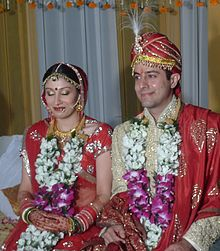
Hinduism And Hindu Theology - Arranged Marriages In Hindu Societies


A wedding that is planned by the bride and groom's parents, but it is becoming more usual for the potential pair to meet beforehand to see whether they are suitable. 


Despite the fact that this practice seems odd by American standards, proponents of arranged weddings believe they are better and endure longer than love marriages


  • Arranged marriages are thought to allow parents to maintain a more objective and reasonable viewpoint. 
  • They will often select partners from comparable social and economic backgrounds, often from the same jati  or caste (social grouping)
  • Parents consult with Astrologers who may look for hints in their children's horoscopes and attempt to connect compatible individuals with similar characteristics. 
  • All of this should be done with great care and with the knowledge that their children's long-term wellbeing is their top concern. 


Because marriage is the cornerstone of family life, and the family is the foundation of society, it is generally regarded as the most significant event in a person's life. 


  • Whether the bride will give or get a dowry, and if so, how much, is a part of the marriage discussions between the two parties. 
  • When it comes to arranged weddings, one of the expectations is that men and women would follow pretty conventional roles. 
  • This provides the pair a sense of what to anticipate and what is expected of them, but it may also be limiting for those who don't want to play such roles. 
  • The new bride, at least in northern India, bears the brunt of the changes, since she will become a member of her husband's family. 


Arranged weddings are still quite common among contemporary Hindu households, and many young people would never consider arranging their own. 


  • One practical factor that contributes to the popularity of arranged weddings is that it may be difficult for young people to meet and form connections that could lead to love marriages. 
  • India's society is still highly divided on the basis of gender. 
  • In rural and small towns, social contact between unrelated unmarried men and women is relatively rare, but this trend is changing in bigger cities as more women work outside the house. 
  • The college or university is the most common location for women and men to mingle in both settings, although even there, women and men prefer to socialize in groups rather than as individuals. 


An arranged marriage is frequently the best method to locate a suitable partner in a culture where interaction is restricted and formal dating is extremely rarer.


You may also want to read more about Hinduism here.

Be sure to check out my writings on religion here.


Hinduism - Who Are The Dhangars?


A collection of endogamous subgroups known as jatis ("birth") served as the paradigm for old Indian society. 

The group's hereditary occupation, over which each group held a monopoly, was how these jatis were structured (and how their social rank was decided). 

The Dhangars were a Hindu jati whose ancestral vocation was herding sheep and goats in ancient central Indian culture. 

They are especially linked with the Maharashtra state. 


You may also want to read more about Hinduism here.

Be sure to check out my writings on religion here.


Hinduism - What Is A Panchayat?


A group of five (pancha) elders from a certain community who were the ultimate authority for the community's members in old India.

Each jati (endogamous subcommunity frequently characterized by hereditary profession) was self-governing, with the panchayat making all major decisions.

This institution is celebrated in contemporary India as a model for decentralized administration, in which citizens assume responsibility for their communities, but since traditional Hindu villages include numerous jatis, this also implies that there were multiple centers of control.

~Kiran Atma


You may also want to read more about Hinduism here.

Be sure to check out my writings on religion here.