Showing posts sorted by relevance for query Adigranth. Sort by date Show all posts

Hinduism And Hindu Theology - What Is The Adigranth?

Adigrath literally means, “Primal Book”. One of the titles for the Sikh text that is most often used by non-Sikhs. 

Sikhs prefer to refer to the text as Shri Guru Granth Sahib, which indicates the book's position as the Sikh community's spiritual leader (guru). 


The tenth Sikh guru, Gobind Singh (d. 1708), bestowed this position after declaring that the community will no longer have human leaders after his death, relying only on their scripture for guidance. 

  • The Sikhs' treatment of the text demonstrates its religious authority. 
  • They treat the Adigranth as if he were a live being. 
  • The Adigranth is ceremonially put to bed at night in Sikh temples and awoken in the morning. 
  • It is worshipped beneath a canopy (a symbol of royalty), fanned in hot weather and warmed in cold, and carried on the bearer's head, which is regarded the cleanest portion of the body, if it must be transported anyplace. 
  • The Sikhs were most likely inspired by Muslim behavior with regard to the Qur'an, since most Hindus give little attention to a book itself, no matter how significant the content may be. 
  • The Adigranth is very important in Sikh life: Sikh couples marry by circling the book, similar to Hindu couples surrounding the holy fire (agnipradakshinam), and a popular dying ritual is an uninterrupted reading (akhand path) of the whole text. 

Guru Arjan, the fifth Sikh guru, composed the book between 1603 and 1604. 

According to legend, he wrote the book in response to competitors challenging his authority, some of whom had produced and circulated volumes ostensibly containing the teachings of Teacher Nanak, the Sikhs' founder and first guru. 

While there may be some truth to this legend, it is now widely accepted that Arjan was working from a compilation created a generation earlier. 


The mul mantra, which provides a set of characteristics and qualities attributed to the Supreme Being, is found in the first verses of the book. 


The Adigranth is divided into three sections after this entrance. 


  • The first is the Japji, a collection of thirty-eight verses by Guru Nanak that are considered the core of the Sikh religion and are repeated as the morning prayer by the devout. 
  • The hymns of the Sikh gurus are organized by raga, or musical mode, in the second part. 
    • The hymns are organized by poetic meter inside each raga, and within each meter, the hymns are ordered chronologically by who of the gurus wrote them. 
    • Because all 10 gurus, according to Sikh tradition, had the same heavenly essence, they all called themselves "Nanak." 
    • However, the songs' introductions distinguish them by using the word Mahala (literally "home," but metaphorically "body") followed by a number, ranging from Mahala 1 for Guru Nanak to Mahala 5 for Guru Arjan. 

  • The Adigranth's last part includes hymns written by a variety of different followers (bhakta), both Hindu and Muslim, who the Sikh gurus felt were preaching the fundamental Sikh doctrine of monotheism and the necessity to serve God. 
    • Trilochan, Jayadeva, Pipa, Ramananda, Sen, Namdev, Kabir, and Ravidas are among the Hindu devotional (bhakti) poets whose works may be found in this area, with major collections for the latter three. 
    • This final part makes the Adigranth a very significant book, even for people who are not interested in the Sikhs. 
    • This part not only provides manuscript tradition that can be exactly and properly dated, but it also ensures that the text has stayed unaltered from the beginning of the seventeenth century due to its holy significance. 

Many additional manuscript sources for these poets are far more modern, and textual degradation and pseudonymous additions make them difficult.


You may also want to read more about Hinduism here.


Hinduism - Who Was Trilochan?


(fifteenth century?) A sant poet who is often linked to Namdev, the poet-saint.

The term sant refers to a loose group of poet-saints from central and northern India who shared several common traits: a focus on individualized, interior religion leading to a per sonal experience of the divine; a disdain for external ritual, particularly image worship; faith in the power of the divine name; and a willingness to disregard traditional caste distinctions.

Trilochan's sole poetry are a few passages from the Adigranth, the Sikh community's holy text.

These verses express his devotion to Vithoba, the presiding deity of the Pandharpur temple in Maharashtra, and Namdev's chosen deity.

As a result, the poems seem to have Maharashtrian roots.

Other bhakti poets, most notably the poet saint Ravidas, mention Trilochan as a devotee (bhakta).

~Kiran Atma


You may also want to read more about Hinduism here.

Be sure to check out my writings on religion here.

Hinduism - Who Was Kabir?


 (middle of the 15th century?) A poet is considered as one of the most important religious personalities in northern India.

Kabir belonged to the Sants, a group of poet-saints from central and northern India who shared several characteristics: an emphasis on individualized, interior religion leading to a personal experience of the divine; disdain for external ritual, particularly image worship; belief in the power of the divine Name; and a tendency to ignore caste hierarchies.

Kabir was a devout follower of these ideas, and in his works, he openly criticizes any religious practice based on habit or custom, such as asceticism, unique ways of clothing, fasting (upavasa), image worship, caste, and text.

Kabir describes himself as a weaver (julaha) in his poems, and according to legend, he supported himself via this employment.

Kabir's background makes it impossible to associate him with a certain faith.

In Arabic, the name Kabir ("Great") is one of Allah's names in the Qur'an, indicating that he is a Muslim.

His poetry, on the other hand, demonstrates his extensive understanding of Hindu religious life.

The members of Kabir's julaha society were supposed to be new converts to Islam who had not yet completely integrated.

Kabir's poetry, on the other hand, plainly demonstrates that he was neither Hindu nor Muslim.

Kabir's appeal is probably due to his forthright, impassioned assertion that true religious accomplishment can only be attained via inward, individual experiences of the divine, which he refers to as Ram.

This is a word for the incomprehensible, ultimate Supreme Reality, not the god-king who is the hero of the Ramayana.

Both of these emphasizes reflect the Nathpanthi ascetics' influence, who also emphasized inward experience and yoga.

Kabir reportedly claimed in one of his songs that he had never put pen to paper since he was so engaged in the holy.

Many of his shorter epigrams have become conventional sayings, and his songs are still popular today.

Kabir's oldest attested poetry can be found in three major collections: one in the Adigranth, the Sikh scripture also known as the "Primal Book," another compiled by the Dadupanth, the religious organization founded by the Sant poet-saint Dadu, and the Bijak, compiled by the Kabirpanth, a religious community that claimed Kabir as its guru (religious preceptor).

These collections show substantial variances, indicating that they are not all from the same source.

For more information, see Charlotte Vaudeville's Kabir (1974); Linda Hess and Shukdev Singh's The Bijak of Kabir (1983); John S.

Hawley and Mark Juergensmeyer's Songs of the Saints of India (1988); Nirmal Dass' Songs of Kabir from the Adi Granth (1991); and David Lorenzen's Kabir Legends and Ananta-Das' Kabir Parachai (1991). 


You may also want to read more about Hinduism here.

Be sure to check out my writings on religion here.


Hinduism And Hindu Theology - What Is An Akhand?

An “unbroken recitation” is called an Akhand. Individuals may conduct such recitations for their personal advantage or pay someone else to do it for them. 


  • The advantages of this activity are said to stem from the holy text's perceived potency. 
  • The recitation may be conducted as a pious deed or as part of a festival observance. 
  • It may also be used as a last option in times of grave crises or as a religious act after a death in the family. 


The Ramcharitmanas, a sixteenth-century poet-saint Tulsidas' rendition of the Ramayana, is one of the works often repeated without interruption. 

The Adigranth is performed in the Sikh community.


You may also want to read more about Hinduism here.

Be sure to check out my writings on religion here.

Hinduism - Who Was Ravidasi(Sant)?


Ravidas  (ca. 1500) is a sant or poet-saint who lived in Benares and is said to have been a younger contemporary of poet-saint Kabir, according to tradition.

The Sants were a loose group of poet-saints from central and northern India who shared a number of common characteristics, including a focus on individualized, interior religion leading to a personal experience of the divine, a dislike for external ritual, particularly image worship, faith in the power of the divine Name, and a tendency to disregard traditional caste distinctions.

Ravidas is described as a leather worker (chamar) by both tradition and allusions in his poems, a social group whose interaction with dead animals and their skins left them untouchable.

His hereditary occupation is said to have sustained him, and much of his poetry deals with concerns of worldly birth and standing.

He never questioned the significance of heredity, but he finally believed that his dedication to God had enabled him to transcend his birth and given him prestige based on other factors.

His poetry, as well as his repeated reminders to his audience that life is brief and difficult, and that they should pay close attention to religious practice, reflect this strong personal conviction.

Ravidas was probably definitely uneducated, given his poor social rank.

His poetic songs were most likely passed down orally, but his personal appeal made him one of the most well-known sant poets.

The Adigranth, a scripture for the Sikh community, and the Panchvani collections, produced by the Dadupanth, are the two earliest recorded sources of his work.

Ravidas has also acted as a role model for the poor in contemporary India; his followers are known as Ravidasis.

Songs of the Saints of India, edited by John Stratton Hawley and Mark Juergensmeyer, was published in 1988, and The Life and Works of Raidas, translated by Winand M.

Callewaert and Peter Freidlander, was published in 1992.


You may also want to read more about Hinduism here.

Be sure to check out my writings on religion here.
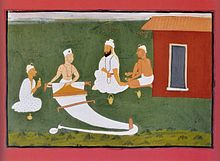


Hinduism - Who Was Namdev?


(1270–1350?)  At his temple at Pandharpur in the current state of Maharashtra, poet-saint who is one of the major characters in the Varkari Panth, a religious group focused upon the worship of the Hindu deity Vithoba.

Namdev was a cotton-printer, a low-class vocation, according to legend, but the power of his dedication made his worldly rank inconsequential.

Jnaneshvar and Chokamela, two additional Varkari poet saints, are reported to have been his associates.

Several collections of his songs have been preserved, including the Adigranth (collected by the Sikh community) and the Panchvani (a col lection of songs by five poets compiled by the Dadupanth).

G. A. Deleury, The Cult of Vithoba, 1960; Justin E. Abbott and Narhar R. Godbole (trans. ), Stories of Indian Saints, 1982; and G. A. Deleury, The Cult of Vithoba, 1960. See Winand Callewaert and Mukund Lath, The Hindi Padavali of Namdev, 1989, for a more critical examination of his Hindu songs and the challenges in utilizing them as biographical sources.

~Kiran Atma


You may also want to read more about Hinduism here.

Be sure to check out my writings on religion here.

Hinduism - Who Was Pipa?


Pipa (15th century?) is a poet-saint in the Sant religious group.

Sant is an umbrella term for a group of poet-saints from central and northern India who share a number of common traits, including:

  1. A focus on individualized, interior religion leading to a personal experience of the divine; 
  2. Disdain for external ritual, particularly image worship; 
  3. Belief in the power of repeating one's patron deity's name; 
  4. And a willingness to ignore traditional caste distinctions.


Pipa was born into a Rajput royal family in the Malwa area, but he finally abdicated his kingdom and traveled to Benares to study under the poet-saint Ramananda.

Pipa was a follower of the mighty goddess Bhavani (an epithet of Parvati), according to the hagiographer Nabhadas, demonstrating the scope of the Sant tradition.

A couple of Pipa's lyrics have been preserved in the Adigranth, the Sikh community's holy scripture, and they are congruent with these traditions in terms of language and theological focus.


~Kiran Atma


You may also want to read more about Hinduism here.

Be sure to check out my writings on religion here.

Ramananda


Ramananda  (14th century?)

Traditional references to him as the spiritual teacher (guru) of poet-saints Kabir, Ravidas, Pipa, and others.

The Sants were a group of poet-saints from central and northern India who shared a number of common traits, including a focus on individualized, interior religion leading to a personal experience of the divine, a dislike for external ritual, particularly image worship, faith in the power of the divine name, and a willingness to disregard traditional caste distinctions.

Ramananda was a prominent spiritual leader who was reported to be a direct pupil of Ramanuja, a southern Indian philosopher who sent Ramananda north to assist promote the devotional movement.

Given that the single passage incontrovertibly attributed to Ramananda is contained in the Adigranth, the Sikh community's scripture, the latter assertion is probably definitely untrue.

This poem indicates the impact of the Nathpanthi ascetics, who emphasised yoga, rather than Ramanuja's Shrivaishnava tradition, in which Vishnu is the major god.

Other lines attributed to Ramananda have been found in subsequent sources, although their validity is disputed, and nothing is known about his life.

Renunciant ascetics, worshippers of the deity Vishnu (bhakta), who are by far the most numerous and influential of the Vaishnava ascetics.

The Ramanandis believe that their order was created by Ramananda, a religious teacher about whom nothing is known for certain.

For a while, the Ramanandis claimed that Ramananda was a student of the southern Indian philosopher Ramanuja, and that their sect sprang from Ramanuja's Shrivaishnava religious society, but this claim was falsely denied following a disagreement during the Kumbha Mela event in Ujjain in 1921.

Ramananda is also claimed to have been the guru of a number of northern Indian bhakti personalities, including Kabir, Ravidas, Pipa, and Sen, however there is little strong historical evidence for this.

All of the anecdotes about Ramananda, on the other hand, indicate to a guy who was steadfast in his dedication and eager to initiate individuals from all areas of life.

Rama, as depicted in the Ramcharitmanas, a vernacular version of the epic Ramayana penned by the poet-saint Tulsidas (1532–1623? ), is the tutelary god for the Ramanandi ascetics.

The text's principal topic is the power of devotion, and Tulsidas presents Rama as God incarnate, who has come to earth for the sake of his believers.

Within the greater Ramanandi fold, however, there are various diverse variants on practice that have little in common with one another.

The tyagis, for example, emphasize renunciation and austerity.

A second thread is that of the Nagas, who fought ascetics in the past but whose military structure is now mainly prominent during the Kumbha Mela bathing (snana) processions.

The fourth strand is that of the rasiks ("aesthetes"), whose religious practice is based on very intricate vision patterns in which they see themselves in Rama's palace; this kind of visualization was definitely adopted from Krishna devotion patterns in the Braj area.

The rasik tradition is by far the most literate and sophisticated; the tyagis and Nagas execute comparable ceremonies to other ascetics, but their inter pretation and deity are unique to their order.

For further detail, read Peter van der Veer's 1988 book, Gods on Earth.

Hinduism - What Is Bijak?


    Bijak means "inventory." 


    The Adigranth and the manuscripts of the religious institution Dadupanth include the other two major collections of poetry attributed to the poet-saint Kabir (mid-15th century?). 


    • Kabir is the most well-known of the sants, a group of poet-saints from central and northern India who share several concepts, including a focus on individualized, interior religion leading to a personal experience of the divine, a dislike for external ritual, particularly image worship, faith in the power of the divine Name, and a tendency to disregard traditional caste distinctions. 
    • In terms of established religious rituals and authority, Kabir is the most iconoclastic of all the sants. 
    • He always stresses the need of personal seeking and fulfillment. 


    What Is The Bijak?


    The Bijak is the scripture of the Kabirpanth, a religious group claiming to be Kabir's followers, which is noteworthy given the nature of Kabir's message. 


    • Certainly, the idea of declaring Kabir the founder of anything, or of his words acquiring the authority of a scripture, would have been rejected by him. 
    • The Bijak includes a variety of poems, including brief epigrams that have become proverbial wisdom, lengthier chaupai stanzas, and shorter two-line poetry (doha). 
    • The Bijak has linguistic characteristics that place it in the eastern portion of the Hindi language area, thus its popular moniker of "eastern" recension. 


    NOTE: Linda Hess and Shukdev Singh (trans. ), The Bijak of Kabir, 1983, contains translations of the text itself.


    Kabir Bijak Pdf 


    Kabir Bijak Pdf - In English


    Kabir Bijak Pdf - In Hindi

    Frequently Asked Questions:


    What is Bijak according to Kabir?

    A document containing holy writings is referred to as a bijak. It is also one of the oldest important writings in contemporary Hindi. According to Kabir, the True God is with the individual who is following the path of justice, views every living thing as his own self, and maintains a passive detachment from worldly matters.


    How many parts are there in Bijak?

    All renditions of the Bijak include a fourth portion that contains other folk song types in addition to the three major sections known as Ramaini, Sabda, and Sakhi.


    What are the followers of Kabir called? Name the three main sections of the Bijak?

    The Bijak is divided into four sections: Ramain, Shabda, Skh, and another segment with other folk music.


    What is Bijak?

    The sacred text for adherents of the Kabirpanthi faith, Bijak is the most well-known of the Kabir's collections. There are also other folk tunes in it. One of the first important texts in contemporary Bagheli is the Bijak.


    Kabir worships which God?

    He adored the Nirguna form of God, whom he refers to by several names, including Rama, Allah, Hari, Sain, and Sahib. Thus, Kabir is the subject of all the claims.


    What is Bijak in history?

    The word "Bijak" refers to a book that contains religious passages. Kabir Das was an Indian mystic poet and saint who lived in the 15th century. His poetry may be found in the Sikhism holy book Guru Granth Sahib and his works had an impact on the Bhakti movement in Hinduism.


    What does the Bijak mention as two main teachings of Kabir?

    (1) He stressed the word "Bhakti." (2) According to him, only true love and devotion to God, which he termed Bhakti, could free a person from the cycle of life and death and bring them closer to God.


    What were the major four teachings of Saint Kabir?

    rejection of the great religions. criticism of all manifestations of Brahmanical Hinduism and Islam's exterior worship. criticism of the caste system and the priesthood classes. belief in a supreme being without form.


    What was Kabir's followers known as?

    Its Kabir panthis, or members, number in in the neighborhood of 9.6 million. Up from 843,171 in the 1901 census, they are distributed across north and central India as well as abroad with the Indian diaspora.


    What is Bijak? how it is divided?

    Bijak: A bijak is a collection of Kabir's poetry. It is divided into three major portions, Sakhi, Ramaini, and Shabda.


    Who wrote the Bijak?

    For the Kabir Panthis, the holy text known as Bijak was written by Kabir Das. Dohas and poetry of Kabir made up the majority of bijak.


    What is the meaning of ultimate reality concept of Kabir?

    By using a variety of traditions, including those from Islam, Kabir portrayed the "Ultimate Reality," depicting it as Allah, Khuda, Hazrat, and Pir. The names Alakh, Nirakar, Brahmana, and Atman were all adopted from the Vedantic traditions. outline of a heart


    What is God according to Sant Kabir?

    According to Sant Kabir, the genuine God is with the one who is on the road of righteousness, loves all living things as his own, and is uninvolved in the events of this world.


    What was the theme of Kabir's illusion and reality?

    A typical human is caught in the struggle between illusion and reality. The One Inexpressible God, the One and Only Truth, is manifestly incomprehensible. In this stanza, Kabir asserts that the only way to break free from the traps of illusion is to become conscious and govern one's affairs with awareness.


    Where is Kabir buried?

    In January 1518, which is known as Magh Shukl Ekadashi in Hindu tradition, the enlightened teacher Kabir departed his body in Maghar. This was followed by Vikram Samvat 1575. He was equally adored by Muslims and Hindus, and after his passing, each religion constructed a mazaar (tomb) and a samadhi in his honor.


    Why was Kabir abandoned?

    His mother was said to have been a Brahman who became pregnant after visiting a Hindu temple, according to one version. She left Kabir behind since she wasn't married, and a Muslim weaver later discovered and adopted him.


    What was Kabir's poetry influenced by?

    Though he was critical of certain parts of both religions, Kabir's poetry incorporates elements of both Islam and Hinduism. The Adi Granth, a collection of Sikh texts, contains some of his poems. His mystical poetry are rooted on the specifics and worldly elements of daily existence.


    Why Kabir Doha is famous?

    Songs known as padas, rhymed couplets known as dohas, words of wisdom known as shabd, and "witnesses" known as sakhis are among Kabir's works. Kabir did not adhere to the practices of idol worship or the caste system. His lyrics are straightforward and easy to grasp, and his ideology is founded on total devotion to one God.


    What is the contribution of Kabir to Bhakti movement?

    Kabir Das made an effort to harmonize the many faiths by presenting a universal path that all people might follow. He asserts that there is a connection between the two spiritual laws and every life (Jivatma and Paramatma).


    References And Further Reading:


    1. Grierson, George A. Review of The BÄ«jak of KabÄ«r, by Ahmad Shah. The Journal of the Royal Asiatic Society of Great Britain and Ireland, 1918, 151–60. http://www.jstor.org/stable/25209368.
    2. Meena, Pooran Lal. “THE ANCIENT REMAINS ON THE BIJAK-KIPAHADI ‘THE GREAT CENTRE OF BUDDHISM.’” Proceedings of the Indian History Congress 77 (2016): 928–32. https://www.jstor.org/stable/26552725.
    3. Gold, Daniel. History of Religions 43, no. 1 (2003): 80–81. https://doi.org/10.1086/381332.
    4. VAUDEVILLE, CHARLOTTE. “KABĪR’S LANGUAGE AND LANGUAGES, HINDUĪ AS THE LANGUAGE OF NON-CONFORMITY.” Indo-Iranian Journal 33, no. 4 (1990): 259–66. http://www.jstor.org/stable/24655578.
    5. Ranjan, Purnendu. “HISTORICAL EVIDENCE FOR THE STUDY OF KABIRPANTH.” Proceedings of the Indian History Congress 68 (2007): 1041–47. http://www.jstor.org/stable/44147909.
    6. Singh, R.P. “Kabir: The Articulator Par Excellence of Indigenous Indian Modernity.” Social Scientist 47, no. 5/6 (2019): 71–78. https://www.jstor.org/stable/26786189.
    7. Kalyani, Kalyani. “Tathagata Buddha Songs: Buddhism as Religion and Cultural-Resistance Among Dalit Women Singers of Uttar Pradesh.” CASTE: A Global Journal on Social Exclusion 1, no. 2 (2020): 51–62. https://www.jstor.org/stable/48643564.
    8. Cort, John. Review of WILL THE REAL KABIR PLEASE STAND UP?, by LINDA HESS and SUKHDEV SINGH. Journal of South Asian Literature 20, no. 1 (1985): 249–50. http://www.jstor.org/stable/40872765.
    9. Hess, Linda, and Sukhdev Singh. The Bijak of Kabir. Motilal Banarsidass, 2015.
    10. The Bijak of Kabir. Oxford University Press, USA, 2002.
    11. Lorenzen, David N. Kabir legends and Ananta-das's Kabir Parachai. SUNY Press, 1991.
    12. The Bijak of Kabir. A. Shah, 1917.
    13. Lorenzen, David N. "Traditions of non-caste Hinduism: the Kabir Panth." Contributions to Indian Sociology 21, no. 2 (1987): 263-283.
    14. Grierson, George A. "The BÄ«jak of KabÄ«r-The Bijak of Kabir. Edited by the RevAhmad Shah. Cawnpore, 1911.-The Bijak of Kabir. Translated into English by the RevAhmad Shah, according to his edited Hindi text published in 1911. Hamirpur, 1917." Journal of the Royal Asiatic Society 50, no. 1 (1918): 151-160.
    15. Lorenzen, David N. "Dissent in Kabir and the Kabir Panth." Devotion and Dissent in Indian History (2014): 169-187.

    You may also want to read more about Hinduism here.

    Be sure to check out my writings on religion here.