Showing posts sorted by relevance for query apana. Sort by date Show all posts

Pranayama - Kundalini Ascension And Vayus


After meditation and health/life extension, the function of the apana vayu as a motor for Kundalini-rousing is the third major area where the vayus are discussed. 


  • The main vayus, with the exception of apana, either travel upwards (prana vayu, udana vayu) or are directionless (samana and vyana vayus). 
  • The apana vayu, with its powerful downward flow, is primarily responsible for life force depletion and keeping us bound to our animal nature. 
  • Apana has a significant effect on vocabulary, resulting in an overuse of faeces and sexual phrases. 
  • If we turn up our apana, we may leave our animalistic side behind and embrace the Divine, according to yoga. 


The mixing of prana and apana in kumbhaka at the Manipura Chakra causes the Kundalini to rise. 

In ancient writings, this is a common topic. By using Mula Bandha in Siddhasana, Sage Yajnavalkya taught to his wife, Gargi, how to send apana on an upward trajectory. 

  • The fire must be fanned after it reaches the Manipura Chakra (the fire chakra) by pulling prana vayu down. 
  • The snake Kundalini's tail will be bummed by the fire, and the serpent will ascend through the chakras, propelled by the twin forces of apana vayu and fire. Kundalini is said to be awakened by apana with fire and moves up like a snake, according to Sage Vasishta. 
  • Raghuvira goes into more depth in his Kumbhaka Paddhati/4, which is dedicated exclusively on pranayama. 


Mastery of apana (apana jaya), he claims, would lead to mastery of mula bandha (root lock), mudras (energy seals), dharana (concentration), agni (fire), Kundalini rising, and an increase in sattva guna (intelligence). 

Here are a few explanations: 

  • Apana (vital down current) and mula bandha (root lock) are almost interchangeable. 
  • The mastery of one will lead to mastery of the other. 
  • The stoking of agni will follow mastery of apana (fire). 
  • Toxins will be absorbed by a powerful agni, which will improve health. Kundalini is roused by a powerful agni and a tilted apana. 


When a diligent practitioner raises Kundalini, the yogi will be able to practice dharana (concentration) and then the other higher limbs. 


It's important to note that in more contemporary texts (i.e. those from the Kali Yuga), the word Kundalini refers to what Patanjali meant by dharana. 

  • Humanity was more intellectually and philosophically oriented during Patanjali's era (Dvapara Yuga). 
  • Patanjali's concept of dharana, which was generally recognized at the time, was the capacity to tie the mind to one location for three hours. 
  • People in our present era, the Kali Yuga, are much more physically oriented, therefore yogis searched for a physical meaning of the word dharana. 
  • Dharana, or tying the mind to a sattvic (holy) meditation object for three hours, was only feasible when the prana was elevated to the upper chakras, according to yogis. 
  • If prana is restricted to the lower chakras, one will express themselves in terms of survival (Muladhara Chakra), sexual identity (Svadhishthana Chakra), or absorption of money, food, and things (Svadhishthana Chakra) (Manipura Chakra). 


Kundalini is the term given to Prana as it rises. 


  • The Kali Yuga's physically oriented yogis sought for methods to elevate Kundalini in order to strengthen dharana. 
  • The route of air and the path of fire, or the usage of both at the same time, are two of the most common methods to raise Kundalini. 
  • 'Path of fire' refers to cleansing and stoking agni (fire). 
  • The term "path of air" refers to raising the apana vayu and utilizing it as a motor to raise Kundalini.
  • Remember that apana is the only vayu current that firmly points down. 
  • If it is turned upwards, all of the vayus will suck up Kundalini like a big vacuum cleaner, and this is what the route of air refers to. 
  • According to the Yoga Kundalini Upanishad, Mula bandha is used to elevate apana, which usually flows downward. 
  • According to the Upanishad, apana ascending up will mingle with agni, and the two will rise together to the Manipura Chakra. 
  • They will join with prana vayu (vital up stream) here, and Kundalini will ascend up via the sushumna, sucked up by the vayus and lit by agni (notice that the English term ignite is derived from the Sanskrit agni = fire). 


In a nutshell, this is how the more contemporary yoga shastras explain how to attain dharana (scriptures). 

However, it just repackages old ideas in a more contemporary language. 

The word sushumna, which refers to the core energy conduit and the route for Kundalini ascension, was first used in the Chandogya Upanishad/9, which predates the Yoga Sutras by centuries. 

I've gone into great length to demonstrate that there isn't a yoga of the Vedic seers, a yoga of the ancient Upanishads, a classical yoga of Patanjali, and a more contemporary yoga of the Hatha Yoga, as some Western academics claim. 

This isn't the case at all. There has been a continuous, consistent history of sages and siddhas who have experienced the same mystical experience for thousands of years. 

What changed was the audience's ability to comprehend the lessons. 

As a result, the same mystical experience was clothed in various languages and modified using diverse techniques to reach an audience whose makeup had changed throughout the millennia.


You may also want to read more about Pranayama and Holistic Healing here.


MULA BANDHA


With your left heel, press down on the Yoni. Keep the right heel squeezed against the space just above the generation organ. Draw the Apana Vayu upwards by contracting the anus. 

Mula Bandha is the name for this. The Apana Vayu, which is responsible for excreta ejection, has a natural propensity to shift downwards. 

The Apana Vayu is forced upwards by the practice of Mula Bandha, which involves contracting the anus and forcibly pulling it upwards. 

The Prana Vayu is joined to the Apana Vayu, and the Prana-Apana Vayu is directed into the Sushumna Nadi. 

Then the Yogi \sattains perfection of Yoga. The Kundalini has been reawakened. The Yogi consumes the Immortal Nectar. In Sahasrara Chakra, he loves Siva-pada. 

He receives all of the holy Vibhutis as well as Aishvarya. Anahata sounds (mystical inner sounds) are heard clearly when the Apana is united with Prana. When Prana, Apana, Nada, and Bindu come together, the Yogi achieves Yoga perfection. This is the highest point that can't be achieved on the first try. This can be done over and over again for a long time.


The use of Bandhas and Mudras aids in the attainment of Siddhi in the practice of Pranayama. Mula Bandha helps to maintain perfect Brahmacharya, provides Dhatu-Pushti (nerve vigour), relieves constipation, and boosts Jatharagni. Mula Bandha should be used in conjunction with focus, meditation, Pranayama, and all other Yogic Kriyas.


You may also want to read more articles on Yoga and Holistic Healing Here.

Pranayama - Vayus And Meditation


Inhalation and intake are linked with Prana vayu, while exhalation and excretion are associated with apana vayu. 

  • Urination, defecation, menstruation, ejaculation, and the delivery of the foetus during childbirth are all aided by Apana. 
  • As a result, it is a downward motion, while prana is an upward motion. 
  • Consider the rise of the chest during inhalation (prana) and the fall of the thorax during expiration (exhalation) (apana). 
  • However, astute meditators will have observed, the inhalation begins at the nose and ends at the perineum, despite the fact that it raises the chest. 
  • Following the exhale with mindfulness will take you from the pelvic floor to the nose, where the breath exits the body. 
  • As a result, there is both an upward and downward movement during inhalation and exhale. 


According to Shrikrishna, a member of Kaivalyadhama and a pranayama researcher, the subtle flow of prana is the inverse of the gross breath.

  • He says that there is a downward flow upon inhaling (called apana gati). 
  • Similarly, there is an energetic upward movement during gross exhalation (called prana gati). 
  • To make things more complicated, he points out that the terms prana and apana are simply equated with breath in certain yogic literature and with subtle energy flow in others (gati). 
  • This is why prana is characterized as a downward flow in certain scriptures and as an upward movement in others. 


One of the most effective secrets of meditation is to experience and harness them both at the same time, when they cross over. 

  • To do so, notice how your gross breath fills your body from the perineum to the neck, while the subtle energy fills your torso from the nose down to the pelvic floor when you inhale. 
  • This implies that your awareness must extend both up and down at the same time. 
  • Then notice how, as you exhale, the top lobes of your lungs empty first, then the chest lowers, and ultimately the belly contracts, all while the delicate energy flow travels from the perineum upwards to the brain. 

One of the most effective methods of quieting the mind is to maintain experiencing this dual movement.


You may also want to read more about Pranayama and Holistic Healing here.


Pranayama - Bhagavad Gita's Mention Of Pranayama


The Bhagavad Gita is India's most important religious text. It contains Lord Krishna's teachings and defines pranayama in two ways: 


  • To begin, it is said that some people practice pranayama by giving apana (vital down-current) into prana (vital up-current) and prana into apana, thus stopping the breath. 
    • The word prana apana gati is used in the Gita. 
    • The inner down movement, which is included in the rising inhale, is known as Frana gati. 
    • The inner rising, or apana gati, is included in the falling exhale. 
    • This suggests the deep lesson that every force in the cosmos has an equal and opposite force. 
    • Focusing on the gati, which is the inner opposite of the apparent outside force, stops the pranic movement. 
    • One of the primary motors that propels Kundalini (the coiled life energy that propels spiritual emancipation) upward is Apana gati, the inner upward movement inherent in the exhale. 

  • The sacrifice of the senses into prana is the second definition of pranayama given in the Gita. 
    • The senses stretch out and attach themselves to different objects of desire or aversion throughout the movement of prana, i.e. inhalation and expiration. 
    • The senses are naturally pulled inwards during kumbhaka, and the yogi encourages this by concentrating on the Divine throughout kumbhaka. 
    • The yogi abandons and surrenders the senses' usual outward activity, 'offering' it to the prana suspended and stopped in kumbhaka. 


As a result, the Gita, like the Yoga Sutra, views pranayama as both refining the process of inhalation and expiration as well as mental processes done during kumbhaka (breath retention).


You may also want to read more about Pranayama and Holistic Healing here.


Pranayama - Vayus To Extend One's Life Expectancy


The study and eventual mastery of apana and prana motions has other significant ramifications. 


  • According to the Hatha Yoga Pradipika, the yogi's physique is transformed into that of a 16-year-old by drawing the apana vayu up and pushing the prana vayu down.
  • As prana vayu is pushed out of the body in an upward trajectory and apana vayu is directed downwards, both vayus ultimately lead to a depletion of life energy. 
  • Mula Bandha and Uddiyana Bandha may be used to drive apana vayu upwards, whereas Jalandhara Bandha and Jihva Bandha can be used to send prana vayu downwards. 


According to the Vedas, the vayus meet in the Manipura Chakra, where they are transformed into samana vayu and absorbed into the body's solar pranic storage by turning them around. 


  • This kind of prana absorption into the Manipura Chakra is believed to be accountable for yogic feats like being buried for days or weeks and yet being alive when dug up. 
  • Pilot Baba, for example, has shown that yogis can survive without oxygen for an extended period of time. This is not a new concept: it is stated in the Brhad Aranyaka, the most ancient Upanishad, that whomever grows samana vayu is beyond death. 


Take note of the yogic tradition's continuity throughout thousands of years. 

  • Apart from absorbing prana, apana, and samana vayus into the solar pranic storehouse, it is beneficial to slow down breath and pulse to the point where they are virtually undetectable. 
  • T. Krishnamacharya and others have shown this capacity. 
  • Slowing the pulse lowers the heart's oxygen consumption and increases the amount of time spent in kumbhaka. 
  • Slowing down one's breathing also extends one's life expectancy.


You may also want to read more about Pranayama and Holistic Healing here.


Pranayama - VAYUS Vs. PRANA?


Some earlier writings, such as the Taittiriya Upanishad, use the word vayu instead of prana to refer to life energy. 

However, in recent yogic literature, the word vayu has come to mean a division of the life force, prana, into ten essential airs, which we might call sub-pranas. 

Unfortunately, one of these sub-pranas is referred to as prana, causing some misunderstanding


The life force is therefore referred to as prana, while the vital air prana is referred to as prana vayu. 


  • Five of the 10 vayus (vital airs) are regarded main (prana vayu, apana, samana, udana, vyana) and the other five secondary (apana, samana, udana, vyana) (naga, krkara, kurma, devadatta, dhananjaya).
  • Prana, apana, and samana are the ones we should be most concerned about. 
  • These vayus are significant in three areas for us: meditation, health/life extension, and Kundalini rising.


You may also want to read more about Pranayama and Holistic Healing here.


What is Pranayama?

Pranayama is more than just "breath practice," as many people believe. With the systematic regulation of the breath, it is a collection of strategies for stimulating, expanding, and balancing life force capacity. Smaller methods, such as witnessing the breath, to more advanced movements that require time and repetition to learn are all examples of these techniques. These exercises may be performed while standing, lying down, or in specific positions.

The Sanskrit words prana and ayama are combined to form the term pranayama. Prana, like I (chi) in Buddhism, refers to the animating life force spirit within all things. Your system is energized, and you are physically healthy, when prana is abundant. In relation to the action of prana, ayama is a verb that means "to stretch" or "to expand." Pranayama literally means "extension of life force capacity," and it will help you feel more vital, clear-headed, and energized.

Many religions, including Buddhism, Hinduism, and, of course, yoga, include pranayama in their health activities. Pranayama is the fourth “limb” of raja yoga, and it was identified by the sage Patanjali in the oga S tras prior to 400 CE as an accompaniment to yoga asanas (postures) and a prelude to deep states of meditation. Many yoga courses offered in the West today omit or misinterpret pranayama, even though it has been a part of classical yoga for centuries. The results of pranayama can be intensified, and your practice of postures can be deepened when paired intelligently with certain yoga postures and flows.

Prana is described as the vital life force energy that animates and moves you. It is vitality at its heart. When the body's prana levels are down, you can feel sluggish, trapped, or even sick. There are five key movements of prana in your body, called ay s, or "wind," that control your overall system, including digestion, circulation, and elimination, according to the he atha oga Pradipika, a 15th-century Sanskrit manual on hatha yoga by Svatmarama. When you don't have enough prana in your body, these motions may be absent. You will raise the amount of prana in your body and guide the energy movements that need more pranic help by practicing pranayama.


The Five Vayus of Prana


1. Udana Vayu – Energy flux upward and outward. This vayu is responsible for excitement, creativity, development, and ascension. Dana pushes prana upward toward the neck and face as it approaches the body. Dana ay is influenced by pranayama by monitoring the inhalation side of the breath and any breath holding during inhalation.

2. Prana Vayu (also known as "Pran" Vayu): The inward and upward flow of energy. This vayu is energizing and vitalizing, and it regulates the absorption of prana into the body, as well as inhalation, feeding, drinking, visual impressions, and mental perceptions. Prana ay regulates the flow of prana as it approaches the body from the chest and ascends. Prana vayu is influenced by regulating the inhalation side of the breath and its capacity in the body through pranayama.

3. Samana Vayu – The inward-spiraling, assimilating energy flow. The assimilation of food, oxygen, and all interactions into the system is governed by this vayu. Samana spirals prana inward as it approaches the body, coalescing around the navel core. Samana ay is influenced by pranayama, which involves matching the lengths and capacities of both inhalation and exhalation.

4. Apana Vayu – Energy flux downward and outward. Exhalation, energetic grounding, breastfeeding, and the avoidance of harmful mental and psychological memories are all governed by this vayu. Apana ay assists in letting go by moving prana downward toward the genital organs and out of the body. Controlling the exhalation side of the breath with pranayama affects apana vayu.

5. Vyana Vayu – The flow of energy that expands and circulates. This vayu is in control of nutrient distribution in the blood and body fluids, as well as feelings and ideas, as well as engagement with the outside world. The yana ay spirals outward from the middle of the body, absorbing prana into the body and the universe. By regulating the power of both inhalation and exhalation, pranayama affects vyana vayu.


Energetic Effects of Brahmana, Langhana, and Sama Vritti


Brahmana, langhana, and sama ritti are three energetic outcomes of yoga that can be affected by meditation, asana (yoga postures), and pranayama.

1. Brahmana (Expansion) – Expanded capacity, vitality creation, and extroverted energy. You can transfer static energy and activate the nervous system with brahmana pranayama. Brahmana is induced by faster and more vigorous breathing patterns, full breaths in the chest and ribs, and an emphasis on the inhalation. When you're feeling lethargic, foggy, exhausted, or stressed, try brahmana activities early in the day or when you're feeling lethargic, foggy, drained, or depressed.

2. Langhana (Reduction) – The calming, grounding, and introverted energy effect. You can relax the nervous system and reduce excess frenetic activity by practicing langhana pranayama. Langhana can be stimulated by slower breathing patterns, breathing in the belly, and focusing on the exhalation. During the evening while you prepare for sleep, when having insomnia or overstimulation, following major trauma, or when feeling general restlessness in your body and mind are all times when you might do a langhana exercise.

3. Sama Vritti (Balance) – The energetic influence of balance. To get the system into equilibrium, Sama vritti pranayama balances all brahmana and langhana results. A sama vritti effect is achieved by balancing the duration and capacity of the body on both inhalation and exhalation, as well as some breath keeping. If you're not sure what kind of enthusiastic practice you need, sama vritti practices are a great place to start.

Pranayama is designed to be used in conjunction with other forms of wellbeing and health services, such as traditional medicine, rather than as a replacement. The information provided here is not intended to diagnose or treat any health-related issues. Always seek medical advice from the doctor if you have any medical concerns.


YOGA KUNDALINI UPANISHAD


Of the 108 Upanishads, the Yoga-Kundalini Upanishad is the eighty-sixth. It is included in the Krishna Yajurveda. It discusses Hatha and Lambika Yogas in detail. It ends with a summary of a non-qualified Brahman. Both seekers are on a search for the Non-dual Brahman.

The Yoga-Kundalini Upanishad is a very important work on Kundalini Yoga, despite being classified as a minor Upanishad. It starts with an examination of Chitta's essence. Samskaras and Vasanas, on the one hand, and Prana, on the other, are said to be the causes of Chitta's life. Prana is automatically controlled if Vasanas are controlled. The Vasanas are automatically monitored if Prana is controlled.

Methods for controlling Prana are presented in the Yoga-Kundalini Upanishad. Vasanas are not dealt with by the Yogic practitioner. He is interested in the methods for monitoring Prana.

Mitahara, Asana, and Shakti-Chalana are the three methods for controlling Prana offered in the Yoga-Kundalini Upanishad. The first chapter covers all three approaches in detail.

Mitahara's diet consists of light, soft, and nutritious foods. Two popular Asanas used by Yogic students are Padmasana and Vajrasana. The Kundalini is being awoken and sent to the crown of the head by Shakti-Chalana.

A two-pronged approach can be used to awaken Kundalini. The two traditions are Saraswati Chalana and Prana Restraint. Saraswati Chalana is the rousing of the Saraswati Nadi.

The Yoga-Kundalini Upanishad describes a clear method for arousing Kundalini. The Prana goes out in 16 digits when a human exhales. Inhalation results in just 12 digits, resulting in a 4 digit loss. If one can inhale Prana for 16 digits, the Kundalini is aroused. This is achieved by sitting in Padmasana and lengthening inwards 4 digits further as Prana is streaming through the left nostril.

The Yogic student should exploit the Saraswati Nadi and stir up the Kundalini Shakti with all his might, from right to left, repeatedly, using this lengthened energy. This procedure could take up to three quarters of an hour to complete. All of this is outlined in the Yoga-Kundalini Upanishad in a concise yet thorough manner.

Shaking the Saraswati Nadi has many benefits, the most significant of which is that it cures various diseases that arise in the stomach and cleanses and purifies the system. The Yogic pupil is initiated into the Kevala Kumbhaka after doing the Sahita Kumbhaka. The Prana is fully restrained in these two forms of Kumbhaka.


The Sahita Kumbhaka is divided into four divisions: Suryabheda Kumbhaka, Ujjayi Kumbhaka, Sitali, and Bhastrika. Suryabheda Kumbhaka eliminates intestinal worms as well as Vayu's four types of evils. Ujjayi cleanses the body, eliminates pathogens, and boosts gastric fire. 

It also reduces the heat in the head and the phlegm in the throat. Sitali is a body coolant. Gulma, dyspepsia, pliha, consumption, bile, fever, hunger, and poison are all destroyed by it. These ways of Sahita Kumbhaka cleanse and brace the entire physiological body for Kundalini Sakti stimulation and non-dual Brahman encounter.

Bhastrika Kumbhaka pierces the three knots, or Granthis, in addition to bringing about a host of beneficial physiological improvements. The Yoga-Kundalini Upanishad then instructs the Yogic student on how to do the three Bandhas. The Mulabandha is the mechanism by which the spincter muscles of the anus push up the downward inclination of the Apana (breath). 

The Apana is raised by this Bandha. It hits the Agni, or fuel, sphere. The Agni's flame grows long and is blown about by Vayu. Agni and Apana mix with the Prana in a heated state. Agni is a ruthless being.

Via the radiant heat of this fiery Agni, the fire that awakens and arouses the Kundalini appears in the body. The awakened Kundalini makes a hissing noise, stands up, and enters Brahmanadi's hole. This Mulabandha is practiced by the Yogins on a regular basis.

The other two Bandhas, namely the Uddiyana Bandha and the Jalandhara Bandha, also play a significant role in arousing the Sarasvati Nadi and Kundalini Shakti.

The Yoga-Kundalini Upanishad outlines the many challenges that Yogic students face after providing extensive knowledge of the Bandha techniques. It also explains how to get through these roadblocks.


There are seven causes of illness in the human body. 


1. Taking a nap during the day. 

2. Midnight vigils at a late hour. 

3. Excessive sexual activity. 

4. Navigating around crowds. 

5. The consequences of eating unhealthily. 

6. Urine and feces discharge are examined. 

7. Exhausting emotional operations involving the Prana.


Obstacles on the Yogic Path 


  1. When diseases strike, the Yogic student makes the error of incorrectly attributing the illnesses to his Yoga practice. This is the first stumbling block in Yoga.
  2. The Yogic student starts to question the Yoga Sadhana's effectiveness. This is the second stumbling block. 
  3. The third barrier is carelessness or a state of misunderstanding. 
  4. The fourth barrier is indifference or laziness. 
  5. The connection to sense-objects is the sixth barrier, and sleep is the seventh. 
  6. The seventh stumbling block is false belief or illusion. 
  7. The eighth is preoccupation with earthly matters.
  8. The ninth reason is a lack of confidence. 
  9. The tenth impediment to Yoga practice is a lack of aptitude for understanding Yoga realities.

Many of these stumbling blocks should be avoided by diligent investigation and deliberation by sincere spiritual aspirants. The Upanishads go on to explain the method of rousing the Kundalini and transporting it to the Sahasrara by piercing through the Granthis.


The Kundalini, once awakened, pushes upwards, releasing a torrent of nectar. This is something that the Yogi loves, as it takes him free from all sensual desires. On 104, the Yogi takes a decision.

The Atman (Inner Reality), he is in the best possible spiritual state. He achieves equilibrium and devotes himself solely to the Atman or Self.

The Yogi's body achieves a very delicate state of spiritual Consciousness through the whole Kundalini Yoga Sadhana phase. 

All becomes Consciousness to the Yogi who has achieved Samadhi. The Yogi recognizes the macrocosm's and microcosm's oneness.

The Yogi enjoys the greatest Avastha since Kundalini Shakti has achieved the Sahasrara Kamala, or thousand-petalled lotus, and has been unified with Siva. This is the last of the beatitudes.

The Chakras are the essential energy centers of Shakti. Pranavayu manifests Prana Shakti in the living body through these centers.

Kundalini Yoga is for those who want to arouse the Kundalini Shakti in order to experience the Bliss of Union of Siva and Shakti through awakened Kundalini and receive the resulting Powers or Siddhis. 

This Yoga-Kundalini Upanishad is extremely important to them. It provides them with a thorough understanding of the Kundalini Yoga practices and procedures, with a focus on the Khechari Mudra.

Both Bhukti and Mukti are sought by the Kundalini Yogi. In and around the universe, he achieves salvation. Jnana Yoga is an ascetic and liberating course. Kundalini Yoga is a path that leads to happiness and liberation.

The Hatha Yogi aspires to have a body that is as solid as stone, balanced, pain-free, and therefore long-lived. The Yogi is the master of the body, as well as of life and death. His gleaming form exudes the vigor of youth. 

He loves the realm of shapes for as long as he has the will to survive. His death is a voluntary death (Ichha-Mrityu). The Yogi should follow the advice of a knowledgeable Guru.

The Serpent Power is the power that provides the entire body and all of its shifting Pranic powers with a static protection or Adhara. 

Yoga disturbs the balance of bodily identity, whose consciousness is the product of the preservation of these two poles, and therefore destroys the polarity as it resides in and as the body.

The Supreme Power, which is the future pole of Energy in the human body, is roused to motion. In the Sahasrara, the Shakti is shifted upward to join with Siva, the quiescent Consciousness.

The static Shakti is influenced and becomes active by Pranayama and other Yogic processes. The polarization of the body gives way as Kundalini unites with Siva in the Sahasrara and becomes fully dynamic. 

The two poles merge into one, resulting in the state of consciousness known as Samadhi. In the Consciousness, there is polarization. The body does, in fact, continue to exist as a subject of scrutiny from others.

The nectar that flows from the union of Siva and Shakti in Sahasrara sustains the Yogi's body as the Kundalini ascends. Glory to Mother Kundalini, who, through Her Infinite Grace and Strength, gently guides the Sadhaka from Chakra to Chakra, illuminating him and allowing him to realize his identity with the Supreme Brahman. The Yoga-Kundalini Upanishad places a high value on seeking out and finding the right Guru. It keeps on worshiping the enlightened Guru as God. Gurus have complete Self-illumination. In deluded people, he lifts the curtain of delusion.

While there are less realized Gurus in this Kali Yuga than in the Satya Yuga, they are still present to assist aspirants. They're still on the lookout for the right Adhikarins.

The Yoga-Kundalini Upanishad lists a number of challenges to Yoga practice. Some people begin doing Yoga, but as they run into difficulties, they are unsure how to continue. They have no idea how to get rid of them. On the spiritual route, there are many challenges, hazards, snares, and traps. Sadhakas will make a lot of mistakes on their way to enlightenment.

It is important that they be guided by a Guru who has already walked the journey and achieved the target.


There's one more thing you should know:


The Yoga-Kundalini Upanishad lists a number of challenges to Yoga practice. 


Some people begin doing Yoga, but as they run into difficulties, they are unsure how to continue. They have no idea how to get rid of them. There are many challenges to overcome.

In the spiritual journey, there are many risks, traps, and obstacles to avoid. 

  • Sadhakas will make a lot of mistakes on their way to enlightenment.
  • It is important that they be guided by a Guru who has already walked the journey and achieved the target.
  • The Sushumna Nadi is another significant concept that can be found in the Yoga-Kundalini Upanishad. You must be fully familiar with this Nadi.
  • Now, a word about Kundalini, whose stimulation is the primary goal of Kundalini Yoga. 
  • The primordial energy or Shakti that lies dormant or resting in the Muladhara Chakra, the body's core, is Kundalini, the serpent-power or sacred light. 
  • Because of its serpentine shape, it is known as the serpentine or annular force. 
  • It's an occult entity that's electric and fiery, the great pristine energy that underpins both organic and inorganic matter.

THE THREE YOGA BANDHAS


The three Bandhas can now be practiced by the Yogic practitioner. Mula Bandha, Uddiyana Bandha, and Jalandhara Bandha are the three Bandhas.

Mula Bandha: The sphincter muscles of the anus push up apana (breath) that has a downward tendency. This procedure is known as Mula Bandha.

As Apana is elevated to the sphere of Agni (fire), the Agni flame grows long and is blown around by Vayu.

Then Agni and Apana mix with the Prana in a heated state. This Agni has a lot of heat. The fire that appears in the body as a result of this reawakens the sleeping Kundalini through its flame.

The Kundalini then makes a hissing sound. It stands up like a snake battered with a stick and joins the Sushumna or Brahmanadi hole. As a result, Yogins can practice Mulabandha on a regular basis.

The Uddiyana Bandha should be done at the close of the Kumbhaka and at the start of expiration. The Yogins name it Uddiyana because Prana Uddiyate, or the Prana ascends the Sushumna in this Bandha.

Take a seat in Vajrasana. Keep the two toes squarely in both palms. Then apply pressure to the Kanda and the area between the two ankles. Then, on the western side, steadily up bear the Tana, or cord, or Nadi, first to Udara, or the upper part of the abdomen above the navel, then to the middle, and finally to the throat. As Prana meets the Sandhi, or navel junction, it gently cleanses the navel of impurities and diseases. As a result, this can be done on a regular basis.

The Jalandhara Bandha should be performed at the conclusion of Puraka (after inhalation).

This is a kind of neck contraction that obstructs Vayu's passage (upwards).

The Prana passes via Brahmanadi in the middle of the western Tana, where the neck is immediately contracted by bending downwards until the chin touches the breast. Assuming the previous pose, the Yogi should trigger Sarasvati and maintain power over Prana.


HOW MANY TIMES CAN KUMBHAKA BE PRACTICED?


Kumbhaka should be practiced four times on the first day.

In the second day, repeat ten times, and then five times separately.

On the third day, twenty repetitions will suffice. Following that, Kumbhaka should be practiced with the three Bandhas five times a day.

OBSTACLES TO YOGA PRACTICE AND HOW TO GET RID OF THEM


The seven causes of disease in the body are mentioned below. The first is sleeping through the day, the second is keeping late vigils overnight, the third is doing so much sexual contact, and the fourth is running around crowds. The consequence of unwholesome food is the fifth source. The sixth step is to examine the urine and feces discharge. The seventh is Prana's difficult mental process.

When confronted with those diseases, the Yogi who is fearful of them says, "My diseases are the product of my Yoga activities." After that, he will stop doing it. This is the first stumbling block to Yoga.

The second impediment to Yoga practice is skepticism about its effectiveness.

The third impediment is carelessness or a state of perplexity.

The fourth is laziness or ignorance.


The fifth impediment to Yoga practice is a lack of sleep.

The sixth is the failure to leave the objects of one's senses, and the seventh is mistaken vision or illusion.

The eighth is concerned with earthly relations or sensual things. The ninth reason is a lack of confidence.

The tenth is a lack of aptitude for grasping Yoga's realities.


These ten stumbling blocks should be avoided by a wise Yoga practitioner by careful investigation and deliberation.

Pranayama should be practiced on a regular basis with the mind set on the Facts. The mind then finds solace in the Sushumna. As a result, the Prana does not pass.

One becomes a pure Yogin when the impurities of the mind are eliminated and Prana is engulfed in the Sushumna.

When the accumulated impurity clogging the Sushumna Nadi is fully eliminated and the flow of essential air through the Sushumna is restored by Kevala Kumbhaka, the Yogin forcefully induces the Apana with the downward path to climb upwards by contracting the anus (Mula Bandha).

As a result of being raised, the Apana joins Agni. They then easily ascend to Prana's seat.

Then, as Prana and Apana unite, they travel to Kundalini, which is coiled and sleeping.

Kundalini spreads its body in the interior of the Sushumna's mouth, heated by Agni and agitated by Vayu.

Kundalini Meditation Pranayama - Shakti Chalana - Advanced Version

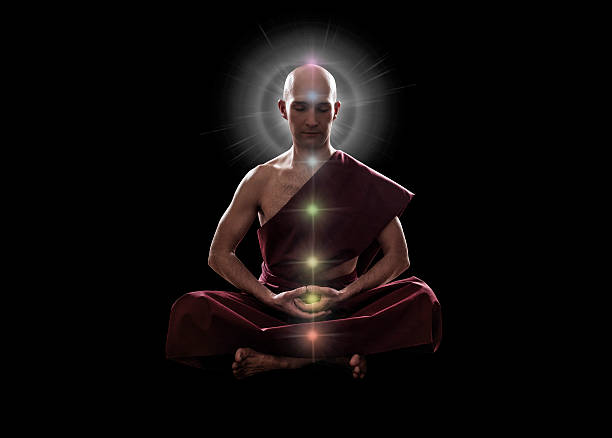
buddhist monk in meditation  pose with colorful Chakras buddhist monk in meditation  pose with colorful Chakras over black background kundalini stock pictures, royalty-free photos & images


Pranayama is not the name of a specific pranayama method, but rather a catch-all word for all yogic practices that include pranayama and are mainly intended to raise Kundalini. 


  • Shakti, prana, and Kundalini are frequently used interchangeably. 
  • When the life force circulates, it is called prana; when it descends by an act of divine grace, it is called Shakti; and it is named Kundalini when it rises to fulfill our divine destiny through the effort of the person. 
  • The goal of asana is to prepare the body for pranayama by making it healthy and stable. 
  • The nadis are cleansed and karma is removed via pranayama. 


Then, using a combination of mantra, pranayama, kriya, visualization, bandha, and mudra, prana is driven into the core energy channel (sushumna), energy obstructions (granthis) are pierced, and prana is raised to the Ajna (third eye) Chakra. Dharana, dhyana, and samadhi are experienced practically spontaneously and easily after it is installed, while the process is laborious without it. 


According to the Hatha Tatva Kaumudi, the Divine vision may only be received when Shakti Chalana has taken place, hence its significance. 

Various yogic schools have their own unique Shakti Chalana formula, but Sundaradeva's Kaumudi is a true encyclopedia of its many variations. 


Technique:


• Practicing Utkarsha Pranayama with all five bandhas (Mula, Uddiyana, ]alandhara, ]ihva, and Maha bandha) and Maha Mudra is an example of Shakti Chalana. 

• Surya Bhedana for 90 minutes in the morning and evening, then turning apana up, i.e. the way of fire and air. 

• Sitting in Siddhasana and then doing Bhastrika while blocking the Muladhara Chakra with the left heel. 

• External kumbhaka, as well as bandha, mudra, and Utkarsha Pranayama, are used to close the nine gates (i.e. Siddhasana + Yoni Mudra). 

• Engaging Mula Bandha and contracting Surya (right nostril); Uddiyana Bandha then pushes Kundalini up via kumbhaka. 

• Sitting in Siddhasana, shutting the nine gates (Siddhasana + Yoni Mudra), inhaling via the crow beak mudra, doing kumbhaka, and generating fire and apana while listening to the inner voice. 


This is only a tiny sampling of the methods available. The idea is that they usually include kumbhaka, bandhas, mudras, and chakras, as well as prana manipulations, or any mix of these.


You may also want to read more about Pranayama and Holistic Healing here.


PRANA'S AND OTHERS' DISSOLUTION


The Kundalini then travels to the Sahasrara's seat. It renounces the Prakriti's eight forms: earth, water, fire, air, ether, consciousness, intelligence, and egoism.

The Kundalini goes to Siva after clasping the eye, the mind, the Prana, and the others in her embrace, and after clasping Siva as well, dissolves herself in the Sahasrara.

As a result, Rajas-Sukla, or the rising seminal fluid, travels to Siva with Marut, or Vayu. Prana and Apana, which are constantly made, are equalized.

Prana, like fire in gold, runs through everything, big and small, describable and indescribable. The breath decomposes as well.

The Prana and the Apana, which were born together with the same quality, both dissolve in the presence of Siva in the Sahasrara. They no longer go up or down until they've hit equilibrium.

The Yogi thrives with the Prana spreading outward in the form of attenuated elements or in the sheer memory of it, the mind reduced to faint memories and voice reduced to recollection.

All of his vital airs then scatter outright in his flesh, like gold in a crucible set on fire.

Hinduism And Hindu Theology - What Is Apana?


One of the five body "winds" (the others being prana, vyana, udana, and samana) said to be responsible for fundamental physiological processes. 


  • The apana wind is said to occur in the anus area and is linked to the release of bodily waste such as urine, feces, gas, semen, menstrual discharges, and childbirth.


You may also want to read more about Hinduism here.

Be sure to check out my writings on religion here.


WHAT ARE YOGA CHAKRAS OR PADMAS OR PETALS?

 CHAKRAS OR PADMAS


The Linga Sarira contains chakras (astral body). 5 Jnanendriyas (ears, skin, eyes, tongue, and nose); 5 Karmendriyas (speech, hands, legs, genitals, anus); 5 Pranas (Prana, Apana, Vyana, Udana, Samana); Manas (mind); and Buddhi (mind) (intellect).

The spinal cord and the nerve plexuses of the gross body have corresponding centers. Each Chakra is in charge of and functions over a certain part of the body. These are invisible to the naked eye. Any irresponsible doctors look for Chakras in the physical body. They won't be able to find them there. They lose trust in Shastras and Yogic Kriyas because they can't locate any Chakra in a dead body.


The Linga Sarira's nervous system pushes Sukshma Prana (astral body). The nervous system of the gross human body is where Sthula Prana travels. The two classes are inextricably linked.

They behave and respond in response to one another. And after the actual entity has disintegrated to death, the Chakras remain in the astral body. The Chakras are only created through reflection and meditation, according to one school of thought. This is not an option. Since gross matter is the product of subtle matter, the Chakras should remain there in a subtle state. The gross body cannot exist without the subtle body. The sense of this statement is that the Sukshma Chakras can only be felt and understood during reflection and meditation.


Plexuses are found in areas where many nerves, lungs, and veins intertwine. Hepatic, Cervical, Brachial, Coccygeal, Lumbar, Sacral, Cardiac, Epigastric, Esophageal, Pharyngeal, Plumonary, Lingual, Prostatic, and other physical gross plexuses are known to the Vaidya Shastra. Sukshma Prana plexuses or centers can also be used in the Sushumna Nadi. These centers in Sushumna regulate all of the body's functions, including nervous, intestinal, circulatory, gastrointestinal, genito-urinary, and other systems. This are critical energy's subtle centers. They are the consciousness centers (Chaitanya). Sushumna's subtle centers refer to the human body's subtle centers. The Anahata Chakra, for example, is located in the Sushumna Nadi and has a physical counterpart at the heart (Cardiac Plexus).


Lotuses or Chakras are other names for the subtle centers in the Sushumna Nadi. Per Chakra is dominated by a specific Tattva. Each Chakra has its own presiding deity. Each Chakra is symbolized by a different species. It indicates that the center possesses the attributes, Tattvas, or Gunas of the animal in question. Muladhara, Svadhisthana, Manipura, Anahata, Vishuddha, and Ajna are the six major Chakras. The chief Chakra is Sahasrara. It's all in your brain. The Lokas refer to these 7 Chakras (Bhuh, Bhuvah, Svah, Maha, Jana, Tapa, and Satya Lokas). The Pancha Bhutas (five elements): earth, water, fire, air, and ether have their centers from Muladhara to Vishuddha.

When Kundalini awakens, it travels across all of the Chakras from Muladhara to Sahasrara. The Yogi encounters a unique type of Ananda (Bliss) and receives unique Siddhis (psychic powers) and wisdom at each Kundalini center to which he guides the Kundalini. When Kundalini is brought to Sahasrara Chakra, he experiences Supreme Bliss.


Adhara (another name for Muladhara Chakra), Amrita, Ananda, Lalita, Balvana, Brahmadvara, Chandra, Dipaka, Karnamula, Gulhaha, Kuladipa, Kundali, Galabaddha, Kaladaada, Kaladhvara, Karangaka, Kalabhedan, Lalana, Mahapadma, Niradhara, Naukula, Prana, Som Any of these names are specific to the six major Chakras. There are several small Chakras as well. Some Hathayogis believe there are 21 minor Chakras in addition to the 13 main Chakras, whereas others believe there are 49 Chakras. The ancient Yogis taught that there are 144 Chakras. The twelve red petals of the Talana Chakra are found at the base of the palate, while the six petals of the Manas Chakra are connected with sensations, visions, and astral flight.


CHAKRAS WITH PETALS


Each Chakra has a certain number of petals, each of which has a Sanskrit alphabet on it. The Sanskrit letter that corresponds to the vibration emitted at each petal is used to describe it. Devi Kundalini's Mantra is represented by each letter. The letters are present in the petals in a dormant state. During focus, these can be manifested, and the movements of the Nadis can be sensed.

The number of petals on a lotus flower can vary. Muladhara, Svadhishthana, Manipura, Anahata, Vishuddha, and Ajna Chakras each have four, six, ten, twelve, sixteen, and two petals. The 50 petals contain all 50 Sanskrit letters. The number and location of the Yoga Nadis around each Chakra decide the number of petals in each Chakra. I'll make it transparent once more. A certain number of Yoga Nadis emerges from each Chakra. The Nadis serve as the petals of the Chakra, which resembles a lotus. The Sanskrit letter that corresponds to the sound made by the vibrations of the Yoga Nadis. When Kundalini is at the Muladhara Chakra, the Chakras' petals hang downwards. They turn towards Brahmarandhra as it awakens. They are still facing Kundalini's side.


You may also want to read more about Kundalini Yoga and Holistic Healing here.


SHAKTI CHALANA MUDRA


In Siddhasana, sit in a secluded spot. Forcibly draw in the air and join it with Apana. 

Mula Bandha should be done before the Vayu reaches the Sushumna. 

Through maintaining the breath, the Kundalini awakens and travels through Sushumna to Brahmarandhra, feeling suffocated.

Sit in the Siddhasana position. Slowly beat the Kanda with the foot, which should be kept above the ankle. Tadana Kriya is the name of the practice. 

Kundalini can also be awoken using this form. It is possible to become a Siddha by practicing this Mudra.


You may also want to read more articles on Yoga and Holistic Healing Here.

Hinduism - What Is Udana?


One of the five physical "winds" responsible for fundamental body activities in traditional Indian physiology, the others being prana, apana, vyana, and samana.

The udana wind is said to live in the neck and to be the force that propels objects out of the mouth, most notably speech and music, but also burps and (probably) vomit.

~Kiran Atma


You may also want to read more about Hinduism here.

Be sure to check out my writings on religion here.


Dictionary of Sanskrit Terms used in Ayurveda


The detailed vocabulary that follows will help you understand the many key Sanskrit terminology used in Ayurveda.


abhyanga - anointing body with oil or ghee

accha peya - pure cow's ghee

agni - bodily fire, particularly digestive fire

ahamkara - ego; the "I" notion; cosmic memory recorder of all lives

ahara rasa - ingested nutrients, before they are digested

aja - goat; one who transcends the cycle of births

ajna - limitless power; name of sixth chakra

akasha - space; principle of vacuity

akshitarpana - herbal decoction used to revive eyes

alambusha - one of fourteen nadis; starts at anus and ends in mouth

alepanam - application of astringent plaster

alochaka - fire of eyes; one of five fires of Pitta

ama - undigested, foul-odored remnants of food in bodily channels

anahata- fearless, unafflicted; nature of the black antelope, symbol and name of fourth chakra

anna lepa sveda - fomentation therapy where poultice is applied to whole body

annam - literally, "that which grows on the earth"; food

annavaha srotas - digestive system or channels

antahkarana - inner or psychic instrument, referring to the mind (manas), intellect (buddhi) and ego memory (ahamkara)

anuvasana - decoction generally used in enema therapy

apana - one of five bodily airs; air controlling ejection of bodily wastes

artava - menstrual fluid

artava dhatu - ovum

artavavaha srotas - menstrual system or female reproductive channels

ashmaghna sveda - sudation on a hot stone slab

ashtapana - another term used for decoction enema therapy

Astanga Hridaya - Ayurvedic text written by Vagbhatta

asthi dhatu - bone and cartilage tissue

Atharva Veda - one of four principle Vedas

Atman - indwelling spirit; soul within body; Conscious Self

avagahana sveda - sudation in a hot tub

avalambaka - water dosha of heart; one of the five waters of Kapha

avapeda nasya - introduction of soft paste into the nasal passages

Ayurveda - knowledge of life; Vedic science of health

bala - strength

bandhana sveda - fomentation therapy where poultice is applied to a localized area of the body

baspa sveda - fomentation occurring in a traditionally designed wooden box, whereby the head of the person remains outside of the box

Bharata Bhumi - ancient name of India, land of Bharata; land of dharma

bhasma - literally, "ash"; incinerated metal or mineral used as potent, powdered remedy

bhrajaka - heat of the skin; one of the five fires of Pitta

bhu sveda - sudation on heated surface of the earth

bija - seed mantra

bodhaka - water of the tongue; one of the five waters of Kapha

brahmacarini - student of the Vedas; observing a monastic life

Brahma Randhra - most sacred aperture of the body, situated at the center of the cranium

brahmin - spiritual caste; one of the four castes delineated in the Hindu scriptures

brhmana - tonification or strengthening therapy

buddhi - faculty of personal wisdom; resolve of the mind; the intellect;

Buddhi - Mercury, son of Shiva; deity who rules Wednesday

chai - Indian tea mixed with milk

chakra - wheel; seven energy centers of consciousness in the body

Charaka - ancient Ayurvedic scholar

Charaka Samhita - Charaka's treatise on Ayurveda

churna - powder

collyrium - Ayurvedic salves for eyes

darbha - type of grass used in Ayurvedic medicine

deva (devata) - generic name for the gods in the Hindu scriptures

devadatta - one of the five subsidiary airs

Devanagari - means of communication between the gods; later, translated as

Samskritam (Sanskrit); one of several scripts in which Sanskrit may be written

dhanamjaya - one of five subsidiary airs

dhani - audible or imperfect sound

dhara chatti - see dhara patra

dhara patra - treatment pot made from metal or clay used to drop oil on head

dharane - to sustain

dharma - right action according to the laws of nature

dhatu - tissue element of the body

dhmapana - introduction of medicated powders into the nasal passages via a straw or tube

dhoma nasya - inhalation of medicated vapors

dhoti - cloth to wrap the lower body

dosha - literally, "that which can go out of balance"; bodily humor

droni - traditional massage table made from woods such as sandalwood, bilva, khadira, and arjuna

Gaja - Lord of herbivorous animals and keeper of earth's memory of plants  and herbs; the elephant that represents the fifth chakra

gandhari - one of fourteen nadis; begins below the left eye and ends at the big toe of the left foot

gandusa - retention of fluid in the mouth

Ganesha - Ganapati; elephant-headed Lord, son of Shiva; one who blesses all beginnings and renders them auspicious; remover of obstacles

garbha-pinda - fluid state of embryo; cosmic womb

ghara - earthen pot

go - cow; sacred scripture

Gopala - protector of the scriptures and of cows; another name for Lord Krishna

grisma - Sanskrit term for summer, one of the six seasons in Ayurveda

guna - attribute or respect, as in the three gunas of Maya

guru - quality of heaviness; spiritual teacher; Guru - Jupiter; deity who rules Thursday

gurukula - traditional school for disseminating knowledge of Vedas

hastajihva - one of fourteen nadis; begins below the right eye and ends at the big toe of the left foot

hemanta - Sanskrit term for early winter, one of the six seasons in Ayurveda

holaka sveda - sudation on a daubed surface of the earth

ida - one of two main nadis; begins in the left genital and ends at the left nostril; breath which flows through the left nostril; lunar nadi

indriyas - five senses

Isvara - Vedic name for the omniscient Lord, when used in association with creation

japa - repetition of mantras

jentaka sveda - sudation in a specially designed sweat lodge

jiva - individual soul

jivana - invigoration; life

kala- nutritional membrane for tissues; "body crystal"

kalari- ancient form of martial arts originating in south India

kala vasti - series of sixteen enemas

kambalika - soup made with yoghurt, urad bean and sesame oil

kapha - biological water humor

karma - bondage to action; cause of rebirth

karma vasti - series of thirty enemas

karna purana - dripping fluids into the ears

karshu sveda - sudation in an earth pit

kavalagraha - holding liquid in the mouth for a comfortable period of time

khada - spicy vegetable or herbal soup generally made with buttermilk

kichadi - mixture of rice and mung bean

kitta - waste

kledaka - water of digestion; one of the five waters of Kapha

krekara - one of the five subsidiary airs

Krishna - Gopala, protector of the scriptures and teacher of self-knowledge in the Bhagavad Gita

krushara- thick grain gruel

kuhu - one of fourteen nadis; begins in the throat and ends in the genitals

kumbhika sveda - sudation from a pitcher of warm decoction

kundalini - primal energy of manifestation symbolized by a coiled serpent at the coccyx of the spine

kupa sveda - sudation on a daubed surface of the earth

kurma - one of the five subsidiary airs

kuti sveda - sudation in a specially designed sweat lodge

langhana - depletion or reducing therapy

lassi - traditional Indian beverage made from yoghurt, milk, and fragrant herbs, generally taken after meals to aid digestion

lepa - plastering body with medicated substances

majja dhatu - bone marrow and nerve tissue

makara - crocodile; symbol of sensual movement and trickery

mala - garland; rosary of beads

malas - bodily wastes

mamsa dhatu - muscle tissue

manas - mind

manda - cooked rice at the bottom of the pot

Mangala - Mars; deity who rules Tuesday

manovaha - channels that carry mental energy

mantha - thin gruel made from rice and ghee

mantra - sacred sounds; group of sounds cosmically designed to stimulate certain physical and physic centers of body

mardana - mild pressure massage

marma - anatomical reflex points of the body; vital seats of pranic energy

marsha nasya - introduction of medicated oils into the nasal passages

masala - combination of spices ground together; spicy mixture

masthiskya - medicinal paste applied to the head

maya - cosmic, creative power; manifestation; relative reality

medas - fat

medas dhatu - fat tissue

moksha - a "state" in which the potential material and vibrations for future rebirths on all planes of existence are completely resolved; liberation from the cycle of birth and death

mutravaha srotas - urinary system

nadi - subtle channel within the nervous system made of fine threads of fluid; refers to the gross form in terms of nerves, veins, and so on; pathways of breath; Ayurvedic name for pulse

nadi sveda - steam application through a hose

naga - one of the five subsidiary airs

nasya - nasal insufflation

navana nasya - insufflation of unctuous substances or powders to clear nasal passages

niruha - oils generally used in Ayurvedic enema therapy

odana- thick porridge

ojas - perfected essence of dhatus when bodily system is in excellent order; glow of health

paca kizhi sveda - sudation with green leaf poultice

pachaka - one of the five fires of Pitta; fire of digestion in the stomach

padabhyanga - Ayurvedic foot massage

padaghata - anointing feet with oil

pancha karma - five cleansing therapies of Ayurveda: emesis, enema (two forms), purgation, and nasal medications

parisheka - fomentation with an affusion of Ayurvedic herbs

Patanjali - founder-renovator of the classical Yoga system

payasam - sweet fluid porridge

payasvini - one of fourteen nadis; located in the right ear lobe and connecting with the cranial nerves

peya - decoction made from rice and ghee

phala - fruit

phanita - sticky candy made from sugar cane juice

pichu - process of placing an oil soaked cloth on the forehead

pinda sveda - fomentation therapy with use of a poultice wrapped in a bolus

pingala - one of two main nadis; begins in the right eye and ends in the right genital; solar power; breath of right nostril

pitta - biological fire humor

prabhava - specific action without regard to the general rule of the three stages of taste; exception to the rule; special action of herbs

pradeha - non-absorbent plaster

prakriti - first creation; individual constitution

pralepa - thin, cold layer of plaster

prana - life breath; first of the five airs of the body; vital force; air of the heart

pranavaha - channels that carry prana; force of prana, or breath

pranayama - yogic breathing exercises

prasthara - fomentation on a bed of poultice

prinana - joy infused from nature

puja - religious ceremony

purana - fullness

purishavaha srotas - excretory system

pusha - one of fourteen nadis; begins at the right ear and ends at the big toe of the left foot

rajas (rajasic) - activity or aggressive force of creation; one of the three gunas rakta dhatu - blood tissue

rakta moksha (mokshana) - therapeutic blood letting

raktavaha srotas - circulatory system (hemoglobin portion)

ranjaka - heat of the blood, operating in liver; one of the five fires of Pitta

rasa - initial taste in the three stages of taste; literally, "external beauty," or "maturity"

rasa dhatu - plasma tissue

rasayana - rejuvenation therapy

Rawal - religious head of the Hindus

rtusandhi - junction between two seasons or two phases within a season

rukshana - dehydration therapy

rupa - form

sadhaka - the third fire found in the heart, central to the activity of Pitta; also the one who performs sadhana (the wholesome activities which bring us into harmony with nature)

sadhana - wholesome activity practiced with presence of mind in harmony with nature; helps to revive and awaken cognitive memory

sadhu - simple person

sahasrara - literally, "a thousand petals"; seventh chakra; spatially boundless dwelling

saindhava (sendha namak) - Ayurvedic rock salt

sama - three doshas in a state of sameness

samadhi - silent breath

samana - air of the stomach; one of the five airs of Vata

samhita - text

samskaras - karmic impressions from past lives carried in the subtle body

samvahana - shampooing the body with a warm decoction

sankara sveda - generic name for fomentation therapy where poultice is used

sarada - Sanskrit term for autumn, one of the six seasons in Ayurveda

Saraswati - goddess of knowledge; one of fourteen nadis; begins at the base of the tongue and ends in the vocal chords; sonority of vocal prowess

sattva (sattvic) - central aspect of the three gunas; cosmic force of balance and contentment

shakti - cosmic feminine force; power, energy, power of consciousness

shamana - therapy which nurtures and adds strength to the body; palliative measure

Shani - Saturn; deity who rules Saturday

shankhini - one of fourteen nadis, begins in the throat and ends on the left side of the anus

shikha - crest of the head

shiro abhyanga (shirobhyanga) - anointing the head with oil; head massage

shirodhara - dripping medicated decoction on the forehead

shiro tarpana - application of oil to the head

shirovasti - applying oil to the shaven head

Shiva - pure being or pure consciousness

shodhana - therapy which consists of elimination procedures; purification measure

shukra - collective refined essence belonging to shukra dhatu; refined emotion of love; semen, reproductive fluid; the ovum of the female; 

Shukra - Sanskrit name for Venus; deity who rules Friday; giver of happiness or fame

shukra dhatu - sperm

shukravaha srotas - male reproductive system or channels

sisira - Sanskrit term for late winter, one of the six seasons in Ayurveda

sirovirechana - snuff inhalation therapy

slesaka - water of the joints; one of the five waters of Kapha

sleshma - another name for Kapha or phlegm

sneha - extravagant love; lubrication; name of the enema treatment in which only half cup of oil is used

snehana - external oelation of the body; lubrication therapy

snehapana - internal lubrication of the body

snehika dhoomapana - herbs mixed with oil or fat for therapeutic smoking

soma - potent nectar taken by the devas to give eternal strength; pleasure principle at work behind mind and senses

srotas - channels, as in the thirteen channels of circulation

sthambana - retention therapy

suksma - subtle

Surya - Sun; deity who rules Sunday

Sushruta - ancient Ayurvedic scholar

sushumna - central and main nadi, within spinal column, which accommodates all nadis

svedana - sudation or fomentation of body; sweat inducing therapy

swami - renunciate; one who knows Brahman and the Self to be One

taila - oil

Taittiriya - literally, "three birds"; one of the Upanishads which deals with Self-knowledge

takra dhara - medicated buttermilk

tamas (tamasic) - inert aspect of creation; one of the three gunas

tanmatra (tanmatric) - quantum energy aspect of the subtle elements that pervade both subtle and gross bodies

tarpaka - water of the sense organs; one of the five waters of Kapha

tarpana - thick gruel of rice, bean, black pepper and ghee

tejas - cool, refined universal fire; subtle, fire of the mind

tikta ghrita - pure ghee combined with bitter herbs

tridosha - three doshas in a state of balance

ubtan - fresh ground legume or grain flour traditionally used to cleanse the skin

udana - air of the throat; one of the five airs of Vata

udvartana - oil or dry massage for Kapha disorder

upadhatu - secondary tissue of the body

upanaha sveda - generic name for fomentation therapy where poultice is used

Upanishad - ancient Vedantic scripture of India

utkarita - pudding made from milk, yoghurt or cream

uttara vasti - douching enema

Vagbhatta - ancient Ayurvedic scholar

vairechanika dhoomapana - therapeutic smoking of dried herbs

vajikarana - aphrodisiac; virilization therapy

vamana - therapeutic vomiting; emesis therapy

varna - pure vibration; unmanifest sound

varsa - Sanskrit term for rainy season, one of the six seasons in Ayurveda

varuni - one of fourteen nadis, which originates between the throat and left ear and ends at the anus

vasanta - Sanskrit term for spring, one of the six seasons in Ayurveda

vasti - Ayurvedic enema therapy

vasti netra - hose used in enema therapy

vasti putaka - enema bag

vata - biological air humor

vayu - air or wind; another name for Vata

veda - knowledge

Vedanta - culmination of Vedas in the philosophy of knowledge of the Self

Vedas - ancient books of knowledge presenting the spiritual science of awareness; first knowledge on earth

Vedic - belonging to the Vedas

vicarana sneha - medicated ghee

vilepika - mixture of four parts water and one part rice

vipaka - post-digestive effect of herbs

virechana - purgation therapy; one of five cleaning actions used in pancha karma

virya - energetic effect of herbs as heating or cooling

vishvabhesaja - healing secret of the universe; universal medicine

vishvodara - one of fourteen nadis; exists in the umbilicus and energizes bodily prana

vyana - air of circulation; one of the five airs of Vata

vyayama - natural forms of exercise

Yama - Lord of death

Yama damstra - period of time between November 22 and December 9 when the earth begins its northward rotation around the sun

yashasvini - one of fourteen nadir; companion nadi to pingala which runs

from the left ear to the big toe of the right foot

yavagu - mixture of six parts water and one part barley yoga - psycho-physical practices aimed at Self-knowledge

yogavaha - that which enhances the effect of what it enjoins

yoga vasti - series of eight enemas

yogin (yogi) - one whose life is devoted to the practice of sadhanas to attain union with God

yusha - bean soup


You may also want to read more about Ayurveda and Holistic Healing here.