Showing posts sorted by relevance for query desire. Sort by date Show all posts

Tantra - Tantra Sculptures & Erotic Sacred Art


Both the words mukti and bhukti refer to conflicting ideals in the history of Indian civilization. 


Pleasure, especially sexual pleasure (kama), has a long history as one of the four legitimate life objectives (purusdrtha), alongside dharma, wealth (artha), and liberation (moksa). 


  • While one of the most important books of tradition, the Bhagavad-gita, is almost quiet on the topic of kama, other literatures, most notably the kamasastra, of which the Kamasutra is the most renowned work, address it methodically and thoroughly. 
  • This literature celebrates sexual pleasure and, while it may appear mechanistic in comparison to Sanskrit erotic poetry and even sexist to modern Western sensibilities, it demonstrates the importance and legitimacy of sexual desire in classical Indian civilization prior to the rise of Islam and the arrival of puritanical colonialism. 
  • Traditionally, liberation was a transcending (visvottirna) condition attained by world renouncers via asceticism and celibacy; the reversal of the body's movement outwards towards the objects of desire. 
  • Sanskrit literature is full of stories of sages who are tempted by beautiful women, typically sent by gods like Indra who are afraid of the power generated by their abstinence and austerity, illustrating the conflict between cultural ideals and the difficulties of transcending earthly concerns. 


The importance of the householder and the renouncer were emphasized by Dumont. 


  • While we may debate who is a householder and if the Brahman is closer to the renouncer than Dumont's 'man-in-the-world,' the distinction does hint to an ambiguity in Indian civilization. 
  • Part of the tantric worldview, especially in the more intellectual interpretations, is that freedom and the world affirming value of desire are not mutually exclusive, but that desire may be utilized to transcend desire. 


The distinction between desire in broader Indian civilization and tantric traditions may be observed right here. 


  • Pleasure, the consequence of desire (the word kama may imply both 'pleasure' and 'desire'), is a goal in itself for the kamasastra. 
  • In this environment, sexual pleasure serves no purpose other than to satisfy itself. 
  • In contrast to the ideal and value of dharma, which places a great emphasis on producing offspring, the goal of kama is pleasure for its own reason. 
  • Kama is barren and, in this sense, a dharma transgressor. 
  • The aim is pleasure rather than progeny. 


Although desire is often mentioned in Tantrism, it is different from tantric usage in the kamasastric meaning, however the lines between tantric and non-tantric kama have been blurred even within the tradition. 


  • Sexual desire was employed to create sexual fluids, power compounds, that were to be given to the deities of the mandala, in early tantric traditions of the extreme left. 
  • We also see the advocation of eating bodily waste products in these extreme writings, and one thinks of extreme Buddhist Tantras like the Candamaharosana-tantra, where waste products are to be swallowed as the diet 'eaten by all the Buddhas' without 'any mild distaste.' 
  • Through their transgressive usage in a ritual setting, all body products are believed to possess power. 


Kama is only later in tantric traditions that it is considered as a method of transition to the deity's state. 


  • Thus, we see a transition from appeasing fierce and erotic deities via the 'sacrifice' of sexual ingredients to the ritual practice of sexual union as the transmutation of desire, with the sensation of coition believed to mirror or recapitulate Siva and Sakti's pleasure. 
  • We also have the use of intercourse to create sexual fluids, which are subsequently contracted back into the male partner in the vajroli mudra, which is an often complex ritual. 


In each of these ways, kama differs from kama as defined by the kamasastra. 


  • The left kama is not a goal in itself in tantric traditions, but rather a means to an end; desire is utilized to transcend itself, much as a thorn may be removed by a thorn, or perfection is achieved by those things that would usually cause one to slip off the path, in the image of the Kulamava-tantra. 
  • And because of the strong connections between sensuality and mortality, Tantrism takes sexual desire even farther away from the kamasastras. 
  • Tantrism, displays a "barren eroticism." 
  • Indeed, the left's extreme antinomian behaviors cannot be seen as pleasurable; there are other times when promiscuity may occur, such as at festivals like Holi.


The difference between kama in the Tantras and kama in erotic science is conceptually obvious, with the former being teleological (the aim being power and/or liberation) and the latter being an end in itself, although there is some blurring of the line. 

  • The sexual images carved on the temple walls, renowned to gawking visitors and laughing kids, are a noteworthy aspect of medieval India's beautiful temples. 


These sculptures have been seen as epitomizing 'tantric art,' but considering that 'tantric eroticism' is a different kind of 'tantric eroticism,' do these sculptures have any connection to tantric civilization, and if so, what might it be? 


  • This is a tough issue to answer, and many theories have been proposed, including that they are protective against demonic forces, that they mirror what happens in the skies, and that they are pictures of tantric ritual activities. 
  • Erotic sculpture is a frequent element of medieval and subsequent temples, and may still be seen on temples in the South, but little survives in the North, owing to temple destruction. 
  • The sculptures, according to Fred Hardy, are designed to keep demons away from the pristine sanctuary, serving as mirrors to reflect the demons' obscenity back on themselves. 
  • This idea was originally conveyed to him by locals in the temple's surroundings. 
  • This is a very reasonable theory, given that the world was filled with supernatural forces, both good and bad, and the temple was thought to be a pure dwelling of the god. 


Indeed, the pantheons of deities that constitute the outside wall (avarana) of the primary deity's authority, especially the guardians of the directions and the guardians of the entrances, may be seen on temple façade. 

  • This atmosphere of mystical protection lends itself nicely to erotic art. 
  • However, no source supports this claim, and at least one text, the Silpa-prakasa, connects such sculptures to the kamasastra . 


Furthermore, many of these sculptures exude tremendous elegance and beauty, and one would anticipate the grotesque to serve in this capacity rather than the beautiful. 


  • White, on the other hand, has claimed that there is a link between Tantrism and sexual temple sculpture's coital couples (maithunas), pointing out that there are remains of Yogini temples strewn throughout central India where Kaula rituals were conducted in the royal palaces. 
  • White claims that the maithunas on the walls of early temples most likely represent tantric rites since they seem to follow a pattern, using the Bheraghat Yogini temple in Orissa as an example. 


Such representations survived for a brief period (White estimates little more than two hundred years), after which the maithuna motif was decontextualized from its ceremonial setting. 


  • To put it another way, erotic portrayals move from tantric sexuality representations, which indicate to the transcendence of sex as activity for its own purpose, to pictures of sex more in line with kamasastra. 
  • Whether these representations are connected to transgressive tantric practice or to kamasastra, it is unlikely that they are linked to 'fertility cults' in any manner other than a broad and generic sense. 


This was obviously the case by the time of the Silpaprakasa, a book on temple building written between the ninth and twelfth centuries in Orissa by a tantric practitioner named Ramacandra Kulacara. 

  • The construction of a temple is described in this literature as portions of the deity's body, the deity being the foundational god Mahapurusa. 
  • It's worth noting that the book explicitly connects the temple to the concept of desire and the science of erotics, the kamasastra. 
  • According to the scripture, desire (kama) is the basis of the world, from which all things are created, and via desire, everything is reabsorbed into primordial matter (mulabhuta). 
  • Creation would be an illusion without Siva and Sakti. 


There would be no life, birth, or death without the activity of desire (kamakriya).' 66 This is consistent with a prominent motif in Sanskrit literature, which places desire as the most essential purpose of existence. 

Furthermore, the text connects maithuna couples to the kamasastra, stating that there should be no portrayals of sexual union (samghama) but only depictions of love play, since the kamasastra contains many different kinds of love play. 


The reality of temple sculpture, on the other hand, contradicts this advice, since there are many instances of completely coital depictions on temple walls, including scenarios involving multiple performers.


  • The 'orgy' sceneries on the slopes of Khajuraho or Konarak are against dharma standards, but they are not at odds with kamasastra, and some texts even include instances of 'orgiastic' devotion. 
  • What's more, maithuna couples are thus explicitly connected to the kamasastra, a major change in moving eroticism to an artistic setting. 
  • Eroticism is shorn of its ferocity and connection to death found in early tantric appeasing and taboo breaking with the erotic sculptures on temple walls. 
  • The portrayal of the body on temple walls is a representation of the body in a text-based idealized sensuality; an eroticism that revels in the flesh while pointing beyond it to a heavenly transcendence. 
  • The depiction of the flesh here is divinized and textualized in a manner that goes beyond transgression or protection. 


Indeed, as other goddesses on temple facades are manifestations, such representations refer to the sexualized body as a manifestation of the deity: the temple is the deity's body and is not devoid of sexuality.


You may also want to learn more about Tantra, Tantra Yoga, and related Hindu Paths, Practices and Philosophies here.


Hinduism - What Is The Kama Sutra?


 ("desire handbook") Traditionally credited to the sage Vatsyayana, this is by far the most renowned of the ancient sexual texts.

This passage is often linked with a long list of sexual positions and pleasures, yet it extends much beyond that preconception.

Vatsyayana was fascinated by the concept of desire in all of its forms.

The book starts with a discussion of life's four purposes (purushartha): worldly things (artha), desire (kama), religious obligation (dharma), and soul liberation (moksha).

Because desire was one of the established ends of human existence, Vatsyayana reasoned that pursuing it was a desirable thing as long as it did not interfere with the others.

Vatsyayana next described how to cultivate desire after establishing its validity.

The second book of the Kama Sutra comprises the text's most well-known material: a description and classification of many sorts of sexual connection.

It starts by defining different forms of sexual endowment in both men and women.

It then goes on to discuss various types of hugging, kissing, clawing, and biting as symbols of passion, as well as sexual positions and oral sex.

Following that are chapters on finding a bride, enticing other men's wives (which the book forbids until one's desire is "too intense"), courte sans, and general observations on the nature of attraction.

The book offers a guide to all aspects of sensual life, showing how sex may be developed into a vehicle for both artistic and sheer carnal pleasure.

The Kama Sutra is especially renowned for its attitude toward women, who are seen to have equal sexual desire and pleasure.

Rather than one person serving the other, the ultimate goal is for both partners to be sexually satisfied.

Many translations of the Kama Sutra have been made.


You may also want to read more about Hinduism here.

Be sure to check out my writings on religion here.


Hinduism - Who Is Kama In The Hindu Pantheon?


Kama is a minor deity who is the personification of the word kama ("desire").

Kama is akin to the Greek god Eros in that he is in charge of sparking human sexual attraction and sensuous desire.

Kama is shown as a young guy astride a parrot and wielding a bow and arrows.

His five arrows are five different flowers, each bringing a different emotional effect to the person it pierces.

The bow is a stalk of sugar cane, the bowstring a line of buzzing bees, and his five arrows are five different flowers, each bringing a different emotional effect to the person it pierces.

Lotus, infatuation; ashoka, intoxication (with love); mango, tiredness; jasmine, pining; blue lotus, paralysis are the five flowers and feelings.

The spring season (personified as another minor deity, Vasant) is seen as Kama's friend and ally in awakening desire through the regeneration of the natural world and the showy display of spring blossoms, and the spring season (personified as another minor deity, Vasant) is perceived as Kama's friend and ally in awakening desire through the regeneration of the natural world and the showy display of spring blossoms.

The most famous tale in Kama's mythology starts with the rise to power of Taraka, a demon that can only be defeated by a Shiva son.

Shiva has no sons and is in profound meditation, lamenting the loss of his wife Sati, therefore Taraka seems hard to overcome.

The other gods implore Kama to strike Shiva with a desire arrow so that he might marry Parvati and have a son.

Shiva is approached by Kama, who shoots him with an arrow.

When Shiva discovers who has interrupted his meditation, he fires a jet of fire from his third eye in the centre of his forehead, instantaneously consuming Kama.

Kama is eventually brought back to life by Shiva's mercy.

Because to the loss of his body, one of Kama's epithets or other titles is Ananga, which means "bodiless" (and the fact that desire seems to strike in unseen ways).

Despite being destroyed by Shiva and seeming to be defeated, Kama succeeds in achieving his aim.

His effort to rouse Shiva from his medita tion is successful, and Shiva marries Parvati.

Wendy Doniger O'Flaherty, Siva, 1981, has further information on Shiva and Kama's relationship. 


You may also want to read more about Hinduism here.

Be sure to check out my writings on religion here.


Letting Go of Me and Mine


This Knowledge (Jnana) is so complex that simply stating it is insufficient. Telling someone that sugar is sweet isn't the same as really tasting it. It must be consumed. Only by experiencing Brahman can one comprehend it, and only by Grace is this possible. 

The Master's Grace can only come to blossom in the proper fertile ground, the seeker's mind. 

The fruit of the Master's Blessings is reaped by the seeker of his own Self. One who understands himself truly "understands," and is "liberated" by Self-Knowledge. 


He who has realized himself has no need for anything and has no desire to own anything. 


Paramatman, who is the "Supreme Self," has no use for Illusion. Due to your feeling of "my," you are currently incredibly haughty. You have two wives, both of whom are "wealthy" and "womanly."

 Nobody will encounter God if they believe that nothing is possible without money. Because God is formless, money and a spouse are designed for the ego, or person (Jiva), rather than God (Shiva). He is Spirit in its purest form. 

There is a common misconception that devotion to God Almighty is impossible without money. Money isn't necessary for spirituality. 

When we explore within ourselves, we might meet our Higher Self, and it is then that we know the Illusion is meaningless. 


Leave the concepts of "I" and "my" behind. 


The realization that "nothing is mine" is the core of the Master's Grace. You must consider, "I am not my physical body. The body, not me, the pure unqualified Self, owns the children and the family." Slaves of Illusion are those who live by the concepts of "I" and "my." 

How can they know what a Saint is truly worth? Illusion is not allowed to approach the Saint. 

"Riches of Illusion" pale in comparison to "Riches of Freedom." Laxmi, the Goddess of Prosperity, turns the one who wants her into a beggar, but humbly serves the one who does not care for her. The dignity comes from not expecting anything in return from the Illusion. It is an insult to say, "I want, I want." 


Demanding anything is insulting. 


It is more honorable to not demand than it is to demand. All that is required for knowledge (Jnana) is renunciation. Make it a practice to say no to everything. 

"The intellect dies, illusion dies, and the body dies as well," Saint Kabir stated, "but hope and desire do not die." 

You will become Saint Kabir if hope and longing vanish. You shall sip the Nectar of Immortality after the poison of desire has been removed from your head. "Let no desire for sense objects exist," Saint Ramdas states. 


You can be free if you let go of the idea of "my."


You may also want to read more about Spirituality and Healing here.

Be sure to check out my writings on Religion here.


Hinduism - Who Was Vatsyayana(Kama Sutra)?


 Vatsyayana is the author of the Kama Sutra, according to legend.

This work is sometimes associated with a comprehensive list of sexual positions and pleasures, which it does include, but it extends well beyond that.


Vatsyayana was fascinated with desire in all of its forms, thus the work opens with a discussion of the four purposes of life (purushartha): 


  1. worldly things (artha), 
  2. desire (kama), 
  3. religious obligation (dharma), 
  4. and soul liberation (moksha).


Because desire was one of the established objectives ofhuman existence, Vatsyayana reasoned that pursuing it was a desirable thing as long as it did not interfere with the other ends.


After establishing the legality of desire, Vatsyayana discusses how to nurture it.


The second book of the Kama Sutra comprises the text's most well-known material: 


  • A description and classification of many sorts of sexual connection.
  • It starts by defining several varieties of sexual endowment, both male and female. 
  • Before moving on to discuss various types of embracing, kissing, scratching, and biting as symbols of passion, sexual positions, and oral sex.
  • This is followed by chapters on finding a bride, courtesans, and general observations on attraction (which the book opposes, save in circumstances when one's affection is "extremely intense").


The book serves as a guide to all aspects of sensual life, demonstrating how sex may be developed into a vehicle for both aesthetic and sheer carnal pleasure.


~Kiran Atma


You may also want to read more about Hinduism here.

Be sure to check out my writings on religion here.


Renunciation and Desire


Is it better to give up one's family or not? 

Even though you go through the motions of daily living, the sum total of your existence is the same. 


What is the use of wearing garlands and applying sandalwood paste (performing spiritual rites) if you are not aware within? 

There must be an internal belief that the world is a deception. 


What good is it to become a renunciate (Sanyasi) if that goal isn't met? 

What is wrong with you if you are completely aware that this illusory reality is untrue and you function in it with detachment? 

That is the most wonderful thing. You can be anywhere, at any moment, and still be unaffected by the outside world. 


Is it true that you can only be a sage if you stay hidden in a chamber or in the woods, and if you leave, you can't be a sage? 

No, this isn't correct. You must be removed from yourself on the inside. Even for those who are willing to do so, illusion is a possibility. 

The five components must be treated with extreme caution, since they will entangle you. 


Do not believe the five elements are harmless. 

They will give you the impression of kindness, but don't be fooled by their appearance and place your faith in them. It's important to remember that they're merely pretending to be docile. 

Even though the field inhabited by the five components and the panorama given by them seem appealing, do not put your faith in it. 

These are deceiving sights. Always keep in mind that they're like ghosts in different disguises. The ghosts are nonetheless ghosts, regardless of their disguise. 


Unlike the ghosts, you are not a phantom. Illusion (Maya) uses many techniques to try to make you forget your True Nature. 

You must maintain vigilance at all times. You may be comfortable, but you are intellectually disengaged. In one's thinking, words, and deeds, one should maintain a condition of "Desirelessness." As a Brahman, live in Brahman. 

"Sir, I have seen you once," a man once stated to a Sage who had discovered Brahman. "Says the Sage," "You wouldn't have been able to see me. I am not who you think I am. I am not who you think I am; I am totally different." 


What would you gain if you quit the material life and withdraw into seclusion? 

It is not necessary for you to do so. Simply alter your mindset or attitude. Don't lose sight of the fact that you are a Brahman. When administering a vaccination, it makes no difference if the patient is tiny or large, skinny or obese; everyone should be immunized. 


It makes no difference how a person looks. 

Both the king and the poor are equal in profound slumber. This is referred to as equanimity. Being in the world is excruciating. 

When you realize that the world is an illusion, you will find joy and fulfillment, even in the midst of its appearance. You've always been and continue to be the "Highest Joy." 

A person who nurtures desire is only a laborer who is continually acting as an employee. The owner is the one who has no desire. Desire does not become desireless unless it is scorned. The Sage Shuka went to the forest only for the aim of reaching Desirelessness, but King Janaka did so while governing over a kingdom. 


I dare claim that if you sincerely want to learn, you can do it wherever. There is a simple solution. It makes no difference where you are. You can have a spiritual life whether you're in a house or in the woods. 

You are not required to flee. Even though he was continuously hounded, the Sage Pralhad could be in the condition of Brahman. 


Take it for granted that if you declare you can't undertake spiritual practice (Sadhana) while living in a family, you're not truly engaged in authentic spiritual practice. 

Whoever who want to be spiritual will do so regardless of where he is.


You may also want to read more about Spirituality and Healing here.

Be sure to check out my writings on Religion here.


Madhurya Bhava


    What Does Madhurya Bhava Mean?

    Hindu Pantheon Series by Kiran Atma


    From the serene (shanta) experience that comes from realizing one's total identification with Brahman or Ultimate Reality, to conceiving of God as one's master, friend, child, or lover, the five modes indicated increasing emotional intensity.

    The Madhurya Bhava is the last and most intensive of the five devotional forms.


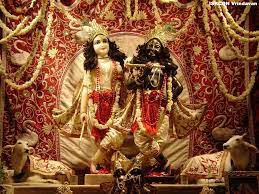
    Rupa Goswami - An Example Of Madhurya Bhava.

    ("Honeyed") Rupa Goswami, a devotee (bhakta) of the deity Krishna and a disciple of the Bengali saint Chaitanya, defined the second of five ways of devotion to God.

    To depict the link between devotee and divine, Rupa exploited human ties.


    What Form Of Devotion Does Madhurya Bhava Exhibit?

    Devotees in this style see their connection with the divine as that of a lover and a beloved.

    This method was especially dominant when it came to the deity Krishna (whose model worshippers were the Braj cowherd women) and Radha(who is a symbol for the human soul.) 

    Because of its emotional proximity, this style is regarded as the most intense and demanding.

    It is also regarded as the sweetest for the same reason.


    Must Bhakti always have Bhavas?


    When a devotee or Bhakta develops in devotion, he or she loses all sense of self. This is known as Bhava

    The devotee and the Lord develop a real connection via Bhava

    The devotee then develops Maha-Bhava, in which he lives, moves, and has his existence in the Lord. 

    Parama-Prema, or Supreme Love, is the completion of love.


    What Are The 5 Different Types Of Bhavas In Bhakti? 

    Shanta, Dasya, Sakhya, Vatsalya, and Madhurya Bhavas are their names. 

    Because these Bhavas, or sentiments, are natural to humans, they are simple to cultivate. 

    Choose the Bhava that best matches your personality.


    What Is Shanta Bhava?


    The devotee in Shanta Bhava is Shanta, or tranquil. 

    He does not dance or leap. 

    He is not a particularly emotional person. 

    His heart is overflowing with joy and love. 

    Shanta Bhakta was Bhishma.


    What Is Dasya Bhava?


    Sri Hanuman belonged to the Dasya Bhakta sect. 

    He had a servant's mindset, Dasya Bhava. 

    He dedicated his life to Lord Rama

    In every manner conceivable, he satisfied his Master. 

    In the service of his Master, he discovered pleasure and ecstasy.


    What Is Sakhya Bhava?


    God is the devotee's companion in Sakhya Bhava. 

    This Bhava was directed against Lord Krishna by Arjuna

    On an equal footing with the Lord, the devotee progresses. 

    As close friends, Arjuna and Krishna liked to sit, dine, converse, and stroll together.


    What Is Vatsalya Bhava?


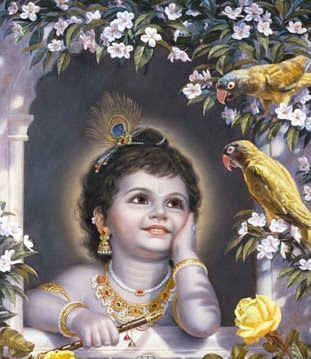
    The devotee in Vatsalya Bhava regards God as his child. 

    Lord Krishna had this Bhava with Yashoda

    Because God is your pet kid, there is no fear in this Bhava. 

    As a mother would with her child, the devotee serves, feeds, and looks upon God.


    What Is Kanta Bhava?


    Madhurya Bhava or Kanta Bhava is the final. 

    This is the most advanced type of Bhakti. 


    The believer considers the Lord to be his lover. 

    This was Radha and Krishna's relationship. 

    Atma-Samarpana or a complete surrender of the soul manifests in this love . 

    The beloved and the lover merge into one. 

    The devotee and God are one with each other, yet they must preserve their separation in order to experience the happiness of their love play. 

    This is oneness in separation and oneness in separation. 

    This Bhava was shared by Lord Gauranga, Jayadeva, Mira, and Andal.


    A word of caution: Madhurya Bhava is not to be confused with worldly conjugality. 


    One must not be confused with the other. Earthly conjugality is totally selfish and pursued only for the pleasure of one's own self. 


    However, devotion to God is motivated by God's pleasure rather than the devotee's. 

    Divine love isn't self-centered. 

    Sattva gives birth to it. 

    Earthly desire, on the other hand, is the result of rajas and attachment to bodies. 

    Earthly conjugality is the result of egoistic self-regarding egoistic emotion, but heavenly communion is the result of non-egoistic feeling. 

    Strong egoism is the source of worldly desire, whereas heavenly love is the result of egoism's loss. 


    What Is The Difference Between Kama And Prema?


    This is the most significant distinction between desire (kama) and heavenly love (prema). 


    The two are linked in the same way that light and darkness are linked. 

    No growth of worldly attachment, no matter how flawless, can lead to the ultimate bliss of divine connection. 

    Due to the fire that burns at the root of everything, lust lurks in the heart. 

    The worldly man, no matter how pious, is unaware of divine love. 

    So long as man is simply a man and woman is merely a woman, the secret of divine love cannot be grasped, and should not be attempted to be understood. 

    True love for God begins with the austere transformation of the human into the divine.


    The Bhaktas indulge the notion of the lover and the adored in Madhurya Bhava. 

    He sees himself as Rama's or Krishna's wife. 

    This mentality is also shared by Mohammedan sufis

    A huge number of Bhaktas with Madhurya Bhava can be found in Brindavan, Mathura, and Nadiad. 

    They dress in ladylike attire and act and converse in a ladylike manner. 

    They dance a lot till they obtain Murchha Avastha (swoon) and collapse exhausted.


    The most intense type of religious love is madhurya bhava. 


    It is the genuine love for Krishna that the gopis have in their hearts.

    There can be no gender discrimination in the pursuit of this most pure kind of bhakti. 

    Krishna is the sensation (bhava) that develops from the jivatma or soul's relationship with the paramatma (universal soul). 


    The soul has neither masculine nor female characteristics.


    Many famous saints have exhibited their profound madhurya bhava for Krishna, including Chaitanya Mahaprabhu, Narasimh Mehta, and Ramakrishna

    It came easily to them, with little effort on their part.

    The ultimate purpose of the devotional path is to develop pure love for Krishna, and what better method to do this than via madhurya bhava? 

    Why should spirits encased in bodies (male or female) be denied pleasure?


    IN THE VRINDAVAN, MADHURYA BHAVA: 'Pancha vidha bhava' signifies assuming all five forms of Bhakti. 


    The Srimad Bhagavatam and the Narada Bhakti Sutra both tell about them. 


    To describe the nectars of bhakti, these five forms were developed. 

    'Bhava' means increasing in self-forgetfulness and devotion. 

    It is a genuine bond between the worshipper and the devotee. 

    Maha Bhava is when a devotee lives, moves, and exists in the Lord. 

    The completion of love, or Supreme Love, is known as Parama Prema. 


    MADHURYA BHAVA: The Lord is portrayed as a lover in this bhava. 


    In metaphysics, there is a distinction between form and content. 


    To comprehend the veracity of this philosophical theory, one must first grasp the core of the notion. 


    It is the greatest type of bhava, also known as Kanta Bhava. 


    It is the Atma Samarpana, or union of the atmas, in which the lover and the Beloved are One. 

    Their separation is for the purpose of enjoying the divine drama of love and bliss, in which the Lord manifests himself as pleasurable power. 


    This bhava, which is a manifestation of sattwa guna, should not be confused with physical desire, selfishness, or raja guna.


    By embracing this bhava, many saints from the jnana path adopted the bhakti path. 


    This bhava was shown by Radha and Mira

    In the south, Lord Gauranga, Jayadeva, and Andal of the Alvars all did. 

    Mira and Andal's poetry depicts the tradition of madhurya bhava devotion. 

    Mira and Andal's lyric symbolism is a summation of their passionate imaginations' sophisticated sexuality. 

    Was their bhava, however, any different from the devotional culture of mystics poet saints Manickavasagar, Ramalinga Swamigal, and the bhakti par excellence Sri Ramakrishna Paramahamsa, who lovingly caressed Ma Kali's bosom? Without perceiving any form, these celestial individuals attained pure joy. 

    In the divine thoughts, the shape did not exist. 

    They never used their minds to speak with God, instead used their emotions.


    VRINDAVAN: 


    Divine madhurya bhava is the result of full submission and the loss of ego. 

    The distinction between kama-lust and prema heavenly love is highlighted in this bhava. 

    Only the heart understands the mystery of heavenly love. 

    In reality, just as Radha's authenticity remains a mystery, it should not be attempted to be grasped. 

    All of this is sensed and recognized in the pure and magnificent heart.


    Madhurya bhava is the Rasa lila in Vrindavan. 


    It is a celestial love dance between the Lord and the gopis. 

    The Lord's flute elicits a response from them. 

    The Bhagavata Purana mentions their sudha-bhakti, or pure loving devotion. 

    The madhurya lila contains the highest prema in the Krishna lila. 

    Radharani, whose core is Mahabhava, the whole dispersion of Krishna prema, is the ultimate manifestation of Madhurya prema. 

    While it is believed that Lord Krishna's rasa lila is the secret of all mysteries, Madhurya bhava, which is the feeling of the lover and the beloved, is the pinnacle of Bhakti.


    There is no sensuality, no hint of carnality between Krishna and Radha. 


    This bhava is beyond the comprehension of ordinary brains. 

    The essence of Jayadeva's Gita Govinda is also this. 

    He claims that the gopis are the channel through which He may exhibit the endless diversity of His happiness aspect. 

    Radha, the embodiment of divine love, represents the ego's surrender in exchange for connection with the Purusha of the Heart. 

    She didn't even need the Lord's flute indication at one point.... 

    She had transformed into His flute and song. 

    They'd evolved into ananda-chinmaya-rasa: happiness and awareness' sweetness.


    Devotional rituals are used to feel closer to one's god or God. 


    If one considers God as a personal relative rather than the all-powerful, all-knowing God, one's relationship with God will only grow. 

    As a result, devotee saints advise practicing devotion in the feelings of a friend, parent, lover, and so on. 


    The bhava or feelings arise when one's devotion to God grows, or one might practice them according to his eligibility and preferences:


    Although devotional service is one, it manifests itself in eleven forms of attachment: attachment to the Lord's glorious qualities, beauty, worship, remembering Him, serving Him, reciprocating with Him as a friend, caring for Him as a parent, dealing with Him as a lover, surrendering one's whole self to Him, being absorbed in thought of Him, and experiencing separation from Him. 

    This is the most important attachment.


    When a person falls in love, he or she is always thinking about their lover. 


    A devotee who has fallen in love with God will always remember him. 

    As a result, of all sorts of devotion, madhurya bhava or kanta bhava (a lover's emotion) is believed to be the finest. 

    Because it allows a person to feel more connected to God. 

    And the Bible teaches that if one turns his affections towards God, regardless of desire, love, rage, or anything else, he will find Him:


    Those who aim their passion, rage, fear, protective love, sense of oneness, and friendship toward Lord Hari will undoubtedly get captivated in Him. [10.29 SB] .15]


    Unlike love between two people, where taints of selfish desire may remain, love for God is pure and crystal like the Sun's beams in devotional rituals. 


    There is no personal want left, simply a wish to see the Lord happy. 

    Madhurya bhava is the highest level of devotion, and only a few people, out of many, practice it effectively. 

    And for a select few, God is everything; from mother, father, friend, wisdom, and money, to all other gods (twameva mata cha pita twameva....mama deva deva).


    Let us now consider Bhava, as a Devotional Feeling in Mythology and Scriptures. 


    What is the best way to love or worship Radha Krishna? 

    As the all-powerful God? 


    On the battlefield before the Mahabharat War, Arjuna listened to Shri Krishna's lessons from the Gita. 


    Shri Krishna often alluded to Himself as the ultimate almighty God, saying, "There is nothing beyond Me." Everything started with Me. 


    Everyone's heart contains me." Arjuna, on the other hand, saw Shri Krishna as a buddy. 

    "You keep claiming to be almighty God," he remarked. 

    What makes me believe this? This might be said by anybody. 

    Show me how God works!"

    "How will you view this?" Shri Krishna said. 

    Your eyes are material, mayic. 

    They are formed of the same components as the rest of the planet. 

    Your body and senses are formed of material components, and they will revert to material elements once you die. 

    However, I am divine. 

    "Material components do not make up my body."


    The Padma Purana argues that all living creatures, even heavenly gods and goddesses, have a distinct body and soul. 


    God's body and soul, on the other hand, are one. 

    "How would you perceive My heavenly form with your material eyes?" Shri Krishna questioned Arjuna. 

    Material eyes can only view the world's material items if the user has adequate vision and enough light. 

    These two requirements must be fulfilled. 

    Even with magnification, humans can only see a certain distance, and microscopic things like atoms are undetectable to us.


    So, what emotion should we have when we adore God? God in His tremendous appearance terrifies even the heavenly gods and goddesses. 


    "We must offer praises to Him," all the heavenly gods and goddesses murmured when Narsingh Bhagwan came on this world to slay Hiranyakashipu. 

    He came into our planet to slay such a terrifying beast. 

    But He's taking on such a terrifying and enraged appearance! "Who'll be the first to go?"

    "Brahma, you are His son," they said. 

    "You're free." "Not now," Brahma replied. 

    "Shiva, you have the ability to cast this planet to ashes," they continued. 

    Please leave." "No, I won't depart right now," Lord Shiva said. 

    "Send for Prahlad and let him go first," they finally agreed. 

    After all, God showed up on his behalf. 

    He'll calm down when he meets Prahlad

    We'll all go to Him then." Lord Narsingh or Nara Simha began to smile when he met Prahlad. 

    He sat Prahlad on His lap and caressed and stroked him gently, as parents do with their children. 


    The heavenly gods and goddesses, as well as Brahma, Vishnu, and Shiva, then sang praise hymns.


    "First, I will bestow divine vision on you, and then you will see God," Shri Krishna told Arjuna. 

    Arjuna was given heavenly eyes so that he may glimpse His awesome appearance. 

    However, Arjuna began to shake with terror. 

    He closed his eyes. 

    He began to perspire. 

    "I don't want to see!" he replied, stuttered. 

    You really are the all-powerful God! I had no clue till today. 

    I've always considered you a buddy. 

    Please pardon me!"

    So you won't be able to love God if you adore His omnipotent form. 

    Instead, you will be terrified. 

    "My children, don't think of Me as a super omnipotent power," God says. 

    Connect to Me in the same manner that you relate to others."


    Dasya bhava, or a servant's love for his master, is the first sort of relationship experience with God. 


    Because a master is kind, not furious, our devotional sentiments may now grow. 

    We see servants in households all around the globe. 

    A personal assistant is assigned to a prime minister or president. 

    However, a servant's right to acquaintance with his master is severely limited. 

    According to the RamayanaSir bal chalau dharma as mora, sevak dharma kathora


    When Ram, Lakshman, and Sita left Ayodhya to visit the forest, Lakshman would walk behind Ram and Sita so as not to tread in their footsteps. 

    What a challenging task! Instead, a real servant merely puts his head where his Guru puts his feet. 

    Does this imply that we must walk on our heads? What gives that this is possible? This means that the position of a servant is quite challenging. 

    There are several propriety requirements that must be followed.


    Beyond this comes sakhya bhava, the friend-to-friend relationship emotion. 

    What is a friend's role? "Hey, where did you go today?" he says casually as he wraps his arm over his friend's shoulders. 

    However, a friend's rights are likewise limited.


    Beyond that, there's vatsalya bhava, or the bond between a parent and a kid. 

    God is adored like a kid in this bhava. 

    You may smack Him, twist His ear, and chastise Him for his misbehavior. 

    "Son, please bring my slippers..." you may say. 

    He'll have to deliver them! He's grown into your son. 

    Even yet, there are certain limitations to this sensation of love.


    Madhurya bhava lies beyond this. 

    This is a lover's and beloved's relationship sensation. 

    This is not the same thing as a husband and wife's love. 

    A lover's and beloved's sentiments go much beyond this. 

    Although a woman's spouse is at home, she secretly loves someone else. 

    Jar prem is the kind of love that the Braj Gopis had for Krishna.


    Madhurya bhava love is unselfish. 

    This is what makes it special. 

    Selflessness entails having no personal interest in one's own happiness. 

    Another distinguishing feature of this bhava is that one might conceive of God as one's lover, child, friend, or master. 

    Those who love God with any of the lesser forms of relationship affections, on the other hand, may not consider Him with the closeness of madhurya bhava. 

    This is not their right. 

    A devotee who regards God as his master is incapable of loving Him even as a friend, much less as a cherished. 

    "What is this foolishness!" his master would chastise any servant who placed his arm over his master's shoulders. 

    "Keep your distance!" This kind of intimacy is not appropriate for a servant.


    The most intimate feelings are those of a lover and beloved. 

    The adored must comply with everything the lover requests. 

    A wife, on the other hand, cannot address her husband in this manner. 

    She must follow the standards of propriety that apply to her responsibilities as a wife. 

    This kind of connection is subject to a number of societal regulations. 

    "Son, come here," a lady cannot say to her husband. 

    "She called me'son?!" her spouse would exclaim. 

    He could then decide to take her to the hospital for treatment.


    However, in madhurya bhava, God grants us the right to love him with all of these relational feelings. 

    We may love and connect to Him as a Beloved, a Son, a Friend, and a Master.


    ~Kiran Atma


    You may also want to read more about Hinduism here.

    Be sure to check out my writings on religion here.