Showing posts sorted by date for query magical. Sort by relevance Show all posts

Parapsychology - Adalbert


Who Was Albert Adalbert?


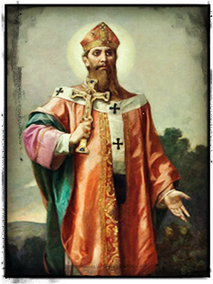
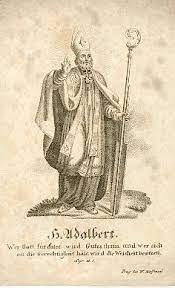
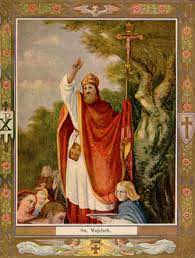
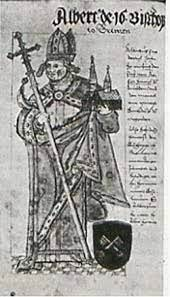
Adalbert (ca. 740 C.E.) was an eighth-century French pseudo-mystic.

He proclaimed that an angel delivered him relics of remarkable holiness from all corners of the globe, and that he could predict the future and read people's minds.


"I know what you've done; there's no need for confession," he'd reply.

"Relax, your sins have been forgiven." 

Adalbert's so-called "miracles" garnered him a lot of fame, and he gave out a lot of nail and hair cuts as potent amulets.


He is reported to have even built an altar in his own honor.


The little biographical material available claims that an angel bestowed magical talents upon him at birth.

Adalbert was accused of displaying a letter from Jesus Christ that he said was given by St. Michael to his followers.


Adalbert was also accused of writing a mystical prayer that invoked uncanonical angels thought to be devils.

A Church synod condemned him in 744 C.E.

After appealing to Pope Zacharius, Adalbert was stripped of his priestly duties a year later.

Later, he was sentenced to a life sentence at the Fulda Monastery.


~Kiran Atma


Hinduism - ADVAITA


What Is Advaita?

Non-duality or 'not two-ness' is the literal translation.

One of the primary schools of Vedanta, Advaita, advocates a philosophical perspective. 


It is the concept that multiplicity is, in the end, the manifestation of a non-dual reality.

This philosophical stance is sometimes referred to as monism in the West (the belief that reality is one), but the meaning of 'non-duality' in a Hindu context is more nuanced, because it does not involve the postulation of even a single entity, because 'Being' (sat) is said to be beyond all signification, including the postulation of a One.


The non-dual principle of reality underpins the cosmos, yet it is not an entity in the same way that the many objects and entities do.

It is the foundation of their existence.

Furthermore, labeling such schools as monistic is difficult since they often preserve a multi-leveled definition of truth that does not necessitate rejecting the existence of plurality.

The idea is that the ontological substratum that permits such creatures to appear is fundamentally a non-dual principle of being.


The Upanisads include the oldest explicit exposition of non dualist notions, with Brahman as the basic substrate of existence from which the cosmos is believed to originate.

Early Upanisads, such as the Chandogya, compare the connection between Brahman and each individual being's basic self (Atman) to the mixing of salt and water in salty water.

The water tastes like salt that can't be seen, and the difference between the two is undetectable, just as Brahman can't be seen yet permeates the whole cosmos.

'You are That,' the sage concludes (tat-tvam-asi, Chandogya Upanis.ad 6.10.3).

Numerous schools evolved in response to the primary topic of the link between the individual ego and Brahman, the substance of the cosmos, as a result of various efforts to construct a systematic philosophical interpretation of such passages in the Upanisads (veda-anta or 'end of the vedas').


The difference-non-difference school, dualists (who claimed a clear ontological split between the two), qualified non dualists, and non-dualist interpretation were among them.

The Mandukya Karika (also known as the Agamasastra or the Gaudapada Karika) is the earliest unambiguous explanation of Advaitaphilosophy.

It was presumably written about the sixth century of the Common Era.

Sankara, however, is the most well-known Advaita proponent (eighth century CE).


The universe of plurality, according to believers of the Sankarite view, is ultimately nothing more than a magical illusion (Maya).

The specific nature of this illusion was the topic of much debate (and opposing schools' contention), but the general consensus was that maya is unexplainable, being neither completely existing nor non-existent.

The key to grasping this concept is to recognize that there are two degrees of truth for Sankara: ultimate truth (where the non-dual Brahman is the solitary reality) and daily, practical truth (where a variety of diverse things exist).

Maya is a cosmic illusion, but it is not a mental delusion (as in a hallucination or a dream), not least because the concept of an individual self (jivatman) is ultimately illusory from the standpoint of ultimate truth.

The world of waking awareness is not a subjective deception, according to Sankara; it exists and acts on a practical plane of reality.

This universe is unreal in and of itself, but real in the sense that it is identical to Brahman, the source of all existence.

According to Sankara, avidya - metaphysical ignorance – is the root of the universe's seeming manifestation, which is basically our ignorance of the reality that everything is Brahman.

At the individual level, this entails projecting categories or 'adjuncts' derived from previously acquired experiences (including those from prior incarnations) onto the non-dual reality, causing it to look as something it is not.

Sankara utilizes the well-known example of the rope and the snake to convey his point.

In low light, a rope might resemble a snake.

We think we're looking at a snake, but it's only a rope.

We can realize the error that was committed in daylight (that is, with the benefit of knowledge) and no longer project the image of a snake onto the rope.

Similarly, Brahman is the source of all things, but we misinterpret it as distinct objects due to our inability to transcend our ignorance of reality's actual nature.

Sankara's interpretation of Advaita, on the other hand, is far from the sole kind of nondualism found in Hindu traditions.

The Bhagavata Purana (c. eleventh century CE) is centered on the playful figure of Krishna and mixes non-dualistic notions with Vaisnava devotionalism (bhakti).

Non-dualistic philosophies may also be found within the many Saivite movements.

The Pratyabhijna or Recognition School, which is commonly connected with Kashmir but also exists elsewhere, is notable for its clear rejection of Sankara's notion of maya's illumination.

The world is real, according to this school, since it is a vibration (spanda) of Siva's dynamic and creative awareness.

Later works, such as Vasistha's highly poetic Yoga Teachings (Yogavasistha), synthesize themes and concepts from a variety of non-dualist schools (including Buddhist ones), but with a clear orientation towards Vedantic interpretations.

Interest in Sankara's philosophy by various Western Orientalists and Hindu reformers in the late nineteenth and early twentieth centuries helped to establish non-dualist ideas as important sources. 

Many of the key intellectual figures and gurus of Hinduism in the modern period, including Ramakrishna, his disciple Swami Vivekananda, SarvepalliRadhakrishnan, Ramana Maharshi, Nisargadatta Raj, Sri Aurobindo, and, to a lesser extent, Mahatma Gandhi, advocate non-dualism as a central aspect of their teaching.

Swami Vivekananda, perhaps more than anyone else, was responsible for catching the imagination of Hindus and Westerners alike with his promotion of non-dual ism as Hinduism's basic doctrine and 'spirituality' as the distinguishing quality of Hindu devotion.


~Kiran Atma


See also: 

Atman, Bhakti, Brahman, Buddhism's relationship with Hinduism, Mohandas Karamchand Gandhi,Aurobindo Ghose, Modern and contemporary Hinduism, Kashmiri Saivism, Krishna, Maya, Puranas, Sir Sarvepalli Radhakrishnan,Sri Ramakrishna, Ramana Maharshi,Saivism, Sankara, Siva, Upanisads, Vaisnavism, Vedanta, Swami Vivekananda,Yogavasistha


References And Further reading:

King, Richard. 1999. Indian Philosophy: An Introduction to Hindu and Buddhist Thought. Edinburgh: Edinburgh University Press.

Ram-Prasad, C. 1991. An Outline of Indian Non-realism: Some Central Arguments of Advaita Metaphysics. Oxford: Oxford University Press.

Sharma, A. 1993. The Experimental Dimension of Advaita Vedanta. Delhi: Motilal Banarsidass.


Parapsychology - Who Was Frater Achad?


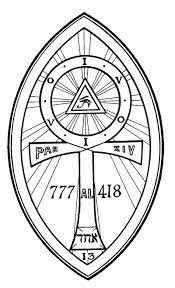
Charles Stansfeld Jones (1886–1950), a British magician and novelist who resided in Cana cay and formed the Fellowship of Ma-Ion, used this mystical name.

He was a disciple of the magician Aleister Crowley, who named him his magical child.

Jones is to be differentiated from theosophical writer George Graham Price, who channeled two popular writings under the alias Frater Achad, Melchizedek Truth Principles (1963) and Ancient Mystical WhiteBrotherhood (1971).

Apart from channeling the two works, nothing is known about Price's life.


Bonner, Margerie Lowry said that while working on Under the Volcano, he started to research the theosophists' canon, which included P.D. Ouspensky, Swedenborg, Blake, James, Böhme, and Yeats, as well as A.E. Waite, Eliphas Levi, Madame Blavatsky, and, by chance, Frater Achad. 


Charles Stansfeld-Jones – a white magician and author of Cabbalistic books and treatises under the name Frater Achad – appeared at Lowry's Dollarton shack and began a long friendship with him, during which time Lowry experimented with astral body projection, the I Ching, and Yoga, and studied the Tree of Life, a reproduction of which was hung on a wall in the shack. 


Lowry discontinued his research after months of immersion for fear of "opening doors that should stay locked." [Originally published in Perle Epstein's The Private Labyrinth of Malcolm Lowry. 

Holt, Reinhart, and Winston, New York, 1969.] While Lowry finished the first draft of Under the Volcano in 1940 before meeting Stansfeld-Jones, he subsequently claimed that he met a Cabbalist at a "critical and serendipitous time in the composition of the novel." Since the receiving of the Book of the Law, Achad has been regarded as the most notable Catholic Thelemite. 


This is because Frater Achad converted to Roman Catholicism in 1928, 19 years after entering the A.A. as a Probationer. 

Achad's claim to fame as a Thelemite—and the reason orthodox Thelemites must contend with him even if they believe his curious researches are mistaken or dangerous—is that he discovered the qabalistic "key" to the Book of the Law, prompting Aleister Crowley to rename the book Liber AL vel Legis instead of Liber Legis. 

This finding was recounted in Achad's magical notebook, Liber 31, which was eventually released. 

Crowley used this insight to consecrate Achad as his magical son, as prophesied in the Book of the Law, and to acknowledge his claim to the Thelemic grade of Magister Templi, or "Babe of the Abyss." However, by the 1920s, Crowley had become disillusioned with his son and successor due to some Achad writings. 

Achad's experiment with changing the courses of the qabalistic Tree of Life was documented in his 1922 Q.B.L.; or the Bride's Reception. 


The Egyptian Revival, published in 1923, and The Anatomy of the Body of God, published in 1925, continued Achad's work. 

To put it plainly, Crowley thought such attempts were foolish. 

Achad was also a member of the Worldwide Brotherhood, an esoteric group that claimed to share universal religious and philosophical knowledge, as well as a "true transcript" of the objective cosmos, by this time. 

Many occultists, including Crowley, thought the convoluted UB system was a "scam" or, worse, a cover for the Catholic Church's infiltration of occult organizations (for more on the UB, see the recent article in the O.T.O. anthology Success is Your Proof). 


Many high-ranking members of the UB converted to Catholicism when it was founded by Merwin-Marie Snell, a Catholic comparative religion professor. 

Crowley and Achad ultimately lost communication, and Achad was expelled from the Order of the Temple. 

Jones, on the other hand, never stopped thinking about his status as Crowley's magical offspring, and Thelema's revelations remained a major element of his spiritual worldview. 

Following Crowley's death, Achad corresponded with Crowley's executor Gerald Yorke in a lengthy series of letters. 

The letters "announced the arriving of the Aeon of Maat" in April 1948, and "from this point onwards the communication contains information recording the development of the new Aeon which Jones had discovered, and exploring its consequences and implications," according to Starfire. 


An Aeon is governed by a central spiritual idea or formula as well as the god-form that personifies that idea, according to Crowley's Thelemic system. 

It lasts about 2,000 years (coinciding with the precession of the equinoxes) and is ruled by a central spiritual idea or formula as well as the god-form that personifies that idea. 

The Aeon of Horus, which began in 1904 with Crowley's receiving of Liber AL vel Legis, is controlled by Horus, the god's crowned and victorious offspring, and will last for thousands of years. 

Yet, like Achad, some unconventional Thelemites have accepted the possibility of a premature dawning of the Aeon of Maat—for example, Kenneth Grant in his Typhonian Trilogies, the Thelemic magical order Ordo Adeptorum Invisiblum, and Nema, whose received text Liber Pennae Penumbra and system of Maat magick is perhaps the most influential result of Maatian speculations. 


The greatest description of these modern currents in theoretical occultism is Don Karr's book Approaching the Kabbalah of Maat. 


Despite the fact that Achad's announcement of the Aeon of Maat influenced a number of important occultist researchers in the twentieth and twenty-first centuries, his Maatian revelation does not appear to follow from his books, his Catholic conversion, or his involvement with (and eventual leadership of) the UB. 

To truly comprehend the importance of an early Aeon of Truth and Justice—the spiritual concepts symbolized by the god-form of Maat—one must first understand the qabalistic implications of Achad's 1920s views. 

Among early twentieth-century occultists, Achad is possibly the most pro-materialist. 


Unlike many Gnostics, Neo-Buddhists, and Theosophists of the time, Achad believes in a material universe infused with spirit—sacramentally infused, if you will. 


This is in line with the Universal Brotherhood's philosophical realism principles. 

It also corresponds to Achad's extreme qabalistic theories. 

Unlike other qabalists, Achad's multifaceted image of the Tree of Life's primeval fall and eschatological restoration resembles a cosmic fulfillment process rather than a myth of transgression and forgiveness. 

This is something he shares with the modernist Catholic thinkers of his day. 

Idealism and Materialism must join and go hand in hand if a new Civilization is to be established, argues Achad in The Anatomy of the Body of God. 


The Soul of Humanity is the connection that binds everything together. 


Our physical bodies are nothing to be ashamed of, but they would be useless without the Spirit and Will that give them life and action. 

On the other hand, we should not be so timid and selfish as to want to be re-absorbed into Spirit, as if the whole Creative Plan had been a waste of time and should have never been undertaken in the first place. 

No! Let us offer gratitude in our hearts for both our bodies and our spirits, and let us use both properly and to the full extent of our abilities. 

Over the course of the 1920s, Achad's writings became more oriented on the immanent fulfillment of God's Kingdom, a perspective that would be dubbed "realized eschatology" in Christian theology. 

"We must take into the inheritance of Freedom that has been provided for us in the Father's Kingdom upon Earth," says Anatomy, "and begin to construct a 'Living Temple, not created with hands, everlasting in the Heavens'—on Earth." The rousing proclamation, There is a space reserved for every one of you, Here and Now, finishes the book's introduction. 


Everything has its place when everything is placed in its place. 


Take up your positions in the Kingdom of the Ever-Coming Son, fulfill yourself in the fulfillment of God's Will inside you, and demonstrate to those who are still in the dark outside that there is space for everyone who are willing to maintain their place and stop attempting to usurp others'. 

Frater Achad's knowledge of the approaching Kingdom of God is based on his interpretation of Qabalah's cosmic processes. 

In the orthodox Thelemic schema, the Egyptian deity forms Isis—Osiris—Horus correlate to Binah—Kether-Chokmah—and Tiphereth, respectively. 

Malkuth, the Material Kingdom, is represented by Maat, who completes the four-part sequence. 


The four letters of the Hebrew Tetragrammaton, IHVH—Osiris (I), Isis (H), Horus (V), with Maat (final H) completing the sequence—can also be ascribed to the Aeons. 


In most texts on Hermetic Qabalah, the letters of the Tetragrammaton fulfill a cosmic story. 

The fallen Daughter (Heh final) must combine with the Son (Vav) to ascend to the level of Heh prime, establishing the Daughter/Malkuth on the throne of Binah, the Mother, in order to restore the Tree of Life to its pre-Fall condition (Heh prime). 

The Mother then "arouses the active power of THE FATHER, and these twain being UNITED, everything is RE-ABSORBED into THE CROWN," as Achad describes in Q.B.L. 

As a result of Malkuth's union with Kether, the eschatological kingdom is realized on Earth, fulfilling God's goal for creation. 

The salvation economy of Mary, a Daughter of Israel and child of the earth, conceiving the Son, the Christos, by the Holy Spirit, then being joined with God the Father in her Coronation as the Mother of Heaven, may be expressed in the Catholic system. 

Through the inbreaking of the eschatological Kingdom in the event of Jesus Christ, the Son's Incarnation thus redeems Malkuth's material world—represented in miniature by Mary. 


Through the Eucharistic Mass, Catholics engage in this reality—the eschaton made manifest here and now in fulfillment of God's design. 


Many orthodox Thelemites have proposed bizarre explanations for why Frater Achad would ever switch to the Roman Church, including insanity, a desire to convert the Church to Thelema's Law, or being lost in the Abyss as a Black Brother. 

Achad, on the other hand, offers a different reason for his strange conversion: Achad needed to be escorted to the Temple's opposite Pillar in order to discover the secrets of the R[oman] Catholic Church. 

He joined the Church as an orthodox member and obtained his first communion during Midnight Mass on Christmas Eve, 1928. 

This step, and only this step, resulted in the start of the Initiations and Ordeals that were to follow, as per Liber Legis. 

(Jones, letter to Gerald Yorke and Albert Handel, May 6, 1948; cited in Hymenaeus Beta, Prolegomenon to Aleister Crowley's Liber Aleph, Second Edition, Hymenaeus Beta, Prolegomenon to the Second Edition, Hymenaeus Beta, Prolegomenon to the Second Edition, Hymenaeus Beta, Prolegomenon to the Second Edition, Hymenaeus Beta, Pro Achad was poised to herald the beginning of the Aeon of Truth and Justice—the eschatological Kingdom realized on earth, glyphed in esoteric terms by the goddess Maat and glyphed in the New Testament by St. John the Divine's vision of the New Jerusalem: Then I saw a new heaven and a new earth, since the previous heaven and earth had vanished, and the sea had vanished as well. 

And I saw the holy city, the new Jerusalem, descending down from God like a bride adorned for her husband (Revelation 21:1-3) This is the banquet for the bride—the New Jerusalem has come down to earth, the divine has become one with the mundane world. 

"Jones relayed the news of his 1932 Silver Star Ordeal not only to Crowley, but also to the Catholic Church," states Hymenaeus Beta. 

Achad considered his initiations into this new New Aeon as vital to both the occult world and the Catholic Church. 

"He came to believe that the Aeon of Horus was coming to an end, and that a new Aeon of Truth and Justice, ruled by the Egyptian goddess Maat (or Ma), was about to begin." Achad's conversion allowed him to participate in the Church's sacramental life. 

This implies he took part in the Eucharist, with his first Mass being the Christmas 1928 Mass commemorating the Incarnation. 

For Catholics, the Eucharist is the eschatological reality bursting into our current moment, the Kingdom of God made visible on earth. 

The Eucharist is "a guarantee of future grandeur," according to the Catholic Church's Catechism, "a foretaste of the celestial feast to come" (CCC 1323). 

The Aeon of Maat is a "backwards current," granting us a vision of an age in which "we all may become something far greater, something which exists in the form of seeds within us in the eternal Now" (Horus/Maat Lodge FAQ page), much like the inbreaking Kingdom of God, which rushes in from the future to meet us in the present (see, for example, radical Catholic theologian Edward Schillebeeckx's God the Future of Man). 

Unlike other non-orthodox Thelemites who believe in a "double current" in which both the Aeons of Horus and Maat are active at the same time, or those who believe that the Aeon of Maat will arrive too soon to replace the Aeon of Horus, my reading of Frater Achad through the lens of the Catholic Mass suggests that the new Aeon of Truth and Justice is present in the present at the same time as the "force and fire" of the Aeon The Mother's Daughter ascends to the throne, the Father awakens, and the Son of God is born among the people of the world. 

"Kether is in Malkuth, and Malkuth is in Kether," Frater Achad declares.


Further Reading:


Achad, Frater [Charles Stansfeld Jones]. The Anatomy of the Body of God. New York: Samuel Weiser, 1969.

Achad, Frater [George Graham Price]. Ancient Mystical White Brotherhood. Lakemont, Ga.: CSA Press, 1971.

Melchizedek Truth Principles. Phoenix, Ariz.: Lockhart Research Foundation, 1963.


~ Kiran Atma

You may also want to read more about parapsychology and occult sciences here.


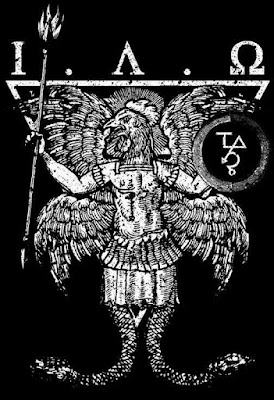
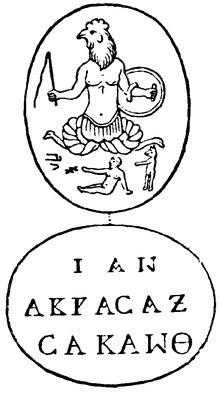
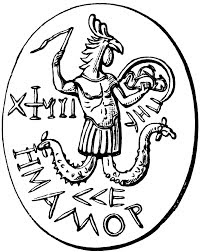
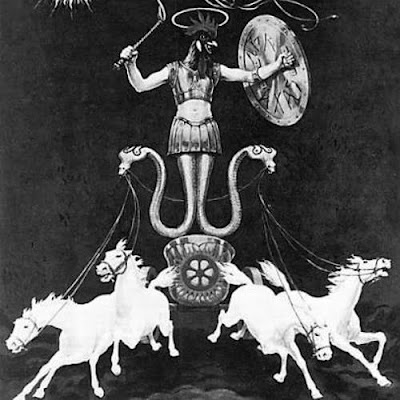
Parapsychology - Who Is Abraxas?


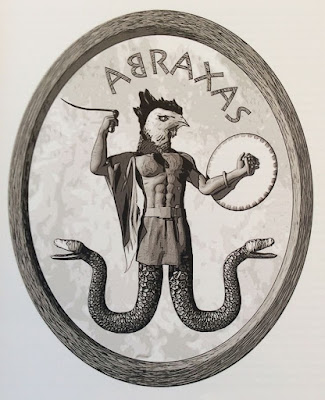
Abrasax was the supreme deity of the Basilidian sect of Gnostics in the second century, who held that Jesus Christ was just a phantom brought to Earth by him.


They thought his name held significant secrets since it was made up of the seven Greek letters that make up the number 365, the number of days in a year.

They believed Abraxas commanded 365 gods, to whom they ascribed 365 qualities, one for each day.


Older mythologists see Abraxas as an Egyptian deity, whereas demonologists depict him as a demon with a king's head and serpents for feet.

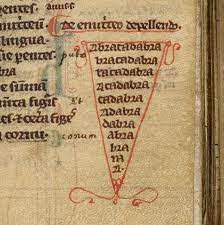
Abraxas is shown with a whip in his hand on ancient amulets, and his name inspired the magical term abracadabra.


Further Reading:


Drury, Nevill, and Stephen Skinner. The Search for Abraxas. London: Spearman, 1972.


~ Kiran Atma

You may also want to read more about parapsychology and occult sciences here.


Parapsychology - What Is Abracadabra?


A

AB

ABR

ABRA

ABRAC

ABRACA

ABRACAD

ABRACADA

ABRACADAB

ABRACADABR

ABRACADABRA


According to Julius Africanus, both ways of pronouncing this term were equally effective.

It was employed as a magic to heal asthma, according to Serenus Sammonicus.

Abracalan, or aracalan as alternative spelling, is claimed to have been the name of a deity in Syria and a magical emblem for the Jews.


Further Reading:


Lévi, Éliphas. Transcendental Magic. London: Rider, 1896. Reprint, New York: Samuel Weiser, 1970.


~ Kiran Atma

You may also want to read more about parapsychology and occult sciences here.


Parapsychology - Who Was Abraham The Jew (1362–1460)?


Little is known about this German Jew who lived about 1400 and was an alchemist, magician, and philosopher.


The majority of what is known comes from a manuscript held in the Archives of the Bibliotheque de l'Arsenal in Paris, a repository of esoteric texts.


The manu script, written completely in French, claimed to be a translation from Hebrew, and the handwriting style suggests that the writer lived in the early eighteenth century, if not earlier.


The French script has a distinct illiteracy to it, with punctuation that is either incorrect or visibly lacking.

Abraham was most likely a Mayence native, and he was born about 1362.

His father, Simon, was a seer and magician, and the youngster began his esoteric studies under his father's tutelage, then later under the tutelage of another teacher, Moses, whom Abraham characterizes as "truly a nice man, but utterly unaware of The True Mystery, and of The Veritable Magic." After that, Abraham chose to travel to further his studies.

He traveled via Austria and Hungary with his buddy Samuel, a Bohemian by origin, through Greece, and then to Constantinople (now Istanbul), where he stayed for two years.

After that, Abraham journeyed to Arabia, a well-known center of mystic study at the time, and then to Palestine and Egypt.

In Egypt, he met Abra-Melin, a great Egyptian philosopher, who entrusted him with important papers and revealed a lot of vital secrets.

Abraham then left Egypt for Europe, finally settling in Würzburg, Germany, where he got extensively immersed in alchemy study.

He had three daughters and two sons, the older called Joseph and the younger Lamech, after marrying a lady who seems to be his cousin.

He trained both sons in esoteric matters, and he bestowed a dowry of 100,000 golden florins on each of his three daughters.

He claimed to have gained this substantial fortune, as well as other huge wealth, while traveling as an alchemist.

He was well-known and was asked to do magical deeds in front of many wealthy and powerful individuals, including Emperor Siegmund of Germany, the bishop of Würzburg, King Henry VI of England, the Duke of Bavaria, and Pope John XXII.

There are no details concerning the remainder of Abraham's life, and his death date is unknown, although it is widely assumed to have occurred about 1460.

The Book of the Sacred Magic of Abra-Melin, as bequeathed by Abraham the Jew unto his son Lamech, is the title of the book that supplied this biographical information.

This title is deceptive and inaccurate, since Abra-Melin had no involvement in the work's introductory section, which includes a description of Abraham's boyhood and early journeys in quest of enlightenment, as well as guidance to a young man striving to become expert in esoteric arts.

The second section, on the other hand, is either based on the records given to Abraham by Abra-Melin or on the secrets revealed to Abraham by the Egyptian sage.

"How Many, and What are the Classes of Veritable Magic?" is one of the chapters in this section of the manuscript, which deals with the fundamentals of magic in general.

"What we Should Consider Before Conducting the Operation," "Concerning the Convocation of the Spirits," and "How We Should Conduct the Operations." The third and last section of the paper is primarily taken directly from Abra-Melin, and the author, avoiding theoretical matters as much as possible, focuses on practical magic practice.

First and foremost, he explains how to "get various Visions," "retain the Familiar Spirits, bound or free, in whatever shape," and "excite Them bugs." In other chapters, he talks of reviving the dead, transforming into "divers shapes and forms," flying through the air, smashing buildings, finding robberies, and swimming underwater.

The author discusses the thaumaturgic treatment of leprosy, dropsy, paralysis, and a variety of other maladies including fever and seasickness.

He also gives tips on "How to Be Loved by a Woman," as well as how to gain the favor of popes, emperors, and other powerful figures.

In "How to induce Armed Men to Appear," he answers the question of summoning visions and explains how to conjure "Comedies, Operas, and all types of Music and Dances." Many of these achievements are accomplished via the use of Kabalistic letter squares.

Many distinct symptoms of this kind are detailed in the book.

As described in this book, Abraham's demeanor and temperament depict a guy who scorns most other magicians and speaks with great mockery of practically all spiritual works other than his own and those of his hero, Abra-Melin.

Abraham harshly condemns anybody who denies the faith in which they were reared, claiming that no one who does so would ever be able to master magic.

Nonetheless, Abraham exhibits minimal selfishness throughout the writings and seems to have labored for accomplishment in his skill in order to use it for the good of humanity as a whole.

His works also indicate a strong conviction in the existence of a higher self in every individual, as well as a strong desire to develop it.

(Also see Nicholas Flamel.) 


Further Reading:


The Book of the Sacred Magic of Abra-Melin the Sage. Translated by S. L. MacGregor-Mathers. Chicago: De Laurence, 1932. Reprint, New York: Causeway Books, 1974.


~ Kiran Atma

You may also want to read more about parapsychology and occult sciences here.


Parapsychology - What Is Aaron's Rod?


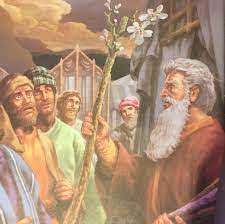
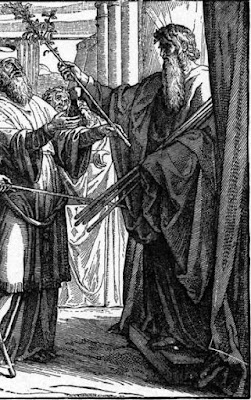
A magical wand based on the biblical story of Moses and Aaron's rods, which were employed in the marvels of parting the Red Sea and causing water to spring from a rock in the desert. 

Aaron's rod morphed into a snake when he threw it in front of Pharaoh and his magicians (Exodus 7), hence the esoteric usage of Aaron's Rod with a serpent image.

According to Jewish folklore, Aaron's rod was created on the sixth day of Creation and was kept by Adam when he left the Garden of Eden, eventually passing through a series of patriarchs.


According to an apocryphal Christian tale, the rod was cut from the Tree of Knowledge, ultimately falling into Judas' hands, and finally becoming the cross beam on which Christ was crucified.

The hazel wand used by water diviners in dowsing is reminiscent of Aaron's rod in the wilderness, which found water.

A wand of some kind has long been a symbol of power.

The wand is also used by contemporary conjuring magicians as a magical staff.


Hinduism - What Are The Yoga Sutras?


 ("yoga aphorisms") A collection of short sayings attributed to the sage Patanjali that serve as the basic texts for the Yoga school, one of the six schools of Hindu philosophy.

The sage Vyasa's commentary on Patanjali's Yoga Sutras is often read alongside the text, and it has been considered as an important component of the book.


The Yoga Sutras are split into four sections, each of which focuses on a different theme: 


  1. The first part is about concentration (samadhi), 
  2. the second part is about the mechanics of spiritual development (sadhana), 
  3. the third part is about various attainments (vibhuti), including magical powers (siddhi), 
  4. and the last part is about yogic isolation (kaivalya), which the text calls liberation.


The Yoga school is often considered the "practical" articulation of Samkhya theory, and the text presupposes the cosmology taught by the Samkhya school, another of the six schools.


You may also want to read more about Hinduism here.

Be sure to check out my writings on religion here.


Hinduism - Who Is Vena In Hindu Mythology?


Vena was a cruel monarch in Hindu mythology who forbids all religious ceremonies and gift-giving save those committed to him.

He is eventually slain by a group of enraged sages, who use their magical abilities to convert holy kusha grass blades into spears.

Following Vena's death, the issue of royal succession emerges.

The sages first churn a little, deformed, dark-skinned man called Nishada from his thigh, who is said to be the progenitor of the Nishada tribe.

Nishada takes all of Vena's many faults onto himself, purifying Vena of them.

Following Vena's cleansing, the sages churn his right hand, revealing a dazzling and sparkling youngster named King Prthu.


~Kiran Atma


You may also want to read more about Hinduism here.

Be sure to check out my writings on religion here.