Showing posts sorted by relevance for query Hindu religious ideas. Sort by date Show all posts

Human Well-Being From A Hindu Perspective: Care, Healing, And Wellness


    It is reasonable to conclude that religion and spirituality in general contribute to human life fulfillment and pleasure in all civilizations. 


    Due to the increasing complexity of everyday life, providing care for persons' physical and mental needs has become a growing problem. 

    Indeed, life has become a source of worry, bringing significant challenges to religious thought and spirituality. 

    As a result, care and human well-being are prioritized in modern India, particularly among Hindu civilizations. 


    Hinduism, the world's third biggest religion, is very important to the people of India. It is considered "a way of life" (Chaudhuri 2012: 28). 


    As a result, it's critical to look at how Hindus see care, healing, and human well-being, as well as what their practice includes among their followers in India. 

    The current research begins with an overview of Hinduism as India's major religion. 

    It is descriptive and attempts to elucidate the notions of care, healing, and well-being within Hindu thinking's cultural and religious traditions. 

    The relationship between Hindu thought and how it is operationalized in its rites of passage (also known as "Hindu sacraments"), "goals for meaningful human life," and "five great sacrifices" will be a particular emphasis. 
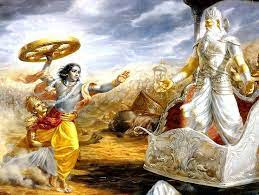


    Finally, the article discusses care, healing, and well-being in the modern day, with a focus on renascent Hinduism and its ideas on gods and goddesses as its source. 


    Ayurveda as a Hindu science of medicine for holistic well-being, yoga as a path for mental well-being, and asrama-dharma as care and well-being for the elderly within the domain of gem-transcendence will all be discussed to further investigate modern Hinduism's viewpoints. 


    India's primary religion is Hinduism. 


    Hinduism is the most widely practiced religion in India, the world's seventh biggest nation (3.3 million square kilometres). 


    India, which is expected to have a population of 1.42 billion people by 2023, is noted for its religious variety and cultural diversity. 

    Aside from Hinduism, India is home to Buddhism, Jainism, Sikhism, and a number of other ancient religious traditions. 

    In addition, India is home to a diverse range of faiths, including Semitic religions. 

    According to the 2011 census, Hinduism is followed by 79.8% of the Indian population, 14.2% Islam, 2.3 percent Christianity, 1.72 percent Sikhism, 0.7 percent Buddhism, 0.37 percent Jainism, and 0.66 percent Zoroastrianism. 


    Despite the diversity of religious connections among Indians, the Hindu religious heritage plays a critical part in the country's spiritual, cultural, and social makeup. 


    In terms of Hinduism's texts, deities, and belief systems, the concept of 'unity amid variety' (Sarma 1996: 13-27) may be distinctively recognized. 

    The word 'Hinduism' does not refer to a single, closed religion tradition, but rather to a wide range of faiths, beliefs, doctrines, rituals, and practices linked with a variety of gods, goddesses, and cults found on the Indian subcontinent. 

    Although the name Hinduism refers to a specific religious tradition with a history that spans many centuries, its spiritual foundations date back almost four millennia. 

    Hinduism is considered by its supporters to be a sanatana dharma, or "everlasting religion," since it is founded on the eternal truth enshrined in the Vedas (the primary Hindu scriptures). 


    Hinduism, being one of the world's oldest alive religions, does not honor a single sage or prophet as its creator, nor does it claim a single central authority for its existence. 

    It is, in reality, based on an open canon. 

    It remains an all-encompassing, all-encompassing, and inevitably ever-evolving spiritual tradition in this way. 

    According to Shashi Tharoor (2018: 39), "Hinduism is a characteristically Indian development, a type of 'banyan tree,' as a consequence of its openness and variety. 

    Its branches spread far and wide, sinking back into the ground to take new root in the inviting soil." 

    One of its defining characteristics is the domination of a type of 'religious awareness.' 

    This centripetal perception leads to the domination of a very distinct religious point of view and spiritual sensitivity to all matters of life among Hindu believers (Griswold 1996: 24-26). 

    As expressed in Hindu scriptures, traditional thought, and culture, this complete worldview incorporates a spiritual perspective of care, healing, and human well-being. 


    Hindu themes of care, healing, and well-being are discussed in this paradigmatic context. 


    The themes of caring, healing, and well-being are implicitly ingrained throughout Hindu thought. 


    In Sanskrit (the Hindu tradition's holy language), the term 'care' has many distinct definitions: 


    Raksa Means to guard, look after, save, preserve, or keep away from. 


    Pala(-na) Means to keep an eye on, guard, defend, or govern. 


    Chinta = to consider a thought via contemplation and introspection,  (Williams 1994; 1976). 


    Raksha Bandhan, a prominent Hindu event, is strongly linked to the pledge of care and the safety of the family. 


    • The sisters tie the rakhi, a kind of amulet, around their brothers' wrists as part of the festival's ceremonial to protect them from negative influences and to pray for their long life and happiness. 
    • The sisters are given a gift at this event. 
    • The ceremony's origins may be traced back to a Hindu folklore in which Draupadi tore a piece of her saree and wrapped it to Krishna's wrist, injuring him accidently. 
    • Its purpose was to halt or prevent bleeding. 
    • As a result, a link was formed between them. 
    • Krishna vowed to safeguard Draupadi in exchange. 
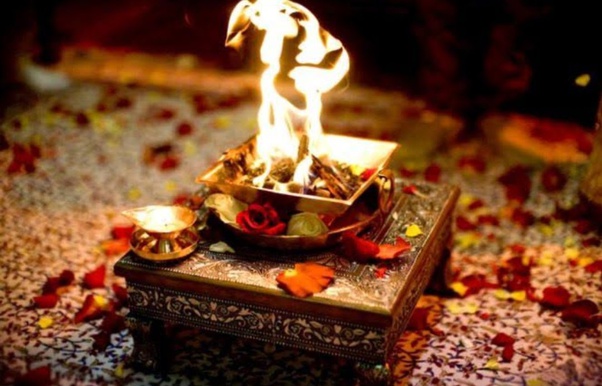


    Furthermore, the Raksha Bandhan celebration serves as an annual ritual. 


    It historically authorized the brothers to take duty for the care of their sisters in order to keep them from being harmed, and it signifies protection and caring among siblings. 


    Sama = balanced; when anything in its original healthy nature is injured, it should be balanced, according to Sanskrit. 


    Svastha is the Sanskrit word for "health" or "being in one's natural condition." • Santhi is a Sanskrit word that means "rest," "quiet," "peace," "tranquility," "bliss," and "comfort" (Williams 1994). 

      • The word svastha in Ayurveda refers to a person's overall health. 
      • It typically refers to a "state of being in which one's body, mind, spirit, and senses are all in happy harmony" (Yogapedia Dictionary 2020). 
      • As a result, health is defined as the physical well-being of a person, as well as mental, emotional, spiritual, and energetic inclinations. 
      • As a result, healing is defined as the comprehensive restoration of health. 
      • Despite this holistic approach, doctors' cures for illnesses are different from the spiritual part of healing. 


    Svasti is a Sanskrit term that means 'well-being.' It might also mean 'benefit.' Well-being refers to a sense of fulfillment and happiness in life, as well as an inner sense of harmony with our surroundings. 


    Meditation, according to Hindu belief, leads to an inner feeling of serenity and tranquility. 


    • It promotes a sense of well-being that is rooted deep inside oneself (Lovato 2019). 
    • Hindus are taught to consider well-being, a feeling of pleasure with life, as vital to a sense of purposefulness, rather than the pursuit of artificial kinds of enjoyment (Menon 2012: 2; 4). 
    • Holi, a full-moon Hindu celebration in which married women celebrate their happiness and the well-being of all family members, is an example of this. 


    Yoga is another aspect of the Hindu tradition's concept of well-being. 


    • It is said to provide people with a feeling of well-being, encouraging a sense of being 'whole.'
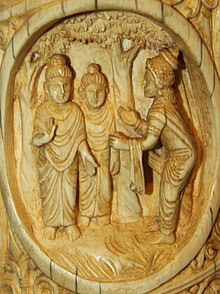


    Sources and practices of conceptualization in Hindu thought. 


    The Hindu scriptures and Indian cultural traditions both include notions of care, healing, and well-being. 


    Hinduism is blessed with various texts as one of the world's oldest existing faiths. 

    The benefit is that they all have a canon that is open-ended. 

    There are four Vedas, as well as Sutras, Epics, Codes of Law, and Sacred History, among other sources. 


    Philosophical Manuals and Sectarian Scriptures are also included with the Vedas. 


    In addition to many other literature that Hindu devotees religiously study, all of them are deemed to have either main or secondary scriptural value. 


    Vedangas, or Sutra literature, is taken straight from the Vedas and contains many of Hinduism's theological principles. 

    In Hindu religious thought, the concepts and practices of caring, healing, and well-being are implied in the Grhya and Dharma Sutras

    The former is concerned with household rituals, whereas the latter is concerned with socioreligious rules. 

    Many other Hindu beliefs and practices, such as samskaras, purushartha, paru;amahayajna, and varnaasramadharma, are intertwined with its different elements. 


    Hindu rites of passage: the practice of samskaras. 


    Meaningful life and dying via Hindu rites of passage: the practice of samskaras. 


    The Hindu sacraments, or rites of passage, are known as samskaras (Pandey 2001; Antoine 1996c) and span one's whole life span as well as the world beyond (transcendent dimension), starting with prenatal rituals and ending with post-mortem existence. 

    • According to ancient scholars, three key prenatal rituals lay the way for care to be offered to pregnant women and the unborn child in order to assure health and protection against evil. 
    • Early childhood or infancy samskaras are for the child's intellectual well-being, longevity, safety, and even adornment. 
    • With basic and secondary education, educational samskaras secure an individual's profession outside of the family, preparing them for active citizenship obligations. 
    • The marriage (vivaha) ceremony is the most important sacrament, through which a person fulfills socio-religious and family duties. 
    • The penultimate sacrament, the funeral ritual (antyeshthi), takes into account the needs of both the dead and the living. 
      • This ceremony expresses 'sublime feelings' that make death pleasant for the one who dies, as well as for the society to accept death and dying as an unavoidable occurrence. 


    A person's life is made up of a succession of events. 


    • In this way, the sacraments offer people in society with the care and protection they need. 
    • These sacraments are intended to mold one's personality and connect our humanity to religious significance. 
    • As a result, the concept of life passages was born. 
    • Their purpose is to aid in the expression of pleasure and grief. 
    • The sacraments support an individual's well-being in this manner. 


    Simultaneously, they contribute to an individual's growth as a "full-fledged social person" (Dandekar 1996: 142). 


    As a result, the Samskaras provide a complete vision of what constitutes a healthy life and personal well-being in Hindu traditional culture. 

    All of these rites of passage are described and formulated in the Grhya Sutras, which defines and formulates household or domestic rituals, which were historically performed at home and in which priests had a little part. 


    The relevance of these family ceremonies is eroding as a result of modernization of schooling and changing societal attitudes. 


    Even the practice of samskaras has become fragmented and has lost its uniting effect. 

    However, some of the customs are still followed, such as the singing of Vedic hymns and the offering of ceremonial fire during official ceremonies, as well as at private occasions when no religious person is present (Gengnagel and Husken eds. 2005). 
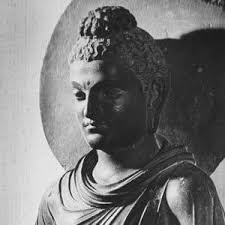


    In reality, only the most devout Hindu households still follow these samskaras to the letter. 


    Fortunately, despite secularization, most Hindus in modern society are still eager to participate in a number of these samskaras, such as the naming ceremony, the first feeding of the infant, initiation into education, marriage, and burial customs. 

    These rituals are often carried out with the assistance of a priest, albeit not always at the temple. 


    Well-being in the context of the individual-society interaction: Promoting 'Human Life Goals' (Purushartha). 


     The four ideals of purushartha (literally: 'goal' or 'end' of man/human [Antoine 1996a: 155156]), dharma, artha, kama, and moksha form a four-fold network about what life is about and its relationship to the universal human desire for meaning and purpose. 


    Dharma as a life aim encourages people to be virtuous, righteous, and morally and ethically responsible in all aspects of life. 

    • The quest of money and success is the theme of ArthaIt is the source of human life and existence. 

    Kama is a Sanskrit word that means "pleasure" or "enjoyment of life." It denotes the method of procreation and, as a result, humanity's survival. Both artha and kama, or money and pleasure, must be consistent with dharma. 

    Moksha is the Hindu term for emancipation, which is the ultimate purpose of existence. 


    A person who acquires money (artha) and enjoys and fulfills life's wants (kama) via virtuous and righteous ways (dharma) would, in theory, achieve nirvana (moksha). 


    These four life objectives are traditionally taught at the student/learning stage of life (brahmachari) and implemented in the householder stage ( Grhastha )  Purushartha is made up of all of these life objectives. 


    In this way, they establish a set of life objectives that must be met in order to live a meaningful life. 

    Life would be blank and pointless without these objectives. 

    As a result, the purushartha dharma defines an individual's well-being in society and fosters wholeness in the public arena of life, resulting in a healthy society. 


    Affectionate treatment of family members, other people, and other living things: The Great Five Sacrifices Or Yajnas (Panchamahayajnas). 


    Every day, a homeowner is obligated to do the five-fold mandatory sacrifices, or duties: 


    (a) Brahma Yajna, homage to Brahman, is performed by reading scripture; 

    (b) Pitr Yajna, homage to the ancestors, is performed by offering water; 

    (c) Deva Yajna, homage to the gods, is performed by offering homa sacrifices

    (d) Bhuta Yajna, homage to elements or other beings, is performed by feeding animals and birds; and 

    (e) Manusya Yajna (Antoine 1996b: 203). 


    Both Bhuta Yajna and Manu-D-'a Yajna are closely tied to an individual's obligation as a caretaker to fellow human beings, animals, and other species; failing to do so implies failing to do one's major daily required task, which may destroy the prospect of liberation, or moksha (the ultimate goal of life). 

    Pitra Yajna, according to Wilson Paluri (2020), is the 'reverential connection' with parents and elders, which is particularly important for the 'well-being' of family life. 


    In the Hindu family structure, caring for parents and the elderly is both a virtue and an obligation. 


    In Hindu tradition, "may mother be god to you, may father be god to you..., may visitors be god to you"10 is the ultimate state of being. 

    Bhuta Yajna, or the offering of food to all creatures, decreases egomaniacal tendencies in humans and cultivates the practice of giving one's assets for the benefit of all sentient beings in need (Dandekar 1996: 139). 

    Hindu traditional societies reflect these mahayajnas. 

    They place a premium on caring for parents and seniors, respecting visitors, offering hospitality to everyone, and defining the pursuit of human well-being. 


    Troublesome Issues to Consider 


    Without mentioning its limits, a discussion of care, healing, and well-being in Hindu thinking and traditional practices would be insufficient. 

    The majority of traditional customs are geared at men and the upper caste. 

    Many people from the disenfranchised, so-called lower caste populations, have been denied access to Vedic traditions because they had to settle for a 'lower religion.' Early Vedic religion is supposed to be simple yet deep, promoting society and gender equality. 

    It has generated hierarchical structures and inequalities throughout its history in order to serve the entrenched interests of rich groups. 

    The most exploited victims of such a discriminatory practice are women and members of indigenous groups (Tribals, adivasis, Dalits) (Devi 2000: 15). 

    Although the dynamic position of people from disadvantaged groups and women in general can be traced throughout Hindu history, the society adopted hierarchical and patriarchal structures (Krishnan 2020a). 

    Current Hindu cultures, on the other hand, are not static, but are subject to social development, which has an impact on the dynamic position of women and indigenous people in religion and society.


    Kiran Atma


    References And Further Reading.


    Antoine, R. 1996a. "Hindu Ethics: 1. General Ethics." In Religious Hinduism, edited by R. DeSrnet and J. Neuner, pp. 149-158. Murnbai: St. Pauls. 

    Antoine, R. 1996b. "Rituals and Worship". In Religious Hinduism, edited by R. DeSrnet and J. Neuner, pp. 200-209. Murnbai: St. Pauls. 

    Antoine, R. 1996c. "The Hindu Saril.skaras." In Religious Hinduism, edited by R. DeSrnet and J. Neuner, pp. 210-219. Murnbai: St. Pauls. 

    Arulsamy, S. 2000. Religion for a New Society. Delhi: ISPCK. 

    Bowker, John. (ed.) 1997. The Oxford Dictionary of World Religions. Oxford: Oxford University Press. 

    Braam, Arjan W., et al. 2006. "Cosmic Transcendence and Framework of Meaning in Life: Patterns Among Older Adults in The Netherlands." The Journals of Gerontology- Series B 61 (3),pp. 121-128. DOl: 10.1093/geronb/61.3.Sl21. 

    Capistrant, B.D., et al. 2015. "Culture and Caregiving for Older Adults in India: A Qualitative Study," The Gerontologist 5(2), p.ll2. DOl: 10.1093/geront/gnv504.06. 

    Chaudhuri, Nirad C. 2012. Hinduism: A Religion to Live By [1st edition 1979]. New Delhi: Oxford University Press. 

    Dandekar, R.N. 1996. ''The Role of Man in Hinduism." In The Religion of the Hindus, edited by Kenneth M organ [first published 19 53], pp. 11 7-153. Delhi: Motilal Banarsidas. 

    Dasgupta, Surendranath. 1975. A History of Indian Philosophy, Vol. II [Cambridge Edition 1922], Delhi: Motilal Banarsidas. 

    Datta, Sukurnar. 2001. "Monasticisrn in India." In The Cultural Heritage of India, Vol. II, pp.582-593. Calcutta: The Rarnakrishna Mission Institute of Culture. 

    Devi, K.Urna. 2000. Women's Equality in India: A Myth or Reality? New Delhi: Discovering Publishing House. 

    Gautamananda, Swami. 2019. "Holistic Health." In Healthy Mind, Healthy Body: New Thoughts on Health [first published 1997] Chennai: Sri Ramakrishna Math, pp. 1-8. 

    Gengnagel, Jorg and Ute Hiisken (eds.) 2005. Words and Deeds: Hindu and Buddhist Rituals in 

    SouthAsia. Wiesbaden: Harrassowitz. 

    Griffith R. T. ( ed.) 1899. The Texts of the White Y ajurveda. https://www.sacred-texts.com/hin/wyv/index.htrn (accessed 13 Sept 2020). 

    Griswold, Harvey De Witt. 1996. Insights into Modern Hinduism. New Delhi: Aryan Books International. 

    Hall, C. Margaret. 1985. "Religion and Aging." Journal of Religion and Health 24(1 ), pp. 70-78. 

    Hinduscriptures. corn. 2021. "Hindu Samskaras." https://www.hinduscriptures.corn/vedic-culture/rituals/sixteen-sanskara/hindu-samskaras/11992/ (accessed 29 Sep 2021). 

    Ketchell, A., L. Pyles, and E. Canda. 2013. World Religious Views of Health and Healing. http://spiritualdiversity.ku.edu/sites/spiritualitydiversity.drupal.ku.edulfiles/docs/Health/World%20Religious%20Views%20of"/o20Health%20and%20Healing.pdf (accessed 10 Nov 2020). 

    Kimble, Melvin A., et al. (eds.) 1995. Aging, Spirituality and Religion: A Handbook. Minneapolis: Fortress Press. 

    Krishnan, Giri. 2020a. "Discovering the Dynamic Status ofWomen in Hindu Tradition: Re-reading of the Narratives of Hindu Women towards Gender Justice." UBS Journal (Union Biblical Seminary, Pune, India) 14(1), pp. 53-70. 

    Krishnan, Giri. 2020b. "Viinaprastha-Sannyiisa Schemes of Life as Gerotranscendence: An Appraisal of a Hindu Perspective of Ageing." In Ageing: Perspectival Explorations Towards Theo-Gerontology, edited by Songram Basurnatary, pp. 125-139. Chennai: Gurukul Publication. 

    Lamb, Sarah. 2005. "Cultural and Moral Values Surrounding Care and (In)Dependence in Late Life: Reflections from India in an Era of Global Modernity." Care Management Journals 6(2), pp. 80-89. 

    Lamb, Sarah. 2007. "Lives Outside the Family: Gender and the Rise of Elderly Residences in India." International Journal of Sociology of the Family 33(1), pp. 43-61. 

    Lamb, Sarah. 2019. "Hinduism Teachings and Aging." In Encyclopedia of Gerontology and Population Aging, edited by D. Gu and M. Dupre. DO I: 1 0.1007/978-3-319-69892-2~144-1. 

    Lovato, Chris. 2019. "Well-Being and Spirituality." In Healthy Mind, Healthy Body: New Thoughts on Health [first published 1997], pp. 147-151. Chennai: Sri Rarnakrishna Math. 

    Menon, Usha. 2012. "Hinduism, Happiness and Wellbeing: A Case Study of Adulthood in an Oriya Hindu Temple Town." In Happiness Across Cultures: Views of Happiness and Quality of Life in Non-Western Cultures, edited by H. Selin and G. Davey, pp. 417-434. Dordrecht: Springer. Manuscript with differing pagination online at https://www.researchgate.net/publication/279409932 (accessed 25 Sep 2020), quoted from this online source. 

    Paluri, Wilson. 2020. "Familial and Community Care in Vrddhavastha: Socio-Religious Jarasastra from Classical Hinduism." In Ageing: P erspectival Explorations towards Theo-Gerontology, edited by S. Basurnatary, pp. 141-153. Chennai: Gurukul Publication. 

    Pandey, R.B. 2001. "The Hindu Sacraments (Sarhskaras)." In The Cultural Heritage of India, Vol. II, edited by S. Radhakrishnan [2nd edition 1962], pp. 390-413. Calcutta: Ramakrishna Mission Institute of Culture. 

    Pandya, Samta P. 2016. "Aging Spiritually: Pitamaha Sadans in India." Cogent Social Sciences 2(1 ). DO I: 10.1080/23311886.2016.1219212. 

    Pathshala. 2020. Overview of Hindu Healing Traditions. https://epgp.inflibnet.ac.in/epgpdata/uploads/epgp_content/S000825CR/POO1532/MO18441/ET/1483520083Text.pdf (accessed 10 Nov 2020). 

    Premsagar, P. Victor. 1994. "Vanaprasthasrama Dharrna: A Programme of Renewal and Religion as Realisation for Retired People." Bangalore Theological Forum 26(3&4), pp. 15-24. 

    Radhakrishnan, S. 2009. The Hindu View of Life [1st edition 1927]. Noida: Harper Collins Publishers. 

    Rajan, K. V. Soundara. 2001. Concise Classified Dictionary of Hinduism, Vol. I. New Delhi: Concept Publishing Company. 

    Roy, Mira. 1986. "Ayurveda." In The Cultural Heritage of India, Vol. VI: Science and Technology, edited by P. Ray and S.N. Sen, pp. 152-176. Calcutta: Rarnakrishna Mission Institute of Culture. 

    Sarrna, D. S. 1966. Renascent Hinduism. Murnbai: Bharatiya Vidya Bhavan. 

    Sarrna, D.S. 1996. "The Nature and History of Hinduism." In The Religion of the Hindus, edited by Kenneth Morgan [first published 1953], pp. 3-47. Delhi: Motilal Banarsidass. 

    Sarrna, D.S. 2000. Hinduism Through the Ages [1st edition 1956]. Murnbai: Bharatiya Vidya Bhavan. 

    Sharma, Arvind. 2002. The Hindu Tradition: Religious Beliefs and Healthcare Decisions. Illinois: The Park Ridge Center. 

    Sri Sathya 2021. "Sri Sathya Sai International Organization." https://www.sathyasai.org 

    Tharoor, Shashi. 2018. Why I am a Hindu. New Delhi: Aleph Book Company. 

    Tilak, Shrinivas. 1989. Religion and Aging in the Indian Tradition. Albany: State University of New York Press. 

    Tiwari, S.C., and N.M. Pandey. 2013. "The Indian Concepts of Lifestyle and Mental Health in Old Age." Indian Journal of Psychiatry (January), pp. 288-292. 

    Valiathan, M.S. 2015. "Healing in the Ramakrishna Tradition." In Total Human Development in the Light ofRamakrishna-Vivekananda Tradition, pp. 109-116. Kolkata: Ramakrishna Institute of Culture. 

    Williams, Monier. 1976. A Dictionary English and Sanskrit [4th Indian edition 1899]. Delhi: Motilal Banarsidass Publishers. 

    Williams, Monier. 1994. Sanskrit-English Dictionary [new edition 1899]. Delhi: Munshiram Manoharlal Publishers. 

    WorldBookEncyclopedia. 1981. Vol. 21. Chicago: World Book, Inc. 

    Yogapedia Dictionary. 2020. "Svastha." https://www.yogapedia.com/definition/11783/svastha-ayurveda (accessed 10 Nov 2020). 


    Hinduism - What Is Kalpavas? Who Are The Kalpavasis?


    Kalpavas (meaning "dwelling for a kalpa") is a Sanskrit word that means "residence for a kalpa." During the annual Magh Mela event in Allahabad during the lunar month of Magh (January–February), a strict religious vow is made.

    The confluence of two holy rivers, the Ganges and the Yamuna, is where Allahabad is located.

    The fundamental religious rite of the celebration is bathing (snana) at this point.


    Although most visitors only remain for a few days during the festival, kalpavasis, or persons who have taken the kalpavas vow, stay for the full month.

    Kalpavasis also promise to follow a rigorous ascetic lifestyle that includes daily baths in the Ganges, a limited diet, specific attire and worship, and participation at religious meetings known as satsang.

    The ascetics from all over South Asia who come to bathe in the hallowed waters are the main players in the Kumbha Mela.

    According to legend, the great philosopher Shankaracharya founded the Kumbha Mela to encourage regular meetings of educated and holy men as a way to reinforce, preserve, and disseminate Hindu religious ideas.


    Kalpavasis: The Spiritual Heart of the Kumbh Mela


    The Kumbh Mela, a colossal gathering of Hindu pilgrims, is renowned for its vibrant spectacle and profound spiritual significance. At the heart of this mega-event reside the Kalpavasis, a unique group of ascetics and devotees who embody the essence of spiritual dedication. The term "Kalpavasis" translates to "dwellers of the Kalpa," referring to the immense cycles of time in Hindu cosmology. These individuals immerse themselves in a rigorous spiritual retreat during the Kumbh Mela, renouncing worldly comforts and dedicating themselves entirely to divine pursuits.

    Kalpavasis exemplify the highest ideals of Hindu spirituality, characterized by unwavering devotion and rigorous self-discipline. They embrace a life of austerity, often residing in simple shelters within the Kumbh Mela grounds. Their daily routine involves a strict regimen of spiritual practices, including early morning dips in the sacred river, hours of meditation, chanting of mantras, and rigorous fasting. This austere lifestyle is aimed at purifying the mind and body, culminating in the ultimate goal of spiritual enlightenment and liberation from the cycle of birth and death.


    Beyond their individual practices, Kalpavasis play a crucial role in fostering a strong sense of community within the Kumbh Mela. They often live in small groups, sharing resources and engaging in collective spiritual practices. This communal living fosters a supportive environment for spiritual growth and provides a powerful example of the transformative power of collective devotion.

    The presence of Kalpavasis at the Kumbh Mela is of immense significance. They serve as living embodiments of Hindu ideals, inspiring millions of pilgrims with their unwavering devotion and selfless service. Many seek their blessings and guidance, considering them to be conduits of divine wisdom. Moreover, Kalpavasis play a vital role in preserving and transmitting the rich tapestry of Hindu traditions and values across generations.


    Kalpavasis are an integral part of the Kumbh Mela, embodying the very essence of this extraordinary spiritual gathering. Their unwavering devotion, rigorous practices, and selfless service serve as an inspiration to millions, reminding us of the timeless values of renunciation, self-discipline, and the pursuit of spiritual enlightenment.


    You may also want to read more about Hinduism here.

    You can find my latest book series on Hinduism here:


    Be sure to check out my writings on religion here.


    Defining Hinduism by its History

    'Hinduism' is an English term coined by Raja Rammohan Roy, an Indian social reformer, in 1816 and 1817. Rammohan Roy, a Hindu by birth and an outspoken critic of Hinduism as it was taught at the time, coined the phrase to characterize the religion of his forefathers, who believed in the unity of God, as'real Hinduism.' The word 'Hindu' is derived from the ancient Persian expression 'Sindhu', the name of the Indus river, which was initially used to describe a person who lived in the lands east of the Indus. While Al-Biruni in the eleventh century AD provided a precise and accurate description of those beliefs and practices, it is unclear how and when 'Hindu' with its ethno-geographical connotation came to mean a society with recognizable socio-religious beliefs and practices. The archaeology of Hindu worship and religion can be found in South Asia in the second millennium BC and Southeast Asia in the early-mid first millennium AD. Hinduism is still a living religion in India, Nepal, and Southeast Asia, where it lost its dominance in the thirteenth to fifteenth centuries, with just around 5% in Singapore, 2% in Indonesia, though more than 90% of the Balinese, and a very small group of Chams in south-central Asia.


    What distinguishes Hinduism as a faith in terms of worship and ritual? The explanation of Hindu ritual conduct in India:

    Within each or more of these classes, the average middle-class Hindu may be brought by one or more aspects of his daily religious practice, namely:

    1. The veneration of ordinary stocks and stones, as well as local arrangements that are odd or grotesque in scale, form, or place.

    2. The veneration of inanimate objects endowed with enigmatic motion.

    3. Creatures who are hated are worshipped.

    4. The veneration of visible, animate, or inanimate objects that are explicitly or indirectly useful and beneficial, or that have some nonsensical purpose or property.

    5. Worship of a Deo, or ghost, a formless and empty object - a hazy impersonation of the strange feeling that comes over in some locations.

    6. Worship of departed ancestors and other people that were familiar to the worshipper throughout their lifetime.

    7. At shrines, people who had a good reputation in life or who died in a strange or famous manner are worshipped.

    8. The worship of demigods or minor deities as demigods or subordinate deities in temples.

    9. Worship of various territorial incarnations of the elder gods, as well as their representations.

    10. The worship of departmental or sub-deities.

    11. Hinduism's supreme gods, as well as their ancient incarnations and personifications, as documented in the Brahmanic scriptures.

    And, in terms of the types of worship described in the just-completed catalogue, they are all heavily tinged by a heavy skylight reflection of overarching Brahmanism, from which the upper classes now claim to derive their meanings instantly.


    Hinduism is defined largely in terms of what Hindus 'do' rather than what they 'say,' according to this definition. Hinduism, unlike Buddhism, Christianity, and Islam, does not have a historical creator or a codified canon that all adherents embrace. Hindu holy books are an incomplete guide to what the faith is about because they emphasize only certain elements based on the context from which they were written. Archaeology, with its focus on experience rather than contemplation, is a good place to start when looking into Hinduism's history.

    Archaeological evidence has long been used to study Hinduism: temple architecture, statues, pictures and their iconography, and the spatial distribution of inscriptions are among the most studied categories. The body of Indian archaeological evidence from specific time periods needs to be analyzed on a regular basis. The essay explores holy sites in several spatial and temporal perspectives, from early historic Rajasthan to mediaeval Vijayanagara to Bali, to add to archaeology's contributions to the study of Hinduism. Another critical part of Lyall's interpretation is his focus on the overlapping existence of many modes of rituals and worship in most practicing Hindus' life cycles. The appearance of some of these elements in the Indian archaeological record indicates that they date from the late centuries BC; however, several of these elements seem to have a much longer ancestry. The apsidal finished shrines are part of a religious architectural pattern that dates to the third and second centuries BC. At third-millennium BC Nindowari in Baluchistan, the tradition of placing votive figurines at shrines is as old as the ceremonial obsession with cultic bathing - which would find continuity in later Hinduism's sanctity associated with water - and the worship of trees, with Harappan sites yielding evidence of both. But does the existence of certain elements imply that Hinduism can be traced back to India's protohistoric cultures? The substantive disparity in proof character cautions against drawing such a simple conclusion. For eg, at the Daimabad site in the second millennium BC, an agate phallus - later a symbol of the god Shiva, a member of the Brahmanical triad particularly synonymous with devastation - was discovered in an ash-filled pit, but it is only one specimen from a culture that spanned a wide area in Maharashtra. In comparison, there are many types of evidence of Shiva worship from the late centuries BC, including lingas or phallus, depictions of devotees worshipping a Shiva-linga, and emblems consistent with Shiva worship on coins. 

    By this time, a few deities had developed a transregional influence, and a worshipper of one deity in one place would have been completely at ease worshipping the same deity in another. Many regions of early historic India, for example, had deities synonymous with fertility, water, and safety, as well as shrines for their worship. The Brahmanical system, with its numerous socio-religious sanctions and legislation, was still in effect by this period, and was a defining characteristic of Hinduism. For the first time, a cohesive body of evidence dating from the late centuries BC in South Asia and the early-mid first millennium AD in Southeast Asia has been assembled, allowing the 'archaeology of Hinduism' to be mapped out. As a result, this essay does not subscribe to the view that Hinduism was a nineteenth-century colonial invention, as premodern sources reveal the existence of Hinduism as a religious system of beliefs and practices, and the Dharmasastra texts, some of which date back to the second century BC, are a clear indicator of a self-aware social and religious identity.

    Furthermore, the archaeological prominence of Hindu values and practices in India in the late centuries BC, which coincided with the advent of a materially configured Buddhism, may have been partially a reaction to and a result of a broader engagement with contemporary religious groups that contested the Brahmanical tradition's dominance. The Mauryan dynasty's consolidation of urban development and development of a pan-Indian empire were key factors in the convergence of early India's religions. In a situation where various religious traditions were both in conversation and rivalry with each other, worshippers of Shiva, Vishnu, and other Hindu gods and goddesses seem to have created and consolidated their own material language of theistic worship. Architectural, sculptural, inscriptional, and other material evidence for Hindu beliefs and practices exist many centuries later in Southeast Asia - especially from the Malay Peninsula, parts of Cambodia, Laos, Vietnam, and Thailand, and some of the Indonesian archipelago's islands - but not simultaneously or identically manifested in all of these regions. Two early sources of evidence currently come from Vietnam and two Indonesian islands: from the former comes the Vo Canh inscription written in Sanskrit on three sides of a stupa, and which is dated palaeographically to the third century AD: 'The surviving passages appear to describe a donation of wealth made by "the joy of the family of the daughter of the grandson of the king Sri Mara" to give equality to his sons, brothers and male descendants .... Theological words used in the text are most likely Hindu in origin, but they come from a pre-Puranic tradition.' Slightly later are the east Kalimanatan stone pillars or stupa, inscribed with Sanskrit verses and dated palaeographically to c. the fourth-fifth century AD, which commemorate gifts given to brahmins for their performance of rituals characteristic of archaic Hindu practices in India on behalf of king Mulavarman.

    Several fifth-century Sanskrit inscriptions from a polity named Taruma or Tarumanagara, which refer to Hindu deities, as well as fifth-sixth-century Vishnu sculptures, lingas, and other Hindu-related materials from Cibuaya, have yielded roughly contemporary evidence. Evidence of the local acceptance or transformation of other Indian ideas and components, such as Buddhism, which coexisted and or or fluctuated in dominance within any given region during the premodern period, models of kingship and social order, Sanskrit, the calendrical structure, literary practices, and so on, occurs around the early-mid-first millennium AD. The fact that Hinduism has been shaped and reshaped by numerous influences over its history in South and Southeast Asia warrants further investigation.


    Identifying prayer and ceremonial spaces


    Hindu worship and practice are made up of intertwined components that can be used in both public and private spaces. Though a detailed examination of this rich and diverse geography is beyond the reach of this article, the following section provides a general typology of the contexts in which Hindu worship took place.


    Temples are a form of religious structure.


    The temple, which was found both within and outside villages, was the most visible place of Hindu worship. The first temples in South Asia appear in the late centuries BC, and although no complete specimen has survived, the ground plans indicate a variety of forms, ranging from elliptical to apsidal. Many depictions of temples in Indian art from the late centuries BC are made of perishable materials. Temples of this kind were popular in village India until recently, implying that, although excavated stone examples date from the late centuries BC, temples made of clay, bamboo, or wood may predate them. The earliest temples in Southeast Asia date from the mid-first millennium AD, and are known from the remains of their foundations, as in India. For example, remains of fourth-sixth-century AD brick temples and a fifth-seventh-century AD stone and brick temple foundation and linga uncovered at Nen Chua, and remains of a sixth century Vaishnodevi temple uncovered in the Malay Peninsula. Shrines were often made of perishable materials, but whether they predate the oldest temples in Southeast Asia made of robust materials needs further research. The remaining shrines from the fourth to sixth centuries AD, coinciding with the Gupta dynasty, are comparatively complete, with most of them having been discovered in central and north India.

    Temple plans were more elaborate in the intervening years, with podiums, superstructures, colonnaded rooms, vestibules, and open courts. They are often adorned with reliefs portraying saints, mythological scenes, and regal processions. However, though elaborate buildings became more prevalent in later times, such as at mediaeval Vijayanagara; similarly, architecturally simplistic shrines did not vanish in Southeast Asia, such as at Angkor. As temples generally enshrined a presiding deity, which, particularly from early shrines, often no longer survives in situ, an immense wealth of Hindu icons of worship are encountered in South and Southeast Asia - rendered in a variety of mediums such as wood, stone, various metals, and terracotta - as temples generally enshrined a presiding deity which, especially from early shrines, often no longer survives in situ. Where they do exist, they can be interpreted in a variety of ways.

    Shiva was worshipped in his aniconic form, the phallic symbol, and sometimes in his human form, or a mixture of both. Vishnu, or the preserver deity of the Brahmanical triad, was generally worshipped by images. Brahma, the triad's creator deity, was often depicted in human form, but his popularity as a cult god was limited. In India, goddesses such as Gajalakshmi and Mahishasuramardini were widely worshipped, and some of the oldest temples featured goddesses like Gajalakshmi and Mahishasuramardini on plaques. There were also classic depictions of animal-human hybrids, such as Ganesha, the elephant-headed deity. Humans were often often depicted as animals, such as Vishnu as Matsya, a shark, Kurma, a tortoise, Varaha, a boar, and Kalki, a horse. Outside of temples, images were revered in open air shrines and when carried in processions, such as many of the famed South Indian bronzes carried in processions.

    Texts identify a wide range of temple rituals, and archaeological representations of those activities can be looked for when excavating temple sites. Some of them started well before the foundation was built. For example, after a location was selected, it had to be consecrated by foundation ceremonies; ceremonial deposits were often deposited in temple foundations. Furthermore, some temple rituals have left material remains, such as large terracotta bowls excavated from the temple areas at Bhitari in north India between AD 450 and 550, which were likely used to give food to the deity or for the ceremonial feeding of large numbers of worshippers or pilgrims. Sprinklers or from the Bhitari temple fields, which priests likely used to sprinkle water when doing worship; animals sacrificed for the deity or e.g. domestic sheep and humped cattle bones were discovered in the inner sanctum of the Parasuramesvara temple in Gudimallam, Andhra Pradesh. Votive offerings in the shape of terracotta figurines of various gods and goddesses, as well as lamps, ablution basins, and votive offerings in the form of terracotta figurines of various gods and goddesses.

    Generally, the votive figurines given were associated with the shrine's presiding deity, though this was not always the case. In addition to a Vishnu portrait and sculpted panels portraying him, the excavated votive artefacts at the ninth-century AD Avantisvami temple in Kashmir dedicated to Vishnu contained terracotta miniature lingas, which were usually rendered to Shiva. The appearance of such offerings can be explained by the surrounding presence of a Shiva temple or Avantisvara: devotees may have reached the Avantisvami temple after worshipping Shiva there, bearing the same kind of paraphernalia that was used for Shiva worship. They made miniature linga offerings to Vishnu as well, disregarding those who believed Vishnu and Shiva worship were mutually exclusive. Mendicants and preceptors have traditionally held a special role in Hinduism, which is also evident in the temples with which they were associated during their lifetimes. 

    The temple of Srirangam in Tamil Nadu, dedicated to Vishnu, is a well-known example of this; the twelfth-century Hindu reformer and philosopher Ramanuja lived here for a large part of his life and, evidently, was also buried here, his shrine being built at that exact place. Although the origins of this tradition are unknown, evidence of teacher shrines can be found as early as the Gupta period, for example, a c. fourth-century AD stone pilaster from Mathura bears an inscription suggesting that it was used in a shrine dedicated to recalling a line of Maheshvara teachers. Preceptors may also influence the design of temples constructed by their devotees.


    Tanks, sacrifice places, and folk shrines


    Though temples remain the most spectacular of Hinduism's holy sites, public ceremonies were not exclusive to them. Other arenas include sacrificial sites, areas where ceremonial donations are publicly performed, prayer near rivers, and village shrines. The options for identifying such locations, as well as the nature of archaeological evidence that may shed light on the related rituals, are discussed further below. Many of India's popular Hindu pilgrimage sites are situated at the source or along the banks of rivers, where ancestor oblations, river worship with fire, and bathing in them on special days are all practiced on a regular basis. Such performances rarely leave permanent archaeological marks or Hooja, according to this article, while Sringaverapura, on the left bank of the Ganga river, is one site that has yielded such evidence in connection with a water source. 

    The river was some distance from the village in ancient times, so a huge tank complex was built to provide good potable water for the inhabitants. The system drained water from the river into a silting chamber and a series of tanks through a canal. In the first century AD, one of them, Tank C, became associated with certain religious rites, and among the remains are terracotta figurines of deities such as Kubera, Shiva, Parvati, and Hariti or Shashthi, as well as animals and votive tanks. The essence of the ceremonies that necessitated such objects remains unclear, but the tank complex seems to have served a dual purpose: its waters offered both physical and moral nourishment. Outside of temples, archaeological remnants of public ceremonies can be found in specially prepared grounds or spaces for the execution of sacrifices. There are brick platforms in the shape of a syena, hawk, or eagle with spread wings at Jagatgram, in the north Indian state of Uttaranchal, that closely resemble descriptions in Vedic literature.

    The epigraphs on some bricks show that these consecrate rites were associated with the asvamedha or horse sacrifice. Oblations of various kinds were commonly offered at such sacrifices, but no such evidence has been found at Jagatgram. However, the Kushana period from AD 100-300 altars at Sanghol in Punjab have yielded large quantities of organic material from ritual fire altars, and a palaeobotanical investigation of these Kushana period from AD 100-300 altars confirmed that the material was of the kind that was usually used in sacrifices, e.g. of various food grains, such as rice, barley, black gramme, lentil, and sesame; edible fruits These findings bring to life, possibly for the first time, the detailed depictions of intricate sacrificial sacrifices and oblations used in Hindu religious texts. The question of social access to worship and the rights of various communities to conduct rites at Indian religious sites is typically overlooked in archaeological studies. While it is difficult to find archaeological evidence of the Brahmanical system in Southeast Asia, in which different social classes were given entry based on their caste hierarchy position, or which only occurred in theory, it is difficult to believe that such sites were not distinguished by caste exclusions.

    Given that the Arthasastra, a text from the late third millennium BC, prescribed where the cremation grounds of the various varnas, or four social divisions, should be located, it seems possible that not everybody was granted entry to arenas like temples, to worship and conduct rituals there. In terms of whether there were any arenas outside of temple Hinduism where all these communities could come together to pray, ethnographic records indicate that there were. The 'Devi,' or goddess, who is commonly revered in such places, is represented by a variety of village shrines, ranging from artificial platforms on which a rough stone is worshipped as her embodiment to natural objects such as trees, caves, and hills. 

    Since Brahman priests are not expected to mediate at these shrines, devotees from all social classes attend. Similarly, ethnographic accounts of village shrines are likely to be signifiers of a premodern existence, as folk gods revered at such shrines can be found in the early historical record. In the Hindu tradition, public places of worship and ceremony were of different forms, some of which were distinguished by caste sanctions that revealed limits. Convergences and backgrounds with shared social values and tolerances may also exist; village shrines were one such intersection point.


    Worship in the home


    Hindu rites and worship took place in a variety of domestic settings. Unfortunately, little is known archaeologically about domestic-level Hindu activities in Southeast Asia; much of what is currently known is focused largely on what can be gleaned from excavation reports of historic settlements in India, especially data on their structural remains. One point to remember is that, much as today, citizens of diverse religious faiths lived together, resulting in the spatial coexistence of various forms of domestic worship. Excavations at Kapilavastu, for example, have uncovered habitational evidence dating from about 800 BC to the third century AD, as well as terracotta Buddha figures attesting to Buddhist icon worship in the early centuries AD. 

    However, as shown by terracotta heads or, for example, one depicting Shiva with a snake-hood on top and a long yajyopavita or holy thread on his back, there were Shiva devotees. Jains may have also worshipped there, as evidenced by the presence of a naked Jina figure or ibid. on the terracottas. In India, terracotta figurines, votive terracotta reservoirs, and female and male figurines were commonly used in domestic worship. Female terracotta figurines have been discovered in ancient rural settlements, such as Narhan, where they were particularly prevalent between c. 200 BC and AD 600. Some of the plaques at Narhan are of the same genre as those found in the north Indian cities of Tamluk, Kausambi, Ahicchhatra, and Rajghat, implying that those who believed in the influence of this 'goddess' comprised a wide cross-section of urban and rural communities. It's also worth noting that female figurines and terracotta votive tanks are commonplace items with nothing particularly 'Hindu,' 'Buddhist,' or 'Jain' about them when seen in isolation. As a result, interpretations of them as Hindu ritual markers must be dependent on their archaeological background.