Showing posts sorted by relevance for query spiritual enlightenment. Sort by date Show all posts

Hinduism - What Is Kalpavas? Who Are The Kalpavasis?


Kalpavas (meaning "dwelling for a kalpa") is a Sanskrit word that means "residence for a kalpa." During the annual Magh Mela event in Allahabad during the lunar month of Magh (January–February), a strict religious vow is made.

The confluence of two holy rivers, the Ganges and the Yamuna, is where Allahabad is located.

The fundamental religious rite of the celebration is bathing (snana) at this point.


Although most visitors only remain for a few days during the festival, kalpavasis, or persons who have taken the kalpavas vow, stay for the full month.

Kalpavasis also promise to follow a rigorous ascetic lifestyle that includes daily baths in the Ganges, a limited diet, specific attire and worship, and participation at religious meetings known as satsang.

The ascetics from all over South Asia who come to bathe in the hallowed waters are the main players in the Kumbha Mela.

According to legend, the great philosopher Shankaracharya founded the Kumbha Mela to encourage regular meetings of educated and holy men as a way to reinforce, preserve, and disseminate Hindu religious ideas.


Kalpavasis: The Spiritual Heart of the Kumbh Mela


The Kumbh Mela, a colossal gathering of Hindu pilgrims, is renowned for its vibrant spectacle and profound spiritual significance. At the heart of this mega-event reside the Kalpavasis, a unique group of ascetics and devotees who embody the essence of spiritual dedication. The term "Kalpavasis" translates to "dwellers of the Kalpa," referring to the immense cycles of time in Hindu cosmology. These individuals immerse themselves in a rigorous spiritual retreat during the Kumbh Mela, renouncing worldly comforts and dedicating themselves entirely to divine pursuits.

Kalpavasis exemplify the highest ideals of Hindu spirituality, characterized by unwavering devotion and rigorous self-discipline. They embrace a life of austerity, often residing in simple shelters within the Kumbh Mela grounds. Their daily routine involves a strict regimen of spiritual practices, including early morning dips in the sacred river, hours of meditation, chanting of mantras, and rigorous fasting. This austere lifestyle is aimed at purifying the mind and body, culminating in the ultimate goal of spiritual enlightenment and liberation from the cycle of birth and death.


Beyond their individual practices, Kalpavasis play a crucial role in fostering a strong sense of community within the Kumbh Mela. They often live in small groups, sharing resources and engaging in collective spiritual practices. This communal living fosters a supportive environment for spiritual growth and provides a powerful example of the transformative power of collective devotion.

The presence of Kalpavasis at the Kumbh Mela is of immense significance. They serve as living embodiments of Hindu ideals, inspiring millions of pilgrims with their unwavering devotion and selfless service. Many seek their blessings and guidance, considering them to be conduits of divine wisdom. Moreover, Kalpavasis play a vital role in preserving and transmitting the rich tapestry of Hindu traditions and values across generations.


Kalpavasis are an integral part of the Kumbh Mela, embodying the very essence of this extraordinary spiritual gathering. Their unwavering devotion, rigorous practices, and selfless service serve as an inspiration to millions, reminding us of the timeless values of renunciation, self-discipline, and the pursuit of spiritual enlightenment.


You may also want to read more about Hinduism here.

You can find my latest book series on Hinduism here:


Be sure to check out my writings on religion here.


Yoga And Yoga Asanas - Yoga As A Means Of Achieving Spiritual Unity


Many people nowadays recognize the need of spiritual unity on a personal, national, and global level. It is self-evident that the world need unity, since division exists on a personal, inter-personal, national, and worldwide level. 


Even yet, many people are now attempting to achieve spiritual oneness in their own unique manner, using a variety of techniques, and the cry to Oneness can be heard everywhere. 

We must acknowledge that we have arrived at a point in history when the concept of Oneness may be articulated, even accepted; but, this oneness, or Oneness, must be genuinely spiritual, not the kind proposed by politicians, economics, or global leaders from different nations and strong faiths. 


Everyone wants "one world, one government, one political unity, one religion, one monetary unit, one language, even the 'one sex' of the Hippy Generation"...but everyone wants their own "one world"; their own "one government," their own "one political party," their own "one religion," their own "one monetary unit,".


  • Each incorporates his own temperament, weakness, and flaws into his system of oneness, but declares it to be the "one path" to personal liberation, political independence, economic salvation, or a "new way of life." 
  • The Messianic complex of people, organizations, and countries has evolved into a "Holy Cause" to support national liberation and freedom-fighting wars, or to convert the world to a new "religion." 
  • The vanity of the "selfless," even those who claim the highest level of humility, is unfathomable.
  •  This era will be remembered in the future as the Age of Unitive Uderstanding, just as the eighteenth century was known as the Age of the Industrial Revolution, the nineteenth century as the Age of Science, and the twentieth century as the Age of Reason. 
  • Those of us who are on the edge of this era will be midwives for the nascent Age of Enlightenment, which will bring spiritual oneness to the person, country, and planet. Material sciences have increased rather than decreased man's necessities. 


Psychiatry in the public eye has been forced to acknowledge defeat. Religion is concerned with gods who have died or are dying. 

  • Is it possible for failure to lead to success? 
  • Is it possible for death to bring about life? 
  • Is it possible for a rotting tree to provide excellent fruit? 

These aren't just rhetorical inquiries. Because man is a spirit, he must worship in spirit and truth. He must perceive the God he worships, in whatever form he worships, via spiritual truth. 


If the word "spirit" is regarded all-inclusive of the global phenomena that vie see as "light," spiritual awareness may be used in daily life. 

The religious holy man of the past has made way for the modern age's "wholly" man. 

We have been blessed in India with "holy" and "wholly" men among our Yogis from the beginning. 


The word "Yoga" connotes spiritual oneness at all levels of body awareness and bodily processes, with the emotional drive under mental control, developing via man's greatest spiritual component into the Supreme Unity, which is called Yoga. "Yoga" literally means "spiritual union," which refers to living a holistic, integrated existence. 


  • Yoga is a condition of spiritual oneness in which a person's life of thought and action is completely in tune with his source or origin. The phrase originates from the Sanskrit word "yuj," which means "to connect" or "to yoke together," or "to connect as one," implying a spiritual oneness that results in action harmony. 
  • Yoga is not solely an Indian path, despite being protected by Hinduism for millennia. 
  • It is a universal philosophy that is rapidly gaining popularity in the West as it draws the inquisitive, scientific, and philosophical mind that seeks the reason for Being rather than just solutions to problems. 
  • Yoga is neither an art form, a science, a philosophy, or a psychology. It is a wholistic approach toward living a unitive existence, neither a "ism" or a "ology." 
  • Yoga is very spiritual in nature, since the goal is a very personal, individual discovery of the Self's true nature via conscious realization of that independent, self-existing, self-originating, effulgent divinity that lies at the heart of both man and the Universe in which he lives. 
  • Untruth, violence, and devastation are all around us; in fact, we are in the middle of confusion, violence, and devastation, even from organizations that profess to be sincerely committed. Yoga has piqued curiosity. 


Let us examine this "challenge to our thinking" a bit more thoroughly if there is a need for clarification of what this freedom implies in the fields of religion, philosophy, politics, or at a national or worldwide level. 


  • Three great cosmic Principles are at work in all things, flowing through the life of the ordinary man, both externally and internally: unity, harmony, and understanding. 
  • The Universe is a single entity. It knows everything. In awareness, it is balanced, resulting in harmony. It is critical that these experiences enter the individual's sphere of consciousness, and that a deliberate effort be made to recreate these experiences in his day-to-day existence. 
  • At the human level, the adversaries of these Cosmic Principles are all aberrations of the same Cosmic Principles. It is unavoidable that we do not see clearly. This is not a new state. 


In SHODHASHAKA PRAKARANA, a renowned ancient writer Haribhadra described conditions that he predicted would lead to society's degradation, if not collapse. He has shown himself to be a reliable prophet. 


  1. He claims that inertia, or Khcda, may draw man away from active development, allowing individuals, even large groups of people, to claim that "nothing can be done" while their leaders and rulers crush them and others beneath the yoke of tyranny in their frenzy for power and status. 
  2. Udwcga, apprehension, and Kshepa, apprehension, would follow. Fears and anxieties are so common that it's difficult to find someone who isn't affected by them. 

  • The order of the day is uncertainty, even about the next breath. Uttathaana symbolizes the world's diversions as we overlook humanity's ruin and the end of civilization, which looms big on the horizon. 
  • It is also clear that these diversions are luring the young of this and other countries away from the spiritual life. 
  • The order of the day is anyayud. Anyayud is a magnet for the unwanted, particularly when morals and ethics are in need of reinforcement and spiritual development is critical. 

  • Sanga is our connection to the world's sensual pleasures as well as our desire to acquire the world's goods and goods. 
  • When we seek higher thinking or strive to raise our awareness, these are the millstones on our necks. Rik's mental instability had reached new heights. 
  • More doctors and mental institutions are needed in this country, as well as others, to care for people suffering from the circumstances produced by the same illusory world they wanted to own. 

  • Mranti, or memory loss, is so common that we are lucky to be able to function at all. 
  • Our very lives are on the line. Our whole life is at stake, and those of us who are interested in Yoga have no option but to devote our lives to this united method of lifting and choosing spiritual liberation.


You may also want to read more about Yoga here.

You may also want to read more about Yoga Asanas and Exercises here.


Tantric Sex, Bhakti, and Meditation


It wasn't by chance that we started talking about desire and meditation right at the outset of the key lessons. We were able to concentrate our desire enough to begin meditating.

Meditation opens up quiet perception and an instinctive recognition of our nervous system as we dive deep into absolute bliss consciousness. This recognition becomes stronger as we gain more yogic experience, and we develop a stronger desire for the spiritual, which leads to more activities. “Bhakti” refers to a rising longing for spiritual experience. Bhakti is a combination of our appetite and the purification that occurs in our nervous system. And it is a conscious decision on our part – we want to enter the divine wish. Bhakti rises like a spiral of everyday workouts, propelling one further towards ever-higher stages of yoga practice and spiritual knowledge.

What exactly does this have to do with tantric sex?

To begin with, if we approach so-called tantric sex in the hopes of getting better sex, that is about what we can get in the best of circumstances. Victory was fleeting. It would be a whole different ballgame if we approach tantric sex on waves of bhakti spawned by our everyday regimen of advanced yoga practices. So we will be flushed with holy ecstasy for the rest of our lives. As a result, the first piece of advice for tantric sex is to lay a solid base of everyday meditation, pranayama, and other advanced yoga activities. Then, long when we start doing it, tantric sex will come naturally and have true divine promise.

It was the same when we began doing advanced yoga poses like mulabandha and siddhasana, which are both meant to stimulate sexual energy upward into our nervous system. If we had completed mulabandha and siddhasana first, before meditation and pranayama, we would have been attempting to send energy up into mainly clogged channels, with no chance of success. It's preferable to clean the house first, and then continue to do so on a regular basis as we try to transfer sexual energy upward into the higher realms of our nervous system. The same is true for tantric sex in its early stages.

How would we decide if we're able to engage in tantric sexual practices? It's easy enough. For our sexual lives, we will like to do something regenerative. It would be important to us. It would be easier if we like it more. It's easy to sense our degree of bhakti, and it's also easy for others to consider. It occurs as a part of advanced yoga techniques purifying the nervous system. It's as if a magnetism grows inside us, beckoning us to do something. Since we need to do something radical, we need a firm call to bring us into a new religiously focused form of sexual interaction. 

To engage in tantric sex, you must have a strong urge. We're about to embark on a quest to change the direction of a massive flood. We learn to participate in sex for the intent of nurturing sexual energies upward, rather than our profoundly rooted fascination with orgasm, in tantric sex. Spiritual sexual energy cultivation comes first, followed by orgasm. A significant change in our goals. We can extend our sexual working to a cultivating mode if our bhakti is good, just as we can practice our arousal raised in siddhasana to a much higher function over time. In tantric sex, it's the same way – a long cycle of incremental preparation. Tantric sex isn't something you should do immediately. It's a process that takes months or years to complete. It will happen as our bhakti becomes stronger, as it must in order for us to complete our path to enlightenment.

Everyone's sexual experience through yoga would be different. It would be as special to and of us as our sexual preferences.

There is no need to incorporate yogic approaches into sexual affairs for those who are light to moderate in their sex life, while practicing tantric sex would undoubtedly improve lovemaking, as well as the rest of advanced yoga activities. Gender on occasion isn't much of a barrier to enlightenment. Standard yoga techniques (right-handed tantra) mentioned in the key lessons would suffice to complete the task.


It's a different matter for people who are really interested in women. Though the pelvic storehouse of prana is vast, there is a limit to how much one can eject while remaining spiritually alive. 

This is particularly true for males, who release a significant amount of prana during orgasm with the ejaculation of sperm. It is somewhat accurate for women as well, but not to the same extent. It is the man who owns the keys to tantric sex, since he is the one who loses the most prana during orgasm. As a result, he is also the one that decides the length of the sexual joining and, as a result, the amount of sexual energy that can be cultivated during lovemaking. While a woman's bhakti can be sufficient to raise sexual energy in herself and her lover, it is the man's bhakti that will decide the degree to which this can be done in sexual union. 

As a result, in tantric sex, the roles of a man and a woman are very different. In certain ways, though, their functions are similar. Both the male and the woman must be interested in the intelligent control of the man's ejaculation for tantric sex to occur. This is true in the early stages of understanding tantric sex and will continue to be true for a while.

With time and practice, the man gains custody of his sperm and is no longer reliant on his partner to control his ejaculation. When all parties have achieved this stage of proficiency, they are able to develop sexual energies forever – the equivalent to a continuing mega siddhasana, if you will. 

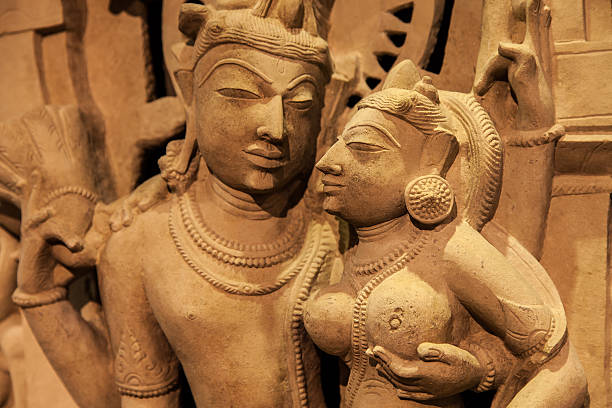
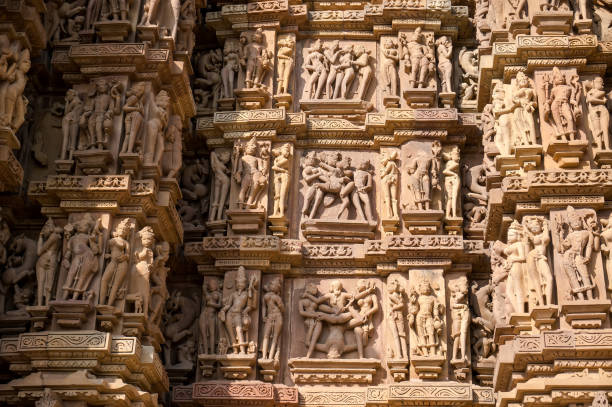
We've also seen Asian paintings of tantric couples playing musical instruments, reading poems, meditating, or engaging in long loving conversations. This isn't necessarily what we think of as sex, let alone tantric sex, in the West.


Nonetheless, this is tantric sex in its purest form: a long pre-orgasmic cultivation of sexual energies in the service of lovemaking. There are a few items worth mentioning.


To begin with, tantric sex is not a positive end in and of itself. It is not a yoga exercise in and of itself.

Tantric sex is a weak activity for purifying the nervous system internationally on its own. The main techniques for this are meditation and pranayama. 

Orthodox bandhas and mudras, siddhasana, and kumbhaka are very useful for stimulating sexual energy upward until any purification has occurred. The sushumna (spinal nerve) and the thousands of nerves in the body experience an increase in ecstatic conductivity as a result. 

Tantric sex, particularly for sexually active yogis and yoginis, may play a role in this. We don't engage in tantric activity to make ourselves more sexually engaged.

If we are not sexually engaged, it is something we should do to develop our yoga. As a result, the aim of this conversation is not to encourage anyone to engage in more tantric sex. 

You're in great shape if you have light to moderate sex and enjoy your advanced yoga activities. Don't engage in romantic escapades just to learn these lessons. This tantric sex lessons are for those who are still sexually involved and are looking for opportunities to incorporate their sexual activities into their yoga practice as a whole.

It may seem to others that putting orgasm on the back burner while honing our capacity to nurture sexual energy relentlessly upward is a bad idea. It can seem like we're tossing the baby out with the bath water. After all, orgasm is the most intense sensation we've ever had. This is a reasonable and reasonable question, and we are correct in asking, "What about orgasm?" “How does it turn out?”

This are not anti-orgasm lectures. The path of Advanced Yoga Practices is, in effect, a path of relaxation and ecstasy. Orgasm is a physiological ecstatic reaction elicited by a certain form of stimulus – sexual stimulation that is biologically directed toward reproduction. 

The joyful reaction in the body that we call "enlightenment" is elicited by a specific form of stimulus – stimulation elicited by advanced yoga activities that is biologically geared toward the birth of our knowledge in unending bliss consciousness and spiritual ecstasy.


Is orgasm sacrificed for enlightenment? 


Enlightenment, on the other hand, is a flowering of ecstasy, an extension of pleasure into an everlasting full bloom in the entire body.

Divine ecstasy, according to Ramakrishna, is like countless yonis (female sex organs) engaged in continuous orgasm in every atom and pore of our flesh.

So, while it may seem at first that we are putting something vital on the back burner, what Advanced Yoga Practices are actually doing is steadily extending our orgasmic reaction into the celestial realms through our purifying and opening nervous system. There, we discover that ecstasy has no bounds in terms of severity or length. It's just a matter of training our nervous systems to reveal what's already inside us.

Much of this is done because of our desire. Every day, we make a new decision about our path.


You may also want to read more about Tantra Yoga here.


To Listen, is To Receive


Shuka, Valmiki, and Narada, for example, all attained spiritual enlightenment through Self-Knowledge. Listening to spiritual teachings and meditating on it can help you achieve that high status. It is necessary to practice according to what has been heard. Self-Knowledge is only possible after that. 

Through listening and meditation, only those who are not drawn to the world's things may achieve Self-Knowledge. 

It is not possible to produce a sweet meal merely by explaining it orally. You must first prepare it before you can consume it. Then and only then does one receive the advantage. The goal of self-study is to maintain a state of (being in) union with oneself, or one's True Nature (Swaroopa). No one becomes a sage simply by donning the renunciate's crimson or saffron robes. What you listen to should be accepted by your mind. 

The mind must be receptive to what it hears. 

The mind's focus should be as smooth and consistent as a fine thin trickle of oil flowing from one pot to another. Because you cannot recall what is written, you must read it again and again. Because of this forgetting, you are unable to realize your union with the Self. 

Everyone relies on the wind to construct their homes. They construct castles in the sky. Everything happens in the world because of the "word." The notion of a tall building is first discussed in great detail, and then the structure is constructed. Only by words can someone who is ignorant become wise. 

How can you listen if you can't hear what's being said? 

It's like trying to educate a buffalo to drink water. The entire amount of water is squandered. This is due to the fact that your attention is fixed on items and does not drift away from them. If it frees itself, the work is over, and you have attained Brahman status. 

Your "Being" should be Brahman at all times. 

Each of the five ingredients is delicately blended with the others. 

They contain the Self (Atman), yet it is distant. Although all of the dwellings are made entirely of dirt, their form and owners differ. 

Similarly, despite the fact that humans are numerous, the Inner-Self in all (God) and the Wind are one. However, there is a force that claims to be "I." That element is untrue. It isn't required to be present. You will experience grief if you isolate yourself and grow proud of it. 

The mind is drawn to sense things and identifies with thoughts, thus listening becomes fruitless (subtle objects). 

Because our attention is drawn to sense-objects, gaining "Knowledge of Brahman" (Brahmavidya) is difficult. 

If you enjoy listening to spiritual teachings, it appears that something is lacking if you do not have the opportunity to do so. Consistently good company affects the mind's temperament. 

Day and night, one should be pondering and reflecting on the spiritual teachings they have received. 

Talk about it and listen to it, but putting the wonderful advice you've heard into practice is even more crucial. 

The act of just listening to the lecture is not very significant. It is necessary to have firsthand experience of what is being suggested and to feel connected to it. If one can achieve this, he will have attained all spiritual capabilities (Siddhis). 

What does it mean to be endowed with spiritual abilities? 

This implies that one naturally obtains all of life's pleasures and conveniences. This happens because he has no desire. Everyone insists on receiving something in exchange for whatever they provide. 

Don't be carried away by the yearning for wealth. You must retain desirelessness in order to be of the "Brahman Nature."


You may also want to read more about Spirituality and Healing here.

Be sure to check out my writings on Religion here.


Reiki Healing - Why Do We Need Reiki Initiations?


Because of properly directed good karma that they have earned in previous incarnations, only a few individuals are granted certain skills of active energy work (healing, for example) and passive energy work (such as clairvoyance) from the start. 


Even tremendous abilities, however, must be deliberately and painstakingly developed via training and practice before they can be reliably used in the real world. 


In addition to the training and practice that are clearly needed, most individuals who wish to develop such talents must practice intensely for many, many years to make themselves resonant for these enormous capabilities. 


Spiritual seekers have faced the great challenge of having so many wonderful abilities resulting from an intimacy with the divine power that not only make life easier in a natural way, but can also be applied in an extremely effective way in supporting their own path to enlightenment and spiritual awakening since the beginning of time. 

However, when a significant portion of one's life is spent honing a few of these skills, there is little time left to apply them to the ultimate objective, spiritual awareness. 


Furthermore, most individuals do not have (or have had) the time to devote to such endeavors in addition to their regular responsibilities. 


Someone has to plow the fields, publish and sell the books, make the bread, and construct the homes as well. 

There aren't enough comfortable caverns in our lovely world's mountains to accommodate as many billions of hermits as there are humans. 


Who would feed them if they spent the whole day meditating and fantasizing about enlightenment? 

In order to develop properly, we must have specific spiritual talents accessible to us in the near term, which can only be awakened after extensive practice and study in solitude. 

This is a difficult situation! The initiations are the key to unlocking this Gordian knot! 

In every spiritual tradition that I am aware of, the appropriate abilities are passed on to students by people who have been trained and qualified, making it easier for them to make significant progress in their personal development in a short period of time while also being able to assist their fellow human beings in overcoming common life problems such as disease. 


Shaktîpatm Hinduism, initiations into mantras such as in the Transcendental Meditation (TM) method, and Kriyâ Yoga are all well-known instances of initiations. 


Certain talents may be essentially awakened in a human being via initiations. 

However, in order to utilize them effectively and meaningfully, some training and expertise are always needed. 

Although initiations may stimulate personal growth, we must constantly deal with our own learning experiences, choices, awareness exercises, experiments in new kinds of conduct, efforts to conquer the ego, and so on. 


Awakening Abilities and Acquiring Abilities are two different types of initiations. 


Initiations may basically allow you to access two distinct kinds of abilities: 


1. It is possible to awaken a potential that resides in every human being. 

Initiation into the Usui System of Natural Healing is one example of this. 

2. A person is practically given a potential that does not exist naturally inside every human being. 

The ability to work with an angel's healing power is an example of this.


You may also want to read more about Reiki Healing here.


Hinduism And Hindu Theology - What Is Asceticism?


In its broadest meaning, this term refers to physical discipline, most often the abandonment of normal society and conventional social life in the pursuit of divine enlightenment and ultimate spiritual freedom (moksha). 

Throughout history, ascetic practice has emphasized many recurring themes. 


Celibacy has been one of the most popular for a number of reasons. 


  • Not only does sexual pleasure utilize the senses to entrap a person, but home and family ties are also regarded as a hindrance to serious spiritual pursuits. 
  • The notion that semen is a man's concentrated essence, and therefore something to be carefully guarded, motivates the focus on celibacy. 
  • Although semen must be spent in order to reproduce, it should not be spilt carelessly since it depletes a man's vitality. 
  • Celibacy is said to provide more vitality, which leads to higher spiritual achievement. 


The practice of tapas, or physical austerity, has long been a defining feature, with the belief that enduring physical suffering not only develops character but also produces spiritual force. 


  • Tapas may take on horrific self-mutilation and mortification forms at times. 
  • Other times, a gentler physical discipline, such as a type of hatha yoga, may be used to prepare the body and mind for long periods of practice. 


In general, ascetics' spiritual growth may take a number of routes, which frequently reflect the talents and preferences of the ascetics who pursue them. 


  • Some ways have emphasized conventional study, some have emphasized worship and devotion, others have emphasized physical austerity, while yet others have emphasized meditation and personal revelation. 
  • Almost often, spiritual instruction takes place under the supervision of a religious preceptor (guru), who is responsible for his students' spiritual growth. 
  • Although there is some debate over how long and how venerable asceticism has been practiced in India, it has a long and venerable history. 
  • The most bold assertion is that the Indian ascetic tradition stems from the Indus Valley civilization's religion. 
  • This assertion is based on an old artifact known as an Indus Valley seal, which depicts a person sitting cross-legged as though in meditation. 
  • Whether one believes this assertion or not, the Vedas, the oldest Hindu texts, provide plenty of evidence of asceticism. 


The Vedas describe renunciants like the vratya, yati, and muni, as well as ascetics who live in the woods. 


  • Indeed, the Aranyakas or "Forest Books," as one layer of the Veda is known, indicates that it was written by such ascetics. 
  • Buddhist and Jain literature, as well as certain later upanishads, clearly indicate that monastic living was firmly established by the fifth century B.C.E. 
  • All of these ascetics, whether Hindu, Buddhist, or Jain, were lumped together under the name shramana, which means “to strive” in Sanskrit. 


The theological conflict between the two main religious paradigms, the Brahmana ideal linked with Vedic religion and the shramana ideal associated with austerity, is well acknowledged. 


  • The Brahmana ideal was based on sacrifice, mastery of complex sacred texts, and hereditary priesthood; it was also so expensive that it almost required royal patronage—all of these factors made it the "establishment religion." These concepts clashed with the shramana ideal, which was renunciant, individualist, and focused on inner experience. 
  • This conflict had been partly resolved by the time of the Dharma Shastras (treatises on religious duty); asceticism had been consigned to the last of the four ashramas (stages of life), that of the Sanyasi. 
  • Even yet, there is still tension since, according to these scriptures, a twice-born man cannot become a Sanyasi until he has met his children's children, which would put him in his late thirties. 
  • These scriptures limit asceticism to twice-born males who have completed their householder duties, but they exclude women and low-caste men. 
  • Needless to say, the real world has never resembled the utopian society depicted in the Dharma Shastras. 


Initiated Hindu ascetics may be classified into many main categories based on their organizational structure. 


  • One distinction is based on the patron god of ascetics; the Shaiva are Shiva worshippers (bhakta), while the Vaishnava worship Vishnu. 
  • The Kapalikas, Kalamukhas, and Pashupatas are Shaiva ascetic groups that have vanished; the Dashanamis and Nathpanthis are the only two Shaiva groups that remain. 

  • The Dashanamis are the most renowned ascetics in the world. 
    • They are said to have been founded by the renowned philosopher Shankaracharya and have a long history of emphasizing study. 

  • Gorakhnath, a miracle-working yogi about whom little is known, is the ancestor of the Nathpanthis. 
    • The Nathpanthis are renowned for emphasizing the physical body's change via yoga. 

  • Vaishnava ascetics are more recently organized, and in northern India, they are divided into four groups (chatuhsampradayi Nagas), each named after the founder of the group:

    • Ramananda for the Ramanandis, 
    • Nimbarka for the Nimbarkis, 
    • Chaitanya for the Madhva Gaudiyas (Brahma Sampraday), and 
    • Vishnuswami for the Vishnuswamis. 


  • Both the Dashanamis and the Vaishnava ascetics have formed bands of warriors known as Nagas ("naked") from at least the sixteenth century, and perhaps much earlier. 
    • These soldier-ascetics were tasked with guarding the other ascetics, as well as acting as long-distance merchants and mercenary warriors. 
    • Although these Naga orders still exist today, they are no longer battle-ready. 

  • The Udasis, who worship the panchayatana ("five-fold"), a grouping of five Hindu deities: Shiva, Vishnu, Durga, Ganesh, and Surya, are another prominent sect. 
    • In terms of religion, the Udasis are in between the Shaivas and the Vaishnavas. 
  • Reform-minded ascetics have formed their own ascetic bands throughout the ages, a process that continues now. 


G. S. Ghurye, Indian Sadhus, 1964; Jadunath Sarkar, A History of the Dasanami Naga Sanyasis, 1958; Padmanabh S. Jaini, “Sramanas: Their Conflict with Brahmanical Society,” in Joseph Elder (ed. ), Chapters in Indian Civilization, 1970; Robert Lewis Gross, The Sadhus of India, 1992; and Peter van der Veer, Gods on Earth, 1988 for more information Also known as panchayatana puja.


You may also want to read more about Hinduism here.

Be sure to check out my writings on religion here.


What is Tantra Yoga?


It's interesting how, as tantra yoga has crept into the culture of our western world, a perception has crystallized. Most people nowadays believe tantra is more about sex – happier sex, more ecstatic sex, more "spiritual sex." As a result, tantra's call has been, "Gender, sex, sex!" Is it possible that we have one-track minds? It's perfectly normal. 

The sex act, especially the intense joy of orgasm, is for most of us the pinnacle experience of our lives. But it's no wonder that we're a sex-obsessed society – generally in favor of it, sometimes against it, and mostly in awe of it. We're both aware that sex connects us to a deeper level of who we are. Sex unites us in marriage, families, and eventually our spiritual lives. So, of course, we are sex-obsessed. It's at the very core of who we are. That is what distinguishes us. We all have a profound urge to forever combine with the pleasure found in this thing called "sex."

We'd be smart to take a limited view of sex in order to solve the ultimate puzzle of it. This is where tantra enters the image.

What if I told you tantra is mostly concerned with yoga, pranayama, bandhas, mudras, and asanas? All of the stuff that we discussed in Advanced Yoga Practices. Real, tantra is mostly concerned with these issues. Yes, it is all about sex, as we have been discussing in the key lessons from the beginning. We haven't avoided the topic of sex in relation to the enlightenment process. 

Enlightenment is impossible to achieve until our sexuality is integrated into the yoga phase – the process of union with our own spiritual selves and the outside world. The position of sexual energy must be discussed when nurturing our nervous system in this direction.

Tantra is a Sanskrit word that means "woven together" or "two fullnesses as one." It's essentially the same as meditation, but with an additional element of intimacy. Tantra understands from the beginning that for liberation to exist, two poles must be ecstatically combined – Father heaven and Mother earth, masculine and feminine powers, Shiva and Shakti, yin and yang – and that these two poles are found within us, in our nervous system. In the key lectures, we've already addressed this from a variety of realistic perspectives.

Tantra yoga is the most comprehensive of all yoga systems, since it views life as two truths that must be brought together in the human nervous system. Mantra yoga, kundalini yoga, hatha yoga, ashtanga (eight-limbed) yoga, and other types of tantra yoga are included. The rituals used in these conventional yoga systems are referred to as tantra yoga's "right-handed" side. 

And there's tantra yoga's "left-handed" side, which is obsessed with infusing absolute happiness awareness into the sensual pleasures of the natural world. The left-handed personality isn't opposed to sensual pleasures. In reality, it makes use of them for spiritual reasons. The left-handed side of yoga is the underbelly, the aspect of the practice that upstanding people are expected to avoid. That is, after all, the conventional viewpoint. That was before tantra became common with the "hip generation." Left-handed tantra is still considered respectable. It is, at least in the West.

Perhaps Westerners have much to lose because they are too engrossed in material life to begin with. Why not incorporate your metaphysical side into your everyday life? Let's have cake and have it too. It screams left-handed tantra all over it.

As a result, in the tantra classes, we'll focus on left-handed tantra as it relates to sexual methods. You'll see that we'll be connecting topics we've already spoken about in the key lessons. Over there, we've done a full work-up on kundalini (“a code word for sex”) and started inducing sexual energy upward into the nervous system with advanced yoga practises like mulabandha, sambhavi, siddhasana, yoni mudra kumbhaka, nauli, kechari, and bastrika. All of these have been incorporated into the twice-daily practice schedule, which will be completed in steps according to our capacity.


Anything we've done so far has been from the ground up, beyond siddhasana, which is systemic perineal stimulation. We'll now descend below siddhasana, so to speak. It is needed. And if we don't get a handle on the massive flows of prana involved in the sex act, we might find ourselves confined spiritually in our nervous system. This does not imply that we must consider the infamous "C" term (celibacy). It does imply that we will suggest certain clever strategies for aligning our sexual practices with our moral goals. In reality, you might be shocked to learn that intellectual spiritual sex is much more exciting than the standard kind of sex that ends with the words "Wham, bam, thank you Ma'am."


You may also want to read more about Tantra Yoga here.


Kundalini Yoga - Aspects, Origin, And Meaning


    What Is Kundalini Yoga?


    Everything and everyone we contact with in life is full with vivid energy. Kundalini Yoga, which wakes you to the force of internal energy, ushered us into a broad spiritual awakening that impacted all area of our life. 


    • Kundalini yoga is intended to improve your consciousness and help you go beyond your ego by awakening this energy. The practice is often referred to as "yoga of awareness."
    • Chanting, singing, breathing exercises, and repeated postures are all part of Kundalini yoga.
    • Its goal is to awaken your Kundalini energy, also known as shakti. This is a spiritual force that is said to reside at the base of your spine.


    Kundalini yoga is derived from kundalini, which is described in Vedantic culture as latent energy at the base of the spine that is awakened through yoga and directed upward via the chakras in the process of spiritual perfection. 

    • Kundalini is a force connected with the divine feminine, according to devotees. 
    • Shaktism and Tantra schools of Hinduism have impacted Kundalini yoga as a yoga school. 
    • It gets its name from an emphasis on kundalini energy awakening via frequent mantra, tantra, yantra, yoga, or meditation practice.


    It's critical to understand what Kundalini is, what it does to your mind, body, and soul, and why it works in order to lead others toward living this high vibrational lifestyle.


    • We will all experience successes, victories, difficulties, and problems throughout our lives. Kundalini teaches us how to respond to life's ups and downs from a more impartial perspective. 
    • This ancient therapeutic practice was the very first yoga ever devised, and its technologies have been scientifically proved to stimulate particular areas of the brain that enhance awareness and produce more balanced control. 
    • This technique aims to strengthen the nervous system on a cellular level and raise your energy awareness via breath, precise movements, and time.


    Origins Of Kundalini Yoga


    Although Kundalini yoga is performed all throughout the globe, no one knows where it originated. 

    The idea of Kundalini energy has been around for millennia, and it was first described around 1,000 B.C. in ancient Vedic writings. 


    • Yogi Bhajan, a Pakistani yoga instructor, is best identified with Kundalini yoga. In the 1960s, he is credited with bringing the technique to Western nations.
    • “Kundalini” is derived from the Sanskrit word “kundal,” which meaning “circle.” 
    • It may also apply to a snake that is coiled. Kundalini energy, according to practitioners, is like that coiled snake: it sleeps at the base of your spine, unaroused.


    Kundalini Yoga Chakras


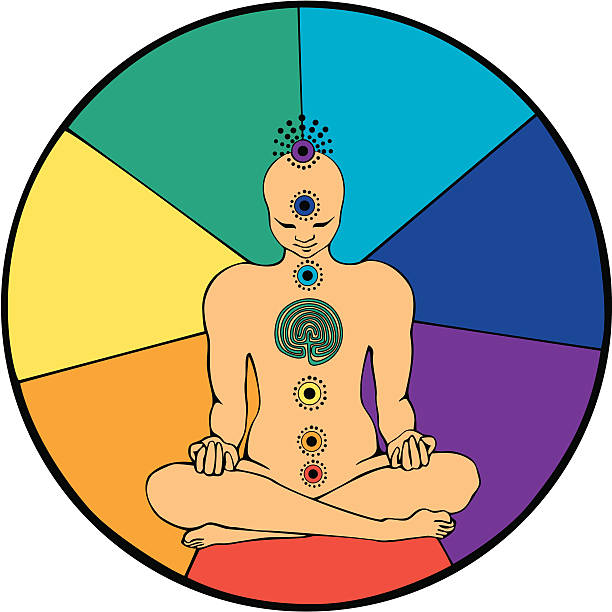
    Kundalini yoga is used to awaken this energy, allowing it to flow up and down your spine via the chakras.


    Chakras are the seven energy centers in your body according to yoga. 


    They are as follows:


    1. heart chakra 
    2. throat chakra 
    3. third eye chakra 
    4. crown chakra 
    5. root chakra 
    6. sacral chakra, 
    7. solar plexus


    Kundalini energy is said to help balance these chakras and contribute to spiritual health as it increases.

    • Kundalini yoga is believed to lead to spiritual enlightenment with consistent practice. It's known as a "Kundalini awakening."


    What Distinguishes It From Other Kinds Of Yoga?


    Kundalini yoga is a higher spiritual practice than other types of yoga.


    • Physical motions are still used, but they aren't the main emphasis. 
    • This is not the same as hatha or vinyasa yoga, which are both based on physical postures.
    • Kundalini yoga is also more precise and repetitious than other forms of yoga. 
    • Unlike other forms of yoga, Kundalini yoga incorporates chanting, singing, motions, and breathing into precise sequences.
    • Breathing, mantras, kriyas, and mudras are also a critical part of the practice.


    The Major Components Of Kundalini Yoga.


    • Chant to begin. 
      • An opening chant, also known as tuning in, starts each class.
    • Warm-up, also known as pranayama. 
      • You'll perform pranayama (breathing exercises) and occasionally motions to extend your spine. 
      • Pranayama is a breathing technique that teaches you how to regulate your breath.
    • Kriya
      • A kriya is a set of postures, breathing exercises, mudras (hand positions), music, and meditation exercises. 
      • Your teacher determines the duration and intensity of the kriya.
    • Relaxation
      • This enables the kriya's benefits to be absorbed by both your body and mind.
    • Meditation
      • Your teacher will lead you through meditation in order to help you develop awareness.
    • Chant till the end. 
      • A concluding chorus concludes the lesson.


    What Does Kundalini Mean?


    Kundalini means "coiled snake" in Sanskrit. 

    • "Circular, annular" is the Sanskrit adjective kundalin. 
    • In the 12th-century Rajatarangini chronicle, it appears as a noun for "a snake" in the meaning of "coiled," as in "producing ringlets." 
    • In the Mahabharata, Kunda is the name of a Naga. 
    • Kunda is a word that meaning "bowl, water-pot." 
    • The Sanskrit feminine word kundali means "ring, bracelet, coil of a rope," and it is the name of a "serpent-like" Shakti in Tantrism dating back to the 11th century, as recorded in the Saradatilaka.


    What has come to be known as "Kundalini yoga" in the twentieth century, after a technical word exclusive to this school, is really a synthesis of Bhakti Yoga devotion and chanting, Raja Yoga meditation, and Shakti Yoga strength and energy manifestation. 

    • It may, however, incorporate haha yoga methods like bandha, pranayama, and asana, Patanjali's kriya yoga, which includes self-discipline, self-study, devotion to God, dhyana, and samadhi, and tantric visualization and meditation techniques called as samsketas in laya yoga.
    • Laya may refer to yoga methods or the impact of "absorption" of the individual into the cosmic, as in Raja yoga. 
    • The Yoga-Tattva-Upanishad, the Varaha Upanishad, the Goraksha Paddhati, the Amaraugha Prabodha, and the Dattatreya Yoga Shastra all mention laya yoga, which comes from the Sanskrit word laya, which means "dissolution," "extinction," or "absorption." 


    Due to a lengthy history of syncretism, the precise boundaries between traditional yoga systems are sometimes unclear. 

    • As a result, many of the earliest texts on Kundalini originate from tantric and haha traditions books, such as the Hatha Yoga Pradipika and the Shiva Samhita. 
    • To attain kundalini awakening, the trained yogi practices "the four yogas," according to the Shiva Samhita, whereas inferior pupils may rely only on one technique: 
    • "Hatha Yoga and Mantra Yoga are two types of yoga. 
    • The third is Laya Yoga. Raja Yoga is the fourth. It is devoid of dualism."

    It was formerly thought that holy energy was generated at the base of the spine in early Eastern religion. 

    • Kundalini helps to “uncoil the snake” and reconnect us to this holy force within.
    • Kundalini was once a study of energy physics and spiritual philosophy, and royalty would meet with Kundalini Masters to hear the ancient scientific teachings of Kundalini as well as spiritual visions. 
    • Harbhajan Singh Khalsa Yogiji, often known as Yogi Bhajan, is credited for introducing Kundalini to Western society.


    You may also want to read more about Kundalini Yoga here.