Showing posts sorted by date for query Magh. Sort by relevance Show all posts

Hinduism - Who Is Goddess Yellamma In The Hindu Pantheon?


Presiding deity of the sanctuary atop Yellama hill in Saundatti, Karnataka's Belgaum district.

Yellama's temple is famous for being a historic center for devadasis ("[female] servants of the Lord"), a class of women held in temples as singers and dancers in the service of the temple's presiding goddess, to whom they were traditionally considered "married." Both boys and girls may be consecrated in Yellama's temple.

Although the devadasi tradition has been associated with common prostitution for the past two centuries, it was far more common in earlier times for a devadasi to live with a single man for the rest of her life, despite the fact that she could not marry him because she was considered dedicated to the deity.

This devotion is sometimes done in response to a demand from the goddess herself, which is revealed via possession; in other situations, the parents undertake it in the hopes of gaining some tangible benefit, most notably recovery from sickness.

Yellamma is linked to fire, as well as causing (and maybe treating) skin disorders, which can be seen as a metaphor for "burning." According to the old paradigm, devadasis possessed a distinct social status and unique legal privileges, including the right to family inheritance and the ability to conduct religious ceremonies that were not available to other women.

These privileged powers vanished with the banning of the devadasi system, which was partially carried out by the British and was finally carried out in post-independence India.

Although such dedications continue to occur, they are often used as a cover for procuring the girls, who are then transferred to brothels in Bombay, Pune, and other central Indian towns.

Most of the girls come from very impoverished families, and their devotion to Yellamma is a method for them to avoid having to pay for a wedding, which is a big expenditure in modern Indian culture.

The dedications are said to be common and take place on the full moon in the lunar month of Magh (January–February), although the laws prohibiting them are seldom enforced due to secrecy.

See Frederique Apffel Marglin's Wives of the God-King, 1985, for a more in-depth look at the devadasi system at the Jagannath temple in Puri.


You may also want to read more about Hinduism here.

Be sure to check out my writings on religion here.


Hinduism - What Is A Hindu Year In The Hindu Lunar Calendar?


Both the solar and lunar calendars are used to establish the Hindu ritual year.

There are two indigenous Hindu solar year estimates, both of which feature twelve solar months, in addition to the Gregorian calendar and the common era.

These months correlate to the twelve zodiac signs in northern India, and they vary as the sun goes through them.

The year starts when the sun enters Aries, as it does in the Western zodiac, albeit in Indian astrology, this shift occurs around April 14, rather than March 21, as it does in Euro-American astrology.

A similar solar calendar exists in southern India, with names derived from the names of certain nakshatras or lunar asterisms.

Apart from the solar months, the solar year is split into two parts depending on the sun's movement: the Uttarayana for when the sun is travelling north and the Dakshinayana for when the sun is going south.

On Makara Sankranti, January 14, the sun starts its northward trip, which is considered the more auspicious period; six months later, on Karka Sankranti, July 14, the sun begins its southbound journey, which is considered the less auspicious time.


The lunar calendar, which has twelve lunar months, is far more important for religious purposes:


  1. Chaitra (March–April), 
  2. Baisakh (April–May), 
  3. Jyeshth (May–June), 
  4. Ashadh (June–July), 
  5. Shravan (July–August), 
  6. Bhadrapada (August–September), 
  7. Ashvin (September–October), 
  8. Kartik (October–November), 
  9. Margashirsha (November–December), 
  10. Paush (December–January), 
  11. Magh (January–February), 


The calendar in northern India normally starts on the first day of the brilliant half of Chaitra, and ends on the first day of the dark half of the same month.

The festivals designated by this lunar calendar happen at various times each year in relation to the solar calendar since these lunar months are based on the phases of the moon (ending with the full moon in northern India and the new moon in southern India).

Because the twelve lunar months take around 354 solar days to complete, each lunar year starts eleven days sooner than the previous one.

This mismatch is remedied every 212 years by the insertion of an additional lunar month, known as the intercalary month, which brings the solar and lunar calendars into broad agreement.

The intercalary month is added to each lunar month during which the sun does not enter a new zodiac sign, allowing it to fall in any month of the year.

Although the solar calendar is less significant in daily life, it aids in maintaining the basic correlation between the lunar calendar and the periodic festivals linked with it.

The three primary seasons (hot, monsoon, and cool) have strong linkages with the festival calendar, at least in northern India.

The chilly season, from October and February, is the most ritually busy period; in many locations, this is also the time after the harvest, when many people have more time and money to devote to religious observances.

Many ceremonies are related with heat in the hot season, but the rainy season, as a period of hazard, is often associated with rites of protection.


You may also want to read more about Hinduism here.

Be sure to check out my writings on religion here.


Hinduism - What Is Vasant Panchami?


What Is The Significance Of Vasant Panchami In The Hindu Calendar?

Festival occurring on the fifth day (panchami) of the bright (waxing) half of the lunar month of Magh(January–February), recognized as the first day of spring (vasant).


This day is considered dedicated to the goddess Saraswati, patron Goddess of the arts, music, and learning.

In her honor, celebrants perform melodies in musical modes (ragas) connected with spring.


Given Saraswati’s link with study, today is also historically reckoned as the day on which young children should begin their studies.

Vasant Panchami is also linked to Kama, the deity of love, since the arrival of spring heralds the return of blooming plants, along with their aromas and colors.

Kama is said to have tried to put sensual desire in the deity Shiva's heart by first bringing spring to Mount Kailas, where Shiva is meditating, and then shooting Shiva with one of his flower arrows.

Shiva emerges from his meditation, gets enraged with Kama, and uses a flash of flame from his third eye to turn him to ashes.

Despite his destruction, Kama succeeds in the end—after being awakened, Shiva becomes aware of Parvati's austere practice and finally marries her.


~Kiran Atma


You may also want to read more about Hinduism here.

Be sure to check out my writings on religion here.

Shattila Ekadashi


Shattila Ekadashi is a Hindu festival celebrated on the eighth day of the ninth lunar month.

The eleventh day (ekadashi) of the dark (waning) half of the lunar month of Magh (January–February).

This is devoted to the worship of the deity Vishnu, as are all eleventh-day observances.

Most Hindu holidays have mandated ceremonies, which generally include fasting (upavasa) and devotion, and frequently promise particular rewards if performed faithfully.

On this day, an image of Vishnu should be bathed in the five auspicious substances (milk, curds, honey, ghee, and sugar water), with a sesame seed (tila) placed in each.

Sesame seed-containing foods should also be consumed.

During the night, one should sleep in front of the deity's picture.

The name of this ekadashi stems from the six (sat) different ways that the sesame seed has been employed.

Following this event religiously is thought to result in rebirth in Vishnu's kingdom, Vaikuntha.

Vasanta


 Vasanta (spring) in the lunar months of Chaitra and Baisakh; Grishma (hot season) in Jyeshth and Ashadh; Varsha (rains) in Shravan and Bhadrapada; Sharad (fall) in Ashvin and Kartik; Hemanta (winter) in Margashirsha and Paush; and Shishira (late winter) in Magh and Phalgun, according to the most traditional enu meration.

In actuality, at least in northern India, there are three primary seasons: the hot season (April–June), the monsoon (July–September), and the cold season (October–March).

Because they are ultimately controlled by bigger climatic occurrences, all of these seasons are approximate.

The sun bakes the northern Indian plains throughout the hot season, finally putting in action air currents that pull moist air north from the Indian ocean; the subsequent monsoons bring relief from the heat and rain for the crops.

The temperature then gradually grows colder until January, when it progressively becomes hotter until the hot season resumes.

The monsoon comes at various times in different areas of the country—earlier in the south, later in the north—and monsoons may be erratic or even non-existent at times.

Each of these three sea sons has strong ties to certain festivals.

The hot season is characterized by steadily rising temperatures, and many of the festivals celebrated at this period include Holi, Navaratri, Ram Navami, Shitalashtami, and Ganga Dashahara.

Despite the fact that the growing heat may make living tough, it is typically seen as a good time.

Physical and ritual dangers abound during the rainy season.

Venomous creatures such as snakes and scorpions are forced out of their burrows by the rapid flood of rain, and their quest for new homes sometimes puts them into touch with humans.

On a bacteriological level, rainwater runoff often results in sewage pollution of water sources, as well as an increase in illness and mortality due to gastrointestinal and other illnesses.

The gods are said to be sleeping throughout part of the rainy season, making them less accessible to defend their devotees (bhakta).

Simultaneously, the arrival of the rains is eagerly awaited, since moisture is required for agricultural growth.

As a result, although this is a period of immense fertility and plenty, it is also a time of peril, and several of the festivals, such as Nag Panchami, Raksha Bandhan, Ganesh Chaturthi, Anant Chaturdashi, and the Pitrpaksha, are rituals of protection.

Other celebrations, such as the Shravan festival and Janmashtami, are associated with water or rain.

The gods arise from their slumber during the chilly season, and rain-fed crops are ready for harvest.

This is the most ritually busy season of the year, and it is considered lucky.

The autumn Navaratri, which culminates in the Dussehra (Vijaya Dashami) celebration, is followed by Diwali, Karva Chauth, Kartik Purnima, Makara Sankranti, and Shivaratri.

Holi, the year's last big celebration, ushers in the unofficial start of the hot season.

The lunar year therefore mirrors the cycle of the universe, which is subject to degeneration and periodic regeneration, by concluding with Holi, a celebration celebrating license, excess, and the dissolution of all social boundaries, followed by a sudden reestablishment of propriety and social order.

Sakata Chauth


Sakata Chauth  is a Hindu festival celebrated in Sakata, India.

The festival is held on the fourth day (chauth) of the dark (waning) half of the lunar month of Magh (January–February), which marks Ganesh's birthday.

Those who participate in this celebration are said to get Ganesh's blessings, which include knowledge, freedom from difficulties, and wealth.

Ganesh considers the fourth day of the lunar fortnight to be holy, and his devotees may take vows on this day (bhakta).

Ganesh Chaturthi, which comes on the fourth day of the bright (waxing) half of the lunar month Bhadrapada (August–September), is the most important Ganesh festival of the year.

Hinduism - What Is The Ravidas Jayanti?


Festival commemorating the birth of medieval bhakti poet-saint Ravidas, who was born near Benares, on the full moon in the lunar month of Magh (January–February).

Ravidas had a poor social position due to his birth into the untouchable caste of leather workers (chamar).

His poetry is written in a per sonal voice, and it contrasts his humble station with the respect and acclaim he achieved through his dedication to God.

Ravidas is regarded as a role model by many members of the lower classes today, and his birthday is commemorated with zeal.


You may also want to read more about Hinduism here.

Be sure to check out my writings on religion here.


Hinduism - When Is The Mauni Amavasya In The Hindu Calendar?


Mauni Amavasya takes place on the new moon day (amavasya) in the lunar month of Magh (January–February).

The day is spent in quiet by those who observe this holiday.

Silence is viewed as one of the religious disciplines that helps to improve spiritual awareness.

The term mauni (speech less) is derived from the word muni (sage).

Bathing (snana) in the Ganges (or another holy river) is considered meritorious throughout the full month of Magh.

Bathing on the new moon's day has a higher level of holiness.

The city of Allahabad, at the confluence of the Ganges and the Yamuna Rivers, is a well-known location for this ritual.


You may also want to read more about Hinduism here.

Be sure to check out my writings on religion here.


Hinduism - When Is The Month Of Magh In The Hindu Calendar?


Magh is the eleventh month of the lunar year, generally occurring between January and February, according to the lunar calendar, which is used to calculate most Hindu religious events.

The Magh Mela, a month-long bathing (snana) celebration held at the confluence of the Ganges and Yamuna rivers in Allahabad, takes place throughout the month of Magh.

Sakata Chauth, Shattila Ekadashi, Mauni Amavasya, Vasant Panchami, Bhishma Ashtami, Jaya Ekadashi, Ravidas Jayanti, and Makara Sankranti are the other prominent festivals in Magh.

During Magh, southern India celebrates Pongal and the Float Festival.


You may also want to read more about Hinduism here.

Be sure to check out my writings on religion here.


Hinduism - What Is The Magh Mela Festival?


Magh Mela is a festival in India.

In the city of Allahabad, a religious festival is held every year during the lunar month of Magh (January–February).

Magh is one of the months in the Hindu festival calendar when bathing (snana) in holy rivers is highly valued.

This is especially noteworthy since Allahabad is located at the confluence of two holy rivers, the Ganges and the Yamuna.

Pilgrims put up an encampment near the confluence during this month, which turns into a vibrant religious center.

Pilgrims follow a stringent and disciplined religious life throughout their stay.

A morning bath, followed by gift-giving (dana) and prayer; a limited diet; and nights spent singing hymns (kirtan) and listening to religious talks are all part of the routine.

Some pilgrims even take a stringent kalpavas vow to stay for the whole month, which includes a strict austere lifestyle.

This celebration attracts around a million pilgrims.

Attendance grows every twelfth year, when the Magh Mela becomes the Allahabad Kumbha Mela.

In 1989, an estimated fifteen million pilgrims visited on just one day, with millions more arriving throughout the month.


You may also want to read more about Hinduism here.

Be sure to check out my writings on religion here.


Hinduism - What Is Kalpavas? Who Are The Kalpavasis?


Kalpavas (meaning "dwelling for a kalpa") is a Sanskrit word that means "residence for a kalpa." During the annual Magh Mela event in Allahabad during the lunar month of Magh (January–February), a strict religious vow is made.

The confluence of two holy rivers, the Ganges and the Yamuna, is where Allahabad is located.

The fundamental religious rite of the celebration is bathing (snana) at this point.


Although most visitors only remain for a few days during the festival, kalpavasis, or persons who have taken the kalpavas vow, stay for the full month.

Kalpavasis also promise to follow a rigorous ascetic lifestyle that includes daily baths in the Ganges, a limited diet, specific attire and worship, and participation at religious meetings known as satsang.

The ascetics from all over South Asia who come to bathe in the hallowed waters are the main players in the Kumbha Mela.

According to legend, the great philosopher Shankaracharya founded the Kumbha Mela to encourage regular meetings of educated and holy men as a way to reinforce, preserve, and disseminate Hindu religious ideas.


Kalpavasis: The Spiritual Heart of the Kumbh Mela


The Kumbh Mela, a colossal gathering of Hindu pilgrims, is renowned for its vibrant spectacle and profound spiritual significance. At the heart of this mega-event reside the Kalpavasis, a unique group of ascetics and devotees who embody the essence of spiritual dedication. The term "Kalpavasis" translates to "dwellers of the Kalpa," referring to the immense cycles of time in Hindu cosmology. These individuals immerse themselves in a rigorous spiritual retreat during the Kumbh Mela, renouncing worldly comforts and dedicating themselves entirely to divine pursuits.

Kalpavasis exemplify the highest ideals of Hindu spirituality, characterized by unwavering devotion and rigorous self-discipline. They embrace a life of austerity, often residing in simple shelters within the Kumbh Mela grounds. Their daily routine involves a strict regimen of spiritual practices, including early morning dips in the sacred river, hours of meditation, chanting of mantras, and rigorous fasting. This austere lifestyle is aimed at purifying the mind and body, culminating in the ultimate goal of spiritual enlightenment and liberation from the cycle of birth and death.


Beyond their individual practices, Kalpavasis play a crucial role in fostering a strong sense of community within the Kumbh Mela. They often live in small groups, sharing resources and engaging in collective spiritual practices. This communal living fosters a supportive environment for spiritual growth and provides a powerful example of the transformative power of collective devotion.

The presence of Kalpavasis at the Kumbh Mela is of immense significance. They serve as living embodiments of Hindu ideals, inspiring millions of pilgrims with their unwavering devotion and selfless service. Many seek their blessings and guidance, considering them to be conduits of divine wisdom. Moreover, Kalpavasis play a vital role in preserving and transmitting the rich tapestry of Hindu traditions and values across generations.


Kalpavasis are an integral part of the Kumbh Mela, embodying the very essence of this extraordinary spiritual gathering. Their unwavering devotion, rigorous practices, and selfless service serve as an inspiration to millions, reminding us of the timeless values of renunciation, self-discipline, and the pursuit of spiritual enlightenment.


You may also want to read more about Hinduism here.

You can find my latest book series on Hinduism here:


Be sure to check out my writings on religion here.


Hinduism - What Is Ekadashi Jaya?


The eleventh day (ekadashi) of the brilliant (waxing) half of the lunar month of Magh (January–February) is the festival.

This festival, like other eleventh-day observances, is devoted to the worship of Vishnu, particularly in his avatar as Krishna on this day.

Most Hindu holidays have specified rituals, which generally include fasting (upavasa) and prayer, and frequently promise particular rewards for loyal performance: for example, properly following the "jaya," or "victory," festival is claimed to assure that one's intended objective would be achieved.


You may also want to read more about Hinduism here.

Be sure to check out my writings on religion here.


Hinduism - What Is The Float Festival At Madurai's Meenakshi Temple?


On the full moon in the lunar month of Magh (January–February), the city of Madurai in the southern Indian state of Tamil Nadu has a festival. 

This is King Tirumalai Nayak's (r. 1623–1659) birthday, during whose reign substantial portions of Madurai's Minakshi Temple were constructed. 

The goddess Minakshi and her consort Sundareshvara (a Shiva epithet) are transported in procession to an artificial lake east of Madurai, where they are placed on lavishly painted floats and dragged back and forth over the lake's waters. 


You may also want to read more about Hinduism here.

Be sure to check out my writings on religion here.


Hinduism - What Is The Hindu Festival Calendar?


Because just a few Hindu holidays are observed by all Hindus, maintaining an unified festival calendar is difficult. 

The same opposing forces that drive Hindu life also influence festival celebrations. 


  • On the one hand, there are substantial geographical disparities in festival celebrations, and on the other hand, there are huge sectarian distinctions. 
  • Some sectarian holidays are observed only in specific localities, while others are observed across the country. 
  • While most people are aware of most festivals because they are public holidays or are recorded on the calendar, significantly fewer individuals celebrate them as religious holidays. 
  • Finally, certain holidays are so important that they are observed by practically everyone, albeit some people will observe them with significantly more vigor. 
  • Although the Goddess festival known as Navaratri in the autumn is observed throughout the nation, it is observed with special zeal in Bengal, where the religion of the Mother Goddess is greatly revered. 


With these factors in mind, the lunar year's festival calendar is shown below, with the holidays listed in chronological sequence throughout the lunar months. 


The goal of this item is just to set out the calendar of these festivals throughout the year; separate entries for the lunar months and each festival provide more information. 


• Spring Navaratri, Ram Navami, Kamada Ekadashi, Hanuman Jayanti, Chittirai. 

• Chaitra (March–April) Papamochani Ekadashi, Spring Navaratri, Ram Navami, Kamada Ekadashi, Hanuman Jayanti, Chittirai. 

• Shitalashtami, Baruthani Ekadashi, Akshaya Trtiya, Parashuram Jayanti, Narsingh Jayanti, Baisakhi, Mohini Ekadashi, Buddha Purnima (April–May) Shitalashtami, Baruthani Ekadashi, Akshaya Trtiya, Parashuram Jayanti, Narsingh Jayanti, Baisakhi, Mohini Ekad

 • Achala Ekadashi, Savitri Puja, Ganga Dashahara, Nirjala Ekadashi (May–June) 

 • Yogini Ekadashi, Rath Yatra, Devshayani Ekadashi, Guru Purnima, Chaturmas Vrat (June–July)

 • Nag Panchami, Kamika Ekadashi, Tulsidas Jayanti, Putrada Ekadashi, Raksha Bandhan, Shravan Vrat (July–August) Nag Panchami, Kamika Ekadashi, Tulsidas Jayanti, Putrada Ekadashi, Raksha Bandhan, Shravan Vrat (July–August)

 • Kajari Teej (Teej), Bahula Chauth, Janmashtami, Radhashtami, Aja Ekadashi, Hartalika Teej (Teej), Ganesh Chaturthi, Rishi Panchami, Onam, Parivartini Ekadashi, Anant Chaturdashi (August–September) • Pitrpaksha, Indira Ekadashi, Fall Navaratri, Dussehra (Vijaya Dashami), Papankusha Ekadashi, Valmiki Jayanti (September–October)

 • Kartik Purnima (October–November) Karva Chauth, Rambha Ekadashi, Narak Chaturdashi, Diwali, Govardhan Puja (Annakut), Devotthayan Ekadashi, Tulsi Vivah, Govardhan Puja (Annakut), Devotthayan Ekadashi, Tulsi Vivah, Kartik Purnima

 • Bhairava Jayanti, Utpanna Ekadashi, Mokshada Ekadashi (November–December). 

 • Saphala Ekadashi, Putrada Ekadashi (December–January). 

Sakata Chauth, Shattila Ekadashi, Mauni Amavasya, Vasant Panchami, Bhishma Ashtami, Jaya Ekadashi, Ravidas Jayanti, Pongal, Magh Mela, Float Festival 

 • Magh (January–February) Sakata Chauth, Shattila Ekadashi, Mauni Amavasya, Vasant Panchami, Bhishma Ashtami, Jaya Ekadashi 

 • Janaki Navami, Vijaya Ekadashi, Shivaratri, Amalaki Ekadashi, Holi (February–March) The fact that the lunar year starts on the first day of the bright (waxing) half of the lunar month of Chaitra complicates the festival calendar even further. 


This presents an odd scenario since lunar months, at least in northern India, conclude on the full moon, making the declining moon's two weeks the first half of the lunar month. 

In Chaitra, the waning fortnight occurs at the end of the lunar year, followed by the waxing fortnight, which occurs in the first fortnight of the next year. 

As a result, Chaitra is both the beginning and final month of the lunar calendar. 


You may also want to read more about Hinduism here.

Be sure to check out my writings on religion here.


Hinduism - What Is An Ekadashi? What Are The Different Ekadashis?


The Hindu religious calendar is based on the lunar calendar, which divides the year into twelve lunar months, each split evenly into "dark" (waning) and "bright" (waxing) halves. 

The eleventh day of the lunar month, in both the waning and waxing halves, is known as Ekadashi. 

During each half of the lunar cycle, some days are designated as holy to certain gods and goddesses, and these are days for special worship. 

The deity Vishnu considers the ekadashi, or eleventh day, of each lunar month to be holy. 

With the exception of one, each of the twenty-four ekadashis has its own name, charter story, mandated ceremonies, and expected outcome. 

Each of these twenty-four festival days is observed by pious Vaishnavas. 


The ekadashis are: 


  1. Papamochani Ekadashi and Kamada Ekadashi during Chaitra, 
  2. Baruthani Ekadashi and Mohini Ekadashi during Baisakh, 
  3. Achala Ekadashi and Nirjala Ekadashi during Jyeshth, 
  4. Yogini Ekadashi and Devshayani Ekadashi during Ashadh, 
  5. Kamika Ekadashi and Putrada Ekadashi during Kamika 
  6. During the lunar month of Bhadrapada, Aja Ekadashi and Parivartini Ekadashi, 
  7. Indira Ekadashi and Papankusha Ekadashi, 
  8. Rambha Ekadashi and Devotthayan Ekadashi, 
  9. Utpanna Ekadashi and Mokshada Ekadashi, 
  10. Paush Ekadashi and Putrada Ekadashi, 
  11. Magh Ekadashi and Vijaya Ekad 


Some of these ekadashis are more significant to the general public than others, notably the Devshayani and Devotthayan Ekadashis, which commemorate Vishnu's "sleep" during the chaturmas period during the rainy season. 

Putrada ("son-giving") Ekadashi is the only ekadashi that appears twice. 


You may also want to read more about Hinduism here.

Be sure to check out my writings on religion here.


Hinduism - What Is Bijak?


    Bijak means "inventory." 


    The Adigranth and the manuscripts of the religious institution Dadupanth include the other two major collections of poetry attributed to the poet-saint Kabir (mid-15th century?). 


    • Kabir is the most well-known of the sants, a group of poet-saints from central and northern India who share several concepts, including a focus on individualized, interior religion leading to a personal experience of the divine, a dislike for external ritual, particularly image worship, faith in the power of the divine Name, and a tendency to disregard traditional caste distinctions. 
    • In terms of established religious rituals and authority, Kabir is the most iconoclastic of all the sants. 
    • He always stresses the need of personal seeking and fulfillment. 


    What Is The Bijak?


    The Bijak is the scripture of the Kabirpanth, a religious group claiming to be Kabir's followers, which is noteworthy given the nature of Kabir's message. 


    • Certainly, the idea of declaring Kabir the founder of anything, or of his words acquiring the authority of a scripture, would have been rejected by him. 
    • The Bijak includes a variety of poems, including brief epigrams that have become proverbial wisdom, lengthier chaupai stanzas, and shorter two-line poetry (doha). 
    • The Bijak has linguistic characteristics that place it in the eastern portion of the Hindi language area, thus its popular moniker of "eastern" recension. 


    NOTE: Linda Hess and Shukdev Singh (trans. ), The Bijak of Kabir, 1983, contains translations of the text itself.


    Kabir Bijak Pdf 


    Kabir Bijak Pdf - In English


    Kabir Bijak Pdf - In Hindi

    Frequently Asked Questions:


    What is Bijak according to Kabir?

    A document containing holy writings is referred to as a bijak. It is also one of the oldest important writings in contemporary Hindi. According to Kabir, the True God is with the individual who is following the path of justice, views every living thing as his own self, and maintains a passive detachment from worldly matters.


    How many parts are there in Bijak?

    All renditions of the Bijak include a fourth portion that contains other folk song types in addition to the three major sections known as Ramaini, Sabda, and Sakhi.


    What are the followers of Kabir called? Name the three main sections of the Bijak?

    The Bijak is divided into four sections: Ramain, Shabda, Skh, and another segment with other folk music.


    What is Bijak?

    The sacred text for adherents of the Kabirpanthi faith, Bijak is the most well-known of the Kabir's collections. There are also other folk tunes in it. One of the first important texts in contemporary Bagheli is the Bijak.


    Kabir worships which God?

    He adored the Nirguna form of God, whom he refers to by several names, including Rama, Allah, Hari, Sain, and Sahib. Thus, Kabir is the subject of all the claims.


    What is Bijak in history?

    The word "Bijak" refers to a book that contains religious passages. Kabir Das was an Indian mystic poet and saint who lived in the 15th century. His poetry may be found in the Sikhism holy book Guru Granth Sahib and his works had an impact on the Bhakti movement in Hinduism.


    What does the Bijak mention as two main teachings of Kabir?

    (1) He stressed the word "Bhakti." (2) According to him, only true love and devotion to God, which he termed Bhakti, could free a person from the cycle of life and death and bring them closer to God.


    What were the major four teachings of Saint Kabir?

    rejection of the great religions. criticism of all manifestations of Brahmanical Hinduism and Islam's exterior worship. criticism of the caste system and the priesthood classes. belief in a supreme being without form.


    What was Kabir's followers known as?

    Its Kabir panthis, or members, number in in the neighborhood of 9.6 million. Up from 843,171 in the 1901 census, they are distributed across north and central India as well as abroad with the Indian diaspora.


    What is Bijak? how it is divided?

    Bijak: A bijak is a collection of Kabir's poetry. It is divided into three major portions, Sakhi, Ramaini, and Shabda.


    Who wrote the Bijak?

    For the Kabir Panthis, the holy text known as Bijak was written by Kabir Das. Dohas and poetry of Kabir made up the majority of bijak.


    What is the meaning of ultimate reality concept of Kabir?

    By using a variety of traditions, including those from Islam, Kabir portrayed the "Ultimate Reality," depicting it as Allah, Khuda, Hazrat, and Pir. The names Alakh, Nirakar, Brahmana, and Atman were all adopted from the Vedantic traditions. outline of a heart


    What is God according to Sant Kabir?

    According to Sant Kabir, the genuine God is with the one who is on the road of righteousness, loves all living things as his own, and is uninvolved in the events of this world.


    What was the theme of Kabir's illusion and reality?

    A typical human is caught in the struggle between illusion and reality. The One Inexpressible God, the One and Only Truth, is manifestly incomprehensible. In this stanza, Kabir asserts that the only way to break free from the traps of illusion is to become conscious and govern one's affairs with awareness.


    Where is Kabir buried?

    In January 1518, which is known as Magh Shukl Ekadashi in Hindu tradition, the enlightened teacher Kabir departed his body in Maghar. This was followed by Vikram Samvat 1575. He was equally adored by Muslims and Hindus, and after his passing, each religion constructed a mazaar (tomb) and a samadhi in his honor.


    Why was Kabir abandoned?

    His mother was said to have been a Brahman who became pregnant after visiting a Hindu temple, according to one version. She left Kabir behind since she wasn't married, and a Muslim weaver later discovered and adopted him.


    What was Kabir's poetry influenced by?

    Though he was critical of certain parts of both religions, Kabir's poetry incorporates elements of both Islam and Hinduism. The Adi Granth, a collection of Sikh texts, contains some of his poems. His mystical poetry are rooted on the specifics and worldly elements of daily existence.


    Why Kabir Doha is famous?

    Songs known as padas, rhymed couplets known as dohas, words of wisdom known as shabd, and "witnesses" known as sakhis are among Kabir's works. Kabir did not adhere to the practices of idol worship or the caste system. His lyrics are straightforward and easy to grasp, and his ideology is founded on total devotion to one God.


    What is the contribution of Kabir to Bhakti movement?

    Kabir Das made an effort to harmonize the many faiths by presenting a universal path that all people might follow. He asserts that there is a connection between the two spiritual laws and every life (Jivatma and Paramatma).


    References And Further Reading:


    1. Grierson, George A. Review of The BÄ«jak of KabÄ«r, by Ahmad Shah. The Journal of the Royal Asiatic Society of Great Britain and Ireland, 1918, 151–60. http://www.jstor.org/stable/25209368.
    2. Meena, Pooran Lal. “THE ANCIENT REMAINS ON THE BIJAK-KIPAHADI ‘THE GREAT CENTRE OF BUDDHISM.’” Proceedings of the Indian History Congress 77 (2016): 928–32. https://www.jstor.org/stable/26552725.
    3. Gold, Daniel. History of Religions 43, no. 1 (2003): 80–81. https://doi.org/10.1086/381332.
    4. VAUDEVILLE, CHARLOTTE. “KABĪR’S LANGUAGE AND LANGUAGES, HINDUĪ AS THE LANGUAGE OF NON-CONFORMITY.” Indo-Iranian Journal 33, no. 4 (1990): 259–66. http://www.jstor.org/stable/24655578.
    5. Ranjan, Purnendu. “HISTORICAL EVIDENCE FOR THE STUDY OF KABIRPANTH.” Proceedings of the Indian History Congress 68 (2007): 1041–47. http://www.jstor.org/stable/44147909.
    6. Singh, R.P. “Kabir: The Articulator Par Excellence of Indigenous Indian Modernity.” Social Scientist 47, no. 5/6 (2019): 71–78. https://www.jstor.org/stable/26786189.
    7. Kalyani, Kalyani. “Tathagata Buddha Songs: Buddhism as Religion and Cultural-Resistance Among Dalit Women Singers of Uttar Pradesh.” CASTE: A Global Journal on Social Exclusion 1, no. 2 (2020): 51–62. https://www.jstor.org/stable/48643564.
    8. Cort, John. Review of WILL THE REAL KABIR PLEASE STAND UP?, by LINDA HESS and SUKHDEV SINGH. Journal of South Asian Literature 20, no. 1 (1985): 249–50. http://www.jstor.org/stable/40872765.
    9. Hess, Linda, and Sukhdev Singh. The Bijak of Kabir. Motilal Banarsidass, 2015.
    10. The Bijak of Kabir. Oxford University Press, USA, 2002.
    11. Lorenzen, David N. Kabir legends and Ananta-das's Kabir Parachai. SUNY Press, 1991.
    12. The Bijak of Kabir. A. Shah, 1917.
    13. Lorenzen, David N. "Traditions of non-caste Hinduism: the Kabir Panth." Contributions to Indian Sociology 21, no. 2 (1987): 263-283.
    14. Grierson, George A. "The BÄ«jak of KabÄ«r-The Bijak of Kabir. Edited by the RevAhmad Shah. Cawnpore, 1911.-The Bijak of Kabir. Translated into English by the RevAhmad Shah, according to his edited Hindi text published in 1911. Hamirpur, 1917." Journal of the Royal Asiatic Society 50, no. 1 (1918): 151-160.
    15. Lorenzen, David N. "Dissent in Kabir and the Kabir Panth." Devotion and Dissent in Indian History (2014): 169-187.

    You may also want to read more about Hinduism here.

    Be sure to check out my writings on religion here.


    Hinduism - What Is Bhishma Ashtami?


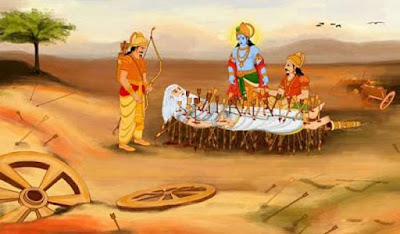
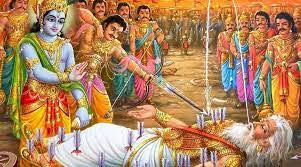
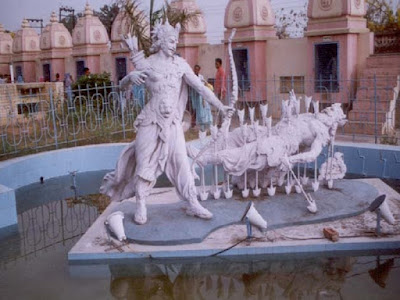
    The death of Bhishma is commemorated on the eighth day (ashtami) of the bright, or waxing, half of the lunar month Magh (January–February). 


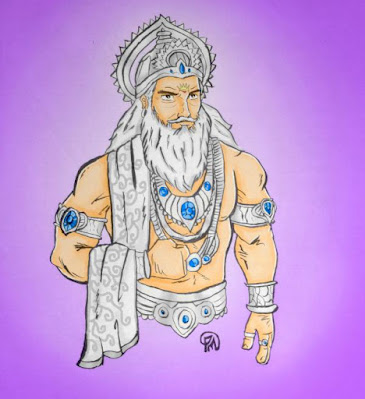
    In the Hindu epic Mahabharata, Bhishma is an uncle to both the Kauravas and the Pandavas, two warring groups. 


    • He is well-known for his courage, sincerity, and continence. 
    • He also has the ability to choose when he dies. 


    Despite being fatally wounded in the epic Mahabharata battle, he survives for weeks (discourses and counsel to the victorious Pandavas the whole time), postponing his death until the sun has started its northward course (uttarayana). 


    • On this day, parents make food and water sacrifices in Bhishma's honor, hoping that their sons would inherit his virtues.


    You may also want to read more about Hinduism here.

    Be sure to check out my writings on religion here.